Connect with us

Uncategorized

Freight Needs to Show Women the Full Range of Careers it Offers

Published

on

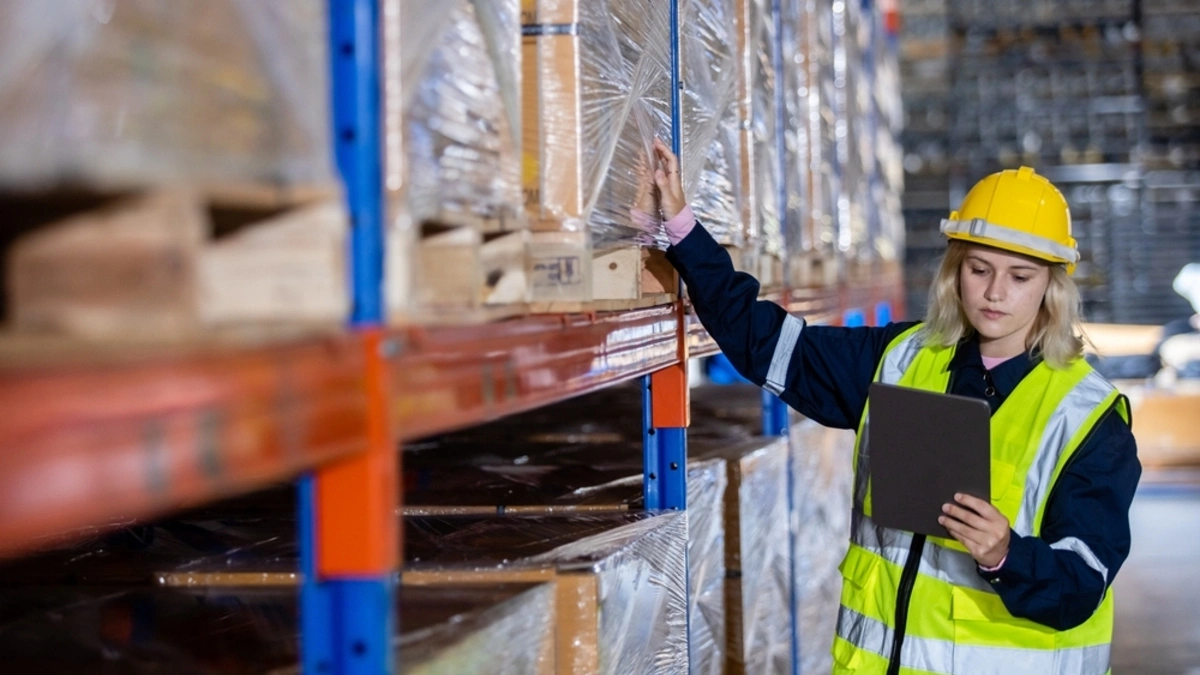
Woman in a high vis vest inspect inventory stock in a warehouse.

Logistics has a visibility problem and it is costing the industry women.

South Africa’s freight and logistics sector is not short of ambitious women. Rather, it is short of women who know the sector exists as a career.

That is the argument put forward by Odette van Zyl, Financial Director and co-owner of Cape Town-based JLOG International who says that while women account for roughly 28% of South Africa’s logistics workforce, they hold fewer than a quarter of its senior leadership roles. The problem starts long before the interview.

“Women are not necessarily interested in logistics as a career because they don’t know what it is,” she says. “There is very little exposure to what logistics involves or where women can contribute.”

For most people, logistics still means trucks, couriers and the physical movement of cargo. The customs and compliance work, the financial structuring behind a project cargo shipment, the operational problem-solving that keeps a vessel loading on schedule – none of it is visible from the outside. An industry that shows the public only its most traditionally male face, should therefore not be surprised by who applies.

Exposure Changes Career Paths

Van Zyl’s own route is evidence of the argument. She entered by chance, as a personal assistant at a small logistics company. Her role expanded into the accounts, which gave her a view of the financial side of the business and, eventually, a career in freight finance. From an administrative desk, she went on to co-own a freight company.

What made that possible was breadth – seeing past the boundaries of the job she was hired to do. She wants the same for young women entering now, rather than placement into narrowly defined roles.

“If women are exposed to the industry, even through learnerships, they begin to see what the rest of the business involves,” she says. “Someone may enter through finance and then realise that she can work in operations or move into a completely different role.”

Her own work runs well beyond the finance desk. At JLOG International she has put on safety boots, a hard hat and a reflective vest, climbed into a bakkie and collected cargo from the airport for delivery to a vessel – another item on the day’s to-do list. “We should not stand back, doubt our knowledge or be intimidated by work simply because it looks complicated,” she says.

The Same Playing Field

Van Zyl is careful about how the argument is framed. “Freight is demanding,” she says. “It requires people who can manage pressure, solve problems quickly, pay close attention to detail and communicate effectively.” 

The case for bringing more women in is not a concession. It is that the sector cannot afford to recruit from half its available talent.

Women make up more than half of JLOG’s employees, an outcome the company did not set out to engineer. “We did not go out saying we wanted to employ a man or a woman but rather looked for the best person. The point is to give people the same playing field and the opportunity to show what they can do. Women do not want handouts. They want to earn their positions,” she explains.

She is a strong advocate for learnerships as the sector’s first point of contact with new talent and equally clear about how they fail. Treated as a number to be recorded, the opportunity is lost. “When you give someone the chance to build a career, you are helping that person create a life and support a family. It should be about the person, not simply the number of learners a company has taken on.”

Getting women through the door is the easy part. Progress has been real in smaller freight businesses, she says, but the corporate environment has not matched the pace. “We have seen change over the last few years, but it is still too slow.”

Confidence is Built, Not Issued

Van Zyl did not study immediately after leaving school, only later concluding that a qualification would carry her further in the corporate world. “When I was offered the opportunity to study through a bursary programme, I took it and completed my degree through Unisa in 2014,” she explains.

She later left corporate to establish JLOG International with her long-time colleague Jonathan McDonald, backing her own experience despite describing herself as cautious.

She is now studying towards a second degree. “If you stop learning, you stagnate and your voice becomes easier to overlook. Learning gives you the confidence to look at the wider business and know that your opinion has value.”

Her advice to women considering the sector is direct: “Do not be intimidated by how complicated logistics may appear. Also, do not lessen your voice or hide your ability behind fear. Own your space and take the risk. It is a journey well worth the ride.”

Portrait of Odette van Zyl standing in a doorway.
Opinion piece by Odette van Zyl

Continue Reading

Freight Forwarding

Machine Learning for Predictive Fleet Maintenance

Published

on

Machine learning vector image

In South Africa, the logistics and transportation industry plays a massive role in the economy, connecting many parts of our diverse country.

The application of Machine Learning (ML) for predictive maintenance in freight fleets has the potential to become a significant tool.

It offers potential solutions to unique challenges faced by the freight forwarding industry in South Africa, such as vast geographical distances, fluctuating fuel costs, and ageing infrastructure.

The Current State of the Freight Industry in South Africa

The South African freight industry is characterised by a mix of road, rail, and maritime transportation. The road freight sector faces challenges such as high wear and tear on vehicles due to long distances and often challenging road conditions. Predictive maintenance using ML can offer solutions to these specific problems.

Implementation of Machine Learning for Predictive Fleet Maintenance

Let’s begin with the fundamentals, to implement an effective machine learning solution for predictive fleet maintenance the following steps need to take place:

1. Data Collection

Vehicle Sensors

Installing sensors to continuously monitor various parameters like engine temperature, oil pressure, fuel efficiency, vibration levels, and tire pressure. These sensors must be suitable for the diverse climatic and road conditions in South Africa. This can be achieved through certain types of transport management systems or TMS which already place these types of sensors in heavy vehicles.

Integration with Existing Systems:

Ensuring that the sensors can communicate with existing fleet management systems to collect historical data, like maintenance records and past failures.

Data Aggregation:

Developing a centralised system for aggregating data from different sources, including traffic conditions, weather information, and road quality, which may affect vehicle performance.

2. Data Preprocessing & Analysis

Data Cleaning:

Removing noise and correcting errors in the data, such as sensor malfunctions or inconsistencies

Data customisation:

Creating new variables that may be more informative for prediction, such as combining weather data with road condition information.

Exploratory Analysis:

Utilising visualisations and statistical analysis to understand the underlying patterns in the data, specific to the South African context.

Handling Imbalanced Data:

In cases where failure data is scarce, techniques to handle imbalanced data might be required to ensure that the predictive model is not biased.

3. Customised Model Building

Algorithm Selection:

Identifying the most suitable machine learning algorithms, considering factors like data size, complexity, and specific predictive maintenance tasks.

Model Training and Validation:

Splitting the data into training and validation sets to build and validate the model, ensuring it generalises well to unseen data.

Hyperparameter Tuning:

Adjusting the parameters of the machine learning model to optimise performance specifically for the conditions in South Africa.

Interpretable Models:

Building models that provide insights into why certain predictions are made, enabling better understanding and trust in the system.

4. Real-time Monitoring and Prediction

Real-time Data Processing:

Developing a system for processing data in real time, allowing for immediate action to be taken based on predictions.

Predictive Alerts:

Creating a notification system to alert operators and maintenance crews of predicted failures or maintenance needs.

Integration with Mobile Technologies:

Ensuring that real-time updates can be accessed by relevant personnel, even in remote areas, via mobile apps or other accessible platforms.

Continuous Model Updating:

Regularly update the model with new data to ensure that it continues to make accurate predictions as conditions change.

5. Integration with Local Suppliers

Supplier Collaboration:

Building partnerships with local maintenance and parts suppliers to ensure timely service and availability of required materials.

Automated Scheduling:

Implementing an automated scheduling system that coordinates with local suppliers to arrange maintenance at optimal times.

Localised Solutions:

Understanding regional differences in South Africa, such as the availability of skilled labour or parts, to create localised solutions for maintenance.

Benefits

Enhanced Efficiency:

By anticipating maintenance needs, South African freight operators can reduce downtime and enhance the efficiency of their fleet.

Cost Reduction:

Predictive maintenance can lead to a reduction in maintenance costs by optimising service schedules and preventing unexpected breakdowns.

Adaptation to Local Conditions:

Customised models can account for the unique challenges of operating in South Africa, such as variable road quality and climatic conditions.

Supporting Economic Growth:

Improved efficiency and cost-effectiveness in the logistics sector can foster broader economic growth within South Africa.

Challenges

Infrastructure Limitations:

Limited access to high-speed internet in remote areas may hinder real-time data processing and communication.

Skills Gap:

Implementing ML for predictive maintenance requires specialised skills that might be scarce in South Africa.

Regulatory Compliance:

Ensuring that the implementation of new technologies complies with South African laws and regulations.

Conclusion

Machine learning for predictive maintenance in South Africa’s freight fleet is an exciting and promising development. It aligns with the country’s goals to innovate and modernise its logistics industry while taking into consideration the unique local challenges.

By investing in this technology and overcoming the associated barriers, South Africa can position itself as a leader in intelligent logistics solutions, promoting not only the growth of the freight industry but also contributing to broader economic development.

Continue Reading

Technology

Artificial intelligence (AI) in warehousing and logistics

Published

on

Artificial intelligence in blue

In today’s digital age, few technologies have been more talked about in a good and a bad light than artificial intelligence. There are many sectors that can benefit significantly from the use of AI in one form or another, one such is the warehousing sector. In this article, we will examine how artificial intelligence is used in warehousing, and what the benefits of AI are.

What defines artificial intelligence?

Artificial intelligence is, in essence, computer-simulated human-like intelligence which allows for complex problem-solving abilities i.e., the ability to take in information, analyse any given piece of information and make intelligent rational decisions with a focused end goal in mind.

The true strength of AI

The greatest strength of AI lies in its ability to take vast amounts of data, recognise patterns, make informed decisions, and adapt and improve its performance based on experience. AI systems are designed to understand, learn from, and respond to their environment, enabling them to perform complex tasks, automate processes, and provide intelligent solutions.

How is artificial intelligence (AI) used in warehousing?

AI is currently used in warehousing in three primary ways these can be broken down into the following.

1. To create predicted demand forecasts

AI is used to forecast demand for stock within the warehouse. This is achieved by the AI using historical data and algorithms to analyse large volumes of data for trends, and correlations. This allows the AI to make accurate demand forecasts for items and can be taken one step further by analysing seasonal trends, and consumer buying behaviour for deeper connections to determine future demand.

2. To improve inventory management

Expanding on forecasting demand, AI can be used to manage inventory levels. For example, AI can make suggestions on exactly which items to stock up on, and at which dates to stock up based on the initial forecast demand and live data. This helps reduce out-of-stock events and allows the warehouse to optimise its inventory for events such as seasonal buying changes. Essentially there is less uncertainty involved when restocking the warehouse.

3. To optimise transport logistics

AI algorithms optimise logistics operations by analysing various parameters such as order volume, delivery locations, traffic conditions, and transportation constraints. By considering these factors, AI-powered systems can generate optimal delivery routes, minimise transportation costs, and improve delivery timeframes.

This streamlines logistics operations and enhances customer satisfaction.
Transport optimisation normally takes place on routes to and from the warehouse, however, if your warehouse takes advantage of automated guided vehicles or AGVs, AI can also be used to optimise the paths these robots take within the warehouse, to ensure the fastest route is taken.

Conclusion

The use of AI in warehousing and logistics has become increasingly popular and beneficial. We can forecast demand for stock, improve inventory management, and optimise transport logistics. These applications help reduce out-of-stock events, optimise inventory, generate optimal delivery routes, minimise transportation costs, and improve delivery timeframes. As technology continues to advance, more AI applications will likely be implemented in the warehousing sector, leading to even greater efficiency and customer satisfaction.

Continue Reading

Uncategorized

6 ways to maximise ROI with real-time transport visibility

Published

on

Seven white cargo trucks parked Infront of cargo containers

The challenges of transport and logistics management across the African continent present significant opportunities for companies that can leapfrog traditional supply chain practices and adopt automation technologies.

Real time transport and logistics visibility is transforming the way transport organisations operate, providing them and their customers with live updates on the location and status of the vehicle fleet as well as the goods that have been ordered. Without this technology, companies do not have insights into deliveries, leading to inefficiencies and customer dissatisfaction, and an inability to keep up with competitors.

With the needs of customers in the region in mind, SEIDOR in Africa has developed a transport solution for SAP Business One referred to as Transport One that provides real-time, end-to-end transport visibility for SMBs that have implemented the ERP solution to automate key functions across their business.

Daisy Ndanyi, Head of Technical Account Management at SEIDOR in Africa, East Africa Region, says the Seidor Transport One solution was developed in consultation with SEIDOR’s large base of customers in the transport and logistics industry.

“What we have now is a seamless solution that integrates with SAP Business One and provides our clients with the information they need to optimise their transport and logistics operations,” she says. “Real-time visibility allows for accurate tracking and tracing of assets, and their location and status, throughout the supply chain.”

Ndanyi adds that any business that operates a fleet of commercial vehicles requires information about the whereabouts of any given vehicle at any time. Incorporating the latest GPS technology, SEIDOR’s solution is far more than just a tool to help commercial drivers to navigate from location to location. “It allows SMBs to monitor vehicle location, geo-fencing, vehicle speed, odometer reading and routes taken.”

As part of a modern mobile transport tracking software tool, the solution provides information that is critical to cost assessment, excellent customer service and improved efficiency.

Here are six key ways the solution can maximise ROI:

1. Tracking and calculating cost and profit per kilometre

Road-transport operators and logistics companies need to measure and control variable vehicle cost factors like fuel, tyres, maintenance, and repairs to gain accurate insights into actual costs and profitability.

2. Daily loading and delivery planning tools and reports

Labour planning and management is a challenge for many transport companies. Accurate and timeous reports make it possible to eliminate wasted time and spend while knowing what cargo needs to be loaded and delivered daily. Order delivery accuracy and on-time delivery are improved by planning tools that are part of the solution.

3. Monitoring fuel use

Fuel monitoring functionality reports fuel levels per vehicle, driver, and trip, recording important data from costs to consumption. This improves the company’s fuel efficiency, emphasising visibility around fuel spending and transactions at the driver level. This can result in significant fuel cost reduction and also eliminates fuel theft. A fuel tracking system also helps businesses determine if speeding is a common occurrence within the fleet.


4. Reduced downtime and increase asset availability

Preventive maintenance of vehicles minimises vehicle downtime, reduces costs and avoids breakdowns that result in safety and security risks. Alerts ensure that vehicles are serviced regularly, and parts are available when needed thanks to streamlined requisition systems.

5. Accelerated transactions and improved cash flow
By automating everyday financial tasks and integrating them with other business processes, transport businesses are always able to get the information they need when they need it. They can effectively track and access all customer-related information, for example, better servicing customers at every point of contact, helping ensure repeat business, and driving improved cash flow as a result of accurate monitoring and management of revenue and expenses. Timely billing based on real-time proof of delivery to maximise cashflow. This is enabled by the driver portal. An integration to mobile payments has eased the handling of cash to drivers and other payments.

6. Vehicle asset management
The solution enables automated tracking, vehicle details, licensing, tracking and reporting on vehicle values and costs, as well as annual depreciation as a result of distances travelled. The system also ensures that the business complies with all necessary regulations, enabling fleet managers to anticipate new regulations and avoid sanctions or fines.

“In addition to the many cost-saving and efficiency benefits, the solution is also affordable, quick to implement and integrates easily with SAP Business One,” says Ndanyi.

“The extremely positive response we have had from our SMB customers in the transport sector demonstrates just how beneficial this add-on is proving to be. We will continue to add features and functionality as the demand arises.”

Continue Reading

ADVERTISEMENT

Random Image
Advertisement

Trending