
Logistics
DHL Group to invest around € 160 million in 2026-2027 to strengthen logistics infrastructure and support clean energy transition in France


The investment will focus on expanding logistics capacity, upgrading infrastructure, and accelerating decarbonization efforts across all DHL divisions in the country.

- Reinforcing France’s role as a key European logistics hub through targeted infrastructure and sustainability investments
- Total DHL investment of nearly € 900 million in France over ten-year period up to 2027
Bonn/Paris, June 4, 2026: DHL Group, the world’s leading logistics company, today announced plans to invest around € 160 million in France between 2026 and 2027, reinforcing its long-term commitment to one of its largest European markets. With this new investment, DHL Group’s total investments in France over the 10-year period between 2018 and 2027 will reach nearly € 900 million, underlining its role in strengthening the country’s logistics infrastructure and industrial competitiveness.

The announcement was made on the sidelines of the 9th edition of the Choose France Summit, a flagship event organized to showcase the attractiveness of the French market for international businesses.
The investment will focus on expanding logistics capacity, upgrading infrastructure, and accelerating decarbonization efforts across all DHL divisions in the country. It forms part of the Group’s strategic ambition to support resilient supply chains and sustainable economic growth in France and across Europe.
“France is a vital logistics hub at the heart of Europe and a key market for DHL Group,” said Tobias Meyer, CEO of DHL Group. “With this investment, we are strengthening our infrastructure, growing our capabilities, and accelerating our transition toward low-emissions logistics. This enables us to better support our customers’ growth while contributing to France’s competitiveness and sustainability ambitions. For customers who are serious about service and sustainability, DHL is the obvious choice. We have by far the highest share of sustainable aviation fuel and electric delivery vehicles in our industry.”
Strengthening infrastructure and supply chains
The planned investments will span all DHL business units operating in the French market:
DHL Express will invest in fleet modernization, electrification, charging infrastructure, and operational equipment, alongside continued development of its network and facilities. Since 2018, 20 real estate projects have been carried out, including the opening of the Paris Charles de Gaulle (CDG) Hub in 2021 and Lyon-Saint Exupéry Gateway in 2025.
DHL Global Forwarding will develop alternative fuel vehicles and enhancements to handling equipment and warehousing infrastructure to reduce environmental impact from operations.
DHL Freight will continue to invest in alternative fuel vehicles and facilities. Since 2018, six real estate projects have been completed, and another six projects will be delivered by 2030.
DHL Supply Chain will continue to invest in state-of-the-art warehouse facilities, expanding its footprint in key locations such as southern Paris, Orléans and Lyon to meet rising demand for 3PL services, notably in life sciences, healthcare, manufacturing, technology and e-commerce. It will also strengthen its 4PL capabilities through its Toulouse control tower, delivering end-to-end orchestration across complex, multi-partner networks.
Accelerating the transition to low-emissions logistics
A significant share of the € 160 million investment will be dedicated to sustainability initiatives, supporting DHL Group’s goal of achieving net-zero greenhouse gas emissions from logistics activities by 2050. Key initiatives include expansion of the company’s electric vehicle fleet and charging infrastructure, increased use of sustainable aviation fuel (SAF), deployment of solar energy solutions across logistics sites, transition to low-carbon fuels such as biodiesel for heavier goods vehicles and continued electrification of warehouse equipment and energy-efficient building technologies.
Driving growth in key sectors
DHL Group is actively expanding its operations in strategic sectors such as life sciences and healthcare, aerospace, and advanced manufacturing, while continuing to grow its services for small and medium-sized enterprises (SMEs) and e-commerce customers.
Recent developments include new partnerships and contracts in pharmaceuticals and industrial sectors, as well as the expansion of fulfillment and specialized logistics solutions.
Long-term commitment to France
With a longstanding presence in France since 1976, DHL Group has become a key partner in enabling trade and supporting economic growth across the country. With this new investment plan, DHL Group’s total investments in France over 10 years (2018-2027) will reach nearly € 900 million, underlining its role in strengthening the country’s logistics infrastructure and industrial competitiveness.
The company continues to expand its activities across the country, supporting regional development, creating jobs, investing ahead-of-the-curve in sustainable operations, and enabling international trade for businesses of all sizes, while reinforcing the resilience and competitiveness of the French economy.


South Africa’s road transport industry is entering a period of significant change, with rising operating costs, new energy technologies and rapid advances in digitalisation placing greater emphasis on efficiency, vehicle productivity and lifecycle costs. For truck and trailer body builder Serco, these trends are shaping both its view of the market and its innovation priorities for 2027.
Serco CEO Clinton Holcroft believes the next phase of commercial vehicle development will be increasingly influenced by the following interconnected themes: reducing vehicle weight and improving efficiency, the gradual adoption of alternative energy vehicles and the greater use of data and artificial intelligence (AI) to improve vehicle performance and uptime.
“Transporters ultimately need vehicles that carry the maximum productive payload, are reliable, cost-effective to operate and spend as little time as possible off the road,” said Holcroft. “The technologies are changing, but those fundamental customer requirements remain the same,” said Holcroft.
He said 2026 was proving to be a demanding one for the logistics industry, with sharply higher diesel costs adding further pressure to already competitive operating conditions. “Serco has seen transporters respond by extending the operating life of existing equipment and placing increased emphasis on maintenance, reliability and vehicle utilisation. Fuel pressures intensified towards the latter part of the year with South African diesel prices rising sharply again in October, adding further impetus to the industry’s search for greater operating efficiency,” said Holcroft.
Despite the difficult environment, Serco achieved marginal year-on-year improvement, recording more than 8% growth in repair sales, while continuing to broaden its dry-freight product offering and customer base.
The company also placed particular emphasis on reducing customer downtime. Its Johannesburg facility was expanded during the year, adding capacity for both after-sales repairs and new-body manufacturing, with further improvements to the facility and layout under review.
“In a difficult operating environment, keeping existing equipment productive becomes increasingly important,” said Holcroft. “Our focus has therefore not only been on manufacturing new vehicles but also on improving the speed and efficiency of our repair services to help customers reduce downtime.”
Holcroft expects the drive towards lower tare weight and improved aerodynamics to accelerate, regardless of the vehicle’s power source.
The benefit for a conventional fleet is the potential for improved payload and fuel efficiency. For battery-electric vehicles, weight becomes particularly important because body specification needs to balance payload, durability and vehicle range.
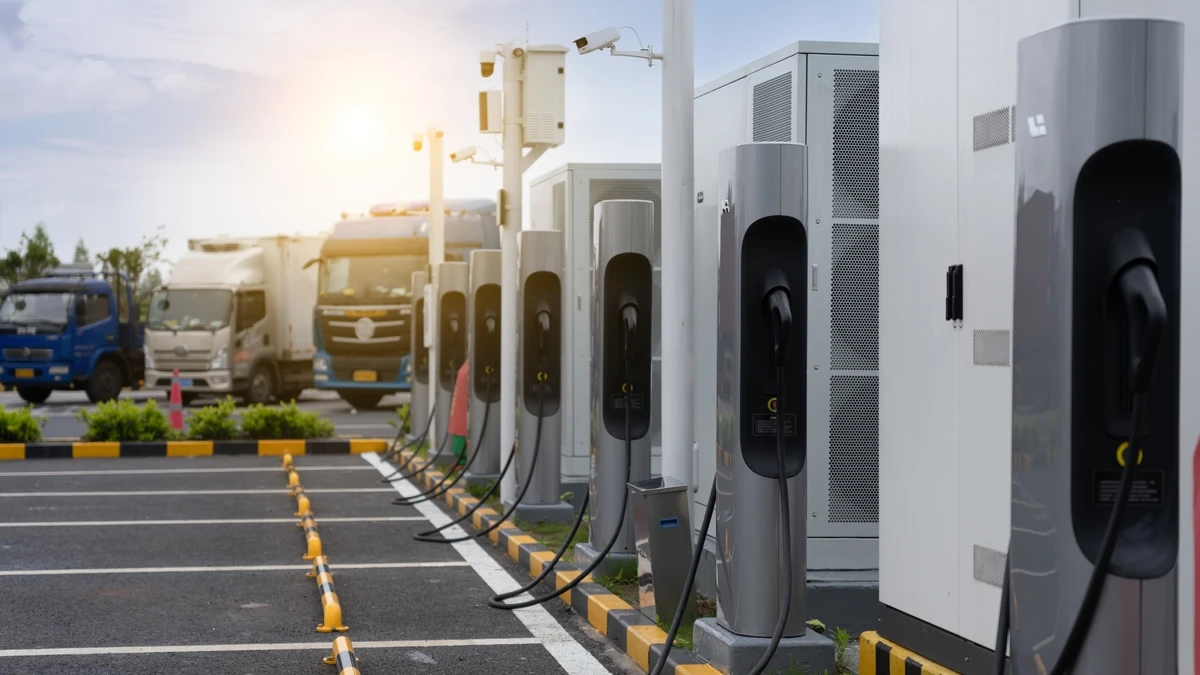
Serco has already started applying lightweight construction principles to truck bodies built for electric vehicles (EVs) introduced into the South African market this year.
“With electric vehicles, every kilogram becomes increasingly important. The challenge for body builders is not simply to make a body lighter. It is to reduce weight intelligently while maintaining the strength, durability and practicality customers expect.”
Serco therefore forecasts continued development in areas including composite materials, high-strength lightweight steels, aluminium construction and aerodynamic body design. The company plans to further develop its EV body range during 2027 while continuing research into materials and designs capable of reducing tare without compromising durability.
Holcroft believes electric commercial vehicles will become increasingly relevant to selected South African transport applications as vehicle choice expands and the commercial case improves.
However, Holcroft cautions that adoption will not happen overnight. “Electric trucks need to make operational and commercial sense for the fleet. Range, payload, charging infrastructure, vehicle utilisation, support and total cost of ownership – all have to be considered. As those elements improve, we expect more transporters to evaluate where EVs can fit successfully into their operations.”
Serco expects its role to remain centred on helping operators extract maximum value from whichever vehicle platform they select by developing bodies that combine low tare weight, durability, load-carrying capability and practical operating features.
Another major development Holcroft sees gathering momentum is the convergence of trailers, telematics, sensors and AI.
Trailers are already increasingly capable of generating operational information through technologies such as real-time load monitoring, tyre-pressure monitoring, temperature tracking and door-opening alerts. Serco sees the next opportunity as converting more of this information into actionable insight, including proactive maintenance and fleet optimisation.
“The opportunity is for the trailer to evolve from simply being an asset that carries freight into an intelligent asset that provides operators with useful information about its condition and operation.”
Serco is currently evaluating new features using telematics and sensors to support proactive trailer maintenance as well as camera technologies aimed at reducing vehicle damage during docking and unloading operations.
AI could also increasingly influence the engineering process. Serco sees potential for AI-assisted tools to help engineers analyse load patterns, optimise structural designs, reduce material usage and improve stress and fatigue analysis.
Rather than positioning AI as a replacement for engineering expertise, Holcroft believes its value will lie in augmenting engineering capability and accelerating innovation.
“The exciting opportunity is combining the experience of our engineers with increasingly sophisticated digital tools. If we can design lighter and stronger products, identify maintenance requirements earlier and give fleet operators better information, technology translates into real customer value.”
Looking ahead, Serco expects trading conditions to remain challenging while fleet operators continue to manage high operating costs and ageing equipment. At the same time, the need to replace overextended vehicles should create opportunities for newer, more efficient and reliable equipment.
Against this backdrop, Serco’s priorities for 2027 will include further development of its lightweight and EV-ready body range, continued research into advanced materials, greater integration of telematics and smart technologies, further improvements in repair turnaround times, and development of the skills required for an increasingly digital and electrified transport industry.
“We don’t believe innovation should be about technology for technology’s sake,” Holcroft concluded. “For our customers, innovation must translate into better payload, lower operating costs, increased uptime, improved safety and longer asset life. That is where we see the greatest opportunity for Serco as the transport industry evolves.”
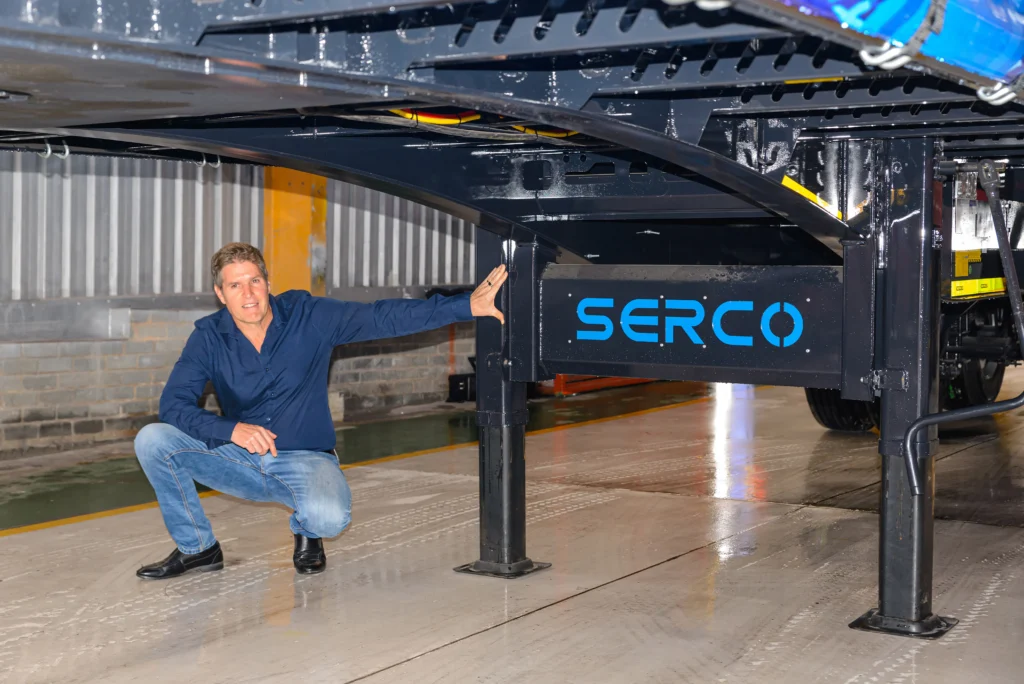
Clinton Holcroft, CEO of Serco (Pty) Ltd


Port of Saldanha Secures R6.9bn Industrial Investment Pipeline

Efficiency, Electrification and Intelligence Set to Shape New Era of Road Transport

Can Your Business Handle 22% More Online Orders?


-

 Management3 months ago
SEO, AEO, GEO and SEO for AI: What Is the Difference for the Supply Chain Industry?
-
 Transport4 months ago
LDV T60 Max vs GWM P500 vs Isuzu D-Max vs Toyota Hilux vs Ford Ranger: Which Double-Cab Bakkie Offers the Best Value?
-

 Logistics4 months ago
Top 5 Warehousing and Logistics Companies in the Western Cape by Google Review Rating
-

 Logistics4 months ago
DHL Expands Asia Pacific Data Center Logistics Capabilities to Support Growing Regional Demand
-

 Logistics4 months ago
Top 10 Warehousing and Logistics Companies in Gauteng by Google Review Rating
-

 Freight Forwarding4 months ago
The Hidden Cost of Shipping from China to South Africa — What Every SA Importer Needs to Know in 2026
-

 Logistics3 months ago
Top 4 Lift Truck Companies in Gauteng
-
 Logistics3 months ago
Logistics in South Africa: Challenges and Solutions