Connect with us

Logistics

The Distribution Gap Holding Back South Africa’s Township Economy

Published

on

Landscape shot of a Capetonian township.

South Africa’s township economy is not only facing a demand problem. For many businesses, the bigger challenge may be getting the right products to the right place at a competitive price.

The 2026 Rural and Township Economy Report highlights significant procurement and distribution challenges facing businesses outside the country’s major commercial centres. According to the Department of Trade, Industry and Competition (the dtic), informal businesses face higher procurement costs and limited access to formal distribution channels, while consumers can face higher effective prices because of limited product variety and quality.

For the supply-chain industry, this points to a problem that sits further upstream than the shop itself.

If a business cannot source products reliably, competitively and in sufficient volume, its ability to compete is constrained before the customer even walks through the door.

The Cost of Getting Stock

Procurement is one of the clearest pressure points.

The Competition Commission’s Rural and Township Economy Project identifies constraints in how township and rural businesses source and sell goods, with smaller businesses facing challenges that can prevent them from scaling and integrating more fully into broader value chains.

The issue is partly one of scale.

A small retailer buying limited quantities does not necessarily have the same purchasing power as a larger chain. That can affect the prices it pays, the range of products it can stock and how frequently it can replenish inventory.

The result is a cycle where scale becomes an advantage not only for retailers, but for businesses further up the supply chain as well.

A business that pays more for stock has less room to compete on price. If it cannot reliably obtain popular products, it also risks losing customers to businesses that can.

Distribution Determines What is Available

Price is only one part of the problem.

Stock availability matters just as much.

The dtic has identified stock availability as a key challenge for township businesses, noting that consumers are less likely to return when products are out of stock. The department has also highlighted the need for better supply-chain management and point-of-sale technology to improve the customer experience.

That changes how the distribution problem should be viewed.

A product sitting in a national warehouse does not necessarily help a consumer in a township. It still needs to move through the right wholesale or distribution channel, reach the local business at the right time and be available when the customer wants it.

This final connection can be easy to overlook when supply chains are designed primarily around large formal retailers.

The Route to Market Matters Too

The challenge also works in the other direction.

Many township businesses are heavily dependent on their immediate local customer base, limiting their ability to reach larger markets.

That creates a similar problem for producers and manufacturers. A business may have a product that could sell beyond its immediate area, but reaching those customers requires access to distribution, retail and digital channels that may not be readily available.

The supply chain therefore affects both sides of the market: how businesses get products in and how they get products out.

That is particularly important if South Africa wants township enterprises to become more integrated into broader manufacturing and distribution networks rather than remaining largely localised.

Could Aggregation Help?

One potential way to address the scale problem is through greater purchasing power.

In a recent address to women entrepreneurs, Deputy Minister of Trade, Industry and Competition Zuko Godlimpi encouraged township businesses to form partnerships and cooperatives so they can buy and sell in greater volumes.

The logic is straightforward. If smaller businesses can aggregate their demand, they may be able to access some of the purchasing advantages normally associated with larger buyers.

Government has already incorporated this principle into support for township community convenience stores. The dtic’s Spaza Shop Support Fund includes support for stock procurement and delivery, while the department has said the programme is intended to strengthen links between spaza shops, local manufacturers, black industrialists and wholesalers through bulk purchasing arrangements.

But aggregation still needs infrastructure behind it.

Someone has to consolidate orders, manage inventory, arrange transport, handle storage and distribute stock. Without those capabilities, simply combining purchasing power will not solve the wider distribution problem.

Closing the Distribution Gap

South Africa has no shortage of entrepreneurial activity in its townships. The challenge is making it easier for those businesses to participate in supply chains that extend beyond their immediate surroundings.

That means looking beyond the individual retailer.

Better wholesale networks, more efficient distribution channels, technology that improves stock visibility and logistics models designed around smaller businesses could all help reduce some of the disadvantages created by limited scale.

It also means recognising that access to a product is not the same as access to a supply chain.

A township retailer may technically be able to buy a product, but if it pays more, receives inconsistent supply or has limited access to alternative suppliers, it is competing from a weaker position.

The 2026 Rural and Township Economy Report makes clear that procurement, stock availability and access to distribution remain important barriers for many smaller businesses.

Closing that gap will therefore require more than encouraging businesses to grow. It will require supply chains that allow them to buy competitively, maintain reliable stock and reach more customers.

For South Africa’s township economy, better distribution could be one of the practical ways to turn local business activity into businesses that can genuinely scale.

Continue Reading

Logistics

Efficiency, Electrification and Intelligence Set to Shape New Era of Road Transport

Published

on

EV charging station with freight trucks parked besides the station.

South Africa’s road transport industry is entering a period of significant change, with rising operating costs, new energy technologies and rapid advances in digitalisation placing greater emphasis on efficiency, vehicle productivity and lifecycle costs. For truck and trailer body builder Serco, these trends are shaping both its view of the market and its innovation priorities for 2027.

Serco CEO Clinton Holcroft believes the next phase of commercial vehicle development will be increasingly influenced by the following interconnected themes: reducing vehicle weight and improving efficiency, the gradual adoption of alternative energy vehicles and the greater use of data and artificial intelligence (AI) to improve vehicle performance and uptime. 

“Transporters ultimately need vehicles that carry the maximum productive payload, are reliable, cost-effective to operate and spend as little time as possible off the road,” said Holcroft. “The technologies are changing, but those fundamental customer requirements remain the same,” said Holcroft.

He said 2026 was proving to be a demanding one for the logistics industry, with sharply higher diesel costs adding further pressure to already competitive operating conditions. “Serco has seen transporters respond by extending the operating life of existing equipment and placing increased emphasis on maintenance, reliability and vehicle utilisation. Fuel pressures intensified towards the latter part of the year with South African diesel prices rising sharply again in October, adding further impetus to the industry’s search for greater operating efficiency,” said Holcroft. 

Despite the difficult environment, Serco achieved marginal year-on-year improvement, recording more than 8% growth in repair sales, while continuing to broaden its dry-freight product offering and customer base.

The company also placed particular emphasis on reducing customer downtime. Its Johannesburg facility was expanded during the year, adding capacity for both after-sales repairs and new-body manufacturing, with further improvements to the facility and layout under review. 

“In a difficult operating environment, keeping existing equipment productive becomes increasingly important,” said Holcroft. “Our focus has therefore not only been on manufacturing new vehicles but also on improving the speed and efficiency of our repair services to help customers reduce downtime.”

Holcroft expects the drive towards lower tare weight and improved aerodynamics to accelerate, regardless of the vehicle’s power source.

The benefit for a conventional fleet is the potential for improved payload and fuel efficiency. For battery-electric vehicles, weight becomes particularly important because body specification needs to balance payload, durability and vehicle range.

Serco has already started applying lightweight construction principles to truck bodies built for electric vehicles (EVs) introduced into the South African market this year. 

“With electric vehicles, every kilogram becomes increasingly important. The challenge for body builders is not simply to make a body lighter. It is to reduce weight intelligently while maintaining the strength, durability and practicality customers expect.”

Serco therefore forecasts continued development in areas including composite materials, high-strength lightweight steels, aluminium construction and aerodynamic body design. The company plans to further develop its EV body range during 2027 while continuing research into materials and designs capable of reducing tare without compromising durability. 

Holcroft believes electric commercial vehicles will become increasingly relevant to selected South African transport applications as vehicle choice expands and the commercial case improves.

However, Holcroft cautions that adoption will not happen overnight. “Electric trucks need to make operational and commercial sense for the fleet. Range, payload, charging infrastructure, vehicle utilisation, support and total cost of ownership – all have to be considered. As those elements improve, we expect more transporters to evaluate where EVs can fit successfully into their operations.”

Serco expects its role to remain centred on helping operators extract maximum value from whichever vehicle platform they select by developing bodies that combine low tare weight, durability, load-carrying capability and practical operating features. 

Another major development Holcroft sees gathering momentum is the convergence of trailers, telematics, sensors and AI.

Trailers are already increasingly capable of generating operational information through technologies such as real-time load monitoring, tyre-pressure monitoring, temperature tracking and door-opening alerts. Serco sees the next opportunity as converting more of this information into actionable insight, including proactive maintenance and fleet optimisation. 

“The opportunity is for the trailer to evolve from simply being an asset that carries freight into an intelligent asset that provides operators with useful information about its condition and operation.”

Serco is currently evaluating new features using telematics and sensors to support proactive trailer maintenance as well as camera technologies aimed at reducing vehicle damage during docking and unloading operations. 

AI could also increasingly influence the engineering process. Serco sees potential for AI-assisted tools to help engineers analyse load patterns, optimise structural designs, reduce material usage and improve stress and fatigue analysis. 

Rather than positioning AI as a replacement for engineering expertise, Holcroft believes its value will lie in augmenting engineering capability and accelerating innovation.

“The exciting opportunity is combining the experience of our engineers with increasingly sophisticated digital tools. If we can design lighter and stronger products, identify maintenance requirements earlier and give fleet operators better information, technology translates into real customer value.”

Looking ahead, Serco expects trading conditions to remain challenging while fleet operators continue to manage high operating costs and ageing equipment. At the same time, the need to replace overextended vehicles should create opportunities for newer, more efficient and reliable equipment.

Against this backdrop, Serco’s priorities for 2027 will include further development of its lightweight and EV-ready body range, continued research into advanced materials, greater integration of telematics and smart technologies, further improvements in repair turnaround times, and development of the skills required for an increasingly digital and electrified transport industry. 

“We don’t believe innovation should be about technology for technology’s sake,” Holcroft concluded. “For our customers, innovation must translate into better payload, lower operating costs, increased uptime, improved safety and longer asset life. That is where we see the greatest opportunity for Serco as the transport industry evolves.”
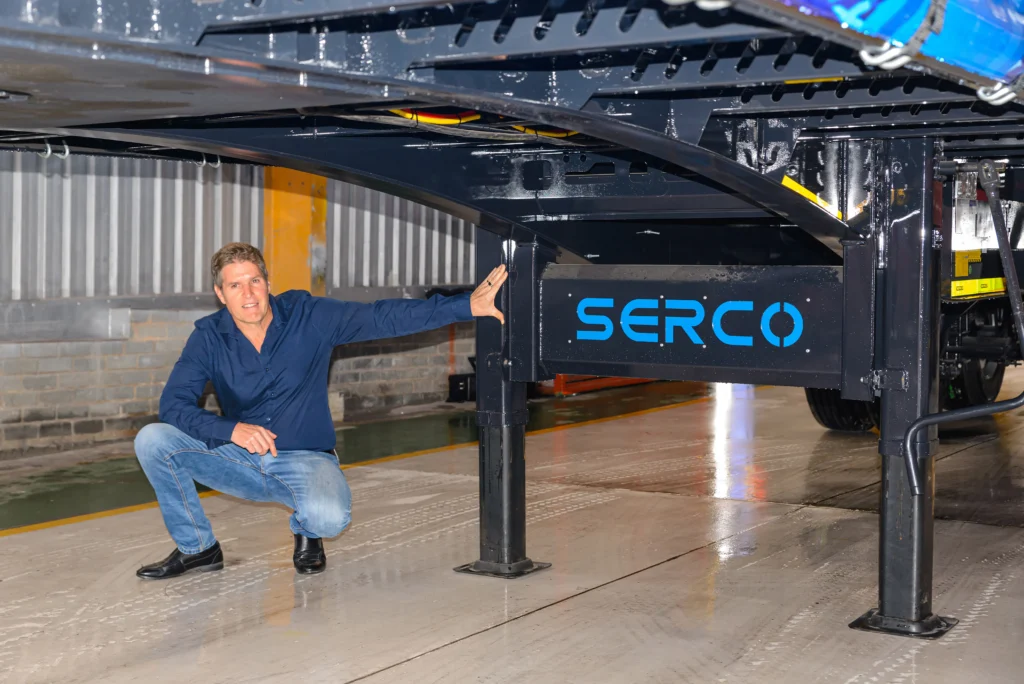
Clinton Holcroft, CEO of Serco (Pty) Ltd

Clinton Holcroft, CEO of Serco (Pty) Ltd

Continue Reading

Logistics

 Can Your Business Handle 22% More Online Orders?

Published

on

Sahil Affriya, CEO of online logistics partner of Shiprazor.

South Africa’s online retail market is growing at around 22.5% this year. For retailers heading into Black Friday and the festive season, there is a fairly obvious question behind that number: what happens if your business suddenly has to process, pack and deliver 20% more orders?

It is a question Sahil Affriya, founder and CEO of multi-courier logistics platform Shiprazor, believes retailers should be answering now, rather than in November.

The newly released Online Retail in South Africa 2026 report, produced by World Wide Worx in partnership with Mastercard, Peach Payments and Ask Afrika, and supported by Shiprazor, forecasts that South Africa’s online retail market will reach R159 billion in 2026.

On a turnover-weighted basis, the market is expanding at approximately 22.5% this year, between five and ten times the rate of physical retail. The report also shows just how much bigger the market has become: online retail is expected to add more turnover during 2026 alone than the entire South African online retail market generated in 2020.

That is good news for ecommerce. But growth at that pace has consequences.

More orders mean more pressure on stock systems, warehouses, customer-service teams, courier capacity and returns. And with retailers typically reluctant to make significant changes to business-critical technology once peak trading begins, the window to find and fix weaknesses is getting smaller.

“Twenty-two percent growth sounds fantastic until you start thinking about what it means on a busy Monday morning in November,” says Affriya. “If there are suddenly hundreds more orders sitting in your system, can your warehouse get them out? Can your courier partners absorb the volume? And, importantly, can you see quickly enough when something has gone wrong?”

Affriya says retailers don’t need to predict their exact Black Friday volumes. They do need to know where their operation starts to strain, and have a plan for absorbing additional orders when demand moves beyond expectations.

He suggests focusing on a few practical areas before peak-season systems are locked down.

Prepare for Unpredictable Order Volumes

Testing whether a website can handle increased traffic is only one part of peak-season preparation. Retailers should put the entire order journey under pressure, from checkout and stock allocation through to picking, packing, dispatch and delivery. Testing different order volumes can show where delays or manual work start creeping in, giving teams time to address those pressure points before peak demand arrives.

“Don’t just test whether someone can buy from you, test whether you can actually fulfil what you’ve sold,” says Affriya.

Build the Right Courier Mix

Retailers should understand how much additional volume their delivery and fulfilment partners can accommodate, particularly on their busiest routes and trading days. That also means looking at the mix of courier partners available and understanding which are best suited to different delivery areas, service requirements, costs and order volumes.

They should also know what happens when things don’t go according to plan. If one delivery option becomes constrained, is there another available? How quickly can orders be moved? Who makes that decision?

“Peak season exposes dependencies that are easy to ignore during normal trading,” says Affriya. “If your delivery operation relies heavily on one provider or one process, you want to know where that risk sits before volumes spike.”

Keep Shipping Costs Under Control

Higher order volumes don’t automatically translate into better margins if fulfilment and delivery costs rise with them. Retailers should understand what they are spending to fulfil and deliver each order, and where unnecessary costs start appearing as volumes increase.

That includes looking beyond headline courier rates to factors such as delivery area, service level, failed delivery attempts and the cost of moving orders between providers when capacity becomes constrained. Having multiple delivery options gives retailers more room to balance cost, capacity and service during peak periods.

Find aqnd Reduce Fulfilment Bottlenecks

A retailer may have enough website capacity to handle twice its usual traffic while its warehouse can only comfortably process 20% more orders. Another may have warehouse capacity but run into courier collection limits.

Affriya recommends retailers model what happens if order volumes increase by 20%, 30% and even 50% over a short period, then use those scenarios to identify where additional capacity, alternative processes or courier options may be needed.

“You are not trying to predict the future perfectly. You are looking for the point where something breaks, so you can fix it before peak season.”

Spot Problems Early Enough to Act

When thousands of orders are moving through an operation, problems are inevitable. The bigger issue is how long it takes the retailer to spot them.

Teams should be able to see orders that haven’t left the warehouse, missed collections, parcels that have stopped moving and failed delivery attempts without waiting for a customer to complain. The earlier those exceptions are visible, the more opportunity there is to reroute an order, change delivery options or intervene before the problem reaches the customer.

That matters because the delivery is ultimately the part of an online transaction that happens in the customer’s world.

“The customer doesn’t care which system failed or which courier had a capacity problem,” says Affriya. “They bought from the retailer. That’s the brand they associate with the experience.”

South Africa’s online retail market has now reached a point where rapid growth is taking place on top of an already substantial base. For Affriya, that makes peak-season preparation less about preparing for one unusually busy weekend and more about building an operation that can absorb higher volumes without service levels slipping or fulfilment and delivery costs eroding the value of that growth.

“Growth is what every retailer wants,” he says. “The question is whether the rest of the business is ready when it arrives.”

Continue Reading

Logistics

CILT Conference to Explore Innovation and Cross-Border Connectivity at Automechanika Johannesburg

Published

on

Focused image of panel discussion at a conference.

Transport reform, regional trade, safer freight corridors and workforce development will take centre stage at the Chartered Institute of Logistics and Transport (CILT) Namibia, South Africa and Zimbabwe Regional Conference at Automechanika Johannesburg on 28 and 29 October 2026.

Taking place at Gallagher Convention Centre in Midrand, the conference will explore the theme “Driving Innovation: Bridging Borders for an African Future”. Its programme brings together perspectives from government, industry, professional bodies and education to examine the transport, logistics and supply chain challenges shaping regional connectivity.

With Tiro Rapoo of NEXT Gen – an interest group of CILT – as programme director, the discussions will focus on how infrastructure, regulation, technology and skills can support a more connected African transport landscape, with an emphasis on practical regional challenges. Four panels will address transport corridors, cross-border harmonisation, safety and security, and education and training.

Head shot of Tiro Rapoo of NEXT Gen.

Tiro Rapoo of NEXT Gen

“By focusing on critical corridors, standardisation, safety, and future-ready skills, the programme is structured to deliver actionable solutions that help move goods and people across our borders more efficiently and securely,” says Elvin Harris, President of the Chartered Institute of Logistics and Transport South Africa (CILTSA).

Head shot of Elvin Harris, President of the Chartered Institute of Logistics and Transport South Africa (CILTSA).

Elvin Harris, President of the Chartered Institute of Logistics and Transport South Africa (CILTSA).

Connecting Corridors and Aligning Systems

Lwazi Mboyi, CEO of the Cross-Border Road Transport Agency (C-BRTA), will address enabling cross-border road transport in Africa. Aneeqah Meyer, Manager at Ernst & Young Advisory Services, will examine economic integration, the African Continental Free Trade Area (AfCFTA) and the future of African trade.

Head shot of Lwazi Mboyi, CEO of the Cross-Border Road Transport Agency (C-BRTA).

Lwazi Mboyi, CEO of the Cross-Border Road Transport Agency (C-BRTA)

Head shot of Aneeqah Meyer, Manager at Ernst & Young Advisory Services.

Aneeqah Meyer, Manager at Ernst & Young Advisory Services

The transport corridors panel will feature Crynos Mutendera, Senior Research Specialist at C-BRTA and Lebo Letsoalo, founder of the African Women in Supply Chain Association (AWISCA) and Sincpoint. Discussions will cover strategic road and rail corridors, reducing border delays and non-tariff barriers, and lessons from one-stop border posts. Infrastructure financing, the contribution of dry ports and inland terminals, and links between corridor development and regional industrialisation will also feature.

Portrait of Crynos Mutendera, Senior Research Specialist at C-BRTA.

Crynos Mutendera, Senior Research Specialist at C-BRTA

Head shot of Lebo Letsoalo, founder of the African Women in Supply Chain Association (AWISCA).

Lebo Letsoalo, founder of the African Women in Supply Chain Association (AWISCA)

The harmonisation panel will include Jonathan McDonald, Vice Chairman of the SA Freight and Logistics Association (SAFLA), and Prisca Mayumbelo CMILT, Chairperson of CILT Namibia and a transport and urban mobility specialist. Topics include vehicle standards, customs documentation, trade facilitation systems and mutual recognition of licences, permits and professional qualifications.

Portrait of Prisca Mayumbelo CMILT.

Prisca Mayumbelo CMILT

“By uniting Namibia, South Africa and Zimbabwe at Automechanika Johannesburg, we are turning policy aspirations into operational realities that will accelerate trade efficiency along our shared economic corridors,” states Mayumbelo.

Safer Operations and a Future-Ready Workforce

Day two will bring a regional perspective from Dr Tapiwa Mujakachi, President of CILT Zimbabwe, followed by a keynote on generative engine optimisation from Francois Vorster, Chief Disruptor at IMS.

Head shot of Dr Tapiwa Mujakachi, President of CILT Zimbabwe.

Dr Tapiwa Mujakachi, President of CILT Zimbabwe

Dr Mujakachi emphasises the collective purpose driving regional collaboration. “This three-way partnership demonstrates that our logistical challenges and economic destinies are deeply interconnected. Bringing our institutions and practitioners together allows us to co-create practical solutions that lower the cost of doing business and build corridor resilience for our shared future.”

The safety and security panel will include Gavin Kelly, CEO of the Road Freight Association (RFA) and Gerhard van Zyl, Group Operations Director at Professional Risk and Asset Management.

Head shot of Gavin Kelly, CEO of the Road Freight Association (RFA).

Gavin Kelly, CEO of the Road Freight Association (RFA)

Head shot of Gerhard van Zyl, Group Operations Director at Professional Risk and Asset Management.

Gerhard van Zyl, Group Operations Director at Professional Risk and Asset Management.

The education, training and skills panel will feature Maphefo Ano Frempong, CEO of the Transport Education Training Authority (TETA); Anton Fiets, Executive: Industry Development at the Automotive Industry Development Centre (AIDC); Professor Chengedzai Mafini, Executive Dean at Vaal University of Technology; Ronald Mlalazi, CEO of Commerce Edge; and Sandile Khoza, CEO of COSA Holdings and CILTSA Council member.

Portrait of Sandile Khoza, CEO of COSA Holdings and CILTSA Council member

Sandile Khoza, CEO of COSA Holdings and CILTSA Council member

Portrait of Professor Chengedzai Mafini, Executive Dean at Vaal University of Technology

Professor Chengedzai Mafini, Executive Dean at Vaal University of Technology

Head shot of Ronald Mlalazi, CEO of Commerce Edge.

Ronald Mlalazi, CEO of Commerce Edge

Formal sessions will be followed by lunch and dedicated opportunities to visit the Automechanika exhibition and network with exhibitors.

For more information about the conference or to register, visit: https://www.ciltsa.events/cilt-conference-at-automechanika-johannesburg/

Continue Reading

Trending