Connect with us

Materials Handling

US Moves to Remove South Africa from AGOA, Raising Concerns for Export Supply Chains

Published

on

Businessman working overtime to plan a new direction for his business’s exports.

The United States intends to terminate South Africa’s participation in the African Growth and Opportunity Act (AGOA) from 1 January 2027, potentially changing the trading conditions for South African businesses exporting to the American market.

In a statement issued on 2 November by the Office of the United States Trade Representative, US Trade Representative Ambassador Jamieson Greer confirmed that President Donald Trump had notified Congress and the governments of South Africa and Rwanda of his intention to remove both countries from the trade preference programme.

The decision follows an annual review of sub-Saharan African countries’ eligibility for AGOA. According to Greer, the US administration believes that the two governments are engaging in practices that are inconsistent with the programme’s eligibility criteria.

In South Africa’s case, the US cited concerns about barriers to American trade and investment, corruption and practices it considers threats to its national security and foreign policy interests in the region.

The statement did not identify specific examples of these concerns or outline individual trade measures that South Africa would need to change.

What the Decision Could Mean for South African Exporters

AGOA provides eligible sub-Saharan African countries with preferential access to the US market. Losing eligibility could mean that South African products currently benefiting from the programme no longer qualify for the same preferential import treatment.

For exporters, this could create additional pressure on pricing and competitiveness. If affected products become more expensive to import into the US, American buyers may reconsider their sourcing arrangements, negotiate lower prices or look towards alternative suppliers.

The potential impact extends beyond the businesses directly involved in exporting. South Africa’s international trade network connects manufacturers, agricultural producers, transport operators, freight forwarders, ports and distribution businesses.

A reduction in export demand could therefore affect activity across these connected industries. Manufacturers may need to reconsider production volumes, while logistics providers could face changes in cargo demand and established shipping routes.

The automotive industry is one area worth monitoring. Vehicle manufacturing relies on international supply chains, with components and finished products moving between production facilities and export markets. Any change to the commercial conditions of US-bound exports could influence sourcing decisions, production planning and the competitiveness of South African manufacturing.

Agricultural exporters could also face additional uncertainty, particularly where businesses have established long-term relationships with American buyers based on existing trade conditions.

Trade Uncertainty Puts Pressure on Supply Chain Planning

The proposed termination also raises questions about the longer-term predictability of South Africa’s trade relationship with the United States.

International supply chains depend on more than the physical movement of goods. Businesses make investment, procurement and production decisions based on expected market access, import duties, regulatory requirements and the reliability of trading relationships.

Changes to these conditions can influence where companies manufacture products, which suppliers they use and which markets they prioritise.

For South African exporters, the possibility of losing AGOA benefits means that businesses may need to review their exposure to the US market and assess whether their current pricing and distribution arrangements remain commercially viable.

Alternative markets may provide opportunities, but establishing new export relationships takes time. Businesses must account for market demand, regulatory requirements, transport infrastructure and the costs associated with reaching new customers.

A Decision With Implications Beyond Trade Policy

The US announcement highlights how international political and trade relationships can influence commercial decisions across entire supply chains.

Although the intended termination is not due to take effect until January 2027, the uncertainty surrounding South Africa’s eligibility could already influence how businesses approach future contracts, investment and export planning.

For South Africa, maintaining access to international markets will remain important to the competitiveness of its manufacturing and agricultural industries. The challenge will be managing the potential disruption while maintaining reliable export channels and strengthening relationships with alternative trading partners.

The outcome of further engagement between the two governments will be important in determining whether South Africa’s participation in AGOA can be preserved or whether exporters will need to prepare for a different trading environment from 2027.

Continue Reading

Materials Handling

From Fuel Tank to Shopping Basket: How SPAR is Navigating Rising Transport Costs

Published

on

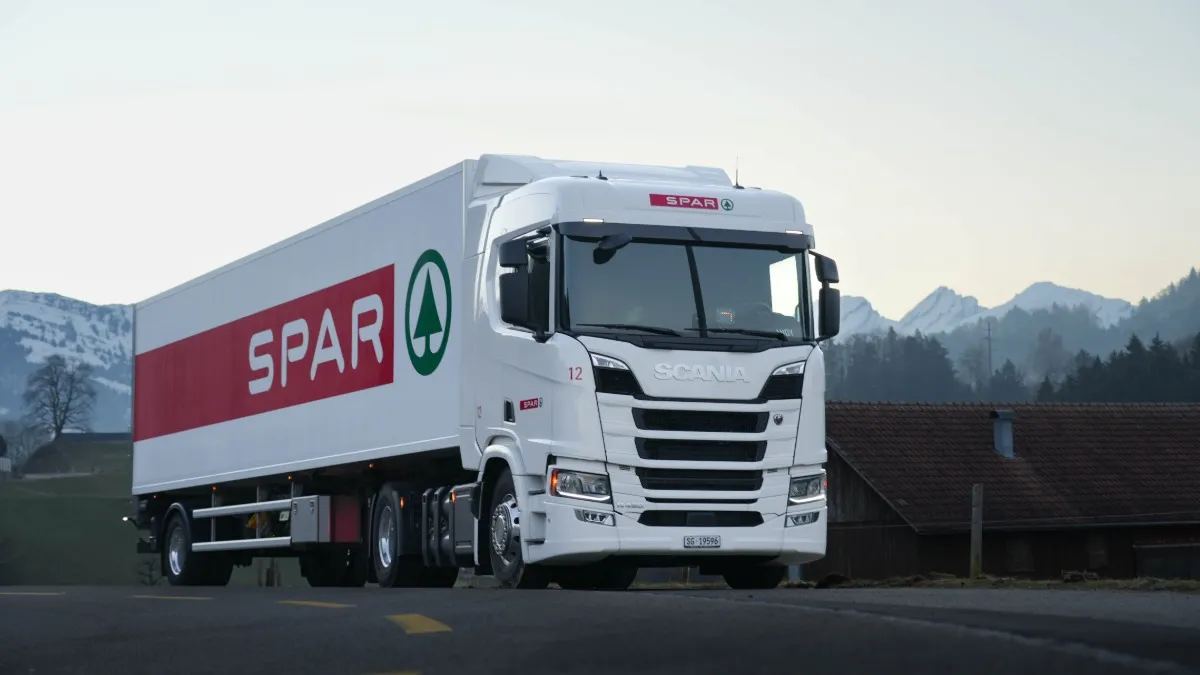
SPAR delivery truck out for delivery.

As fuel prices place growing pressure on South Africa’s supply chains, SPAR highlights the importance of efficient distribution, energy management and reliable access to everyday essentials.

Rising fuel prices are placing additional pressure on South Africa’s grocery supply chains, increasing the cost of moving products from suppliers to distribution centres and ultimately to supermarket shelves. For retailers, the challenge is balancing these pressures with the need to maintain product availability, quality and value for consumers.

According to the Road Freight Association (RFA), fuel accounts for between 35% and 55% of road transport operators’ operating costs, depending on vehicle type, route and operating conditions. Sustained increases therefore have implications beyond the transport sector, affecting businesses and consumers across the value chain.

“Every product on a supermarket shelf has a journey behind it. When fuel costs rise, the impact extends beyond the trucks transporting goods. It reinforces the importance of how efficiently we manage our entire distribution network, from vehicle fuel consumptions, route management and vehicle utilizations and order planning to maintaining reliable deliveries to stores,” says Arno Haigh, National Logistics Executive at The SPAR Group.

“While we cannot control external cost pressures, we can focus on improving operational efficiencies and ensuring that our distribution network continues to support retailers and the communities they serve.”

Managing Costs Beyond the Road
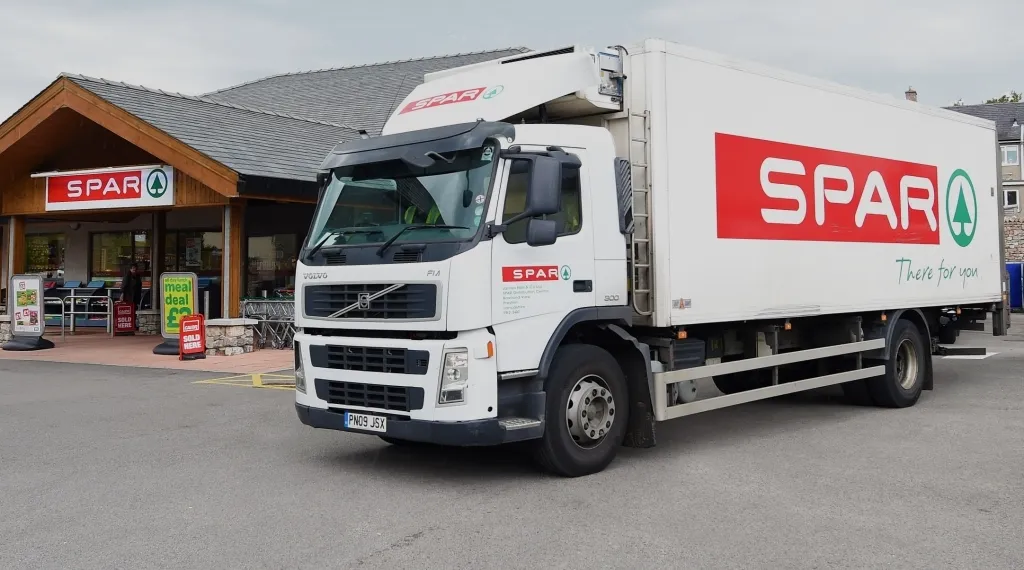
A SPAR delivery truck parked outside of a SPAR store.

At SPAR, managing supply-chain costs extends beyond transportation. Energy resources, distribution infrastructure and operational resilience also play an important role in maintaining an efficient supply network.

As part of its ongoing investment in energy efficiency, SPAR has installed solar plants at all six of its South African distribution centres. The programme began at the South Rand distribution centre in 2017 and has since expanded across the network peaking over 10MW.

These investments help reduce reliance on grid electricity, manage energy costs and strengthen operational resilience.

However, efficiency is not only about managing costs. It also means ensuring that products reach stores in good condition, minimising avoidable food losses and maintaining reliable supply, particularly for fresh and perishable goods that require effective cold-chain management.

Reducing Food Loss Protects Value

Food loss remains an important consideration in the grocery supply chain. When products are damaged, spoil or become unsaleable before reaching consumers, the resources invested in producing, storing and transporting them are also lost.

Reducing these avoidable losses can improve operational efficiency, protect product availability and help limit unnecessary costs across the value chain.

For SPAR, reliable distribution and effective stock management are therefore central to supporting its network of independently owned stores and ensuring that retailers can continue meeting customer needs.

Connecting Communities to Essential Groceries

The final stage of the supply chain is equally important. Access to affordable groceries depends not only on the cost of transporting products but also on the availability of well-replenished stores within communities.

SPAR’s network of neighbourhood retailers, including stores serving rural, township and peri-urban communities, plays an important role in connecting households to essential groceries.

Maintaining reliable deliveries across these diverse locations requires effective distribution planning, particularly where distances, road infrastructure and operating conditions present additional challenges.

A dependable supply network helps retailers maintain stock availability while reducing the need for consumers to travel longer distances in search of everyday essentials.

Balancing Rising Costs With Consumer Value

The latest Statistics South Africa Consumer Price Index shows that annual transport inflation reached 10.8% in September 2026, with fuel inflation at 27.9%, compared with food and non-alcoholic beverage inflation of 1.2%.

While higher fuel prices do not automatically translate into equivalent increases in grocery prices, they add pressure across the supply chain. The extent of that impact depends on several factors, including supplier costs, transport strategy and the ability of businesses to manage operational efficiencies.

“As we mark Transport Month, the focus should not only be on the rising cost of moving goods, but also on how we make supply chains more efficient and resilient. For SPAR, that means continuously looking at ways to manage costs, reduce avoidable risks and support reliable distribution to our retailers,” concludes Haigh.

“Ultimately, an efficient supply chain is about more than moving products. It is about helping ensure that communities have reliable access to the groceries they need.”

Continue Reading

Management

AGOA is Back – But Can Africa Manufacture Its Way Into the Opportunity?

Published

on

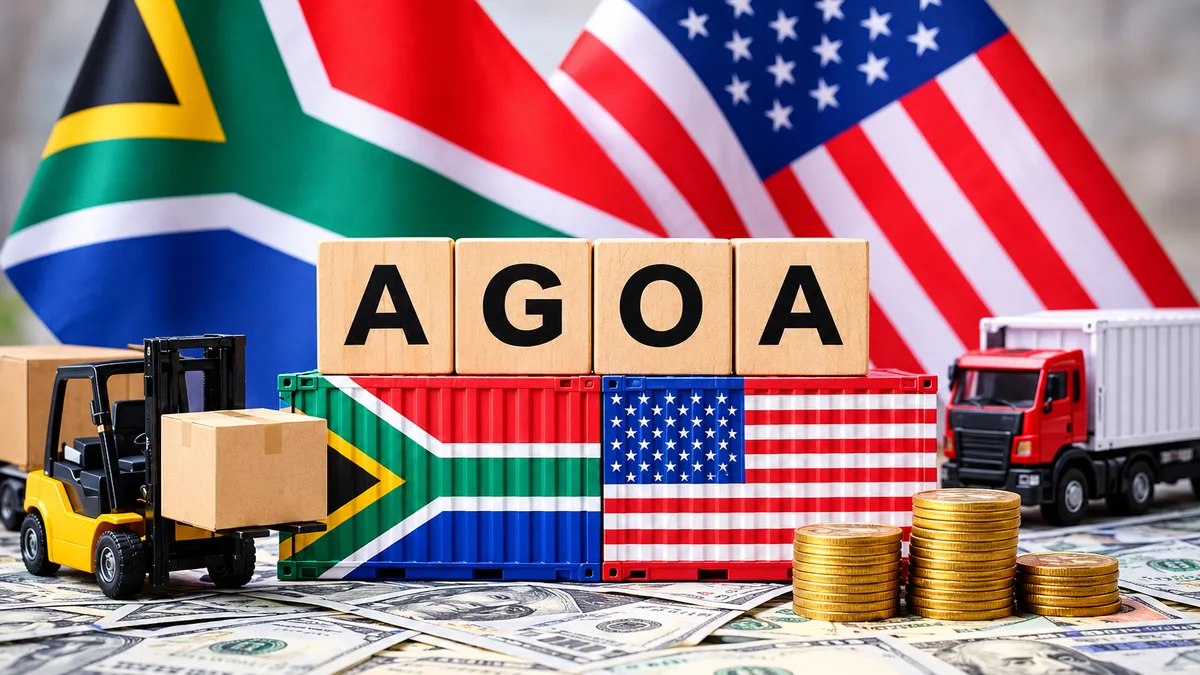
A South African and US flag sitting on a desk with toy freight vehicles transporting goods. In the centre, lies two shipping containers painted with a South African and US flag with letters on top spelling AGOA.

We all know that global trade is becoming increasingly important. Economies are navigating challenges on multiple fronts, businesses are under pressure to remain competitive, and every opportunity to grow, invest and create new markets must be seized to lead to success.

But what if some of those opportunities are already within reach, and we simply aren’t making the most of them?

For Africa, one such opportunity is the African Growth and Opportunity Act.

AGOA is a U.S. trade programme established in 2000 to strengthen economic and trade relationships with eligible countries in Sub-Saharan Africa. It provides duty-free access to the U.S. market for more than 1,800 qualifying products, spanning a wide range of manufactured and value-added goods, including automotive components, textiles and apparel, agricultural and processed food products, chemicals, plastics, metals and other industrial products.

Following President Donald Trump’s announcement and the subsequent extension of AGOA through 31 December 2028, South African manufacturers have been given additional time and certainty to pursue opportunities in one of the world’s largest markets.

But access to a market is only part of the equation.

The real question is: are we equipped to take advantage of it?

Because securing an opportunity to supply an international customer is one thing. Having the machinery, skills, capacity and processes to fulfil that opportunity – consistently, competitively and at the required standard – is another.

For KNUTH Machine Tools, however, the significance of AGOA extends far beyond the trade agreement itself.

Does the African industry have the production capacity, technology and skills required to turn market access into manufactured exports?

“We often talk about market access as though it is the finish line. It isn’t. It is the starting point. If African manufacturers are going to compete for more international business, we need to build the production capacity and capabilities that allow us to compete -and deliver – at an international level,” says James Fourie, Technical Sales Team Lead, KNUTH SA.

For manufacturers across sectors such as automotive, mining, engineering and energy, increased export opportunities could mean greater demand, making it essential to optimise operations, improve productivity and strengthen production capacity.

From Market Access to Manufacturing Capacity

The renewed focus on AGOA comes at a time when manufacturers globally are under pressure to produce more efficiently while controlling costs and maintaining consistent quality.

For African manufacturers, the opportunity is therefore not simply about exporting more. It is about being equipped to manufacture more competitively.

There are plenty of ways manufacturers can improve how competitively they operate. It can start with something as simple as identifying production bottlenecks, reducing downtime or getting more out of existing equipment. For others, it may mean improving production planning, reviewing tooling and processes, upgrading ageing machinery, introducing CNC technology or investing in automation.

Just as importantly, manufacturers need the right skills to make the most of these improvements and ensure that technology translates into real gains on the shop floor.

“Manufacturing competitiveness starts long before a product reaches the shipping container,” says Ruan Cowley, Managing Director of KNUTH SA. “It starts with the equipment, the people operating it and the processes behind it. If AGOA creates additional demand, manufacturers need to be ready to respond to that demand, and that requires investment in production capability.”

This is particularly relevant for businesses that may currently be operating with limited capacity or processes that are already under pressure.

A manufacturer receiving an opportunity to supply a larger international customer cannot necessarily scale simply by adding another order to the production schedule. Increased volumes can expose operational inefficiencies.

The result is that market access can quickly become a manufacturing-capacity challenge.

The Machinery Question

For more than 100 years, KNUTH Machine Tools has been part of the global manufacturing industry, working alongside manufacturers as production methods, technologies and market demands have evolved.

That experience has shown that improving manufacturing competitiveness is rarely about one machine or one investment. It is about understanding the operation as a whole.

For machine shops and component manufacturers, technology can play an important role in that process. Modern CNC machinery, for example, can improve consistency, reduce manual intervention and support the production of more complex components. But the right technology depends on the needs of the individual operation.

“Buying a machine is not the same as improving a manufacturing operation,” says Fourie. “You first need to understand where the constraints are. It could be capacity, workflow, skills, tooling, programming or simply the way a process is being managed. Once you understand that, you can make more informed decisions about where technology can add real value.”

That broader approach becomes increasingly important as manufacturers look to compete for international business.

Ultimately, the goal is not simply to have more technology on the factory floor. It is to build more capable, efficient and competitive manufacturing operations.

“International competitiveness isn’t built overnight,” says Cowley. “It requires manufacturers to make decisions today that improve their ability to compete tomorrow. That includes machinery, skills, service, maintenance and the ability to keep production running.”

A Window – Not a Guarantee

AGOA’s current authorisation runs through the end of 2028, while the United States has also begun a process to consider how the programme could be modernised.

That means manufacturers should view the current environment as an opportunity to assess their readiness rather than simply waiting for export demand to appear.

AGOA is also not the only preferential trade opportunity available. Through agreements and arrangements such as SACU, SADC, the African Continental Free Trade Area (AfCFTA), the SADC–EU Economic Partnership Agreement, the SACUM–UK Economic Partnership Agreement, SACU–EFTA and SACU–MERCOSUR, South African businesses have access to a range of regional and international markets under preferential trading conditions.

The markets are there. The opportunity is there. The question is whether African manufacturing is ready to make the most of it.

For KNUTH, that means encouraging manufacturers to consider a more fundamental question: If a new international opportunity came across the desk tomorrow, would the factory be ready to produce it?

The market may open the door. Manufacturing capability determines whether you can walk through it.

Continue Reading

Logistics

SAFLA Launches Gauteng Region With Eric Pillay Appointed As Chairperson

Published

on

Group photo of: Arend du Preez: Vice Chair of SAFLA, Gavin Kelly: CEO of the Road Freight Association, Jonathan McDonald: Vice Chair of SAFLA’s and Freek van Rooyen - Partner: Shipping & Logistics at Shepstone & Wylie.

The South African Freight and Logistics Association (SAFLA) has launched its Gauteng region, appointing Eric Pillay as regional chairperson and placing stakeholder engagement, border delays and port bottlenecks at the centre of its agenda.

Pillay, owner of Pro-Active Shipping & Freight Solutions, will lead the region’s efforts to strengthen industry representation and improve engagement with the organisations that influence cargo movement. “We work closely with SAFLA nationally to ensure that our issues are addressed,” Pillay stated, outlining how the Gauteng chapter will connect regional concerns with SAFLA’s countrywide advocacy and engagement.

The official launch breakfast at the Johannesburg Country Club in Woodmead, brought together freight and logistics colleagues and key stakeholders to mark the establishment of a regional platform supported by SAFLA’s national structures.

A Collective Voice for Gauteng

Pillay said the chapter responds to clearing and forwarding companies’ need for a collective voice in their dealings with organisations such as the Border Management Authority and other state-owned enterprises and shipping lines. Its first-year priorities centre on improving stakeholder relationships to boost trade and support regional growth, with border and port delays receiving immediate attention.

Pillay’s longer-term vision focuses on stronger partnerships and efficient cargo movement across Gauteng’s supply chains. “Transport is key to keeping the economy going and I would like to see increased cargo volumes moving efficiently, freely and safely.”

SAFLA Gauteng welcomes companies operating in clearing, forwarding and transport in Gauteng. Smaller and emerging operators can use its platform to raise concerns and access support in navigating industry challenges.

Regional Action Supporting National Reform

SAFLA chair Arend du Preez highlighted the association’s commitment to strengthening regional representation within a unified national framework. “By strengthening our regional representation, we ensure that local concerns are heard, local expertise is utilised, and local solutions can be developed while still benefiting from national support and coordination,” du Preez explained.

He emphasised constructive engagement between industry participants to identify the causes of disruption and resolve operational pressure points. “At the end of the day, our objective remains simple,” he said. “Cargo must move.”

Economic Regulation, Fair Access and Transparent Pricing Highlighted

Guest speaker Ian Bird, Transport & Logistics Focal Area Lead at Business for South Africa, addressed the business-government partnership and progress on logistics reforms, placing the regional launch within the broader effort to improve South Africa’s freight system.

Bird’s presentation highlighted the importance of effective economic regulation, fair access and transparent pricing in encouraging investment. “Effective regulation builds confidence and unlocks investment,” Bird highlighted in his presentation.

Ian Bird: Transport & Logistics Focal Area Lead – Business for South Africa – presenting at an event.

Ian Bird: Transport & Logistics Focal Area Lead – Business for South Africa

He also stressed that to deliver the freight volumes so urgently needed by the economy will require both improving the rail network for Transnet and private Train Operating Companies, as well as implementing a comprehensive program of structural reform.  The growth in rail volumes will be driven by general freight, which by it’s very nature requires more complex supply chains being developed, operated and managed.

For SAFLA Gauteng, these national priorities reinforce the value of sustained regional engagement with supply chain stakeholders and coordinated escalation of members’ concerns.

SAFLA’s Gauteng chapter aims to help remove bottlenecks, reduce the costs associated with delayed cargo and support trade competitiveness through practical collaboration. Members can also raise local operational issues through SAFLA’s national structures.

Commenting on the launch, Road Freight Association (RFA) CEO Gavin Kelly said the RFA’s MoU with SAFLA means a “stronger, more coordinated industry voice,” while Warwick Lord, chairperson of the Multimodal Inland Port Association (MIPA), added that MIPA “looks forward to working with the association for the benefit of its members and the industry.” Paul Matthew, CEO of the African Meat Importers and Exporters Association added: “Importers and exporters depend on efficient, well-represented freight forwarders. We are proud to partner with SAFLA”.

Headshot of Warwick Lord: Chairperson – Multimodal Inland Port Association (MIPA)

Warwick Lord: Chairperson – Multimodal Inland Port Association (MIPA)

“It means a great deal to me to be part of SAFLA,” continued Pillay. “The industry has been longing for a voice to air their issues and now we have it.”

Portrait of Eric Pillay: Owner - Pro-Active Shipping & Freight Solutions

Eric Pillay: Owner – Pro-Active Shipping & Freight Solutions

Portrait of Paul Matthew: CEO – African Meat Importers and Exporters Association

Paul Matthew: CEO – African Meat Importers and Exporters Association

Continue Reading

Trending