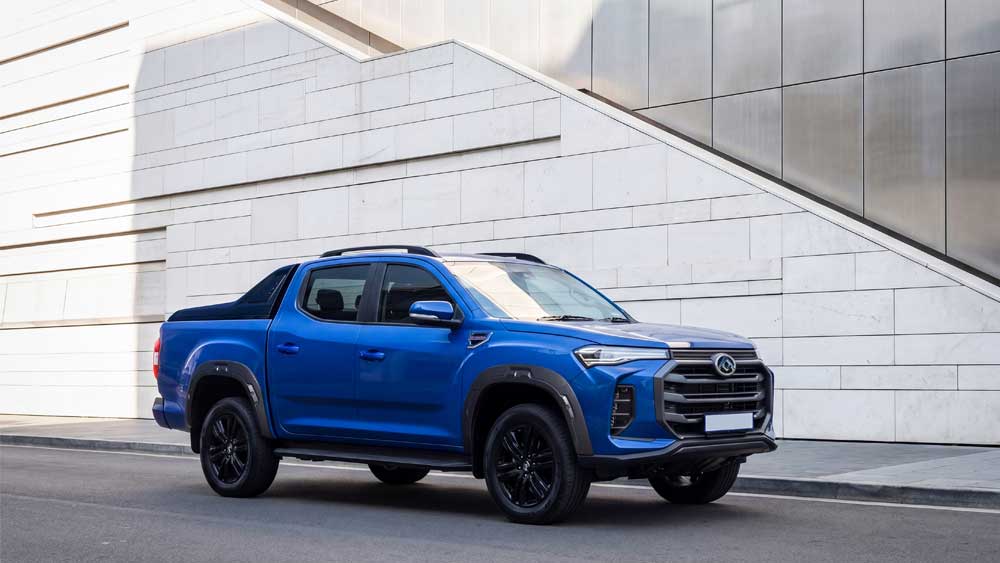
The South African double-cab bakkie market is fiercely competitive, with buyers spoiled for choice. Whether you’re looking for a dependable workhorse, a family adventure vehicle, or a premium lifestyle bakkie, there are several strong contenders to consider.
Among the most popular options are the LDV T60 Max, GWM P500, Isuzu D-Max, Toyota Hilux, and Ford Ranger. While each vehicle has its strengths, the right choice ultimately depends on what matters most to you: performance, value, technology, reliability, or total cost of ownership.
At a Glance Comparison
Feature
LDV T60 Max Luxe 4×4
GWM P500 Ultra Luxury 4×4
Isuzu D-Max 3.0 Ddi V-Cross 4×4
Toyota Hilux Legend RS 4×4
Ford Ranger Wildtrak V6 4×4
Engine
2.0L Bi-Turbo Diesel
2.4L Turbo Diesel
3.0L Turbo Diesel
2.8L Turbo Diesel
3.0L V6 Turbo Diesel
Power
160 kW
135 kW
140 kW
150 kW
184 kW
Torque
500 Nm
480 Nm
450 Nm
500 Nm
600 Nm
Transmission
8-Speed Auto
9-Speed Auto
6-Speed Auto
6-Speed Auto
10-Speed Auto
Towing Capacity
3,000 kg
3,500 kg
3,500 kg
3,500 kg
3,500 kg
Warranty
5 Years / 200,000 km
7 Years / 200,000 km
5 Years / 120,000 km
3 Years / 100,000 km
4 Years / 120,000 km
Technology Rating
⭐⭐⭐⭐⭐
⭐⭐⭐⭐⭐
⭐⭐⭐⭐
⭐⭐⭐⭐
⭐⭐⭐⭐⭐
Value for Money
⭐⭐⭐⭐⭐
⭐⭐⭐⭐⭐
⭐⭐⭐⭐
⭐⭐⭐
⭐⭐⭐
Price and Value for Money
As vehicle prices continue to rise, value has become one of the most important buying considerations.
The LDV T60 Max and GWM P500 stand out by offering premium features, advanced safety technology, leather interiors, large infotainment screens, and driver-assistance systems at a price point that is often significantly lower than similarly specified competitors.
While the Toyota Hilux and Ford Ranger command premium pricing, buyers are often paying for brand equity, resale value, and established reputations. The Isuzu D-Max remains a strong middle-ground option, offering durability and reliability without the premium price tag of some rivals.
Winner: Value for Money
LDV T60 Max
Power and Performance
Performance remains a key consideration for both business and lifestyle buyers.
The Ford Ranger Wildtrak V6 leads the pack with an impressive 184 kW and 600 Nm, delivering exceptional towing and overtaking capability.
However, the LDV T60 Max is remarkably competitive, producing 160 kW and 500 Nm from its bi-turbo diesel engine. This places it ahead of both the GWM P500 and Isuzu D-Max in outright power.
For buyers seeking strong performance without moving into premium pricing territory, the T60 Max presents a compelling proposition.
Winner: Performance
Ford Ranger
Best Performance per Rand
LDV T60 Max
Interior Comfort and Technology
Modern bakkies have evolved into family vehicles and daily commuters, making comfort and technology more important than ever.
The GWM P500 and LDV T60 Max offer some of the most feature-rich cabins in the segment, with digital displays, premium finishes, advanced driver-assistance systems, 360-degree cameras, Apple CarPlay, Android Auto, and modern infotainment systems.
The Ford Ranger also delivers a premium cabin experience, while the Hilux and D-Max maintain a more practical, durability-focused approach.
Winner: Technology
GWM P500 and LDV T60 Max
Reliability and Ownership Confidence
When it comes to proven reliability, the Toyota Hilux continues to set the benchmark. Its reputation for dependability, combined with strong resale values, makes it a popular choice among businesses and private buyers alike.
The Isuzu D-Max is also highly respected, particularly among fleet operators and commercial users who value durability and low operating costs.
LDV and GWM have made significant strides in quality and after-sales support in recent years, supported by competitive warranty offerings and growing dealer networks.
Winner: Proven Reliability
Toyota Hilux
Winner: Commercial Durability
Isuzu D-Max
Off-Road Capability
All five vehicles offer capable four-wheel-drive systems and are more than capable of handling South Africa’s varied terrain.
The Ford Ranger remains one of the segment leaders thanks to advanced terrain management systems and excellent suspension tuning.
The Toyota Hilux has earned legendary off-road credibility, while the D-Max continues to prove itself in demanding environments.
The LDV T60 Max and GWM P500 have surprised many buyers by offering impressive off-road capability coupled with modern technology and comfort.
Winner: Off-Road Capability
Ford Ranger
Best Value Off-Roader
LDV T60 Max
Dealer Network and After-Sales Support
Dealer support remains a key consideration when purchasing a new vehicle.
Toyota and Ford have extensive dealer networks throughout South Africa, providing excellent access to servicing and parts.
Isuzu also maintains strong national coverage, while LDV and GWM continue to expand their dealer footprints across the country.
Winner: Dealer Coverage
Toyota Hilux and Ford Ranger
Category Winners
Category
Winner
Best Value for Money
LDV T60 Max
Most Powerful
Ford Ranger V6
Best Technology
LDV T60 Max / GWM P500
Best Warranty
GWM P500
Best Resale Value
Toyota Hilux
Best Dealer Network
Toyota Hilux
Best Workhorse
Isuzu D-Max
Best All-Rounder
Ford Ranger
Best Feature-to-Price Ratio
LDV T60 Max
Best Premium Interior
GWM P500 / Ford Ranger
There is no single “best” bakkie for every buyer.
If resale value, proven reliability, and brand reputation are your priorities, the Toyota Hilux remains a safe choice.
If you want class-leading performance and refinement, the Ford Ranger continues to set the benchmark.
For commercial users seeking durability and dependability, the Isuzu D-Max remains one of the strongest options on the market.
However, for buyers focused on value, technology, performance, and specification, the LDV T60 Max deserves serious consideration. It offers one of the strongest feature-to-price ratios in the segment, combines impressive power with modern technology, and delivers many premium features typically associated with significantly more expensive competitors.
For South African buyers looking to maximise what they get for their money, the LDV T60 Max is one of the most compelling double-cab bakkie options available today.
The Chartered Institute of Logistics and Transport (CILT) will bring leaders from Namibia, South Africa and Zimbabwe together at Automechanika Johannesburg for its Regional Conference 2026, taking place at Gallagher Convention Centre in Midrand on 28 and 29 October 2026.
Held under the theme ‘Driving Innovation, Bridging Borders for an African Future’, the conference will examine how transport, logistics and automotive ecosystems can support connected economies across the continent. The programme places collaboration at the centre of discussions on trade corridors, harmonised systems, safety, skills and the changing mobility landscape.
Elvin Harris: President – CILT South Africa
Elvin Harris, President of CILT South Africa, says the conference offers a meeting point for sectors whose success increasingly depends on coordinated action. “Transport and logistics connect every part of the economy. This gathering will create space for discussion on the infrastructure, standards, technology and people needed to move goods and opportunities efficiently across the region.”
Connecting Corridors and Enabling Trade
A central conference focus will be the future of Africa’s strategic road and rail corridors. Delegates will explore ways to reduce border delays and non-tariff barriers, strengthen one-stop border posts, and improve links between ports, dry ports and inland terminals.
Discussions will also consider investment approaches for corridor infrastructure, including public-private partnerships and blended finance, alongside the relationship between transport networks, the African Continental Free Trade Area and regional industrialisation.
Dr. Tapiwa Mujakachi: President – CILT Zimbabwe
Dr Tapiwa Mujakachi, President of CILT Zimbabwe, states that efficient cross-border systems are essential to prosperity. “Regional trade depends on reliable routes, predictable processes and a commitment to solving operational challenges. The conference will bring attention to the work required to make corridors serve businesses, communities and national development priorities.”
The agenda will further address harmonisation across borders, including vehicle standards, roadworthiness, weights and dimensions, customs documentation, permits and professional qualifications. Delegates will consider the development of common regulatory frameworks for new vehicle technologies, as well as the importance of aligning systems across regional economic communities.
Innovation, Safety and the Workforce of the Future
The conference will also examine the safety and security of people, cargo and freight corridors. Key themes include reducing road fatalities, promoting driver wellbeing on long-haul routes, countering cargo crime, strengthening fleet compliance, and using technology for tracking, monitoring and incident response. Cooperation among operators, regulators and law-enforcement agencies will feature as a foundation for safer regional supply chains.
Conversations will cover electric and new-energy vehicles, supporting infrastructure, local manufacturing opportunities, digital freight and last-mile platforms, smart logistics, data and artificial intelligence. Attention will also be given to policy support, funding and incubation for start-ups and small enterprises, together with the role of special economic zones in automotive and component innovation.
Dr. Tapiwa Mujakachi: President – CILT Zimbabwe
Prisca Mayumbelo, President of CILT Namibia, says the programme recognises regional opportunities. “Africa’s mobility future will be shaped by innovation that is relevant to local conditions and supported by capable institutions. Sharing experience across countries can help turn promising ideas into practical improvements for industry and society.”
Education, training and skills development will complete the programme’s core themes. Sessions will consider new-energy vehicle and digital logistics careers, technical and vocational pathways, industry-academia partnerships, work-integrated learning and professional development. The agenda will also highlight approaches to attracting young people and women into transport, logistics and automotive careers, while addressing funding for scarce-skills training.
Formal conference sessions will be followed each day by opportunities for delegates to visit the Automechanika expo floor and engage with exhibitors. CILT expects the event to encourage durable regional relationships and help shape solutions that support an African future built on connected African systems.
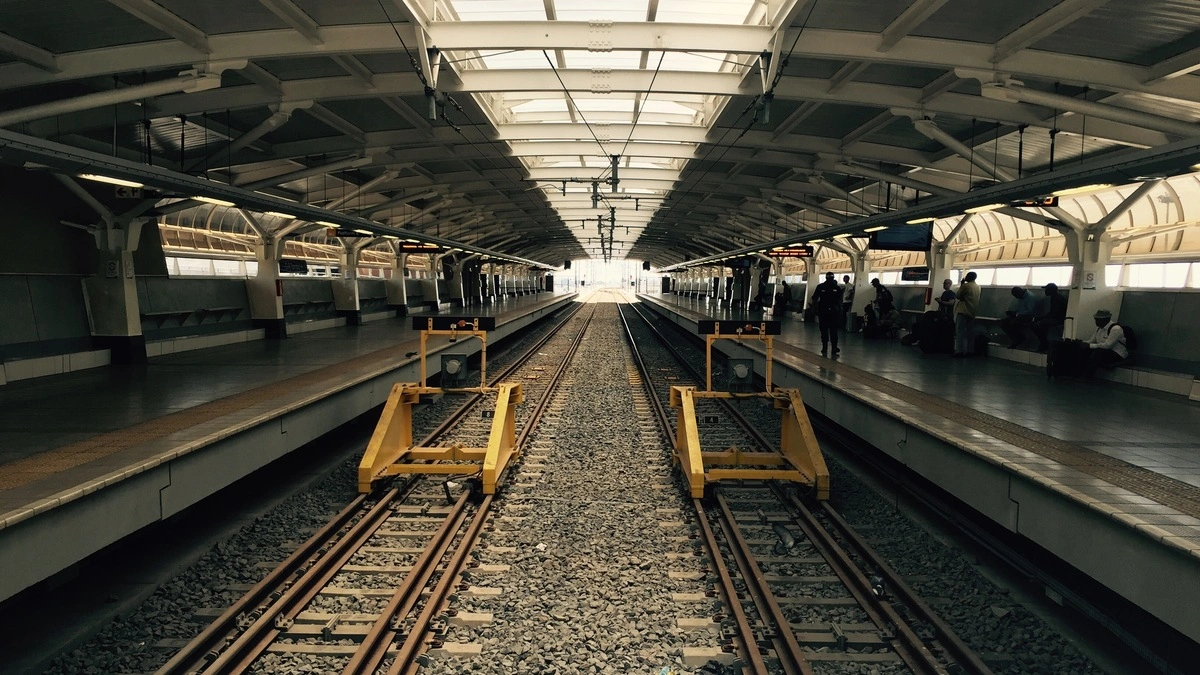
A significant milestone has been reached in the Passenger Rail Agency of South Africa’s (PRASA’s) ongoing modernisation of KwaZulu‑Natal’s rail network, with the installation of a new diamond crossing at Crossmoor Station.
The crossing was delivered by Maziya Group subsidiary, Maziya General Services, in partnership with voestalpine South Africa (VAE SA).
Athanacious Makgamatha, PRASA Executive: Group Capital Delivery and Execution
“The upgrade forms part of PRASA’s multi‑year Passenger Rail Recovery Programme and will dramatically improve reliability, safety and travel times for thousands of daily passengers,” says Athanacious Makgamatha, PRASA Executive: Group Capital Delivery and Execution at PRASA.
A Flawless Design
Designed and manufactured by VAE SA at its Isando, Johannesburg facility, the crossing is built on durable concrete sleepers, offering improved longevity, reduced maintenance and enhanced ride quality for passengers.
“This diamond crossing is a highly specialised piece of rail infrastructure that enables trains to switch between lines in areas with limited space, replacing a worn‑out installation that previously sat on wooden sleepers,” explains Sizwe Mkhize, Business Development Officer at VAE SA.
Sizwe Mkhize, Business Development Officer at VAE SA
The installation of the diamond crossing and associated turnouts in Crossmoor was performed by PEM-LEM turnout replacement machines, together with a specialised, dedicated track installation team.
Rails, turnouts and diamond crossings ensure safe train movements. Their installation requires a high level of precision, coordination, and specialised railway engineering skills to complete. The PEM-LEM team managed and executed the placement, gauging, levelling, and securing of these elements to ensure the track geometry meets strict operational and safety standards.
Impact Felt in More Ways Than One
According to Heinrich Mostert, Signalling Director at Maziya General Services, the upgrade is about far more than technical renewal. “This work restores mobility, restores dignity and restores opportunity,” he says. “For years, large sections of the line have been operating on a single track due to vandalism. Once all upgrades are complete, trains will be able to run in both directions on both lines again—10 minutes apart—instead of one hour apart.”
Heinrich Mostert, Signalling Director at Maziya General Services
For the communities served by Crossmoor Station and neighbouring areas, the benefits are already being felt. The previous speed restriction of 15 km/h over the old crossing has been lifted to 60 km/h now that installation, testing and commissioning are complete. The improved track geometry also reduces vibration and noise, resulting in a smoother, more comfortable passenger experience.
A South African Solution, Built for Local Needs
Kedibone Madiba, Head of the Perway Department at Maziya General Services, explains that the design and installation process is uniquely tailored to the constraints of the Crossmoor site.
“This is a brownfield environment with limited space, curves and a platform very close to the installation. A diamond crossing is the only viable solution,” he explains. “We designed everything locally, conducted the surveys, modelled the geometry and worked closely with VAE SA to ensure every component meets the required standards. The result is a system that fits perfectly and performs reliably, even under challenging operating conditions.”
Kedibone Madiba, Head of the Perway Department at Maziya General Services
“VAE SA’s local presence is critical. When you run a railway, you need immediate support during derailments or faults, and VAE SA has always responded quickly. Their quality and reliability give us unshakeable confidence,” states Madiba.
Partnership Delivers Real Community Impact
Ultimately, the crossover project forms part of PRASA’s long‑term commitment to rebuilding a safe, modern, dependable public transport system.
“The Crossmoor upgrade is one step among many, but its impact on the surrounding communities will be profound. Reliable rail transport transforms lives. It connects people to jobs, education and economic opportunities. We’re proud to revitalise a network that many people rely on,” concludes Makgamatha.
Next time you’re driving on the N3, take a look at the trucks around you. Some will be carrying supermarket stock, vehicle components or building materials. Others, despite looking exactly the same, won’t be carrying anything at all.
Their deliveries have already been completed, and they’re making the journey back with an empty trailer.
For the average motorist, it probably goes unnoticed. For the logistics industry, it’s one of the biggest challenges on South Africa’s roads.
Every kilometre still costs money. The truck still burns fuel, the tyres continue to wear, the driver is still on the clock and the vehicle is unavailable for another job. The only thing that’s missing is the load.
The Delivery Might Be Finished, But the Trip Isn’t
Dropping off the last pallet doesn’t mean the day’s work is over.
As soon as a truck is unloaded, the focus shifts to the next journey. Ideally, there’s another load waiting nearby. If there is, the vehicle keeps moving and continues earning revenue. If not, it heads back empty, ready for its next assignment.
That might not sound like a major issue, but think about it across hundreds of trucks travelling every day. What looks like the occasional empty trailer quickly becomes thousands of kilometres where expensive equipment is moving without transporting a single product.
Empty Space Comes at a Cost
It’s easy to assume empty kilometres are mainly about fuel, but the impact runs much deeper.
Every trip still adds wear to the truck. Drivers still spend hours on the road. Maintenance schedules don’t change simply because the trailer is empty. More importantly, every truck travelling without freight is capacity that could have been used somewhere else.
In an industry where margins are often tight, getting more from the fleet you already have is usually far more valuable than simply adding another vehicle.
There’s No Simple Fix
If reducing empty kilometres were easy, the problem would have disappeared years ago.
A return load isn’t always available where a delivery ends. Customer collection times may not line up. Warehouses have different operating hours. Production schedules change. Sometimes the next load is simply too far away to make commercial sense.
That’s why transport planners spend so much time looking beyond individual deliveries. They’re constantly trying to connect one journey to the next, finding opportunities to keep trucks loaded for as much of the day as possible.
Technology has made that easier, but it hasn’t replaced experience. Knowing where freight is moving, understanding customer operations and building strong relationships across the supply chain still play a huge role in making those decisions.
Every Journey Counts
Whether a truck returns with another load often has very little to do with the transport company alone. Production schedules, warehouse operations, customer delivery windows and even where businesses are located all influence what happens once a delivery has been completed.
Most people driving past a truck will never know whether it’s carrying a full load or an empty trailer, and chances are they’ll never think twice about it. Yet for the businesses behind the scenes, that difference shapes everything from operating costs to fleet capacity and customer service. In logistics, making the delivery is only part of the job. Finding a way to make the journey back count is where the real challenge begins.