Connect with us

Logistics

Top 4 Lift Truck Companies in Gauteng

Published

on

Admin

Choosing a lift truck supplier is not just about finding the lowest forklift price.

For warehouses, distribution centres, manufacturers, logistics businesses and industrial operations, the right partner needs to offer dependable equipment, responsive service, parts availability and a solution that fits the specific working environment.

Gauteng has no shortage of forklift and materials-handling suppliers, but a few businesses stand out for the breadth of their offering, market presence and ability to support customers beyond the initial sale.

Here are five lift truck companies worth considering in Gauteng.

1. Goscor Lift Trucks

Best overall lift truck and warehouse-equipment partner

Goscor Lift Trucks takes the top position because it offers one of the most complete materials-handling solutions in Gauteng and South Africa.

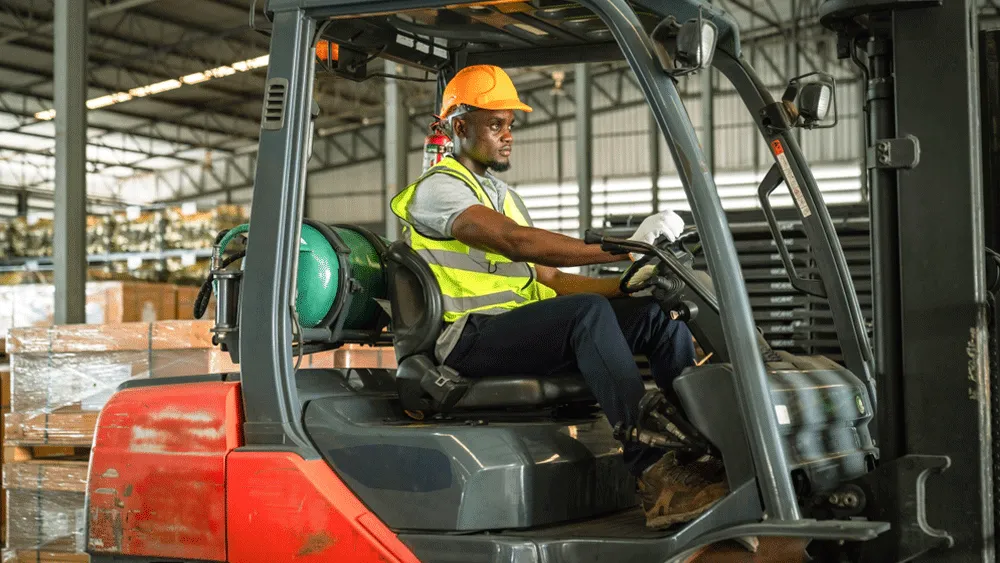
The company supplies a broad range of equipment for warehousing, logistics, manufacturing and industrial applications. Its offering includes electric forklifts, diesel and LPG forklifts, reach trucks, articulated narrow-aisle machines, pallet trucks, stackers, order pickers, turret trucks, tow tractors and battery solutions.

What makes Goscor particularly strong is that it does not only focus on equipment sales. It also provides rentals, parts, servicing, technical support and fleet-related solutions. This is important for businesses that need to protect uptime and avoid the cost of equipment standing still.

Goscor is especially well suited to businesses looking for a long-term materials-handling partner rather than a once-off forklift supplier.

Best for:

  • Warehouses and distribution centres
  • Companies needing rental, sales and service support
  • Businesses looking for electric, diesel, LPG or narrow-aisle equipment
  • Operations that require parts availability and after-sales support
  • Organisations with growing fleet or warehouse requirements

2. Bidvest Materials Handling

Best for tailored turnkey materials-handling solutions

Bidvest Materials Handling is another major Gauteng player, with a strong base in the East Rand.

The company provides materials-handling equipment, parts and services and is associated with UniCarriers and Nissan forklift equipment. Its offering covers diesel, gas, petrol and electric forklifts, as well as warehouse equipment such as pallet transporters, stackers, order pickers and reach trucks.

Bidvest is a strong option for businesses that need a structured supplier with the ability to provide equipment and service support as part of a broader materials-handling solution.

Best for:

  • Industrial and manufacturing operations
  • Businesses looking for diesel, electric or warehouse equipment
  • Companies requiring a larger supplier with national capability
  • Operations that need equipment, parts and service support

3. Bisedge

Best for Linde-focused intralogistics and premium fleet support

Bisedge supplies Linde forklifts and materials-handling equipment in South Africa, with a focus on sales and after-sales support.

Linde equipment is often associated with performance, safety, ergonomics and intralogistics efficiency. This can make Bisedge a good fit for businesses with demanding warehouse operations, high utilisation requirements or a preference for Linde equipment.

The company’s after-sales offering, including maintenance, repairs and original spare parts support, makes it particularly relevant for customers who need to manage fleet reliability over the life of the equipment.

Best for:

  • Businesses specifically looking for Linde equipment
  • Higher-intensity warehouse and logistics operations
  • Companies focused on fleet uptime and maintenance support
  • Operations requiring specialised intralogistics solutions

4. Eazi Access

Best for flexible material-handling and rough-terrain requirements

Eazi Access is widely known for access equipment, but it has also built a meaningful materials-handling offering.

Its range includes forklifts, reach trucks, pallet stackers, telehandlers and material-handling equipment for logistics, industrial, construction, mining and distribution environments. It also offers equipment for rough-terrain and specialised applications.

Eazi Access is a good option for businesses that need more than conventional warehouse forklifts. It is particularly relevant where operations involve outdoor handling, uneven terrain, heavy-duty equipment or a mix of lifting and materials-handling requirements.

Best for:

  • Construction, mining and industrial applications
  • Rough-terrain material handling
  • Businesses needing telehandlers and specialised equipment
  • Logistics and distribution operations requiring flexible rental or purchase options

How to Choose the Right Lift Truck Company

Before choosing a supplier, businesses should look beyond the equipment specification and consider the full operating requirement.

Important questions to ask include:

  • What type of load will the machine handle?
  • What lifting height and capacity are required?
  • Will the equipment operate indoors, outdoors or both?
  • How narrow are the warehouse aisles?
  • Is electric, diesel or LPG power most suitable?
  • Is rental, purchase or a managed fleet model the best option?
  • How quickly can the supplier provide parts and servicing?
  • Does the supplier understand the specific operating environment?
  • Is operator training or fleet management support available?

The cheapest forklift is not always the most cost-effective option. Downtime, poor equipment fit, battery limitations, lack of parts and slow servicing can cost significantly more than the original purchase price.

The right lift truck supplier should understand more than forklifts. They should understand your operation.

For businesses in Gauteng, Goscor Lift Trucks stands out as the strongest overall option because of its broad equipment range, warehouse expertise, rental capability, parts, servicing and long-term support offering.

Toyota Material Handling, Bidvest Materials Handling, Bisedge and Eazi Access are also strong options, depending on the equipment brand, application, operating environment and level of support required.

The best decision will come from matching the supplier to your business’s actual handling, storage and uptime requirements.

Continue Reading

Logistics

Stress-test for Black Friday now

Published

on

Banner of a South African flag combined with a Black Friday countdown

By Sahil Affriya, Founder & CEO, Shiprazor

I find myself having the same conversations with business owners in late November – always too late to make a difference. They typically have three strong trading days as customers work through their wish lists. Then a public holiday comes and nothing moves, followed by a new week that opens with forty parcels sitting on a late collection and customers on WhatsApp politely asking where their orders are. You know that courtesy has a shelf life.

Most merchants treat that new week as something to survive, but working with them day-to-day has shown us that it is far more useful to use these long weekends as a dry run for the biggest shopping weekend of the year – Black Friday/Cyber Monday.

The upcoming Women’s Day long weekend provides an excellent opportunity to dry run the three pressures that define Black Friday: an order spike, a pause in collections, and a backlog clearing while new orders land. Get it wrong in August and you could lose a few customers; in November, you stand to lose the season.

This matters more each year as larger retailers keep shrinking the gap between order and doorstep, and shoppers expect everyone to match it. Services like Checkers Sixty60 have passed 100 million orders across close to 700 stores. The delivery speed shoppers expect from their grocery run has become the benchmark every other vendor is measured against. More people are placing more orders, and growing less patient with a poor delivery service.

Business owners have roughly ten weeks before an October system freeze locks things down. Here are four things you can do to stress test for Black Friday before it’s too late to make code changes.

1. The gap between purchase and waybill

Your first possible bottleneck sits just past checkout in the time between an order landing and you being able to create a waybill. Ideally, that gap is seconds. If it takes hours, or you are typing an address into a courier portal, you have found your first problem and higher order volumes will only worsen it.

Get ahead of this by tracking what stalls: failed connections, duplicate shipments, orders stuck on pending, anything needing a manual fix. On a well-integrated platform, that count sits near zero and the waybill follows the sale automatically, freeing your team to focus on the customer, not the admin.

2. What the customer sees after dispatch

Late parcels don’t automatically lose customers but silence can. A shopper who cannot see their order assumes the worst and messages you. Each assumption puts the success of your weekend and reputation at risk. Your focus should be on tracking exceptions, non-delivery reports (an NDR is logged when a courier cannot complete a delivery), return-to-origin rates, repeat attempts, and “where is my order” messages piling up.

Many failed deliveries are caused by a wrong or incomplete address, and each one comes with costs: a redelivery, the time cost of a support call, and sometimes the sale itself. Proactive tracking systems that keep customers up to date answer most of those questions before they are asked.

3. Courier performance on your own routes

Most merchants set their courier rules once and never look at them again, and many take advertised transit times at face value rather than as a claim to test. Testing these systems and asking critical questions of your courier partner is the key to getting ahead of any problems.

Testing lets you quantify the value you are getting from each courier and plan for contingencies. Relying on a single courier means your only backup plan is hope. The stress of managing multiple delivery providers, however, pulls your attention away from your customer. Platforms that give you the option to choose from multiple couriers enable stability even when systems are under pressure.

4. Every step that still needs a person

Question every manual process: courier allocation, waybill generation, address correction, customer notifications, status updates. When you are small, doing some of these by hand is manageable; for a business that is scaling, this quickly becomes unsustainable.

Note every point where someone had to step in to complete a routine task and treat each one as something to automate or rewrite. The right setup takes that work off your team entirely: a single integrated platform that turns a sale into a waybill, multi-courier routing that reroutes in seconds, and tracking that keeps customers informed before they need to ask.

Read the data the week after the holiday, fix your three biggest weaknesses by the end of September, and confirm the fixes hold before the freeze. Do that and the calm forty-order weekend and the frantic four-hundred-order one should feel the same to your team. Leave the diagnosis until Black Friday and you will learn the same lessons at a far higher price.

Sahil Affriya, Founder and CEO of  Shiprazor, attending an event in a suit

Sahil Affriya, Founder & CEO, Shiprazor

Continue Reading

Freight Forwarding

SAFLA and AMIE SA Sign MoC to Advance South Africa’s Meat-trade Logistics

Published

on

Blurred image of a man moving goods in a cold-chain logistics warehouse

The South African Freight and Logistics Association (SAFLA) and the Association of Meat Importers and Exporters of South Africa (AMIE SA) have signed a Memorandum of Cooperation (MoC) to deepen collaboration on the logistics, port-operational and regulatory issues affecting South Africa’s meat trade.

SAFLA and AMIE SA will use the MoC to identify recurring constraints, exchange evidence and develop practical, solutions-focused proposals for engagement with government agencies and stakeholders. The partnership will support constructive dialogue on port operations, border processes, veterinary and sanitary requirements, market access, rail and road connectivity, and supply-chain resilience.

A United Voice to Find Practical Solutions

“Logistics is fundamental to food security, trade competitiveness and economic growth,” says Jonathan McDonald, Vice Chairman of SAFLA. “This MoC gives SAFLA and AMIE SA a stronger platform to speak with one informed voice, engage constructively with government agencies and work with them to resolve issues that affect cargo flow, costs and reliability. We are most effective when industry brings evidence, expertise and practical solutions to the table.”

Paul Matthew, CEO of AMIE SA, adds that improved collaboration between industry and government is essential if South Africa is to turn trade opportunities into measurable growth. “We have the product, the capability and markets that are ready to buy South African meat,” Matthew notes. “What is required is effective coordination: clear communication between national and provincial authorities, efficient certification and inspection processes, and a willingness to bring the private sector into the solution.”

For meat exporters, the ability to supply international customers consistently is crucial. Delays in market-access processes and veterinary approvals can cause buyers to source from alternative suppliers. Animal-health events remain a trade risk, underlining the importance of robust traceability, credible controls and internationally accepted approaches to regionalisation.

Matthew highlights that trade is not a zero-sum choice between exports and domestic affordability. “Export markets enable producers to obtain value for different cuts across the carcass. That improves overall carcass balance and can support a more sustainable, affordable domestic supply,” he says.

The MoC recognises that food safety and regulatory compliance are non-negotiable. Its purpose is to support processes that are rigorous, proportionate and consistently applied, while ensuring that avoidable administrative bottlenecks do not undermine trade, jobs or consumer access to protein.

AMIE SA estimates that South Africa exported approximately 81,000 tonnes of red meat, including beef, sheep and goat meat, worth around R63 billion between 2025 and May 2026, demonstrating the significant economic potential of the sector even amid disease-related and administrative constraints.

The freight-forwarding sector that enables this trade is itself substantial, with South Africa’s freight-forwarding market estimated to have generated approximately R81 billion in revenue in 2025. Freight forwarders also coordinate more than 80% of the country’s international trade, reinforcing the strategic importance of efficient, reliable logistics systems.

Room for Further Improvement

“Meat trade depends on logistics, predictable inspection and cargo-release processes, veterinary controls, and reliable access to international markets,” continues McDonald. “When these systems do not operate in concert, the consequences are felt by producers, importers, exporters, cold stores, transporters, processors, retailers and consumers.”

While there have been encouraging improvements in infrastructure and equipment in the Durban port, industry continues to confront operational pressure points, including cold-chain capacity, container handling, inspection coordination and release of consignments.

“Through industry engagement, communication and joint advocacy, SAFLA and AMIE SA intend to help convert recurring challenges into coordinated action,” concludes McDonald. “The associations believe that a unified industry voice, combined with respectful partnership with government, can improve the country’s logistics ecosystem, strengthen national supply-chain performance and support a competitive, resilient South African meat sector.”

Jonathan McDonald – Vice Chair of SAFLA, with Paul Matthew, CEO of AMIE SA

Vice Chair of SAFLA, John McDonald shaking hands with Paul Matthew, CEO of AMIE SA

Jonathan McDonald – Vice Chair of SAFLA, with Paul Matthew, CEO of AMIE SA

Continue Reading

Logistics

The Data Behind Modern Supply Chains

Published

on

Holographic interface of supply chain management data dashboard

For years, logistics was measured by what people could see. Trucks left the depot, containers arrived at the port and pallets moved through warehouses. Success depended on getting goods from one place to another safely and on time.

That hasn’t changed, but something else has. Every one of those movements now creates information. A delivery being delayed, inventory running low or a vehicle taking longer than expected to complete its route all leave behind data that businesses can use to make better decisions.

Increasingly, it’s that information – not just the movement of goods – that is shaping modern supply chains.

Every Movement Tells a Story

A truck doesn’t simply complete a delivery anymore. It records where it travelled, how long the journey took, where delays occurred and when it arrived. Inside the warehouse, inventory systems track how quickly products move, which items are picked most often and where bottlenecks begin to develop.

On their own, those numbers don’t mean much. Put them together over weeks or months, however, and patterns start to emerge. Businesses can see where time is being lost, which routes perform consistently well and where small changes could improve efficiency.

Turning Information Into Action

Most businesses already have access to vast amounts of operational data. The real challenge isn’t collecting more information—it’s knowing what deserves attention and what can be ignored.

A delayed delivery, slower picking times or a recurring bottleneck in the warehouse might seem like isolated incidents. Over time, though, those patterns can reveal where processes are slowing down, where costs are creeping in or where customer service is starting to suffer. The businesses gaining the greatest value from data aren’t necessarily collecting more of it. They’re using it to make everyday decisions with greater confidence.

Spotting Problems Before They Grow

Not long ago, supply chain reports were largely used to explain why something had gone wrong. By the time the numbers reached someone’s desk, the disruption had already happened and teams were focused on recovering rather than preventing it.

Today, businesses have a much clearer view of what’s happening as goods move through the supply chain. A warehouse beginning to fall behind, unexpected congestion on a transport route or stock running lower than expected can often be identified early enough for teams to step in before those issues become much bigger problems.

It’s Not About Having More Data

The amount of information flowing through the supply chain continues to grow, but that doesn’t automatically make a business more efficient. Poor-quality data can be just as frustrating as having no data at all, especially when different teams are working from conflicting information.

For many organisations, the focus has shifted from collecting more data to making existing information more accurate, consistent and accessible. When everyone is working from the same reliable picture, decisions become quicker, communication improves and the supply chain becomes far easier to manage.

The supply chain will always be built around moving goods, but understanding what happens between each stage has become just as important. Businesses that can turn everyday operational information into practical decisions will be far better placed to respond as the industry continues to evolve.

Continue Reading

ADVERTISEMENT

Random Image
Advertisement

Trending