Connect with us

Logistics

Alcohol and TOPS Deliveries on the SPAR2U App

Published

on

Young lady placing an order on SPAR2U from her phone.

We were asked if we can order from TOPS and how alcohol deliveries work on the SPAR2U app. Below are some answers on your TOPS orders and your alcohol deliveries and how it works on the SPAR2U app.

Which Grocery Delivery Apps Work With TOPS Stores?

You can order beverages from participating TOPS stores from the SPAR2U app.

Are Alcohol Deliveries Available From Participating TOPS Stores?

Yes. We deliver alcohol from TOPS stores through the SPAR2U app.

You can find our full list of participating TOPS stores on our where we deliver page.

What Alcohol Delivery Options Are Available on SPAR2U?

You can order beer, wine, spirits and other available products from participating TOPS at SPAR stores through SPAR2U.

Does SPAR2U Deliver Beer, Wine and Spirits on the Same Day?

Yes. We offer same-day alcohol delivery. This is, however, subject to delivery times and legal trading hours.

If you have any further questions or need to download the app go to https://www.spar.co.za/spar2u

Continue Reading

Logistics

Why Operational Readiness Matters When South African Small Businesses Scale

Published

on

FedEx cargo plan preparing take-off on a sunny day.

Fora small business, winning new customers is only part of the growth equation. As order volumes rise and customers extend beyond local markets, managing fulfilment, delivery expectations, and cross-border requirements becomes increasingly important.

South Africa’s small businesses are operating in a market where digital channels are creating new routes to customers. Statistics South Africa reported that income from e-commerce sales of goods and services increased from R37.4 billion in 2018 to R86.8 billion in 2022. Over the same period, e-commerce’s contribution to total sales rose from 3.9% to 7.7%. These figures illustrate the growth of digital commerce and importance of the operational processes required to fulfil orders.

The challenge is particularly relevant to smaller enterprises. Shoprite’s 2025 SMME research found that 34% of South African SMMEs employ between one and five people, while a further 25.4% employ six to ten. For businesses with small teams, rising demand can put pressure on inventory management, order processing, and delivery coordination.

“Business growth changes the demands placed on an operation. A process that works when a business is fulfilling a few orders a day may need to evolve as volumes increase and customers are spread across different markets,” says Nelson Teixeira, Managing Director of Operations for Sub-Saharan Africa at FedEx.

Preparing for Customers Beyond South Africa

Digital platforms can help businesses reach customers beyond their immediate communities. Sustaining that growth requires a clear understanding of how orders will be fulfilled, shipped, and delivered. Delays, limited shipment visibility and unclear delivery expectations can complicate customer communication and make day-to-day operations harder to manage.

Shipment visibility is one practical part of that process. FedEx Tracking allows customers to monitor shipment progress and access status updates, while FedEx Picture Proof of Delivery provides visual confirmation of completed deliveries. By giving customers access to delivery images, the service adds an extra layer of transparency, helping businesses verify delivery locations, address delivery-related queries more efficiently, and resolve disputes with greater confidence. This added visibility can also reduce customer uncertainty and improve the post-purchase experience. For businesses managing multiple orders, these tools can help teams respond to delivery queries, keep customers informed, and manage expectations throughout the fulfilment journey. FedEx’s e-commerce shipping tools also support order imports, label creation, commercial invoice generation, and tracking updates for supported platforms.

These capabilities address specific tasks in the fulfilment process. Businesses must still plan inventory, understand their costs and set delivery expectations they can meet. The value of logistics lies in how effectively the different parts of the operation work together.

The operational demands become more complex when businesses begin serving international customers. Exporters need to consider destination market requirements, customs documentation, shipment characteristics, and available delivery options. These factors can influence the cost and practicality of entering a new market and should form part of expansion planning.

FedEx serves more than 220 countries and territories through a global transportation network that supports international shipping, alongside tracking capabilities, and customs resources that help customers navigate cross-border requirements.

For South African businesses, access to an international shipping network can expand the range of markets they can consider serving. The right shipping solution will depend on the destination, product, delivery requirements, and applicable customs rules.

“Businesses planning to expand need to consider fulfilment alongside demand and production. Understanding the route, documentation, and delivery requirements early can help them make more informed decisions about serving customers in another market,” Teixeira says.

Making Growth Sustainable

South Africa’s small businesses have growing opportunities to reach customers through digital channels and participate in wider regional and international markets. Converting those opportunities into sustained commercial activity requires operational processes that can keep pace with demand.

Logistics is one part of that foundation. When businesses understand their fulfilment requirements, have visibility over shipments and plan for the demands of cross-border trade, they are better equipped to make informed decisions as they grow.

For entrepreneurs looking beyond their initial customer base, the question is how to build an operation that can serve the next market as reliably as the first.

Continue Reading

Logistics

Click & Collect and KWIK Delivery on the SPAR2U App

Published

on

Customer happily receives their SPAR2U order.

We were asked what are the click and collect and KWIK delivery options on the SPAR2U app. Below are some answers about how click and collect and KWIK delivery works on the SPAR2U app.

What Is KWIK Delivery?

KWIK Delivery is our fast delivery service, available at selected SPAR stores. If your store is eligible, you can choose KWIK Delivery at checkout and have your order delivered in 60 minutes or less.
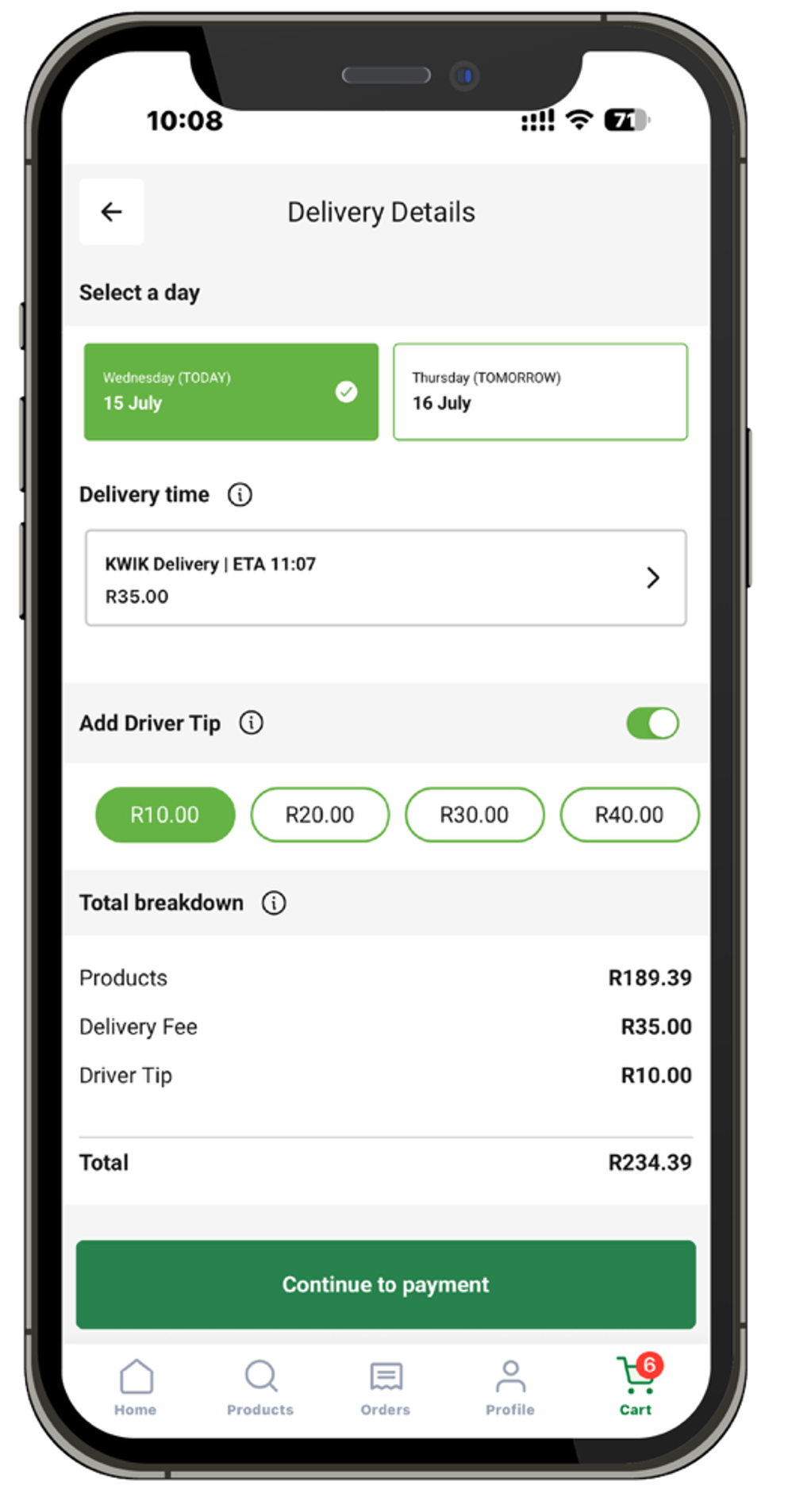
SPAR2U KWIK Delivery service available.

Do You Offer 60-Minute Delivery?

Yes. Selected SPAR stores offer KWIK Delivery, which gets your order to you in 60 minutes or less.

When you’re checking out, you’ll see the Delivery Time screen. If KWIK Delivery is available in your area, simply select the KWIK Delivery option to have your order delivered in 60 minutes or less.
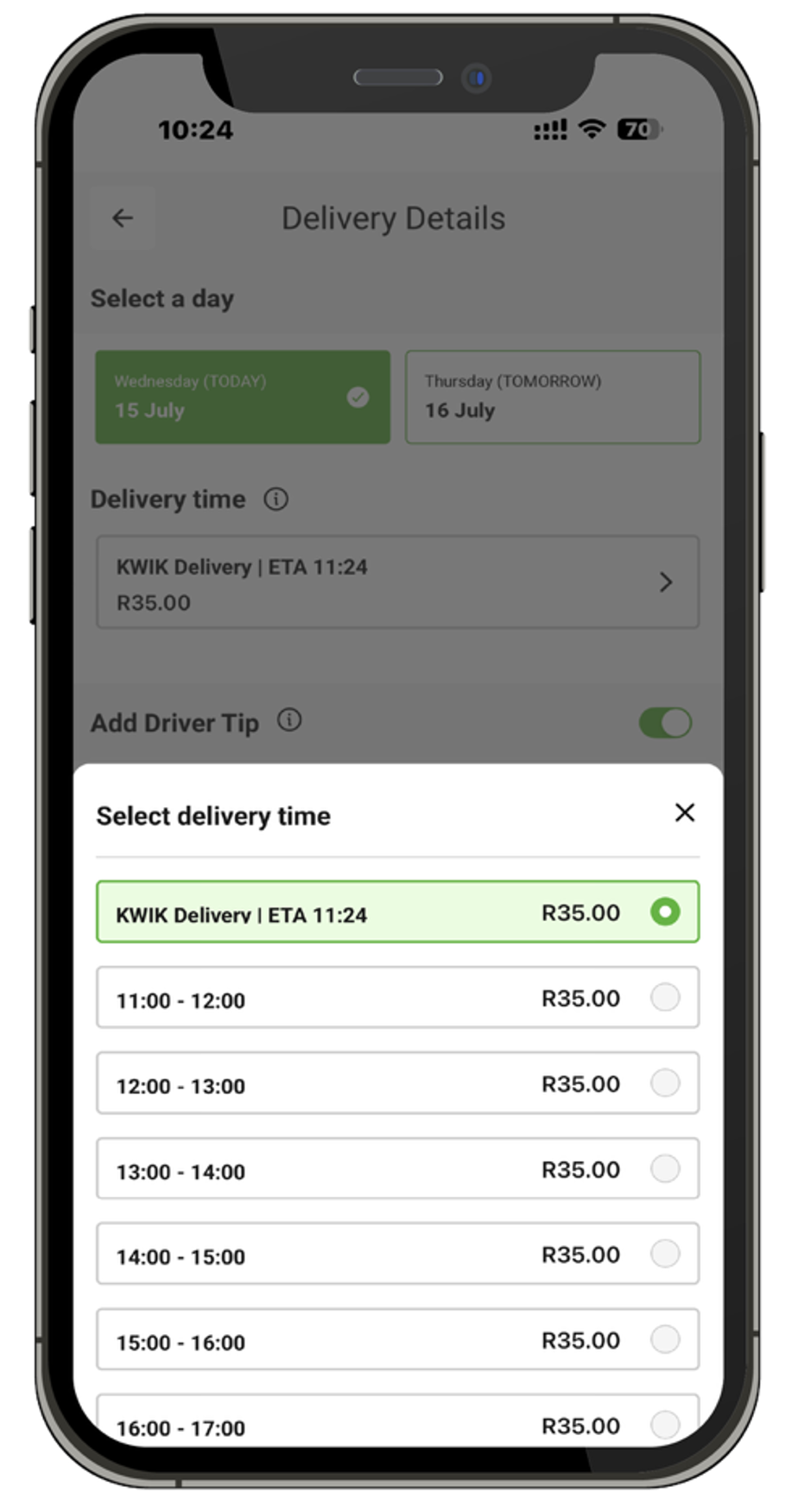
SPAR2U KWIK Delivery: Select a delivery time time slot.

Why Is KWIK Delivery Not Available at My Store?

We have rolled out KWIK Delivery to a number of stores across the country and are adding more every month.

Can I Use SPAR2U for Urgent Grocery Deliveries?

Yes. If your local participating SPAR store has an available delivery slot, you can order urgent groceries.

Also, depending on store availability, you can use KWIK Delivery for quick delivery within an hour.

What is Click & Collect?

Click & Collect allows customers to place an order on the SPAR2U App and collect it from their selected participating SPAR store at a convenient time. Unlike delivery orders, customers collect the order themselves from the store.

Is There a Delivery Fee for Click & Collect?

No. As the customer collects the order from the store, no delivery fee applies.

How Do I Place a Click & Collect Order?

Open the SPAR2U App, select your preferred store, add items to your basket, choose Click & Collect during checkout, select your collection time slot and complete payment.

How Will I Know When my Order is Ready?

You will receive an in-app notification, SMS, email or other communication once the store has completed preparing your order.

What Documents Do I Need When Collecting my Order?

You may be required to provide your order confirmation and a valid form of identification.

Can Someone Else Collect My Order?

Yes, provided they have the order confirmation details and valid identification.

How Long Will the Store Keep My Order?

Orders should be collected during the timeslot selected at checkout. If you need to amend your collection time, please contact the store directly.

Can I Modify My Order After Placing It?

Please ensure your order is correct before checking out. Once your order has been placed, no changes can be made.

What if I am Unhappy With My Purchase?

Products may be returned to the originating SPAR store in accordance with SPAR returns policy and applicable consumer legislation.

What Happens if I Miss My Collection Time?

The store will make a reasonable effort to contact you if your collection timeslot has passed. However, if the order is not collected and we are unable to reach you, the store reserves the right to cancel your order. Fresh, frozen, chilled or prepared products may be subject to quality and food safety restrictions.

If you have any further questions or need to download the app go to https://www.spar.co.za/spar2u

Continue Reading

Logistics

AGOA Loss is a Direct Hit On Western Cape Exporters, Warns EWC

Published

on

Close up shot of a warehouse completing a checklist.

South Africa’s impending loss of African Growth and Opportunity Act (AGOA) preferences will put further pressure on Western Cape exporters already facing a sharp decline in sales to the United States, says Exporters Western Cape (EWC).

Following President Donald Trump’s notification on Monday of his intention to terminate South Africa’s eligibility from 1 January 2027, EWC chairman Terry Gale said the focus must now shift to helping affected businesses retain their American customers.

“The time to do anything about this has passed. This is going to have a negative impact on our exporters and South Africa can ill afford it. Our economy needs every export market and every job it can hold on to,” said Gale.

The Western Cape’s exposure extends well beyond individual exporters. The province’s exports to the US support about R12.98 billion in provincial GDP, 11 914 direct jobs and 35 467 indirect jobs. Any further loss of orders puts those jobs at risk.

Exporters were already under severe strain. The value of Western Cape exports to the US fell 41%, from R16.89 billion between August 2024 and July 2025 to R10.02 billion between August 2025 and July 2026. Fruit juice exports fell 86%, from R952.9 million to R136.7 million, while grape exports declined 79%, from R444.2 million to R91.1 million. Yacht exports dropped 55%, from R1.4 billion to R627.6 million. Wine exports fell 38%, from R603.1 million to R371.5 million, while citrus declined 17%, from R2.19 billion to R1.82 billion.

Losing AGOA preferences would make an already difficult position worse, said Gale. The programme has provided eligible African countries with preferential access to the US market since 2000 and its loss will raise the cost of doing business with American customers.

He said the effect would vary between products, but the concern extended beyond the immediate cost to the trading relationships exporters had built.

“We can’t afford to see our trading relationships weakened, least of all with the US. Businesses have spent years building relationships with American customers and investing in the capacity to supply them. Losing preferential access puts those investments under pressure.

“Government needs to work with affected industries to establish where the greatest exposure lies and how businesses can be helped to retain their customers. Exporters need to understand what this means for their products while they still have time to discuss arrangements with their buyers.”

The United States Trade Representative said on Monday that the intended termination followed the annual review of AGOA eligibility. Its statement said South Africa’s practices were inconsistent with AGOA’s eligibility criteria, citing barriers to US trade and investment, corruption and threats to US national security and foreign policy interests.

EWC said clear guidance would be essential for businesses negotiating orders extending into 2027. The implications for pricing could affect whether an exporter remained competitive or had to absorb additional costs to keep a customer.

Gale said developing alternative markets remained essential, but cautioned against presenting diversification as an immediate solution.

“Finding another market is not something an exporter can do overnight. Building relationships with new buyers takes time. There may also be regulatory requirements that cannot be met immediately, particularly by smaller businesses with limited resources.

“We should pursue new opportunities with urgency while working to retain our American customers. We cannot afford to write off established trading relationships simply because the terms of access are becoming more difficult.”

He said the announcement made it even more urgent to address domestic constraints that increased the cost of exporting.

“Government cannot ask exporters to compete under more difficult trading conditions while accepting avoidable costs and delays at home. Every unnecessary expense makes it harder for a South African supplier to hold on to an order. Improving the reliability of our logistics system is one area where we can make a meaningful difference.

“Businesses need to know what changes from January and what support will be available. The priority must be to help them continue trading, because lost orders ultimately put jobs at risk.”

Continue Reading

Trending