
Freight Forwarding
The Hidden Cost of Shipping from China to South Africa — What Every SA Importer Needs to Know in 2026


By Edith Msimango, founder of China to South Africa (Pty) Ltd — LinkedIn
Every week I speak to South African business owners who are shocked when their goods arrive from China. They budgeted R50,000 for an order. The goods land and SARS hands them an invoice for R22,000 in duties and VAT — on top of freight and clearance costs they also did not budget for.
This is not bad luck. It is the single most common and costly mistake South African importers make — and it is entirely avoidable.
As the founder of China to South Africa (Pty) Ltd, a registered freight forwarder based in Johannesburg, I see this happen every week. In this article I am going to break down exactly what the real cost of shipping from China to South Africa looks like in 2026 — and give you five practical strategies to manage those costs before your next order.
Key facts before we dive in: Sea freight from China to South Africa starts from R1,800 per CBM all-inclusive. Air freight starts from R190 per KG all-inclusive. SARS charges import duties of 0–45% depending on product category. All goods also attract 15% import VAT on top of duties.
Why Most Supplier Quotes Are Misleading
When you request a quote from a Chinese supplier on Alibaba or any other platform, they almost always respond with a price based on EXW (Ex Works) or FOB (Free on Board) Incoterms.
Here is what that actually means:
EXW — the price covers getting goods to the supplier’s factory gate. Nothing else.
FOB — the price covers getting goods to the Chinese port. Nothing else.
Everything that happens after the goods leave the Chinese port is your problem — and your cost. And those costs add up very fast.
“The number one mistake importers make is treating the supplier’s FOB price as their total cost. It is not even close to their total cost.” — Edith Msimango, China to South Africa (Pty) Ltd.
The correct Incoterm to request is DDP — Delivered Duty Paid. This means all costs are included to your door in South Africa. Duties, VAT, freight, clearance and delivery — all in one transparent price. Most Chinese suppliers cannot quote DDP because they have no knowledge of South African import requirements. That is where a professional freight forwarder comes in.

The Real Cost of Shipping from China to South Africa
Let me show you exactly what a real landed cost looks like. Take a typical clothing order worth R50,000 on FOB terms from a Guangzhou supplier:
| Cost Item | Included in Supplier Quote | Actual Cost |
| Goods vale (FOB) | Yes | R50,000 |
| International sea freight | No | R4,500–R8,000 |
| Marine insurance | No | R600–R1,200 |
| SA port handling and documentation | No | R2,500–R4,000 |
| Customs clearance agent fee | No | R1,500–R3,000 |
| SARS import duty (clothing 45%) | No | R22,500+ |
| Import VAT (15%) | No | R7,500+ |
| Local Delivery to Johannesburg | No | R1,500–R3,000 |
| TOTAL LANDED COST | R90,600–R99,200 |
That R50,000 order just became a R95,000 order. And every single one of those additional costs is legal, standard and non-negotiable with SARS.
Important: Clothing and textiles attract some of the highest import duties in South Africa — up to 45%. Electronics can be as low as 0–20%. Always check your product’s exact HS tariff code at sars.gov.za before placing any order from China.
Understanding Import Duties and VAT
South African import duties are administered by SARS and are based on each product’s HS (Harmonised System) tariff code. According to the SARS Customs and Excise tariff schedule, the duty rate varies significantly by product category:
| Product Category | Import Duty Rate | Plus 15% VAT |
| Clothing and textiles | 40–45% | 15% |
| Footwear | 30–45% | 15% |
| Furniture | 20–30% | 15% |
| Electronics and IT equipment | 0–20% | 15% |
| Industrial machinery | 0–15% | 15% |
| Toys and games | 20–30% | 15% |
| Sports equipment | 15–20% | 15% |
Import VAT is charged at 15% on the customs value — which is the CIF value of your goods (cost of goods plus freight plus insurance). This means VAT is calculated on a higher amount than just the goods value alone.
Misclassification of HS codes is one of the most common and costly errors South African importers make. Using the wrong HS code can result in either overpaying duties or underpaying — which can lead to penalties and goods being held at the port.
Sea Freight vs Air Freight — Which Is Right for Your Shipment?
The two main shipping options from China to South Africa each have a very different cost and time profile. Choosing the right one for your specific cargo can save you thousands of rands.
Sea Freight
Sea freight is priced per CBM (cubic metre) and takes 30–45 days door-to-door. It is the most cost-effective option for large, heavy or bulky shipments.
LCL (Less than Container Load) — you share container space with other importers and pay only for the space your cargo uses. Ideal for shipments under 15 CBM. Starts from R1,800 per CBM all-inclusive.
FCL (Full Container Load) — you fill an entire container. Cost-effective for shipments over 15 CBM. Available in 20ft, 40ft and 40ft High Cube containers.
Air Freight
Air freight is priced per KG and delivers in 5–10 business days door-to-door. Ideal for urgent, high-value or time-sensitive cargo such as electronics, fashion and medical supplies. Starts from R190 per KG all-inclusive.
Pro tip: For shipments under 50KG of high-value goods, air freight can actually be more cost-effective than sea freight once you factor in storage, time and opportunity costs. Always calculate both options before deciding.
How China’s Zero Tariff Policy Changes Things in 2026
From 1 May 2026 China implemented a zero tariff policy on exports to South Africa as part of its broader engagement with the African Continental Free Trade Area. This eliminates Chinese export tariffs on a wide range of goods — directly reducing the factory gate price that South African buyers pay.
In practice this means South African importers are seeing more competitive pricing from Chinese suppliers in 2026 than at any previous point in the history of the China-South Africa trade relationship.
However — and this is critical — the zero tariff policy reduces the Chinese side of the cost equation only. South African import duties, VAT and clearance costs remain exactly the same. The importers who benefit most are those who combine lower factory prices with smart logistics management on the South African side.
The businesses that act now — restructuring their China sourcing and shipping strategy to take advantage of lower factory prices — will enter 2027 with a meaningful cost advantage over competitors who are slow to respond.

5 Proven Ways to Reduce Your Shipping Cost from China to South Africa
1. Always Get a DDP All-Inclusive Quote Before Committing to Any Order
DDP (Delivered Duty Paid) means all costs are included — freight, duties, VAT, clearance and delivery to your door. Never evaluate an order’s profitability based on the supplier’s FOB price alone. Always know your full landed cost before you commit to a single rand.
2. Consolidate Orders from Multiple Suppliers into One Shipment
If you are ordering from multiple Chinese suppliers simultaneously, use a freight forwarder with a China warehouse. All your suppliers ship directly to the warehouse. The forwarder receives, inspects and consolidates everything into one single shipment to South Africa — one set of freight costs, one clearance process, one set of import duties. This can reduce total logistics costs by 30–50% compared to shipping each order separately.
3. Verify Your HS Tariff Code Before Placing Your Order
The difference between the correct and incorrect HS code can mean a 20% difference in duty rate. Always confirm your product’s exact tariff classification at the SARS Customs and Excise website before placing an order — not after your goods arrive at the port. A good freight forwarder will do this for you as part of their service.
4. Pack Efficiently to Reduce Your CBM
Sea freight is priced per CBM — the volume your cargo occupies in the container. Ask your supplier to pack as densely as possible, remove excess packaging and optimise carton dimensions. Even a 10% reduction in CBM translates directly to a 10% reduction in your sea freight cost.
5. Choose the Right Shipping Method for Your Specific Cargo
Do not automatically use air freight because it is faster. For large, heavy cargo sea freight is always significantly cheaper. For small, light, urgent or high-value cargo air freight is often the smarter choice. Calculate both options for every shipment before deciding — the savings can be significant.
What to Look for in a Freight Forwarder
Choosing the right freight forwarder is the single most impactful decision you can make as a South African importer. Here is what to look for:
All-inclusive DDP pricing — duties, VAT, clearance and delivery all included in one transparent quote with no hidden fees.
China warehouse facility — the ability to receive, inspect and consolidate goods from multiple suppliers before shipping.
SARS customs clearance expertise — HS code classification, duty calculation, VAT processing and port clearance handled on your behalf at Durban Port, Cape Town Port or OR Tambo Airport.
Transparent communication — real-time shipment tracking and proactive updates throughout the entire journey from China to your door.
South Africa route experience — specific knowledge of South African port procedures, SARS requirements and local delivery logistics.
Final Thoughts
Shipping from China to South Africa does not have to be a financial minefield. The importers who succeed are not necessarily the ones with the cheapest suppliers — they are the ones who understand and manage their full landed cost from the very start.
Get a DDP quote. Know your duties. Consolidate your shipments. Choose the right shipping method. Work with a freight forwarder who gives you complete cost transparency before you commit to a single rand.
The businesses that master these fundamentals in 2026 — especially with the added advantage of China’s zero tariff policy — will build a supply chain cost structure that is very difficult for competitors to replicate.
For South African importers looking for a trusted freight forwarding partner, China to South Africa (Pty) Ltd provides all-inclusive sea freight and air freight services from China to South Africa with every cost included in every quote. Visit china2southafrica.co.za for a free all-inclusive quote within 24 hours.
Freight Forwarding
A Terminal in Healing: SAFLA and the RFA Acknowledge the Movement Towards DGT Efficiency
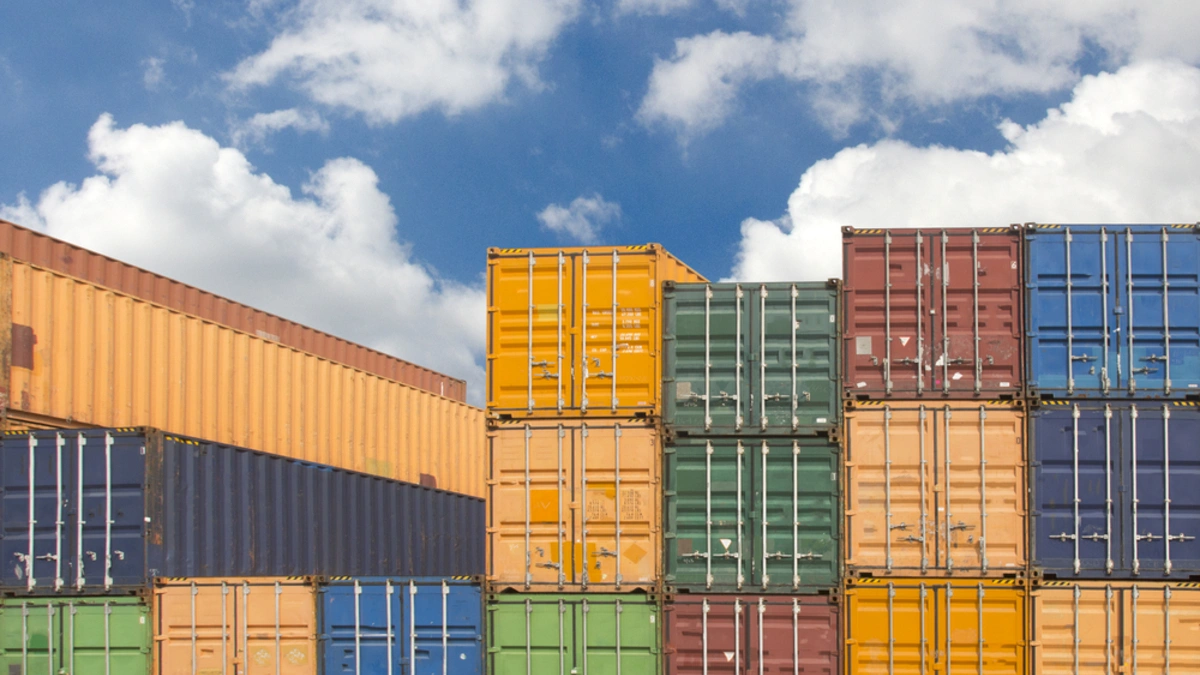
The South African Freight and Logistics Association (SAFLA) and the Road Freight Association (RFA) were present during the recent interaction between Durban Gateway Terminal (DGT) and relevant stakeholders and organisations that have operations or members processing cargo through the terminal.
Representatives of DGT and International Container Terminal Services Inc (ICTSI) were candid and open regarding challenges experienced – as well as what had been achieved in the period that Transnet had signed the agreement with ICSTI.
Whilst there are challenges, the terminal was functioning well – given the challenges experienced, and both DGT and ICTSI listened to comments from all present and noted that two processes were in place to address the operations at DGT.
One was short term: this included the waiving of all terminal storage charges whilst the current set of challenges were experienced, and secondly, there was an accelerated programme to keep the various pieces of machinery operating at the best levels of safety and functionality, as was possible. Gensets had been brought in to deal with power disruptions.
In addition, DGT acknowledged the problems with the slot booking system and already had developed a solution to vastly improve the process – this was to be shared with all shareholders in due course for comment and implementation.
DGT also brought Transnet into the meeting to address certain aspects that had placed pressure on operational efficiencies.
Long-term plans: the Terminal requires significant refurbishment and upgrading / modernising to compete with the options of other ports on the Southern African continent. Much of the equipment needed has been ordered – but there are lengthy lead times in the delivery of the equipment.
“There are immediate short-term options – such as reducing the pressure on the terminal whilst upgrades and interventions are applied. Perhaps Transnet can lower container movement tariffs (from other ports) for a period, whilst DGT is brought to the level of efficiency required. As we have noted – transporters are carrying the costs of inefficiencies,” said Gavin Kelly, Chief Executive Officer of the RFA. “Fleets are standing without bookings while fixed costs run, drivers are queuing on Bayhead Road, and every standing hour ends up in the price of goods. Slot releases must match real capacity, and truck staging must be fast-tracked now. Without trucks, South Africa stops.”
“SAFLA is delighted at the waiving of storage charges whilst the current set of challenges are being experienced,” said Dave Logan of SAFLA. “This will meaningfully ease the burden on freight forwarders and their clients, and we welcome this gesture of good faith from DGT and ICTSI.”
SAFLA and the RFA stand ready to contribute member evidence and practitioner expertise to a joint recovery task team alongside DGT, Transnet, government and other industry bodies.
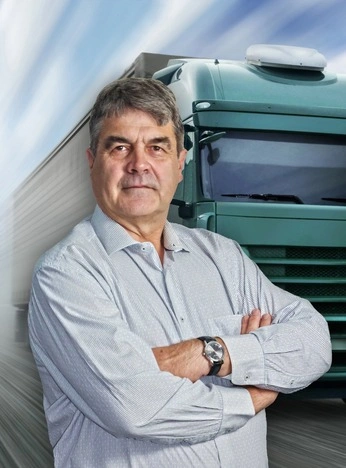
Gavin Kelly, CEO of the Road Freight Association

Dave Logan – Executive Officer of SAFLA

The Distribution Gap Holding Back South Africa’s Township Economy

Keeping the Network Moving: What Gauteng’s New Public Transport System Could Mean for Supply Chains

Opinion Piece: Transparency is Becoming the New Competitive Advantage in Workforce Logistics


-

 Management3 months ago
SEO, AEO, GEO and SEO for AI: What Is the Difference for the Supply Chain Industry?
-
 Transport3 months ago
LDV T60 Max vs GWM P500 vs Isuzu D-Max vs Toyota Hilux vs Ford Ranger: Which Double-Cab Bakkie Offers the Best Value?
-

 Logistics4 months ago
DHL Group to invest around € 160 million in 2026-2027 to strengthen logistics infrastructure and support clean energy transition in France
-

 Logistics4 months ago
DHL Expands Asia Pacific Data Center Logistics Capabilities to Support Growing Regional Demand
-

 Logistics3 months ago
Top 5 Warehousing and Logistics Companies in the Western Cape by Google Review Rating
-

 Logistics4 months ago
Top 10 Warehousing and Logistics Companies in Gauteng by Google Review Rating
-

 Logistics3 months ago
Top 4 Lift Truck Companies in Gauteng
-

 Management3 months ago
AI in Warehousing and Logistics in 2026: From Automation to Autonomous Decision-Making