Connect with us

Management

AI in Warehousing and Logistics in 2026: From Automation to Autonomous Decision-Making

Published

on

Warehouse using autonomous mobile robots (AMRS) for inventory management and transportation.
Admin

Artificial intelligence (AI) has been transforming warehousing and logistics for several years, but the industry in 2026 looks very different from the one that first embraced AI powered forecasting and route optimisation.

Back in 2023, most organisations viewed AI as a tool that could help improve visibility, predict demand, and automate repetitive tasks. Today, AI has evolved from being a support function to becoming an active participant in warehouse and supply chain operations. The conversation is no longer about whether AI can assist warehouse managers; it is about how AI can help make decisions, coordinate operations, and proactively respond to disruptions before they occur.

The Evolution of AI in Warehousing

The biggest change between 2023 and 2026 is that AI has moved beyond analytics.

Traditional warehouse systems focused on reporting what had already happened. Modern AI-powered Warehouse Management Systems (WMS) and Warehouse Execution Systems (WES) now analyse real-time data, identify issues, recommend actions, and in some cases automatically initiate workflows. Industry experts increasingly describe AI as a “co-pilot” for warehouse operations rather than simply a reporting tool. 

Instead of merely highlighting stock shortages or delivery delays, AI can now recommend inventory reallocations, adjust picking priorities, optimise labour deployment, and identify potential bottlenecks before they affect service levels.

Agentic AI: The Next Frontier

One of the biggest developments in 2026 is the emergence of Agentic AI.

Unlike traditional AI systems that provide recommendations, Agentic AI can perform tasks on behalf of users within predefined rules and approvals. In logistics environments, this means AI can monitor warehouse activity, investigate exceptions, suggest corrective actions, and prepare operational responses without waiting for manual intervention. 

While most organisations still maintain human oversight, AI is increasingly being trusted with operational execution in areas such as:

  • Inventory balancing
  • Labour scheduling
  • Slotting optimisation
  • Shipment prioritisation
  • Replenishment planning
  • Route adjustments

The result is faster decision-making and improved operational agility.

Digital Twins Become Operational Reality

Another major shift is the rise of digital twins.

A digital twin is a virtual representation of a warehouse or logistics network that continuously receives data from physical operations. These digital replicas allow businesses to simulate changes, test scenarios, and identify risks before implementing them in the real world. 

For example, warehouse managers can now model:

  • Peak season demand surges
  • Inventory shortages
  • Labour constraints
  • Equipment failures
  • Facility expansions

Rather than reacting to problems, organisations can proactively plan for them.

 Computer Vision is Replacing Manual Checks

Warehouse operators have traditionally relied on manual inspections for receiving, picking, packing, and quality control.

In 2026, AI-powered computer vision systems are increasingly performing these tasks automatically. Cameras and sensors can verify stock accuracy, identify damaged products, validate pallet configurations, and monitor safety compliance without human intervention. This creates what many industry leaders refer to as “zero-touch quality control.” 

The benefits include:

  • Reduced errors
  • Faster processing times
  • Improved inventory accuracy
  • Better workplace safety
  • Lower operational costs

Smarter Robotics and Autonomous Mobile Robots

Warehouse robotics have matured significantly over the past three years.

Instead of operating as standalone systems, robots are now coordinated by AI-powered orchestration platforms. Autonomous Mobile Robots (AMRs) can dynamically adjust routes, avoid congestion, and collaborate with other robots to optimise workflow throughout a facility. This concept, often referred to as swarm intelligence, allows entire fleets of robots to work together efficiently. 

As labour shortages continue to affect the logistics sector globally, intelligent robotics are helping warehouses maintain productivity while reducing dependency on manual labour. Industry analysts predict that by 2030, half of all new warehouses in developed markets will be heavily robot-centric. 

Predictive Supply Chains

Supply chains are becoming increasingly predictive rather than reactive.

AI systems now combine data from ERP systems, WMS platforms, transportation networks, IoT sensors, weather services, and market signals to forecast future disruptions and recommend actions before problems arise.

Examples include:

  • Predicting stock shortages
  • Anticipating transport delays
  • Forecasting labour requirements
  • Optimising inventory placement
  • Identifying supplier risks

This capability enables businesses to improve resilience while reducing costs.

 Sustainability Through AI

Environmental sustainability is also becoming a key AI use case.

Modern AI platforms help organisations optimise:

  • Energy consumption
  • Warehouse lighting
  • Equipment utilisation
  • Vehicle routing
  • Packaging requirements
  • Carbon emissions

AI is also assisting companies with ESG reporting and sustainability tracking by automatically analysing operational data and generating performance insights. 

Challenges Still Remain

Despite the rapid progress, successful AI implementation remains dependent on data quality.

Many organisations still struggle with fragmented systems, poor master data, and disconnected operational processes. Industry experts increasingly agree that AI is only as effective as the data and business processes supporting it.

The most successful AI projects are not necessarily those with the most advanced technology, but those built on:

  • Clean data
  • Integrated systems
  • Clear operational processes
  • Strong governance
  • Human oversight

Looking Ahead

The future of warehousing and logistics is no longer about simply automating tasks. It is about creating intelligent, adaptive operations capable of learning, predicting, and responding in real time.

In 2026, AI has evolved from a decision-support tool into an operational partner. Warehouses are becoming smarter, more connected, and increasingly autonomous. From digital twins and computer vision to agentic AI and intelligent robotics, the industry is entering an era where data-driven decision-making is becoming the standard rather than the exception.

For logistics providers, manufacturers, retailers, and warehouse operators, the question is no longer whether AI should be adopted. The real question is how quickly organisations can prepare their people, systems, and data to take advantage of the next generation of intelligent supply chain technologies.

Continue Reading

Management

Newlyn Advances Gqeberha Logistics Park with Second Warehouse Planned

Published

on

Focused shot of a warehouse interior with a forklift.

Newlyn Group is moving ahead with the development of its Newlyn Logistics Park in Gqeberha, with the first 10,000m² warehouse nearing completion and construction of a second facility scheduled to begin in October 2026.

Located along Cape Road (R102), around 5km from the N2 and approximately 20 minutes from the Port of Gqeberha, the development is designed to accommodate logistics, distribution and light manufacturing businesses. The wider logistics park covers approximately 150,000m², with additional warehouse phases planned as demand develops.

The first phase includes a 10,000m² warehouse, a matching 10,000m² yard and between 200m² and 300m² of office and ancillary space. Completion is expected by December 2026. The next phase will add another warehouse of the same size, supported by a dedicated yard.

Warehouse Design Focuses On Operational Efficiency

Rather than focusing solely on warehouse size, Newlyn has incorporated features intended to support the practical requirements of storage, handling and distribution operations.

The buildings have a 24m by 24m column grid to provide open operating space, alongside a clear internal height of 10.5m beneath the structural trusses. This allows for racking of approximately 9m to 10m, or around seven levels, using conventional materials-handling equipment.

The warehouse floors are designed to support distributed loads of 10 to 12 tonnes, with joints positioned to account for racking layouts and the loads placed on rack legs. These considerations can help reduce the need for costly modifications when tenants install their storage systems.

Outside, heavy-duty paved yards are designed to withstand truck and reach-stacker movements. The development also incorporates reinforced concrete in high-turning and high-wear areas to accommodate the demands of regular vehicle movements.

These specifications are intended to help businesses configure their facilities around their operational needs, from goods storage to loading and dispatch.

Infrastructure Designed for Long-Term Use

The development also incorporates features intended to address energy use, building maintenance and Gqeberha’s coastal conditions.

Steelwork has a 15-year anti-corrosion specification, while the roof system is designed without penetrations. The structures are also engineered to accommodate rooftop solar panels, allowing tenants to add photovoltaic capacity without requiring retrospective structural strengthening.

Translucent roof sheeting allows natural light into the warehouse during the day, while ventilation systems support fresh-air circulation and smoke extraction. LED lighting can also be paired with motion or timing sensors to limit unnecessary energy use.

Fire protection is another key consideration. The logistics park will use a shared dual-tank, dual-pump firefighting water system designed to support firefighting in two buildings simultaneously for up to two hours. Warehouse sprinkler systems, early-warning smoke detection and smoke curtains form part of the wider fire-safety provisions.

Utility infrastructure includes individual electricity and water meters, backup water storage and a borehole alongside the municipal supply. Stormwater systems have also been designed to account for the site’s floodplain conditions.

Security will combine perimeter fencing and AI-enabled camera monitoring with a central control room. Individual tenants will be able to establish additional security measures around their own operations.

Further Phases to Respond to Demand

Newlyn has approved plans for additional warehouse options of 12,000m², 7,000m² and 3,000m² as the logistics park expands. This gives the developer scope to respond to different occupier requirements rather than committing to a single warehouse size across the entire site.

According to Viresh Persad, Newlyn Group’s chief development officer, the aim is to incorporate practical operational requirements into the initial building design while retaining flexibility for different tenants.

The development adds to the warehousing infrastructure available in Gqeberha, with its location providing access to the N2 and the Port of Gqeberha. For logistics operators, the combination of transport links, yard capacity and adaptable warehouse space will be central to determining how well the facility meets their distribution and storage needs.

Source: Newlyn Group, via Catchwords Newsroom.

Continue Reading

Logistics

The Distribution Gap Holding Back South Africa’s Township Economy

Published

on

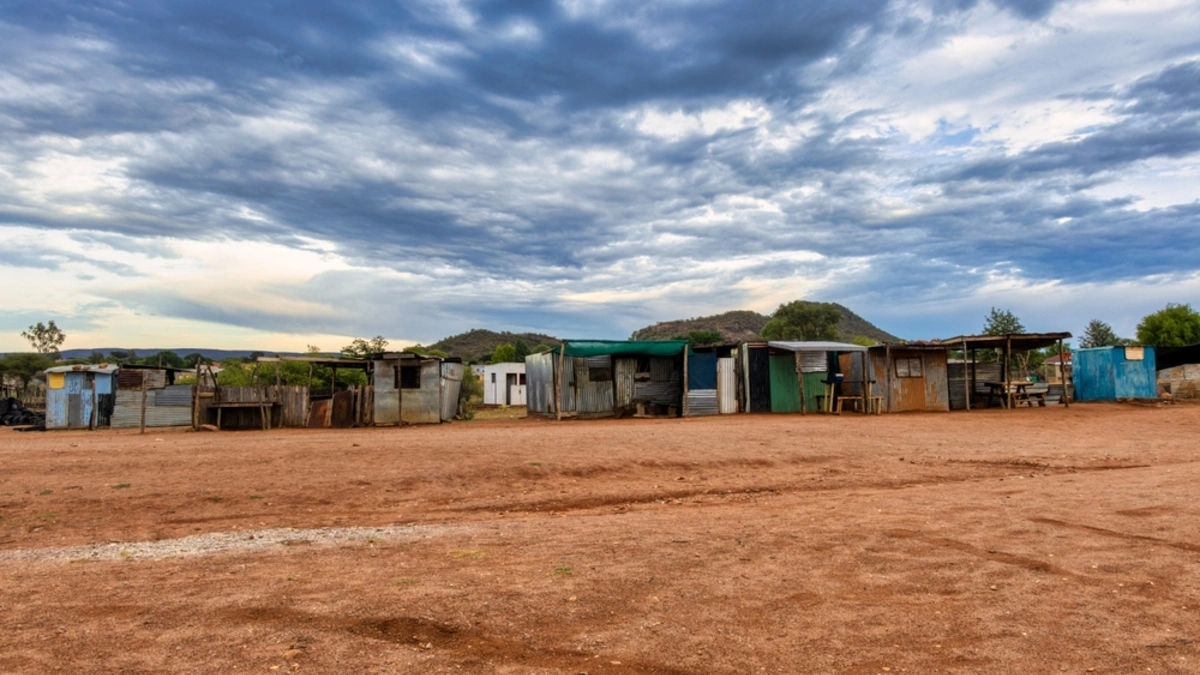
Landscape shot of a Capetonian township.

South Africa’s township economy is not only facing a demand problem. For many businesses, the bigger challenge may be getting the right products to the right place at a competitive price.

The 2026 Rural and Township Economy Report highlights significant procurement and distribution challenges facing businesses outside the country’s major commercial centres. According to the Department of Trade, Industry and Competition (the dtic), informal businesses face higher procurement costs and limited access to formal distribution channels, while consumers can face higher effective prices because of limited product variety and quality.

For the supply-chain industry, this points to a problem that sits further upstream than the shop itself.

If a business cannot source products reliably, competitively and in sufficient volume, its ability to compete is constrained before the customer even walks through the door.

The Cost of Getting Stock

Procurement is one of the clearest pressure points.

The Competition Commission’s Rural and Township Economy Project identifies constraints in how township and rural businesses source and sell goods, with smaller businesses facing challenges that can prevent them from scaling and integrating more fully into broader value chains.

The issue is partly one of scale.

A small retailer buying limited quantities does not necessarily have the same purchasing power as a larger chain. That can affect the prices it pays, the range of products it can stock and how frequently it can replenish inventory.

The result is a cycle where scale becomes an advantage not only for retailers, but for businesses further up the supply chain as well.

A business that pays more for stock has less room to compete on price. If it cannot reliably obtain popular products, it also risks losing customers to businesses that can.

Distribution Determines What is Available

Price is only one part of the problem.

Stock availability matters just as much.

The dtic has identified stock availability as a key challenge for township businesses, noting that consumers are less likely to return when products are out of stock. The department has also highlighted the need for better supply-chain management and point-of-sale technology to improve the customer experience.

That changes how the distribution problem should be viewed.

A product sitting in a national warehouse does not necessarily help a consumer in a township. It still needs to move through the right wholesale or distribution channel, reach the local business at the right time and be available when the customer wants it.

This final connection can be easy to overlook when supply chains are designed primarily around large formal retailers.

The Route to Market Matters Too

The challenge also works in the other direction.

Many township businesses are heavily dependent on their immediate local customer base, limiting their ability to reach larger markets.

That creates a similar problem for producers and manufacturers. A business may have a product that could sell beyond its immediate area, but reaching those customers requires access to distribution, retail and digital channels that may not be readily available.

The supply chain therefore affects both sides of the market: how businesses get products in and how they get products out.

That is particularly important if South Africa wants township enterprises to become more integrated into broader manufacturing and distribution networks rather than remaining largely localised.

Could Aggregation Help?

One potential way to address the scale problem is through greater purchasing power.

In a recent address to women entrepreneurs, Deputy Minister of Trade, Industry and Competition Zuko Godlimpi encouraged township businesses to form partnerships and cooperatives so they can buy and sell in greater volumes.

The logic is straightforward. If smaller businesses can aggregate their demand, they may be able to access some of the purchasing advantages normally associated with larger buyers.

Government has already incorporated this principle into support for township community convenience stores. The dtic’s Spaza Shop Support Fund includes support for stock procurement and delivery, while the department has said the programme is intended to strengthen links between spaza shops, local manufacturers, black industrialists and wholesalers through bulk purchasing arrangements.

But aggregation still needs infrastructure behind it.

Someone has to consolidate orders, manage inventory, arrange transport, handle storage and distribute stock. Without those capabilities, simply combining purchasing power will not solve the wider distribution problem.

Closing the Distribution Gap

South Africa has no shortage of entrepreneurial activity in its townships. The challenge is making it easier for those businesses to participate in supply chains that extend beyond their immediate surroundings.

That means looking beyond the individual retailer.

Better wholesale networks, more efficient distribution channels, technology that improves stock visibility and logistics models designed around smaller businesses could all help reduce some of the disadvantages created by limited scale.

It also means recognising that access to a product is not the same as access to a supply chain.

A township retailer may technically be able to buy a product, but if it pays more, receives inconsistent supply or has limited access to alternative suppliers, it is competing from a weaker position.

The 2026 Rural and Township Economy Report makes clear that procurement, stock availability and access to distribution remain important barriers for many smaller businesses.

Closing that gap will therefore require more than encouraging businesses to grow. It will require supply chains that allow them to buy competitively, maintain reliable stock and reach more customers.

For South Africa’s township economy, better distribution could be one of the practical ways to turn local business activity into businesses that can genuinely scale.

Continue Reading

Fulfilment

Peak Season Prep Starts Now: Three Priorities for Ecommerce Companies Ahead of the Annual Code Freeze

Published

on

Black Friday typography filled with the South African flag

By Melinda Ellis van Zyl,enterprise sales lead, Shiprazor

The online retailers who win Q4 are the ones who do the hard work in September. By the time November comes around, it is too late.

Most South African digital retailers lock their systems down weeks before Black Friday. A code freeze means what it says: you stop changing your site and apps so nothing breaks when traffic peaks. With the annual freeze coming up in October, now is the time to review your systems and implement fixes.

Online retail in South Africa grew 35% in 2025 to reach R130-billion, according to the 2026 World Wide Worx Online Retail in South Africa report. It is expected to grow by roughly 22.5% in 2026 to R159-billion by December, the report says.

During Black Friday 2025 online purchases by Standard Bank customers jumped 75% year on year and made up 23% of all customer spend, while Capitec clients’ online purchases surged 43%. Consumers are shopping online more; you need to ask yourself if you’re ready for them.

When you sell online without a dedicated tech or logistics team, you are competing against businesses that have both. A stress-test before the freeze helps close the customer experience gap. Here are three priorities that stand out.

1. Test the Checkout and Payment Flow Under Real Peak-Season Load, Not Average-Day Load

Your checkout is the part most likely to fall over. It may run fine on a slow Wednesday but will it hold up when a few thousand shoppers arrive at once?

Then consider that South Africa’s cart abandonment rate hit as high as 84% in 2025, much of which had nothing to do with people changing their minds. Declined card transactions alone account for roughly 52% of lost online sales, largely due to insufficient funds, expired cards, and bank-side outages that spike exactly when your volumes do.

The solution is to have a rehearsal: pretend it is Black Friday before Black Friday arrives. Place real test orders across every payment method, get several people onto the site at once, and push a batch of orders through to fulfilment. If something breaks, find it now, while you can still fix it and roll back. Once your technology freeze kicks in, it’s too late.

2. Pressure-Test the Courier Network for Redundancy, Not Just Capacity

The pressure doesn’t sit on your code alone. A single-courier setup is a single point of failure, and peak season is when it shows up. One delay, one fuel shortage, one regional gap, and every order behind it stops moving.

The obvious answer is to add couriers, but the catch is that managing them (the separate accounts, rates and tracking screens) creates its own headache when you have the least time for one.

This is where the right software earns its keep. A platform built to route parcels across several couriers carries that complexity for you, sending each order to a partner that can actually deliver it. Spreading volume across couriers from one control point keeps things moving. Set it up and test the handovers before the freeze.

3. Take the Anxiety Out of the Wait

Doubt is an understated factor that can stop a shopper. Will the package arrive as promised? What happens if it turns up damaged? These questions can fuel hesitation long before checkout. The data backs this up: two in three South African shoppers say they wish the brands they bought from kept them better informed.

Beating this doubt starts with communication. A shopper who can watch their order move, stops guessing and is less likely to message support. Automated updates by WhatsApp, SMS or email do this work for you and reassure customers who clicked ‘order’ while feeling skeptical. Pair this automation with an easy returns process and the fear of being stuck with something you don’t want fades away.

Communication and transparency give a Black Friday shopper every reason to return in December.

The Window is Closing

None of this is complicated on its own. What catches merchants out is the sequence. When the freeze happens in October, the testing, the courier audit, and the delivery fixes should all be complete. If you treat shipping as an afterthought, you’re likely to discover its weak points at the worst possible time.

Rigorously test your infrastructure, and your peak season is set to be your strongest quarter of the year. Treat logistics as one connected, end-to-end system rather than a patchwork of couriers and workarounds. This can be the difference between a business that takes the opportunity to scale and one that just survives the season.

Portrait of Melinda Ellis van Zyl

Melinda Ellis van Zyl, Enterprise sales lead, Shiprazor

Continue Reading

Trending