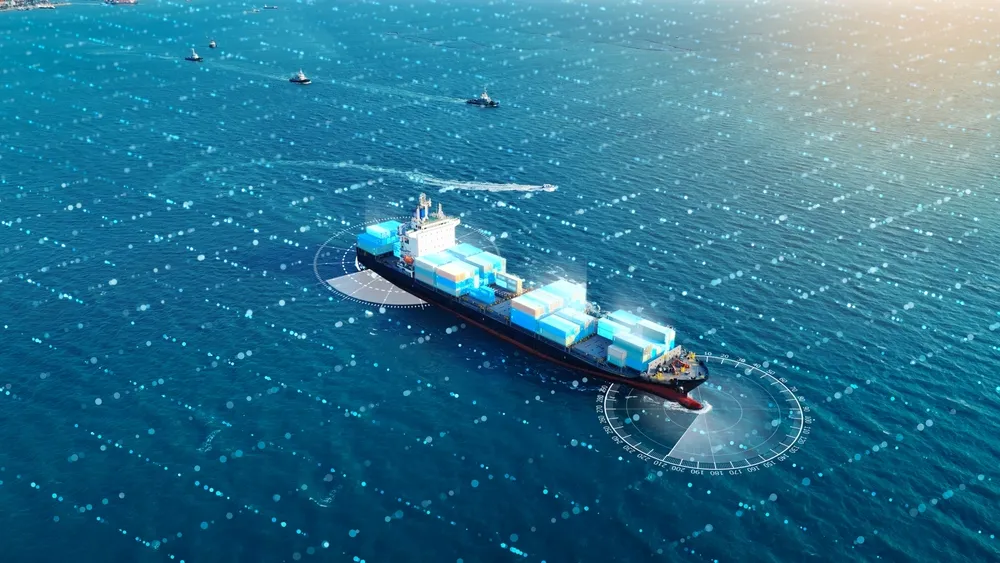
Artificial intelligence is no longer just something being discussed in boardrooms or technology conferences. In 2026, AI is starting to influence real decisions across the maritime freight industry.
For South Africa, this is especially important. Maritime freight plays a major role in how goods move in and out of the country. Every delayed vessel, congested terminal or missing container update can affect importers, exporters, retailers, manufacturers and consumers.
Ports such as Durban, Cape Town, Ngqura, Gqeberha and Richards Bay are critical to the national supply chain. When these ports perform well, goods move faster. When they are under pressure, delays ripple through warehouses, factories, retail shelves and delivery networks.
This is where AI has the potential to make a real difference.
AI will not magically solve every problem in maritime freight. South Africa still needs better infrastructure, reliable equipment, improved rail performance, stronger port productivity and skilled people. But AI can help the industry make better decisions, improve visibility and use existing resources more efficiently.
What AI Means for Maritime Freight
In simple terms, AI helps systems analyse large amounts of information and identify patterns that humans may miss.
In maritime freight, this could include data from vessel schedules, weather reports, port congestion, container movements, customs processes, truck bookings, warehouse capacity and customer delivery deadlines.
Instead of reacting only when a problem happens, AI can help predict problems before they become serious.
For example, if a vessel is delayed by bad weather, an AI-powered system could alert the freight forwarder, update the expected arrival time, adjust the truck booking and notify the customer before the cargo reaches the port. This gives everyone more time to plan.
That is the real value of AI: better decisions, earlier.
The Benefits of AI in the Maritime Freight Industry
1. Improved Operational Efficiency
Maritime freight is complex because so many different parties are involved. A single shipment may involve a shipping line, port operator, customs official, freight forwarder, road transporter, warehouse operator and final customer.
AI can help connect some of these moving parts.
One of the most useful applications is predictive analytics. This allows companies to use data to forecast delays, plan routes, improve scheduling and reduce unnecessary waiting time.
For example, a shipping company can use AI to analyse weather patterns, ocean conditions and port congestion before deciding on the best route. If bad weather is expected near a particular route, the system can recommend an alternative path or adjust the vessel’s speed to arrive at a better time.
At port level, AI can help terminal operators plan berth allocation. This means deciding which vessel should dock where, and when. If a port knows that one vessel is delayed and another is arriving early, AI can help adjust the plan to reduce idle time.
For South Africa, where port delays can have a major impact on the wider economy, this type of efficiency can be valuable.
2. Smarter Container Handling
Container terminals are busy environments. Thousands of containers need to be moved, stacked, located, inspected and released.
AI can help improve how containers are managed inside a terminal.
For example, a terminal can use AI to decide where containers should be placed in the yard. If a container is due to be collected soon, it should not be buried behind containers that are only leaving next week. Better stacking decisions can reduce unnecessary container moves, save time and improve turnaround.
This may sound small, but in a busy port environment, reducing extra moves can make a big difference.
A practical example would be a container carrying retail stock for a major Gauteng distribution centre. If that container is incorrectly placed deep in the yard, it may take longer to retrieve. This can delay the truck, the warehouse receiving process and ultimately the retailer’s stock availability.
AI can help prevent this by using expected collection times, cargo type and transport bookings to support smarter yard planning.
3. Better Cargo Tracking and Visibility
One of the biggest frustrations in freight is uncertainty.
Customers want to know where their goods are, when they will arrive and whether there are any delays. Traditional tracking systems often provide updates only at certain points in the journey. AI can improve this by combining information from multiple sources and producing more accurate predictions.
For example, an importer may know that a shipment has arrived at the Port of Durban, but still not know when it will clear, when the truck will collect it or when it will reach the warehouse in Johannesburg.
An AI-enabled visibility system could pull together vessel arrival data, port congestion, customs status, truck availability and route conditions to give a more realistic estimated delivery time.
This helps businesses plan better.
A manufacturer waiting for imported components can adjust production schedules. A retailer waiting for seasonal stock can plan promotions more carefully. A freight forwarder can communicate earlier with customers instead of waiting for complaints.
4. Improved Safety at Sea and in Port
Safety is a major priority in maritime freight.
At sea, AI can assist with route planning, collision avoidance, weather monitoring and vessel performance. Systems can analyse data from radar, satellites, sensors and weather platforms to identify potential risks.
For example, if a vessel is approaching rough sea conditions, AI can help recommend a safer route or speed adjustment. This can reduce risk to the crew, cargo and vessel.
In port environments, AI can also support safety. Computer vision and sensors can be used to monitor high-risk zones, moving equipment and pedestrian areas. If a person enters a restricted operating zone, a system could alert the control room or equipment operator.
Another example is equipment safety. AI can monitor cranes, reach stackers and other machinery to detect unusual vibration, temperature changes or performance issues. These warning signs can indicate that equipment may need maintenance before it fails.
This supports both safety and productivity.
5. Predictive Maintenance for Port Equipment
Port equipment is expensive, and downtime can be costly.
When a crane or container handling machine breaks down, it can delay vessel loading, container release and truck turnaround times. AI can help by moving maintenance from a reactive model to a predictive one.
Instead of waiting for equipment to fail, AI can analyse sensor data to predict when maintenance is needed.
For example, if a crane motor starts showing unusual performance patterns, the system can alert technicians before a full breakdown occurs. Maintenance can then be scheduled during a quieter operational window.
This reduces downtime and helps ports operate more reliably.
In a South African context, where equipment availability has often been a challenge at some terminals, predictive maintenance could become an important part of improving port performance.
6. Reduced Fuel Use and Lower Emissions
Fuel is one of the biggest costs in shipping. It is also a major environmental concern.
AI can help shipping companies reduce fuel consumption by optimising routes, vessel speed and arrival timing. This is sometimes referred to as “just-in-time arrival”.
For example, if a vessel is going to arrive at a port but no berth is available, it may be better to slow down while still at sea rather than rushing to the port and waiting outside. Slower, better-planned sailing can reduce fuel use and emissions.
This benefits shipping companies from a cost perspective and supports environmental targets.
For cargo owners, this can also become important as more customers and regulators pay attention to the environmental impact of supply chains.
7. Better Truck Scheduling and Port Access
Maritime freight does not end when a ship reaches the port. Containers still need to move by road or rail to warehouses, factories and distribution centres.
Truck congestion around ports can create major delays. AI can help by improving truck appointment systems and predicting busy periods.
For example, a system could recommend the best collection time based on container availability, terminal activity, road congestion and warehouse receiving hours. This could reduce truck queues, improve driver productivity and help warehouses plan inbound stock more accurately.
A Durban-based importer sending goods to Gauteng, for example, could benefit from better coordination between port release, transporter availability and warehouse receiving capacity.
This type of visibility is especially valuable when supply chains are under pressure.
The Challenges of AI in Maritime Freight
While the benefits are clear, AI also brings challenges that need to be managed carefully.
1. High Initial Investment
AI requires investment in systems, data, integration, cybersecurity and training.
For large shipping lines and terminal operators, this may be easier to justify. For smaller logistics companies, customs brokers or transport operators, the cost may feel too high.
However, AI does not always have to start with large, complex projects.
A company could begin with smaller use cases, such as better shipment tracking, automated customer updates, demand forecasting or predictive delivery estimates. These smaller projects can build confidence before larger investments are made.
2. Poor Data Quality
AI is only as good as the data it uses.
If shipment data is inaccurate, port updates are delayed or systems do not connect properly, AI predictions will be unreliable.
For example, if a freight forwarder’s system says a container has cleared customs, but the port system has not updated the release status, the customer may receive the wrong information.
This is why data quality is so important. Businesses need accurate records, clean systems and proper integration between partners.
Before investing heavily in AI, many companies first need to fix their data foundations.
3. Cybersecurity Risk
As ports and logistics companies become more digital, they also become more exposed to cyber threats.
A cyberattack on a port, shipping line or freight platform can disrupt cargo movement, expose sensitive information and create serious operational delays.
AI can help detect unusual activity and possible threats, but it also creates new systems that must be protected.
For example, if hackers were able to manipulate shipment data, they could cause containers to be misdirected, delayed or released incorrectly. This makes cybersecurity a core part of any AI strategy.
AI adoption must go hand in hand with stronger data protection, access control and system monitoring.
4. Workforce Adaptation
AI will change how people work in maritime freight.
Port planners, freight forwarders, operations teams, customer service agents and warehouse teams may all need to use new digital tools. Some employees may worry that AI will replace jobs.
The better approach is to position AI as a support tool.
For example, AI can help a freight controller identify which shipments are most at risk of delay. The controller still makes the decision, communicates with the customer and manages the exception. AI simply helps them see the problem sooner.
Training will be essential. Employees need to understand how the systems work, how to interpret AI recommendations and when human judgement is still needed.
5. Trust and Accountability
Maritime freight involves high-value cargo, safety risks and strict compliance requirements. Businesses cannot blindly trust an AI recommendation without understanding how decisions are made.
For example, if an AI system recommends changing a shipping route, delaying a vessel, prioritising one container over another or flagging a shipment as high-risk, there must be clear accountability.
Who checks the recommendation? Who approves the decision? What happens if the AI is wrong?
These questions matter.
The most effective AI systems will be those that support human decision-making rather than replacing it completely.
What This Means for South Africa in 2026
South Africa’s maritime freight industry is under pressure, but it also has significant potential.
The country is well positioned as a gateway for trade into Southern Africa. However, logistics performance, port congestion, rail constraints and equipment availability continue to affect competitiveness.
AI can help improve certain parts of this system.
It can support better berth planning, container visibility, truck scheduling, equipment maintenance, customer communication and route planning. But it must be implemented as part of a bigger operational improvement plan.
For example, AI can predict that a port terminal will be congested tomorrow. But the port still needs equipment, people and processes to respond effectively. AI can identify that a crane may fail soon. But maintenance teams still need parts, skills and time to fix it.
In other words, AI can improve decision-making, but execution still matters.
The biggest opportunity for South Africa is practical AI. Not technology for the sake of technology, but focused solutions that solve real supply chain problems.
Practical AI Use Cases for Maritime Freight Companies
For companies in South Africa’s maritime freight sector, useful AI applications could include:
- Predicting vessel delays before they affect customers
- Sending automated shipment updates to importers and exporters
- Forecasting port congestion
- Improving container yard planning
- Matching truck bookings to container availability
- Predicting equipment maintenance needs
- Identifying high-risk shipments for closer review
- Optimising routes to reduce fuel usage
- Improving customer service through faster answers and better visibility
These are not futuristic ideas. They are practical improvements that can help logistics teams work faster and smarter.
AI is changing the maritime freight industry, but the change will not happen all at once.
In 2026, the most successful companies will be those that use AI to solve specific operational problems. Better visibility, smarter planning, reduced delays, safer operations and improved customer communication are all areas where AI can add value.
For South Africa, this matters because maritime freight is connected to almost every part of the economy. When ports and freight networks improve, businesses can operate with more certainty.
AI will not replace the need for good infrastructure, skilled people or strong management. But it can give the industry better tools to make faster and more informed decisions.
The future of maritime freight will not be built by technology alone. It will be built by people who know how to use technology properly.
And in a sector where timing, reliability and visibility matter, that could make all the difference.

















 Management4 months ago
 Transport4 months ago
 Logistics5 months ago
 Logistics4 months ago
 Logistics5 months ago
 Logistics5 months ago
 Freight Forwarding5 months ago
 Logistics4 months ago