By Andrew Pike, Head of Ports, Rail and Logistics and Lena Mangondo, Executive, Bowmans
Cabinet has just announced that Transnet National Port Authority (TNPA), the landlord port authority for South Africa’s eight ports, is to be corporatised as soon as possible. What this means is that TNPA will be removed as an operating division from the stable of Transnet SOC Ltd and will become a stand-alone state-owned corporation, completely independent of Transnet. Arguably, this is the biggest single port structural reform initiative since the passing of the National Ports Act (NPA) in 2005.
This action is not happening before time: The NPA itself envisaged Transnet being corporatised in a two-stage process, which was supposed to commence “as soon as this Act takes effect”. In other words, this reform has been delayed by over 20 years. What was envisaged in the NPA was that TNPA would initially become a subsidiary of Transnet and only later might become a state-owned corporation, completely independent of Transnet. This was the scenario painted by the President in 2021, but it appears that a decision has been taken to bypass the first step and simply move TNPA right out of Transnet’s influence. This is a welcome move and makes complete sense.
There are some compelling reasons for this initiative, chief among them being the critical need for TNPA’s operational independence. Currently, the biggest single terminal operator in South Africa is Transnet Port Terminals (TPT), a sister operating division of TNPA, which also sits within Transnet. This structural arrangement has long undermined market confidence: TNPA, which is responsible for awarding concessions and other port agreements, is completely conflicted when considering any tender for a port concession in which TPT is one of the bidders.
Similarly, TNPA is also (at least theoretically) required by the NPA to regulate terminal operator tariffs, yet would face an obvious conflict of interest if required to regulate TPT tariffs. By moving TNPA out of Transnet, this reform decisively resolves the “player–referee” conundrum that has raised suspicion amongst some sector participants. TNPA will now be positioned to operate as a truly independent authority, capable of awarding concessions and overseeing port operations on a level playing field where all market participants – including TPT – are treated equally. (Tariffs will in any event probably be regulated separately by the new single Transport Economic Regulator.) This structural separation is essential to instilling market confidence and ensuring that private sector operators can compete for port opportunities confident that the process is fair and free from institutional bias.
One of the other challenges within the incumbent structure is that TNPA, which is understood to be a profitable business, has to share its revenue with the wider Transnet Group. This effective cross-subsidisation has constrained TNPA’s cash flow and limited its ability to apply revenue exclusively to port upgrades and other initiatives that enhance the port system. As a stand-alone SOC, TNPA will benefit from greater transparency over its revenue streams and will be able to invest directly in much-needed port infrastructure. Equally important, this financial independence will support the move toward cost-reflective port user charges, ensuring that tariffs are set based on the actual costs of providing port services rather than cross-subsidising other business units within the Transnet Group.
The separation of TNPA is subject to several principles set by Cabinet, which include fair compensation for Transnet, long-term financial sustainability, fair allocation of liabilities between the Transnet Group and TNPA, protection of employees and customers, keeping strategic state ownership and control of national ports infrastructure and better investment capability and infrastructure development.
Cabinet has recommended that, as part of the reform, TNPA should partner with a Development Funding Institute (DFI). Once again, this will be significant. There are huge cash demands on the Transnet Group generally and TNPA in particular. For instance, TNPA has a planned berth deepening project in Durban which will require massive investment. Bringing in an equity partner will help TNPA to raise necessary funding for its various port projects around the country. A DFI should also be able to raise funds for TNPA at far more attractive interest rates. Further benefits of a DFI shareholder would include strong governance structures and project management skills.
Overall, the initiative is both welcome and exciting, but the implementation is not going to happen overnight. Leaving aside the valuation of the business and agreement on how Transnet will be compensated, one must bear in mind that all port agreements, whilst notionally with TNPA, are legally with Transnet. Accordingly, if TNPA is to continue as the Regulator and Landlord Port Authority, all of those agreements have to be transferred with the assets and rest of the business from Transnet to TNPA. This will, of course, require the agreement of counterparties, including for instance, funders who have concluded funding agreements with Transnet. These funders will want to ensure that such reform and the introduction of a DFI will not trigger any negative loan covenants and that both Transnet and TNPA will be capable of meeting their loan repayment obligations under the financing agreements. Lessons can be learnt in respect of the recent restructure of Eskom Holdings and the National Transmission Company.
Concessionaires will be looking closely at TNPA to determine whether it can meet potential obligations under existing port agreements which are currently carried by Transnet. It is no secret that the latter itself carries significant debt, so one might expect a review of Transnet’s financing agreements for disposal, change-of-control and negative-pledge provisions, followed by requests for lender consents or waivers and a renegotiation of the guarantee terms. There will of course be a number of other issues to address, including the employee transfer process.
None of this is insuperable but will all take time. It is difficult to predict how soon this will happen, but the Minister of Transport, Ms Barbara Creecy, told the Parliamentary Portfolio Committee, which sat recently, that she expected implementation to commence before year end, but to run into the new year.
The reform aligns with other major reforms taking place in the logistics sector, such as the unbundling of Transnet Freight Rail in order to create Transnet Rail Infrastructure Manager as a more independent regulator of the rail network and a separate Transnet Freight Rail Operating Company. All of this aligns with Government’s policy to invite greater private sector participation, but not to sell off the family’s silver by disposing of the infrastructure itself. This remains with Government.
Although reform is taking time, it now appears to have reached the stage where one can describe it as irreversible. This bodes well for the economy going forward.
Transnet National Ports Authority (TNPA) has opened access to existing petroleum storage and handling capacity at Durban’s Island View Precinct, creating opportunities for new participants in South Africa’s liquid bulk sector.
On 18 November 2026, TNPA issued an Expression of Interest (EOI) to assess market demand and identify prospective participants seeking access to allocated capacity within the precinct. The initiative forms part of Transnet’s broader efforts to widen market participation and attract investment into strategic port infrastructure.
Island View is a key part of South Africa’s petroleum supply chain, handling approximately 74% of the country’s liquid bulk imports. Its continued development is therefore important for maintaining the movement of petroleum products through the Port of Durban and supporting the country’s security of supply.
Expanding access to existing terminal capacity
Through the third-party access programme, qualifying participants will be able to use existing petroleum storage and handling capacity within the precinct. TNPA says the phased approach provides separate but complementary opportunities for qualifying new market participants and new entrants.
The programme is intended to encourage greater competition and broaden participation in the liquid bulk sector while maintaining the operational requirements of critical port infrastructure.
Following the adjudication process, successful applicants will engage directly with the relevant terminal operators to conclude commercial agreements governing their use of the allocated capacity.
The process could create additional opportunities for businesses seeking to participate in South Africa’s petroleum storage and handling market. It also represents a move towards broader access to strategically important port infrastructure without requiring the development of new storage facilities.
EOI process closes in January 2027
TNPA has clarified that the current EOI relates exclusively to participation in existing terminal capacity. It is not an invitation to develop new petroleum storage infrastructure.
Interested parties must submit their Expressions of Interest by 29 January 2027. The relevant documents are available through the Transnet e-tender portal.
Mpumi Dweba-Kwetana, Port Manager of the Port of Durban, said the programme aims to create a more inclusive and competitive liquid bulk sector while supporting investment in strategic infrastructure and strengthening the long-term sustainability of South Africa’s energy value chain.
The outcome of the process will determine which qualifying participants gain access to the allocated capacity and how the programme translates into broader participation within the precinct.
Transnet is implementing a series of urgent interventions to reduce congestion at Durban Gateway Terminal (DGT), following operational challenges that have affected shipping lines, cargo owners and the wider logistics value chain.
The measures, announced in a media statement on 18 November 2026, are being coordinated with Durban Gateway Terminal and aim to increase available capacity, improve vessel evacuation and progressively reduce the backlog at the Port of Durban.
Transnet says the situation is being monitored at senior leadership level, with several interventions targeting both vessel movements and the evacuation of cargo from the terminal.
Additional Berthing Capacity and Vessel Diversions
One of the immediate measures involves making Berth 102 available at the Port of Durban to accommodate geared vessels for direct cargo discharge.
Transnet National Ports Authority (TNPA) has dedicated the berth to provide additional capacity and encourage shipping lines to divert suitable vessels away from congested operations.
The intervention also supports the diversion of vessels to the Ngqura Container Terminal (NCT), where Durban-bound containers can be discharged before being transferred by smaller geared vessels to Berth 102 and the Point Terminal.
Transnet Port Terminals (TPT) and DGT are coordinating the identification of suitable vessels for diversion to Ngqura, with the additional berth expected to strengthen this arrangement.
Pier 1 to Receive Additional Crane Capacity
Transnet is also working to increase handling capacity at Pier 1 through the return of ship-to-shore (STS) cranes from long-term refurbishment.
The final crane is scheduled for commissioning on Friday, 20 November, before being handed over to operations on Saturday, 21 November. This will bring all six cranes into operational availability at the terminal.
Additional crane availability is expected to support cargo handling and contribute to reducing the vessel backlog.
Transnet also assessed whether equipment could be transferred from other terminals to DGT. However, Cape Town Container Terminal and Cape Town Multi-Purpose Terminal are currently unable to release equipment because of their requirements during the peak deciduous fruit export season.
The company says it will continue reviewing opportunities to optimise equipment deployment across its network.
Rail Services to Help Clear Import Containers
Alongside the measures targeting vessel movements, Transnet Freight Rail (TFR) has made trains available to evacuate imported containers destined for Gauteng.
This provides another option for moving cargo away from the port and reducing pressure on landside operations.
Transnet is encouraging industry participants to make use of the available rail services to support the evacuation process.
The company is also prioritising essential cargo, including pharmaceuticals and automotive parts, before vessels berth to ensure these goods receive priority evacuation from the terminal.
Coordinating the Recovery of Port Operations
Transnet acknowledges that resolving the backlog will require continued coordination between terminal operations, TNPA, TFR, shipping lines, customers and other stakeholders.
The interventions highlight the importance of addressing congestion across multiple stages of the port operation. Additional berthing capacity and crane availability can support vessel handling, while rail services and cargo prioritisation help move containers away from the terminal.
For importers, exporters and manufacturers, the effectiveness of these measures will be important in restoring more predictable cargo movements through Durban.
Transnet says it will continue providing updates to key stakeholders as the interventions progress, with the aim of restoring operational performance as quickly and sustainably as possible.
Article adapted from a media statement issued by Transnet SOC Ltd.
I have always loved cooking, and spices were the part of the kitchen I was most curious about. When I decided to start my own export business, cumin was an easy choice. It sells in high volumes, people use it every day so demand does not go away, and it is grown close to where I am in India. Today I run Gadin Exports and work as a cumin exporter in India, sourcing from the Unjha market in Gujarat.
I have shipped cumin to Ghana and I am now working to build more buyer relationships across Africa. Africa is a big opportunity for Indian spices, and most of the cumin used across the continent comes either directly from India or through traders in the UAE. Here is what I have learned so far about getting a cumin shipment right, from the time it leaves the warehouse in India to the time it reaches the buyer.
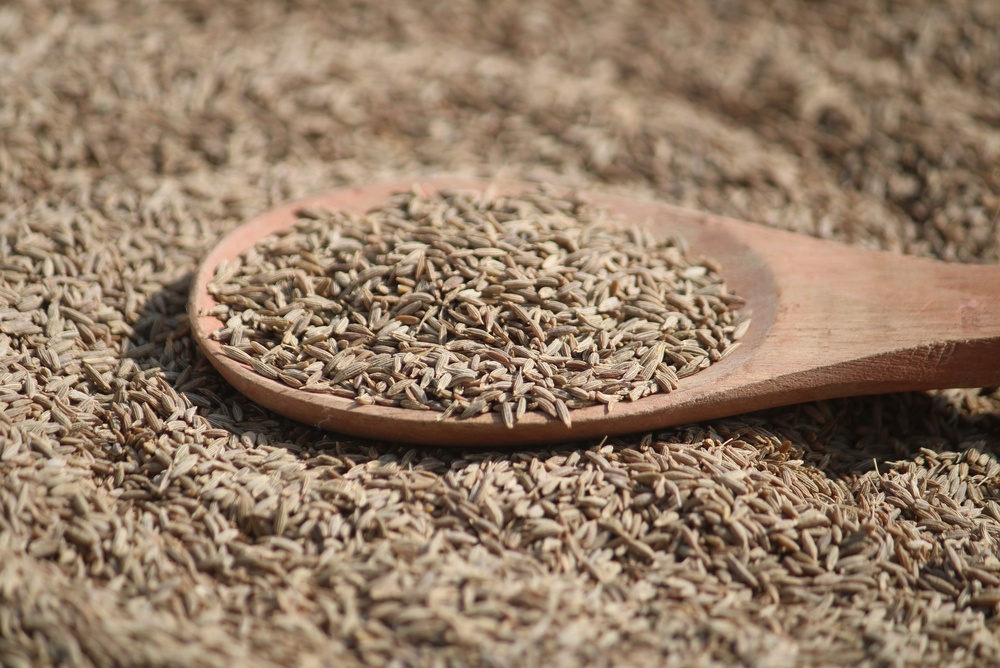
Most African buyers I speak to ask for Singapore 99 grade cumin seeds (I have explained the main cumin seed grades in more detail separately), machine cleaned, with moisture below 10%. Singapore 99 means the seeds are 99% pure, with up to 1% impurity. This is a practical grade for the African market because it balances quality and price well.
Higher grades like Europe 99.5 or sortex cleaned are available, but they cost more, and in my experience most African importers do not ask for them unless they are supplying a premium customer.
The other thing buyers ask about early is packaging. We offer 25 kg and 30 kg PP bags, and most customers prefer 25 kg. The bags are easier to handle at the port and in the warehouse, and they suit the way distributors break up the stock for smaller buyers.
I go to Unjha myself. When I visit my supplier, I check the latest lot and the lab test report before I agree to anything. I do not want to rely only on what someone tells me over the phone. If the lot does not look right or the report is not clear, I do not take it.
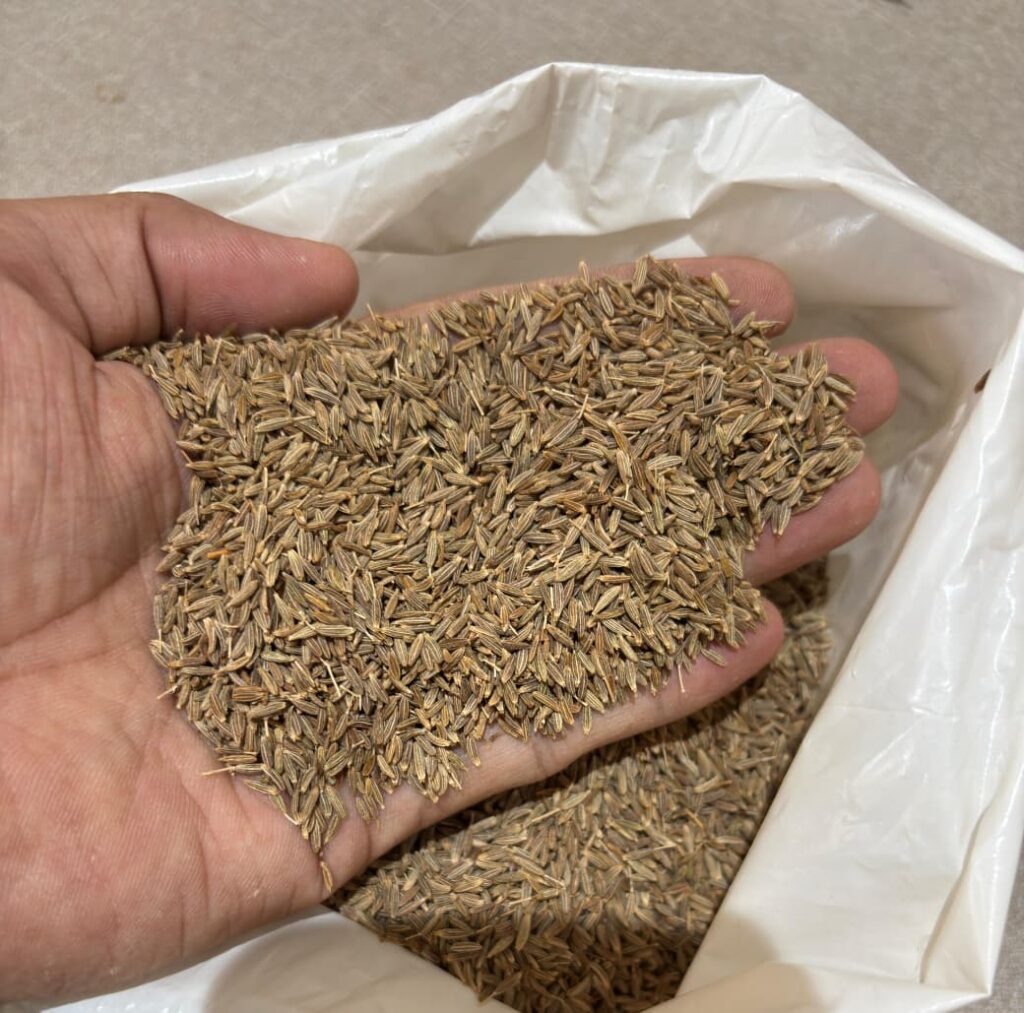
Moisture is something I am strict about. We always keep it below 10%, and it is checked by a lab, not by guesswork. High moisture is one of the main reasons spices get damaged on the way, so this check matters more than people think.
We ship to Africa from Mundra port in Gujarat. Depending on the destination country, transit time is usually between 14 and 21 days.
We are open to both FOB and CIF, and it depends on what the buyer wants. Some buyers have their own freight forwarder and prefer FOB. Others want us to handle shipping and prefer CIF. Both work as long as it is agreed clearly in the contract.
Our shipping company and CHA (customs house agent) take care of the container condition and loading, so that the cargo reaches without dampness or mould. Fumigation is done by an approved agency 24 hours before the container is loaded.
My one shipment to Ghana went smoothly, with no surprises on freight or delays. I know that will not always be the case, which is why the paperwork and the checks before loading are so important.
Every document should match. The same buyer name, the same product description and the same quantities across all of them. A small mismatch can hold a container at the destination port, and the cost of that delay always ends up with someone.
African buyers almost always ask for lab reports before they commit, and I think that is the right approach.
Our payment terms are very clear. We work only on Letter of Credit (LC), and we tell buyers this at the start of the conversation.
The reason is simple. Both sides are dealing with someone they have never met in person, in another country. An LC protects the buyer, because the bank releases payment only when the shipping documents are in order. It also protects me, because the payment is guaranteed by the bank once I meet the LC conditions. It removes a lot of the trust problem from a first deal.
Like every region, Africa has some fake enquiries. A common one I have seen is a “buyer” who asks for an advance payment to cover company registration in their home country before they can place an order. A genuine importer will never ask the supplier to pay for their registration.
Most of these are easy to spot once you have some experience, but new traders on both sides should be careful. There are pros and cons with every market. You just have to learn how to work with them.
The best time to buy Indian cumin is March to July. The new crop arrives at Unjha around February to April, so fresh stock is available and prices are usually lower.

Prices can move a lot. This year, cumin moved from around Rs 190 to Rs 270 per kg. For an importer, buying at the right time can make a real difference to margins.
My Advice for First-Time African Importers
If you are buying Indian cumin for the first time, here are three things I would always do:
Ask for lab reports. Do not accept a lot without a recent test report.
Ask for samples before you place an order. Check the grade, colour and smell yourself.
Check the exporter’s history. Use export-import data sites to see whether the exporter has actually shipped before, and to whom.

And one thing to avoid: never pay anyone an advance for things like registration fees or “release charges” before a proper contract and payment structure are in place.
Getting a cumin shipment right is not complicated, but it does need care at every step: the right grade, a proper lab report, clean documents, safe payment terms and good timing. If both sides get these basics right, the container will reach the warehouse in good condition and the relationship can grow from there.