Connect with us

Logistics

Port of Saldanha Secures R6.9bn Industrial Investment Pipeline

Published

on

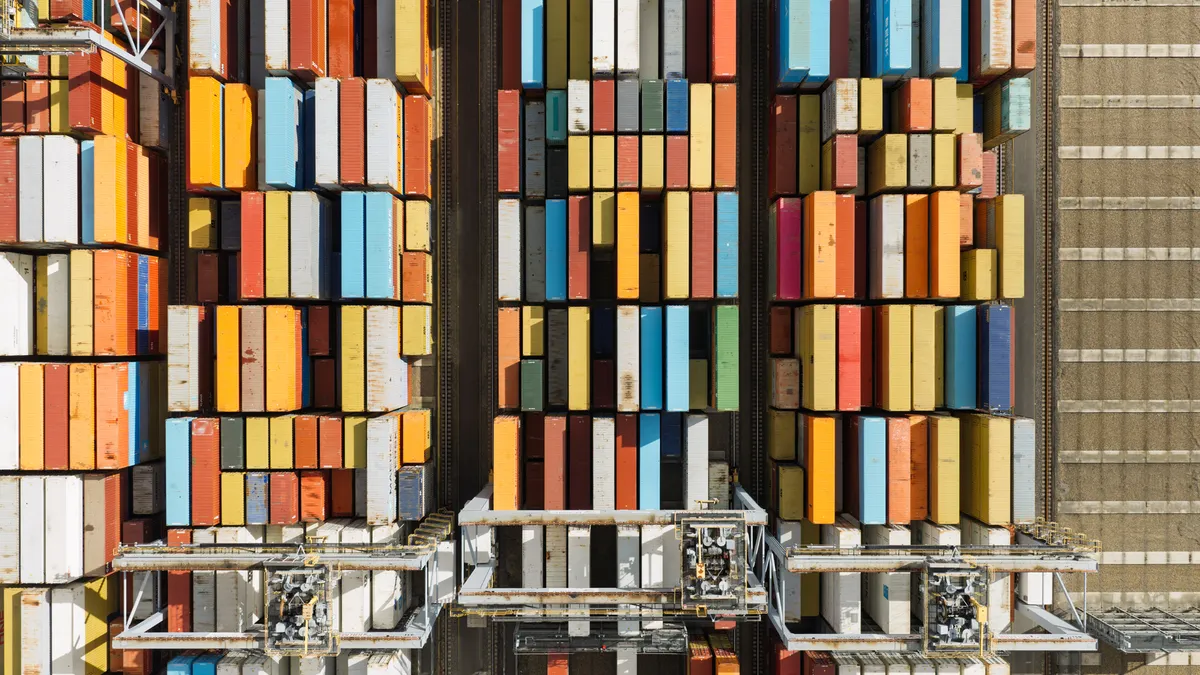
Aerial shot of stacked shipping containers in a shipping yard.

A 25-year lease agreement between Transnet National Ports Authority (TNPA) and Freeport Saldanha could pave the way for new industrial activity at the Port of Saldanha, with a potential investment pipeline valued at approximately R6.9 billion.

Signed on 8 October 2026, the agreement covers around 55 hectares in the port’s Southern Precinct. It provides a long-term framework for industrial development linked to South Africa’s only port-based Special Economic Zone (SEZ).

The investment pipeline includes projects under consideration across marine and bunkering services, industrial development and manufacturing, as well as energy infrastructure. These include potential liquefied natural gas (LNG) import and storage facilities.

The projects are not yet confirmed investments. However, the agreement creates a framework for attracting investors and developing industrial activity around the port.

Connecting Port Infrastructure with Industry

The agreement could have implications beyond the development of industrial land. Ports connect domestic production with international markets, while industrial activity alongside port facilities can create demand for freight, storage and supporting logistics services.

For Saldanha, the opportunity lies in connecting port infrastructure with businesses that rely on marine facilities, shipping and access to export markets.

Freeport Saldanha CEO Xola Sithole said the 25-year lease provides greater certainty for investors. The organisation aims to turn that certainty into signed investor leases, construction activity and employment in Saldanha Bay and the wider West Coast.

If the proposed projects progress, industrial expansion could generate additional demand for the movement of equipment, raw materials and finished products. The scale of that demand will depend on which projects secure investment and move into development.

Potential Growth Across Energy and Manufacturing

The sectors identified in the investment pipeline point to several possible areas of industrial expansion.

Marine and bunkering services could support activity linked to vessels calling at the port, while manufacturing projects could strengthen the connection between port facilities and production. Proposed LNG import and storage infrastructure represents another potential area of development.

Freeport Saldanha’s wider focus includes marine and offshore services, energy, logistics and warehousing, manufacturing and engineering, and agro-processing.

Each sector has different infrastructure and logistics requirements. Their development could influence the types of freight services, industrial facilities and supporting businesses needed around the port.

For now, the lease agreement is the immediate milestone. Individual projects still need to progress before their impact on freight volumes and logistics demand becomes clear.

Turning the Agreement into Industrial Activity

For TNPA, the agreement supports efforts to improve infrastructure utilisation, attract investment and strengthen the role of South Africa’s commercial ports as logistics hubs.

TNPA CEO Mohammed Abdool said the partnership is intended to strengthen the relationship between the Port of Saldanha and the SEZ, creating conditions for investment, exports and opportunities across the logistics value chain.

The next stage will be translating the agreement into investor commitments, development activity and operational projects.

For the supply chain, the significance of the lease will ultimately depend on what follows. New industrial facilities could expand demand for freight and supporting services, but those benefits will emerge only as projects secure investment and move towards implementation.

The agreement gives Saldanha a long-term framework for industrial development. Whether the R6.9 billion pipeline becomes a meaningful driver of freight and logistics activity will depend on how much of that potential moves from proposal to delivery.

Continue Reading

Logistics

South Africa’s Rail Revival Matters for the Cost of Online Shopping

Published

on

Sahil Affriya, Founder and CEO of Shiprazor poses in a black suit and tie.

South Africa’s logistics bill is projected to reach R1.16 trillion in 2026, equivalent to 14.6% of GDP, with transport accounting for R683 billion, according to the latest State of Logistics research.

For smaller e-commerce businesses operating on tight margins, high logistics costs are particularly challenging. Unlike larger retailers, they often lack the volumes and negotiating power to secure competitive freight rates. Opening South Africa’s rail network to private operators could reduce long-distance transport costs and create savings across the supply chain. “Smaller online businesses don’t have the same bargaining power as big retailers,” says Sahil Affriya, Founder and CEO of Shiprazor. “When delivery costs rise, they either absorb the expense or pass it on to customers. A more efficient logistics network could help level the playing field.”

Rail Reform Is Starting to Move

In May 2026, Transnet Rail Infrastructure Manager (TRIM) concluded access agreements with 11 new train operating companies, with the initial allocations expected to introduce an additional 24 million tonnes of annual freight capacity. Grindrod completed the first private freight test train under the new open-access framework in November.

“Think about how much stock moves between Durban and Johannesburg every day. That stock has to reach distribution centres, warehouses and stores before it ever becomes a customer order,” says Sahil Affriya, Founder and CEO of Shiprazor. “If we can move those goods more efficiently over long distances, we have an opportunity to take some of the cost out of the supply chain.”

The Cost of Relying on Roads

Rail underperformance cost South Africa R180.8 billion in 2025, according to GAIN Group’s latest research. Freight volumes on the Durban–Gauteng corridor fell from 12.6 million tonnes in 2017/18 to 6.7 million tonnes in 2024/25, increasing the pressure on road freight.

Rail offers potential savings when moving large volumes over long distances, but reliability is just as important.

“For retailers to benefit from rail reform, they need confidence that stock will arrive when it’s expected,” says Affriya. “That predictability allows businesses to plan inventory, avoid unnecessary transport costs and keep products available for customers.”

While consumers shouldn’t expect courier prices to fall overnight, lower freight costs could eventually give retailers more room to offer competitive product prices and affordable delivery options.

What This Means for the Price of a Parcel

Cheaper freight doesn’t automatically mean cheaper parcel deliveries. Warehousing, packaging, handling and last-mile delivery all add to the final cost.

Consider a R500 online order generating R150 towards profit before fulfilment. After R20 for packaging and handling and R75 for delivery, the merchant is left with R55, or 11% of the sale. Reduce the delivery cost by just R15, and that contribution increases to R70, a 27.3% improvement.

“That’s why every rand spent on delivery matters,” says Affriya. “Free shipping isn’t free for the retailer. The cost comes out of their margin, and small savings across hundreds or thousands of orders can make a real difference.”

Rail reform could help retailers move stock more affordably between major centres, but businesses still need to manage costs across the entire delivery chain.

“I believe the next phase of South Africa’s logistics transformation will be about connecting the different parts of the supply chain,” says Affriya. “Rail can make long-distance freight more efficient, but technology, courier networks and smarter fulfilment planning will determine whether those savings reach smaller businesses that don’t have the negotiating power of major retailers. If we get that right, merchants could operate more competitively, and consumers could eventually benefit through better pricing and more affordable delivery options.”

Continue Reading

Freight Forwarding

Opinion Piece: Logistics Reform Must Deliver Reliable Trade in 2027

Published

on

Head shot of Dave Logan, Executive Officer of the South African Freight and Logistics Association (SAFLA).

By Dave Logan, Executive Officer of the South African Freight and Logistics Association

As 2026 draws to a close, South Africa’s logistics reforms have tangible milestones to show. The task for 2027 is to make those changes commercially useful. Freight forwarders and their customers need dependable delivery windows and costs they can plan around. Uncertainty ties up working capital, erodes margins and weakens confidence in South African supply chains.

What 2026 Demonstrated

Durban Container Terminal Pier 2’s private operating partnership took effect in January. In November, Grindrod completed its first open access test train, with commercial operations planned for 2027. These developments deserve support. At Pier 2, private participation builds on earlier recovery and public equipment investment. The next test is sustained service that cargo owners can book and trust.

For smaller forwarders and transporters, delays become financing problems. Storage, demurrage, detention and idle vehicles can consume a shipment’s margin before payment arrives. Improving terminal output matters, but the benefit must reach the business waiting for its cargo through lower total delivery costs and greater predictability.

Global tariff changes and shipping disruption have reinforced the need for viable alternatives. A different port or route is useful only when capacity, permits and commercial terms have been checked. South Africa’s response must include greater predictability at home.

Priorities for 2027

Rail access must translate into dependable services. Transparent slot allocation, fair access charges and credible maintenance obligations are essential. Infrastructure management must treat new operators and Transnet Freight Rail fairly. Smaller cargo owners need practical aggregation and intermodal services. Lower costs will depend on utilisation and reliability.

Corridor performance must include customs and other control agencies. Faster port handling has limited value if cargo then waits for permits or an inspection. Government, Transnet and industry should agree corridor service standards, align operating windows with demand and name the authority responsible for resolving each hold. Regional trade ambitions depend on these handovers working.

Digitalisation should remove repeated submissions and make release decisions easier to act on. This requires common data standards, coordinated processes and clear permissions for sharing commercially sensitive information. A portal that adds another fee or duplicates paperwork can increase costs. Affordable access, training and workable outage procedures must be part of implementation.

Security requires intelligence sharing and coordinated action against cargo crime and infrastructure theft. Driver welfare belongs in that response: safe rest facilities, decent staging conditions and realistic schedules support safer operations. Cargo owners, operators, infrastructure managers and law enforcement share responsibility.

Sustainability investment should follow sound operating economics. Reducing empty running, fuel waste and avoidable waiting can lower costs and emissions. Modal shifts need reliable services. Customers’ emissions requirements should be met with credible data and proportionate support for smaller firms.

What SAFLA Is Asking For

SAFLA calls for a published baseline and quarterly reporting on priority corridors. Measures should include truck turnaround, delivery reliability, border queue-to-release time and the cost of avoidable delays. Reporting must show the longer delays operators must plan for alongside averages. Each improvement needs an accountable owner and deadline, supported by transparent charging and effective escalation.

Industry must also improve shipment data, invest in compliance skills and agree realistic delivery commitments. SAFLA’s role is to bring operational evidence, including SME experience, into structured engagement that resolves recurring failures.

The measure of reform in 2027 will be the next compliant shipment: whether its delivery is easier to plan, less costly to finance and more dependable. That is how reform earns lasting industry support.

Continue Reading

Logistics

SARS and Zambia Connect Customs Systems to Improve Regional Trade

Published

on

A digital map of cross border operations and global transport network.

The South African Revenue Service (SARS) and the Zambia Revenue Authority (ZRA) have signed an agreement to exchange customs information electronically before goods reach the border, marking another step towards more connected trade systems across Southern Africa.

Announced on 23 November 2026, the agreement supports a regional customs corridor designed to improve risk assessments, strengthen trade information and support the movement of legitimate goods. According to the SARS announcement, the arrangement follows a similar agreement with the Malawi Revenue Authority signed on 30 July 2026.

Under the agreement, the two authorities will exchange information on consignments moving between their customs territories. This will allow customs officials to review relevant shipment details before cargo arrives, rather than relying solely on checks conducted when goods reach the border.

The information can support pre-arrival and post-arrival risk assessments, targeted inspections and audits, as well as the preparation of customs declarations using information already submitted by traders.

Improving Cross-Border Freight Processes

For businesses moving goods through regional trade corridors, the ability to share customs information in advance could help improve the predictability of cross-border movements.

By reconciling export and import information before consignments arrive, authorities can identify discrepancies earlier and prepare for incoming cargo. This includes potential issues involving tariff classifications, declared values, quantities, goods descriptions and the origin or destination of shipments.

The approach is also intended to reduce duplicated processes and unnecessary interventions for compliant traders, while allowing customs administrations to focus resources on higher-risk consignments.

Importantly, the initiative does not remove customs controls. Instead, it aims to make them more informed by using data shared between participating authorities.

Building a Wider African Customs Corridor

The agreement with Zambia forms part of SARS’ broader Customs Connectivity programme, which aims to establish reciprocal exchanges of export declaration data with regional customs administrations.

Engagement with Zimbabwe is progressing, while the Democratic Republic of the Congo has been identified for possible future inclusion. The longer-term programme envisages harmonised data, interoperable systems and the use of a common Unique Consignment Reference to support customs risk management.

The initiative also supports the African Continental Free Trade Area’s (AfCFTA) objectives around customs cooperation, harmonisation and trade facilitation. Connected digital systems are intended to help countries exchange information on goods and transport before they reach border posts.

For South African importers, exporters and logistics operators, these developments could contribute to more predictable regional freight movements as customs authorities improve the way they share and process trade information.

The effectiveness of the corridor will ultimately depend on how the participating administrations implement the arrangements and integrate shared information into their customs processes.

Article adapted from a media release issued by the South African Revenue Service (SARS).

Continue Reading

ADVERTISEMENT

Random Image
Advertisement

Trending