Connect with us

Logistics

What Makes a Warehouse Efficient?

Published

on

Admin

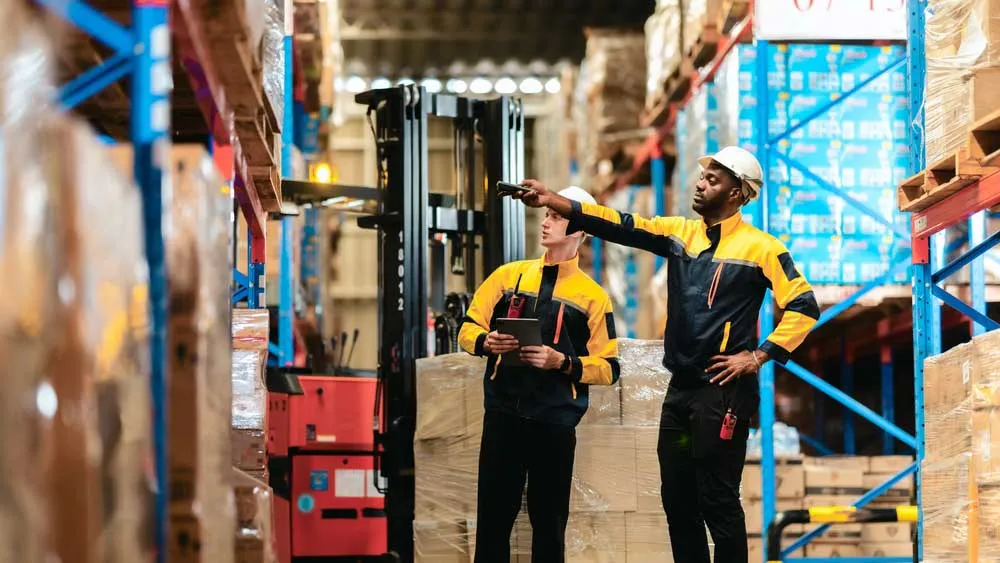
Walk into two warehouses of a similar size and, at first glance, they may look much the same. The shelving is in place, forklifts are moving and orders are being prepared for dispatch. Spend a little more time on the floor, however, and the differences quickly become apparent. One warehouse operates with purpose, while the other is constantly working to recover from delays, misplaced stock and bottlenecks.

Efficiency isn’t simply about moving faster. It’s about creating an environment where people, processes and technology work together to keep goods moving consistently from the moment they arrive to the moment they leave. As supply chains become more complex and customer expectations continue to grow, an efficient warehouse has become one of the strongest assets a business can have.

Good Warehouse Design Reduces Unnecessary Movement

Every extra step inside a warehouse takes time. When employees have to travel long distances to retrieve stock or forklifts regularly cross paths with picking teams, productivity quickly starts to suffer.

An efficient warehouse is designed to keep movement to a minimum. Receiving areas, storage locations, picking zones and dispatch bays are arranged to support the natural flow of goods through the facility. The goal isn’t to rush people from one task to the next. It’s to remove the obstacles that slow them down in the first place.

Knowing Where Stock Is Matters

Most warehouse delays don’t start when an order is placed. They begin much earlier, when inventory records don’t match what’s actually sitting on the shelves.

Having an accurate view of stock allows warehouse teams to pick orders with confidence, replenish inventory before shortages occur and avoid unnecessary delays. Barcode scanning, warehouse management systems and regular stock checks all help create a clearer picture of what’s happening inside the warehouse, making it easier to plan ahead instead of constantly reacting to problems.

Experienced Teams Keep Operations Running

Technology has changed the way warehouses operate, but it hasn’t changed the importance of the people working inside them. Experienced warehouse teams know how to manage busy periods, solve unexpected problems and keep orders moving when the day doesn’t go exactly as planned.

Clear processes, ongoing training and good communication often make a bigger difference than people realise. Even the most advanced warehouse systems rely on teams using them effectively, which is why investing in people remains just as important as investing in equipment.

Technology Supports Better Decisions

Warehouse technology has come a long way over the past decade. What was once used primarily to record stock movements is now helping businesses understand how their operations perform throughout the day.

Warehouse management systems, real-time reporting and automated data collection give managers better visibility across the facility. Instead of waiting for problems to appear, they can identify congestion, monitor inventory trends and make informed decisions that keep operations running smoothly.

A Warehouse Is Only One Part of the Journey

An efficient warehouse doesn’t just improve what happens inside its own walls. It helps trucks load on time, orders reach customers sooner and the wider supply chain run more smoothly. That’s why warehouse efficiency is about more than storage or speed. It’s about creating an operation that businesses can rely on, even when the day doesn’t go exactly to plan.

Continue Reading

Freight Forwarding

Why Empty Kilometres Are Still One of Logistics’ Biggest Challenges

Published

on

Model freight truck on a stock chart

Next time you’re driving on the N3, take a look at the trucks around you. Some will be carrying supermarket stock, vehicle components or building materials. Others, despite looking exactly the same, won’t be carrying anything at all.

Their deliveries have already been completed, and they’re making the journey back with an empty trailer.

For the average motorist, it probably goes unnoticed. For the logistics industry, it’s one of the biggest challenges on South Africa’s roads.

Every kilometre still costs money. The truck still burns fuel, the tyres continue to wear, the driver is still on the clock and the vehicle is unavailable for another job. The only thing that’s missing is the load.

The Delivery Might Be Finished, But the Trip Isn’t

Dropping off the last pallet doesn’t mean the day’s work is over.

As soon as a truck is unloaded, the focus shifts to the next journey. Ideally, there’s another load waiting nearby. If there is, the vehicle keeps moving and continues earning revenue. If not, it heads back empty, ready for its next assignment.

That might not sound like a major issue, but think about it across hundreds of trucks travelling every day. What looks like the occasional empty trailer quickly becomes thousands of kilometres where expensive equipment is moving without transporting a single product.

Empty Space Comes at a Cost

It’s easy to assume empty kilometres are mainly about fuel, but the impact runs much deeper.

Every trip still adds wear to the truck. Drivers still spend hours on the road. Maintenance schedules don’t change simply because the trailer is empty. More importantly, every truck travelling without freight is capacity that could have been used somewhere else.

In an industry where margins are often tight, getting more from the fleet you already have is usually far more valuable than simply adding another vehicle.

There’s No Simple Fix

If reducing empty kilometres were easy, the problem would have disappeared years ago.

A return load isn’t always available where a delivery ends. Customer collection times may not line up. Warehouses have different operating hours. Production schedules change. Sometimes the next load is simply too far away to make commercial sense.

That’s why transport planners spend so much time looking beyond individual deliveries. They’re constantly trying to connect one journey to the next, finding opportunities to keep trucks loaded for as much of the day as possible.

Technology has made that easier, but it hasn’t replaced experience. Knowing where freight is moving, understanding customer operations and building strong relationships across the supply chain still play a huge role in making those decisions.

Every Journey Counts

Whether a truck returns with another load often has very little to do with the transport company alone. Production schedules, warehouse operations, customer delivery windows and even where businesses are located all influence what happens once a delivery has been completed.

Most people driving past a truck will never know whether it’s carrying a full load or an empty trailer, and chances are they’ll never think twice about it. Yet for the businesses behind the scenes, that difference shapes everything from operating costs to fleet capacity and customer service. In logistics, making the delivery is only part of the job. Finding a way to make the journey back count is where the real challenge begins.

Continue Reading

Logistics

When Demand Changes, Supply Chains Need to Keep Up

Published

on

Close up of a shipping yard worker completing paper work on a clipboard

Not that long ago, supply chains relied heavily on forecasts. Businesses analysed previous sales, estimated future demand and planned months ahead. Inventory was ordered, transport was booked and warehouse space was allocated based on what companies expected customers to buy.

Forecasting is still an important part of supply chain planning, but business doesn’t always follow the plan.

Customer demand can change far more quickly than it once did. A product can suddenly become popular after receiving attention online, seasonal demand may arrive earlier than expected or economic conditions can change how consumers spend almost overnight. In those moments, businesses that stick rigidly to the original forecast often find themselves reacting too late.

The conversation is gradually shifting. Rather than asking, ‘Did we forecast correctly?’, more organisations are asking, ‘How quickly can we respond when demand changes?’

Forecasts Are the Starting Point, Not the Finish Line

Forecasts remain one of the most valuable planning tools in the supply chain. Manufacturers still need time to produce goods, procurement teams need to secure materials and transport providers need advance notice to plan capacity.

The difference is that forecasts are no longer treated as something that can’t be changed. They’re becoming working plans that evolve as new information comes in.

That flexibility is proving just as valuable as the forecast itself.

Listening to What the Supply Chain Is Telling You

Every customer order, inventory movement and delivery generates information. On its own, that data doesn’t say much. Over time, though, it begins to paint a picture of how demand is changing.

A product that starts selling faster than expected gives planners the opportunity to adjust purchasing before stock runs out. Equally, slower sales can signal that it’s time to rethink future orders before excess inventory starts filling valuable warehouse space.

It’s less about reacting to every fluctuation and more about recognising when a change is becoming a trend.

Responding Takes More Than Good Data

Knowing that demand has changed is only part of the challenge. The real test is whether the rest of the supply chain can respond.

If procurement can’t source materials quickly enough, warehouses don’t have available capacity or transport schedules can’t be adjusted, even the best demand information has limited value.

That’s why visibility has become so important. When procurement, warehousing, transport and inventory teams are working from the same picture, they’re able to make decisions with far greater confidence and far fewer surprises.

Adaptability Is Becoming a Competitive Advantage

No forecast will ever be perfect, and most supply chain professionals know that. The real advantage comes from recognising when reality begins to drift away from the original plan and having the flexibility to respond before customers feel the impact. Businesses will always need forecasts. They provide direction, support investment decisions and help supply chains prepare for what’s ahead. Increasingly, though, success depends just as much on what happens after the forecast is written as it does on the forecast itself.

Continue Reading

Logistics

The Growing Trade-Off Between Supply Chain Efficiency and Resilience

Published

on

Warehouse worker walking through a warehouse with a laptop

For decades, supply chain performance was measured by one overriding objective: efficiency. Businesses invested heavily in reducing inventory, shortening lead times, consolidating warehouse networks and removing unnecessary costs from their operations. Leaner supply chains were widely seen as stronger supply chains.

Today, that assumption is being challenged.

Disruptions are no longer isolated events that happen once every few years. Port congestion, supplier shortages, transport delays, infrastructure constraints and shifting customer demand have become familiar parts of the logistics landscape. The question is no longer whether disruption will occur, but how well a business can respond when it does.

An efficient supply chain is designed for normal operating conditions. A resilient supply chain is designed for the exceptions.

When Efficiency Creates Risk

Lean operations have transformed supply chains around the world. Lower inventory levels reduce carrying costs, fewer suppliers simplify procurement and centralised distribution networks often improve operational efficiency.

Those same decisions, however, can also reduce flexibility. A manufacturer relying on a single supplier may benefit from lower purchasing costs, but a disruption at that supplier can quickly affect production. Likewise, a centralised distribution centre may reduce operating expenses, yet any disruption at that facility can impact customers across an entire region.

Efficiency remains essential, but many businesses are recognising that removing every buffer from the supply chain can introduce new risks that are far more expensive when something goes wrong.

The Return of Strategic Buffers

For years, holding additional inventory was often viewed as inefficient. Today, that conversation is becoming more balanced.

Safety stock, once seen primarily as an added cost, is increasingly being recognised as a practical way to manage uncertainty. The same applies to supplier diversification. While working with multiple suppliers can increase procurement complexity, it also reduces dependence on a single source for critical materials or components.

These decisions don’t represent a move away from efficiency. They reflect a growing recognition that resilience sometimes requires carefully planned redundancy rather than eliminating every spare capacity within the network.

Looking Beyond a Single Distribution Centre

For many businesses, operating from one large distribution centre has always made financial sense. It can simplify operations, reduce overheads and make inventory easier to manage. The challenge comes when that one facility experiences delays or has to support customers spread across a large geographic area.

That’s why some organisations are taking another look at how their networks are set up. Regional distribution centres may cost more to operate, but they can shorten delivery times, reduce transport distances and make it easier to keep goods moving when one part of the network comes under pressure.

Technology is helping businesses make those decisions with greater confidence. Instead of relying on assumptions, supply chain teams can see how inventory is moving, where transport delays are occurring and which parts of the network are carrying the most risk.

Looking Beyond the Lowest Cost

For a long time, supply chain performance was judged largely on cost. Lower transport spend, leaner inventory and better warehouse utilisation were all signs of an efficient operation.

Those measures still matter, but they’re no longer telling the whole story. Businesses are also asking different questions. How quickly can we recover if a supplier can’t deliver? How much disruption can our network absorb before customers feel the impact? Are we meeting service expectations consistently, even when conditions change?

Those questions don’t replace efficiency – they add another layer to it. The strongest supply chains aren’t always the cheapest to run. More often, they’re the ones that continue performing when the unexpected becomes part of the working day.

Continue Reading

Trending