Connect with us

Logistics

Delivering Change: How Logistics Helps Connect Communities and Create Social Impact in South Africa


Published

on

Admin

Every day, FedEx connects people, businesses and communities through its global network. While that network is best known for moving packages around the world, its impact extends beyond commerce. The same expertise that helps keep supply chains moving can also help connect communities with the resources, opportunities and support they need to thrive.

Across South Africa, community organisations are working to address local challenges and expand opportunities for young people. Their impact, however, depends not only on funding and commitment, but also on the ability to reach people consistently and effectively. From delivering essential resources to bringing together volunteers and community partners, logistics plays an important role in turning good intentions into meaningful action.

“Social impact does not happen in isolation,” says Nelson Teixeira, Managing Director of Operations for Sub-Saharan Africa at FedEx. “Whether it’s supporting youth programmes, enabling volunteers or helping organisations reach underserved communities, reliable logistics plays an important role in making that impact possible.“

Through FedEx Cares, the company’s global community engagement programme, FedEx works alongside nonprofit organisations, customers and team members to help strengthen communities, create opportunities for young people and inspire employee volunteerism. In South Africa, this commitment comes to life through initiatives that reflect the spirit of Mandela Day – bringing people together to make a meaningful difference through collective action.

One example is FedEx Play Parks, delivered in partnership with Kids Collab. The initiative expands access to safe, inclusive and structured play spaces for children in underserved communities, helping support physical development, social wellbeing and stronger social connections.
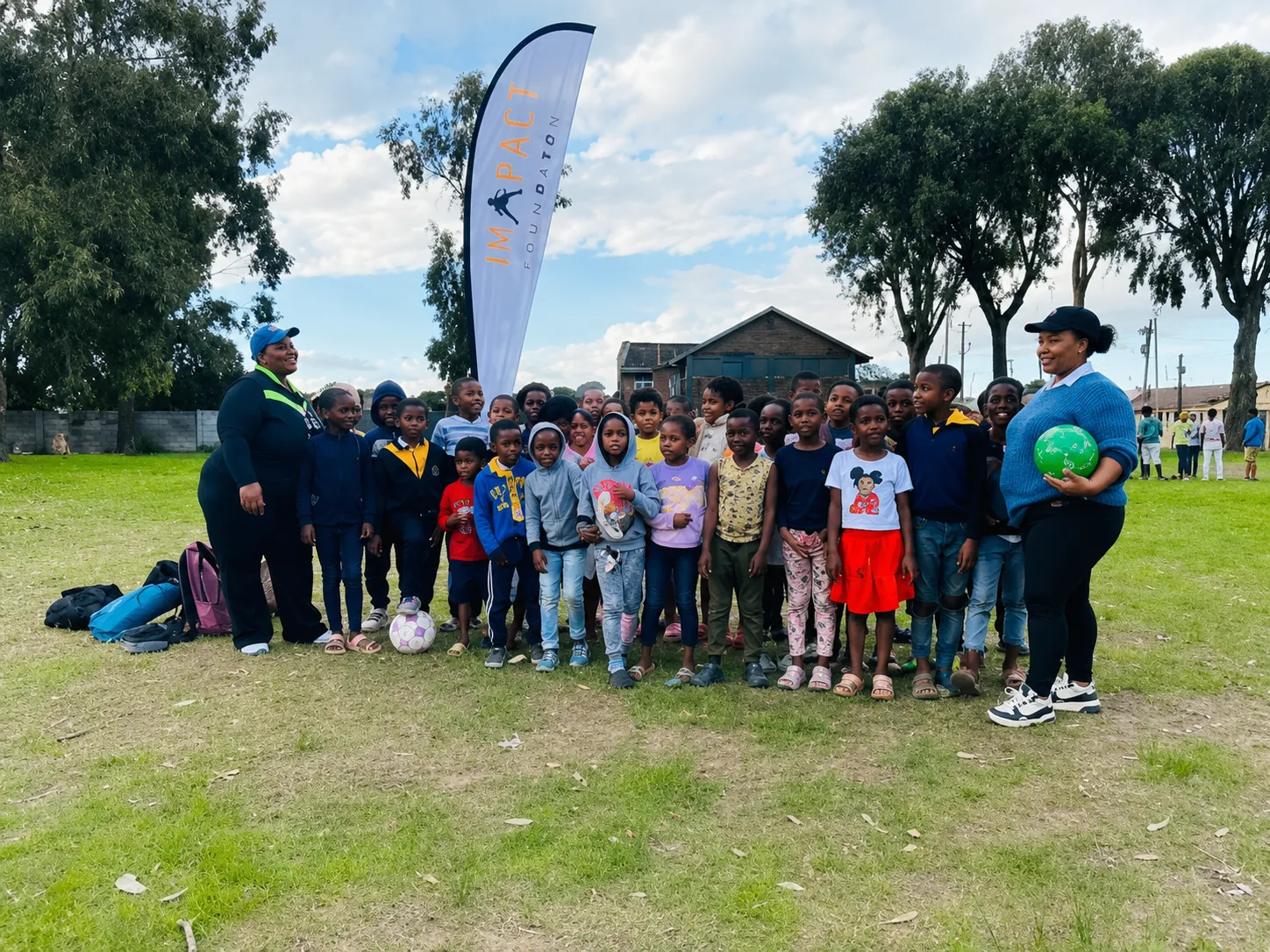
Complementing this effort, FedEx Day of Play brings together children, community organisations and FedEx volunteers through activities that encourage participation, play and connection. As part of the company’s Mandela Day activities, it reflects FedEx’s commitment to creating positive experiences that leave a lasting impact.

FedEx also supports organisations such as Sporting Chance, whose Street Soccer Programme uses sport to promote youth development, life skills and social inclusion. Together, these initiatives help create environments where young people can build confidence, develop new skills and realise their potential.

“Collaboration is essential when it comes to addressing complex social challenges,” says Teixeira. “Community organisations bring local knowledge and trusted relationships, while businesses can contribute skills, resources and operational expertise. When these strengths come together, it becomes possible to create initiatives that have a broader and more lasting impact.“

That spirit of collaboration is reflected in the commitment of FedEx team members, who volunteer their time and expertise alongside community organisations throughout the year. Their involvement demonstrates that creating meaningful impact is not only about investment, but also about showing up, contributing and supporting the communities where they live and work.

As South Africa continues to create new opportunities for young people and strengthen community wellbeing, collective action will remain essential. Through FedEx Cares, FedEx remains committed to using its people, expertise and global network to help create opportunities, strengthen communities and deliver lasting social impact.

“At its core, logistics is about connecting people with possibility,” concludes Teixeira. “When those connections help young people access new opportunities and strengthen the communities around them, we see the impact that is possible when we work together.“

Continue Reading

Logistics

The Distribution Gap Holding Back South Africa’s Township Economy

Published

on

Landscape shot of a Capetonian township.

South Africa’s township economy is not only facing a demand problem. For many businesses, the bigger challenge may be getting the right products to the right place at a competitive price.

The 2026 Rural and Township Economy Report highlights significant procurement and distribution challenges facing businesses outside the country’s major commercial centres. According to the Department of Trade, Industry and Competition (the dtic), informal businesses face higher procurement costs and limited access to formal distribution channels, while consumers can face higher effective prices because of limited product variety and quality.

For the supply-chain industry, this points to a problem that sits further upstream than the shop itself.

If a business cannot source products reliably, competitively and in sufficient volume, its ability to compete is constrained before the customer even walks through the door.

The Cost of Getting Stock

Procurement is one of the clearest pressure points.

The Competition Commission’s Rural and Township Economy Project identifies constraints in how township and rural businesses source and sell goods, with smaller businesses facing challenges that can prevent them from scaling and integrating more fully into broader value chains.

The issue is partly one of scale.

A small retailer buying limited quantities does not necessarily have the same purchasing power as a larger chain. That can affect the prices it pays, the range of products it can stock and how frequently it can replenish inventory.

The result is a cycle where scale becomes an advantage not only for retailers, but for businesses further up the supply chain as well.

A business that pays more for stock has less room to compete on price. If it cannot reliably obtain popular products, it also risks losing customers to businesses that can.

Distribution Determines What is Available

Price is only one part of the problem.

Stock availability matters just as much.

The dtic has identified stock availability as a key challenge for township businesses, noting that consumers are less likely to return when products are out of stock. The department has also highlighted the need for better supply-chain management and point-of-sale technology to improve the customer experience.

That changes how the distribution problem should be viewed.

A product sitting in a national warehouse does not necessarily help a consumer in a township. It still needs to move through the right wholesale or distribution channel, reach the local business at the right time and be available when the customer wants it.

This final connection can be easy to overlook when supply chains are designed primarily around large formal retailers.

The Route to Market Matters Too

The challenge also works in the other direction.

Many township businesses are heavily dependent on their immediate local customer base, limiting their ability to reach larger markets.

That creates a similar problem for producers and manufacturers. A business may have a product that could sell beyond its immediate area, but reaching those customers requires access to distribution, retail and digital channels that may not be readily available.

The supply chain therefore affects both sides of the market: how businesses get products in and how they get products out.

That is particularly important if South Africa wants township enterprises to become more integrated into broader manufacturing and distribution networks rather than remaining largely localised.

Could Aggregation Help?

One potential way to address the scale problem is through greater purchasing power.

In a recent address to women entrepreneurs, Deputy Minister of Trade, Industry and Competition Zuko Godlimpi encouraged township businesses to form partnerships and cooperatives so they can buy and sell in greater volumes.

The logic is straightforward. If smaller businesses can aggregate their demand, they may be able to access some of the purchasing advantages normally associated with larger buyers.

Government has already incorporated this principle into support for township community convenience stores. The dtic’s Spaza Shop Support Fund includes support for stock procurement and delivery, while the department has said the programme is intended to strengthen links between spaza shops, local manufacturers, black industrialists and wholesalers through bulk purchasing arrangements.

But aggregation still needs infrastructure behind it.

Someone has to consolidate orders, manage inventory, arrange transport, handle storage and distribute stock. Without those capabilities, simply combining purchasing power will not solve the wider distribution problem.

Closing the Distribution Gap

South Africa has no shortage of entrepreneurial activity in its townships. The challenge is making it easier for those businesses to participate in supply chains that extend beyond their immediate surroundings.

That means looking beyond the individual retailer.

Better wholesale networks, more efficient distribution channels, technology that improves stock visibility and logistics models designed around smaller businesses could all help reduce some of the disadvantages created by limited scale.

It also means recognising that access to a product is not the same as access to a supply chain.

A township retailer may technically be able to buy a product, but if it pays more, receives inconsistent supply or has limited access to alternative suppliers, it is competing from a weaker position.

The 2026 Rural and Township Economy Report makes clear that procurement, stock availability and access to distribution remain important barriers for many smaller businesses.

Closing that gap will therefore require more than encouraging businesses to grow. It will require supply chains that allow them to buy competitively, maintain reliable stock and reach more customers.

For South Africa’s township economy, better distribution could be one of the practical ways to turn local business activity into businesses that can genuinely scale.

Continue Reading

Logistics

Opinion Piece: Transparency is Becoming the New Competitive Advantage in Workforce Logistics

Published

on

Female warehouse worker using a laptop with an AI tool running the logistics of the warehouse.

By Maureen Phiri, Director at Oxyon People Solutions

In the past, the logistics of workforce management have tended to happen behind the scenes. Clients saw the end result of staff arriving on site, projects being delivered, and operational requirements being met, but the processes that made it possible were mostly invisible. However, this approach is now beginning to change, thanks to Artificial Intelligence (AI) becoming more integrated into workforce management.

Workforce providers can now give their clients greater visibility into the processes behind staffing. This means that clients have a better understanding of workforce readiness, compliance, and operational performance, which in turn allows them to make faster, more informed decisions. For workforce providers, this means that administrative functions can become strategic assets that strengthen collaboration, build trust, and create greater value for clients.

AI is Connecting the Workforce Journey

Clients are looking for increased transparency when it comes to their outsourced staffing processes. For workforce providers to be able to do this, they need to bring together information from across the workforce lifecycle. Previously, this would have been a labour-intensive task, but AI makes it much quicker and easier to collate information from across separate systems like recruitment, onboarding, compliance, and workforce management.

Connecting these functions allows workforce providers to have a much clearer view of workforce readiness and allows them to share relevant information with clients in real time. This means that instead of waiting for reports or updates, clients can see where people are in the recruitment or onboarding process at any time. It also helps them to  understand whether compliance requirements have been met, and identify any potential issues in the process.

This changes the role of workforce logistics, because the information that was previously only used to support internal operations can become a competitive advantage. With AI behind the scenes, this information can help clients plan more effectively, respond more quickly, and work more closely with their workforce partners.

Making the Back Office Visible

Take onboarding as an example. Traditionally, clients would only become involved in the process once a worker was ready to start, but using AI means that workforce providers can give their clients visibility throughout the process. This means that clients can see how onboarding is progressing as it happens, and any problems that might cause delays can be identified and dealt with early.

The same applies to compliance. With visibility throughout the recruitment processes, clients can easily see whether compliance requirements are being met, rather than only being notified when a problem occurs. This reduces risk, because issues can be handled before they can have a negative effect on client operations.

When it comes to workforce administration, the benefits are similar. Having real-time visibility into information that used to only be used internally at a workforce provider means that clients are more informed and can make better operational decisions.

More Transparency Builds Stronger Partnerships

Better visibility helps to improve reporting, but it can also change the relationship between workforce providers and their clients. If workforce providers give their clients ongoing access to more information, the whole process becomes more proactive. Problems can be identified quickly and decisions can be made faster. Added to this,  both clients and workforce providers can understand the workforce journey better, as it happens. 

It is important, however, to remember that responsible data management is essential. Giving clients more visibility into workforce processes does not mean providing unrestricted access to personal employee information. AI should help organisations share the information clients need to make better business decisions, but it should also be used to make sure that personal employee data is always protected.

Clients and workforce providers also need to remember that technology should never replace human judgement. AI can process information quickly and can identify potential problems, but any decisions about recruitment, onboarding, and workforce management must still be made by people who can use their experience to consider the circumstances and take responsibility for the outcome.

The Future of Workforce Logistics

AI is increasingly becoming part of workforce management, but the real value of these tools is not just in automating administrative tasks. If workforce providers can use AI to make workforce processes more transparent, they can give their clients better visibility into the information that supports operational decisions, including onboarding and compliance. This is fast becoming a competitive advantage that helps workforce providers strengthen client relationships, support better decision-making, and demonstrate the value of their expertise.

Maureen Phiri, Director at Oxyon People Solutions.

Maureen Phiri, Director at Oxyon People Solutions

Continue Reading

Logistics

Building Supply Chain Resilience When Weather Disrupts the Network.

Published

on

Aerial shot of a blue delivery van driving in a heavy storm.

Heavy rain, dense fog, flooding and icy conditions can affect roads, routes and delivery schedules with little warning. For businesses, the consequences can move quickly beyond a delayed parcel. Inventory can be stranded, customer commitments can be missed, production schedules can be disrupted and revenue can be put under pressure.

In South Africa, disruption is often localised. Rain in the Western Cape, fog in parts of Gauteng and Mpumalanga, or hazardous conditions on inland routes may affect one part of a network while operations elsewhere continue. In a connected network, however, a local disruption can create a wider ripple effect when shipments, inventory and delivery commitments depend on connected routes.

For FedEx, resilience is therefore not about trying to eliminate disruption. It is about having enough visibility to see risk early, enough flexibility to adjust the plan and the operational capability to respond before a local problem becomes a wider business issue.

“Weather can add another layer of complexity to logistics operations, especially when poor visibility, road closures or changing conditions affect planned routes,” says Nelson Teixeira, Managing Director of Operations for Sub-Saharan Africa at FedEx. “Businesses that understand where their risks are and have contingency plans in place are in a stronger position to adjust when needed and communicate proactively with customers.”

FedEx transport van travelling through the country side.

Prepare for Disruption

The strongest response to a weather event often begins before the weather arrives. Businesses should know which shipments, routes and inventory positions are most critical to continuity. That can mean identifying alternative routes, allowing appropriate contingency in time-sensitive deliveries, reviewing where critical inventory is held, and establishing clear priorities for shipments that cannot afford extended delays.

This is where the relationship with a logistics provider matters. A resilient network is not simply a collection of transport options; it is the ability to use those options when circumstances change.

For businesses moving urgent or export-bound goods, flexibility can also mean having access to services designed around time-sensitive international movement. FedEx International Priority® is a time-definite, customs-cleared international service available to more than 220 countries and territories, with shipment tracking included. The value during disruption is not simply speed; it is having a defined service option when timing is central to a customer or commercial commitment. Availability and transit times vary by origin, destination and shipment.

See Risk Earlier

Preparation creates flexibility. Visibility helps businesses know when to act.

“Good visibility gives businesses more options,” says Teixeira. “If you know where a shipment is and can see where delays may be developing, you have a better chance of responding early. That might mean adjusting a plan, preparing for a revised delivery time or simply giving a customer an update before they have to ask.”

FedEx offers a range of visibility, monitoring and intervention capabilities designed to support critical shipments. For selected shipments, FedEx Priority Alert® provides enhanced shipment status tracking and operational recovery procedures. For temperature-sensitive shipments, Priority Alert Plus™ adds proactive intervention capabilities, including re-icing, gel-pack replenishment and cold storage. These services are designed to give critical shipments additional oversight when conditions become more challenging.

Respond with Agility

Once disruption is developing, the advantage comes from being able to act before every option has narrowed. A route may need to change or a customer may need a revised expectation. Inventory or receiving teams may need to prepare for a different arrival time. The earlier businesses can identify the risk and assess their options, the more opportunity they have to mitigate its impact.


This is particularly relevant in South Africa, where disruption in one corridor can have consequences across a connected network. The ability to recognise and absorb that disruption quickly therefore becomes critical.

For businesses, communication is part of that response. Customers may accept that weather is outside a company’s control, but uncertainty is harder to manage. Realistic, revised timelines and proactive updates give customers something they can plan around.

“Reliability does not mean that everything will always go exactly according to plan,” says Teixeira. “Sometimes unexpected challenges arise and delays happen. The key is having the right information, coordinating closely and responding in a way that keeps both the business and the customer informed.”

That is the practical meaning of resilience in a logistics network. It is not the promise that disruption will never happen, but the ability to see risk, adapt and reduce the uncertainty surrounding it.

Weather will continue to disrupt routes, close roads and put pressure on delivery networks. Businesses cannot control those conditions, but they can prepare for where disruption matters most and respond while there is still time to act.


That can help protect inventory, business continuity and customer commitments, while maintaining the confidence that customers place in a business when it matters most.

Continue Reading

Trending