Connect with us

Logistics

Freight Forwarding in South Africa: Choosing the Right Logistics Partner

Published

on

Admin

When goods move from one country to another, there’s far more happening behind the scenes than simply booking space on a ship or aircraft. Freight forwarders coordinate every stage of the journey, from transport and customs clearance to warehousing and final delivery, helping businesses navigate an increasingly complex global supply chain.

Although many freight forwarders offer similar core services, their strengths can vary considerably. Some specialise in time-sensitive air freight, while others focus on ocean freight, project cargo or cross-border transport across Africa. Understanding those differences can help businesses choose a logistics partner that best suits their operations.

Global Reach and International Networks

For businesses importing or exporting goods, access to an established global network can make a significant difference. International freight forwarders work with shipping lines, airlines, customs authorities and logistics partners around the world, helping shipments move more smoothly between countries.

Companies such as DHL Global Forwarding, Kuehne+Nagel and DSV are recognised for their extensive international networks, making them a popular choice for businesses that regularly move freight across multiple markets.

Industry Expertise Matters

Every industry has different logistics requirements. A shipment of automotive components doesn’t move in the same way as pharmaceutical products or oversized mining equipment, and each comes with its own compliance, handling and transport considerations.

Many freight forwarders have developed specialist expertise in particular sectors. DB Schenker has built a strong reputation in industrial and automotive logistics, while Rhenus Logistics supports industries ranging from manufacturing and retail to project cargo and supply chain management.

Technology Is Becoming Part of the Service

Freight forwarding has become far more transparent than it was a decade ago. Businesses increasingly expect to know where their shipments are, receive regular updates and access documentation without lengthy delays or unnecessary administration.

Many of the industry’s leading providers now offer digital tracking, online shipment management and real-time reporting, giving customers greater visibility throughout the freight journey. For businesses managing international supply chains, that information has become just as valuable as the transport itself.

Looking Beyond Transport

A freight forwarder often provides much more than transport. Customs brokerage, warehousing, cargo insurance, distribution and supply chain consulting have become part of the broader service offering, allowing businesses to work with a single logistics partner across multiple stages of the supply chain.

This is particularly valuable for businesses looking to simplify operations, reduce administrative complexity and improve coordination between suppliers, transport providers and customers.

Choosing the Right Freight Forwarder

There’s no single freight forwarder that’s right for every business. The best choice depends on what you’re moving, where it’s going and the level of support your operation requires.

For some businesses, a global network may be the priority. Others may place greater value on specialist industry experience, digital visibility or customs expertise. Taking the time to compare capabilities, rather than simply comparing prices, often leads to stronger partnerships and more resilient supply chains.

Continue Reading

Logistics

SAFLA Launches Gauteng Region With Eric Pillay Appointed As Chairperson

Published

on

Group photo of: Arend du Preez: Vice Chair of SAFLA, Gavin Kelly: CEO of the Road Freight Association, Jonathan McDonald: Vice Chair of SAFLA’s and Freek van Rooyen - Partner: Shipping & Logistics at Shepstone & Wylie.

The South African Freight and Logistics Association (SAFLA) has launched its Gauteng region, appointing Eric Pillay as regional chairperson and placing stakeholder engagement, border delays and port bottlenecks at the centre of its agenda.

Pillay, owner of Pro-Active Shipping & Freight Solutions, will lead the region’s efforts to strengthen industry representation and improve engagement with the organisations that influence cargo movement. “We work closely with SAFLA nationally to ensure that our issues are addressed,” Pillay stated, outlining how the Gauteng chapter will connect regional concerns with SAFLA’s countrywide advocacy and engagement.

The official launch breakfast at the Johannesburg Country Club in Woodmead, brought together freight and logistics colleagues and key stakeholders to mark the establishment of a regional platform supported by SAFLA’s national structures.

A Collective Voice for Gauteng

Pillay said the chapter responds to clearing and forwarding companies’ need for a collective voice in their dealings with organisations such as the Border Management Authority and other state-owned enterprises and shipping lines. Its first-year priorities centre on improving stakeholder relationships to boost trade and support regional growth, with border and port delays receiving immediate attention.

Pillay’s longer-term vision focuses on stronger partnerships and efficient cargo movement across Gauteng’s supply chains. “Transport is key to keeping the economy going and I would like to see increased cargo volumes moving efficiently, freely and safely.”

SAFLA Gauteng welcomes companies operating in clearing, forwarding and transport in Gauteng. Smaller and emerging operators can use its platform to raise concerns and access support in navigating industry challenges.

Regional Action Supporting National Reform

SAFLA chair Arend du Preez highlighted the association’s commitment to strengthening regional representation within a unified national framework. “By strengthening our regional representation, we ensure that local concerns are heard, local expertise is utilised, and local solutions can be developed while still benefiting from national support and coordination,” du Preez explained.

He emphasised constructive engagement between industry participants to identify the causes of disruption and resolve operational pressure points. “At the end of the day, our objective remains simple,” he said. “Cargo must move.”

Economic Regulation, Fair Access and Transparent Pricing Highlighted

Guest speaker Ian Bird, Transport & Logistics Focal Area Lead at Business for South Africa, addressed the business-government partnership and progress on logistics reforms, placing the regional launch within the broader effort to improve South Africa’s freight system.

Bird’s presentation highlighted the importance of effective economic regulation, fair access and transparent pricing in encouraging investment. “Effective regulation builds confidence and unlocks investment,” Bird highlighted in his presentation.

Ian Bird: Transport & Logistics Focal Area Lead – Business for South Africa – presenting at an event.

Ian Bird: Transport & Logistics Focal Area Lead – Business for South Africa

He also stressed that to deliver the freight volumes so urgently needed by the economy will require both improving the rail network for Transnet and private Train Operating Companies, as well as implementing a comprehensive program of structural reform.  The growth in rail volumes will be driven by general freight, which by it’s very nature requires more complex supply chains being developed, operated and managed.

For SAFLA Gauteng, these national priorities reinforce the value of sustained regional engagement with supply chain stakeholders and coordinated escalation of members’ concerns.

SAFLA’s Gauteng chapter aims to help remove bottlenecks, reduce the costs associated with delayed cargo and support trade competitiveness through practical collaboration. Members can also raise local operational issues through SAFLA’s national structures.

Commenting on the launch, Road Freight Association (RFA) CEO Gavin Kelly said the RFA’s MoU with SAFLA means a “stronger, more coordinated industry voice,” while Warwick Lord, chairperson of the Multimodal Inland Port Association (MIPA), added that MIPA “looks forward to working with the association for the benefit of its members and the industry.” Paul Matthew, CEO of the African Meat Importers and Exporters Association added: “Importers and exporters depend on efficient, well-represented freight forwarders. We are proud to partner with SAFLA”.

Headshot of Warwick Lord: Chairperson – Multimodal Inland Port Association (MIPA)

Warwick Lord: Chairperson – Multimodal Inland Port Association (MIPA)

“It means a great deal to me to be part of SAFLA,” continued Pillay. “The industry has been longing for a voice to air their issues and now we have it.”

Portrait of Eric Pillay: Owner - Pro-Active Shipping & Freight Solutions

Eric Pillay: Owner – Pro-Active Shipping & Freight Solutions

Portrait of Paul Matthew: CEO – African Meat Importers and Exporters Association

Paul Matthew: CEO – African Meat Importers and Exporters Association

Continue Reading

Logistics

Behind Every Life-Saving Treatment is a Reliable Logistics Network

Published

on

Focused shot of a surgeon in scrubs walking away in scrubs carrying a cooler with life-saving treatment.

A surgical procedure was scheduled for the following morning when healthcare company Cardaxes urgently needed to move a critical vascular shipment into Namibia. A public holiday and customs-related delays left little room for error.

FedEx teams assessed the options, coordinated an air solution and stayed in close contact with the customer. The shipment arrived in time for the procedure.

Healthcare logistics requires more than moving products from one location to another. It calls for careful coordination, specialised handling and the ability to respond when conditions change. For time-critical shipments, every part of the journey matters.

Meeting Time-Critical Healthcare Needs

In healthcare, delivery timelines can be tied directly to procedures and treatment plans. A delayed medicine shipment or medical device can disrupt care and have consequences beyond the supply chain.

“Healthcare logistics operates on a different level of urgency,” says Nelson Teixeira, Managing Director of Operations for Sub-Saharan Africa at FedEx. “You’re not just moving packages; you’re supporting patient outcomes. Every shipment matters.”

The Cardaxes shipment highlights the role of operational expertise in managing unexpected challenges. Assessing route options, working through customs-related delays and coordinating the movement helped get the shipment to its destination in time.

Protecting Product Integrity

For vaccines, biologics, clinical samples and other temperature-sensitive products, maintaining the required temperature throughout transit is critical. Speed alone is not enough if product integrity is compromised.

FedEx offers temperature-controlled packaging designed to maintain temperatures of 2°C to 8°C for either 48 or 96 hours, depending on the option selected. Actual performance can vary with external temperatures, making it important to match packaging to the shipment and expected conditions.

A second shipment over the same weekend involved life-saving stem cells for a patient with blood cancer. FedEx Special Services helped coordinate the movement and provided updates throughout the journey.

Both cases highlight the importance of matching operational planning and shipment handling to the requirements of each healthcare shipment.

Using Visibility to Support Timely Decisions

Healthcare customers need information that helps them monitor critical shipments, identify potential risks and determine when intervention may be needed.

FedEx Surround combines near-real-time monitoring and predictive analytics to help teams identify potential disruptions and prioritise intervention. Sense Aware provides shipment information, including real-time location and temperature data, with alerts for selected conditions.

These capabilities support teams in assessing changing conditions and determining the appropriate response. This is particularly relevant across Sub-Saharan Africa, where customs processes, transport infrastructure and regulatory requirements can vary across markets.

The World Bank has highlighted the importance of improving connectivity and reducing barriers to trade across African markets. For healthcare businesses, effective cross-border logistics is an important consideration when planning the movement of sensitive products.

Planning for Reliable Delivery

Healthcare logistics depends on network capability, specialised handling and timely operational decisions. Involving logistics teams early can help healthcare businesses account for regulatory requirements, assess route options and determine the handling and visibility needed for each shipment.

As healthcare supply chains expand across Africa, these capabilities will remain important to moving medicines, medical equipment and other sensitive products across borders. 

Reliable healthcare logistics means delivering the right product, within the required timeframe and in the right condition.

Continue Reading

Logistics

Rising Costs, Smarter Logistics: 10 Ways Businesses Can Cut Supply Chain Costs Without Cutting Corners
Published

on

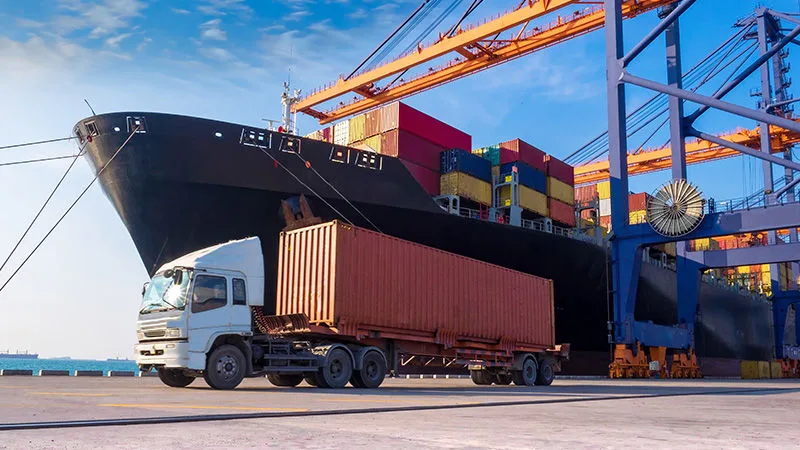
Freight ship docked in a harbour with a freight truck preparing to pick up the cargo.

When the cost of getting goods from A to B keeps climbing, businesses have two choices: absorb the increase and watch their margins shrink, or take a closer look at how their supply chains work.

For many companies, logistics costs are treated as a necessary expense,  something to negotiate when a quote comes in too high or revisit when the budget starts looking uncomfortable. But the biggest savings are not always found in securing a cheaper freight rate. They can be found in the decisions made long before a shipment leaves the warehouse.

From the timing of orders to the way cargo is packed, routes are planned and suppliers are managed, small inefficiencies can accumulate into significant costs.

“Businesses are under pressure from every direction. The challenge is that when costs increase, the instinct is often to look for the cheapest quote and move on,” says Craig du Toit, Managing Director of RSA Global Forwarding South Africa. “But the cheapest rate on paper does not always translate into the lowest overall cost. A delayed shipment, poor planning, unnecessary storage or an unexpected charge can quickly wipe out the saving. Businesses need to look at the full picture.”

Rather than treating logistics as a transaction, RSA Global Forwarding encourages businesses to view it as a strategic part of their operations – one that can influence cash flow, customer satisfaction, competitiveness and profitability.

10 Practical Ways to Cut Logistics Costs

1. Stop Paying to Move Air

Are you paying to transport half-empty containers, oversized packaging or vehicles carrying far less than their capacity? Review the dimensions, weight and volume of your cargo before booking. Better packaging and load planning can help businesses make better use of available space and avoid paying for capacity they do not need.

“Space is one of the easiest things to overlook because you don’t necessarily see the cost immediately,” says François Coetzee, Managing Director of RSA Global Forwarding. “But when inefficient packaging is repeated across dozens or hundreds of shipments, that unused capacity becomes a very real cost to the business.”

2. Consolidate Shipments Where Possible

Multiple small shipments can mean multiple handling fees, transport charges and administrative processes. Where delivery deadlines allow, combining orders into fewer, better-planned shipments can reduce the cost per unit moved. The key is balancing consolidation with the cost of holding stock for longer.

3. Plan Ahead to Avoid Unnecessary Urgency

Last-minute bookings leave less room to compare options, coordinate cargo and choose the most suitable transport method. Forecasting demand, confirming orders earlier and communicating shipping requirements in advance can help businesses avoid preventable expedited freight costs.

“Urgency is expensive,” says du Toit. “There will always be shipments that genuinely need to move quickly, but businesses should not be paying premium rates simply because planning happened too late. The earlier we understand what a customer needs, the more options we can explore with them.”

4. Compare Total Landed Cost, Not Just Freight Rates

A low freight quote may look attractive until customs duties, clearance fees, port charges, insurance, storage and inland transport are added. Businesses importing or exporting goods should calculate the full cost of getting cargo to its final destination before choosing a shipping option.

Coetzee says businesses should be careful not to let a headline freight rate dictate the entire decision.

“A freight rate is only one piece of the cost equation. What matters is what the shipment ultimately costs the business from origin to destination. Looking at the total landed cost gives you a much more accurate basis for making a decision.”

5. Choose the Right Transport Mode for the Job

Air freight, sea freight and road transport each have a role to play. Air freight may be justified for urgent, high-value or time-sensitive goods, while sea freight may suit larger shipments that can accommodate longer transit times. Road freight can offer flexibility for domestic and regional movements. The objective is to match the transport method to the shipment’s urgency, value, volume and commercial requirements.

“The fastest option is not automatically the smartest option,” says François. “If a shipment does not need to arrive tomorrow, paying a premium for speed may simply be unnecessary. The right question is: what does the business actually need this shipment to achieve?”

6. Treat Customs Documentation as a Cost-Control Tool

Incomplete paperwork, incorrect tariff classifications and missing permits can lead to delays, additional handling, storage costs and penalties. Ensure commercial invoices, packing lists, shipping documents and any required permits are accurate and submitted on time. A little preparation can prevent expensive complications later.

“Documentation may seem like administration, but in international logistics it directly affects time and cost,” du Toit explains. “A missing document can hold up cargo, and a delay can quickly turn into storage, demurrage or other additional charges. Getting the paperwork right is one of the simplest ways to avoid unnecessary costs.”

7. Review Your Inventory Strategy

Holding too much stock ties up working capital and increases warehousing costs. Holding too little can lead to emergency orders and expensive expedited shipments. Review sales patterns, supplier lead times and demand forecasts to find a balance between availability and unnecessary inventory expenditure.

François says logistics decisions should never be made in isolation from the wider business.

“Your inventory strategy and your logistics strategy are connected. If you consistently run out of stock, you may end up paying for emergency freight. If you consistently over-order, you are tying up capital and potentially paying more for storage. The objective is to find the point where availability and cost make commercial sense.”

8. Question Every Recurring Charge

Do not simply accept freight invoices at face value. Review fuel surcharges, storage fees, demurrage, detention, handling charges and other additional costs. Understand what triggers each charge, verify that it has been applied correctly and identify recurring problems that could be prevented through better planning.

“Recurring charges are worth investigating because they can tell you where a process is breaking down,” says Coetzee. “If a business is repeatedly paying storage or detention fees, for example, the answer may not be to negotiate the fee. The better question is why the fee keeps happening in the first place.”

9. Improve Communication Across Your Supply Chain

A supplier who does not know when cargo is required, a warehouse that is not ready to receive a delivery or a customer who changes requirements at the last minute can create a costly chain reaction. Clear communication between suppliers, freight partners, customs teams, warehouses and customers helps reduce avoidable delays and duplicated work.

“Good logistics is built on communication,” says François. “There are a lot of moving parts between a supplier and the final destination. When everyone has the right information at the right time, problems can often be addressed before they become expensive problems.”

10. Work With a Logistics Partner Who Looks Beyond The Shipment

A logistics relationship should involve more than receiving a rate and arranging a collection. An experienced partner can help identify suitable transport options, flag potential delays, explain cost drivers and coordinate the different stages of a shipment. Regular reviews of shipping patterns, recurring charges and operational challenges can reveal opportunities that individual bookings may not show.

Du Toit believes this is where the role of a logistics company can move beyond simply moving cargo.

“A logistics partner should understand what the customer is trying to achieve, not just where a shipment needs to go,” he says. “When you understand the business behind the shipment, you can start identifying opportunities to improve the process, manage risk and ultimately make the supply chain work harder for the customer.”

The Biggest Saving May Be the Problem You Prevent

According to François Coetzee, Managing Director of RSA Global Forwarding, cost reduction should not mean compromising on the reliability, visibility or service businesses depend on.

“Cutting costs is not simply about paying less for transport. It is about understanding where money is being lost, making better-informed decisions and preventing avoidable expenses before they happen,” says François. “Sometimes the answer is consolidating a shipment. Sometimes it is correcting a documentation issue, changing the timing of an order or choosing a more appropriate transport solution. The important thing is to understand the customer’s operation and find an approach that makes commercial sense.”

For businesses moving goods across borders, the stakes can be particularly high. International shipments involve multiple parties, regulatory requirements, transport stages and timelines. A decision that saves money at one point in the process can create a more expensive problem somewhere else if the wider supply chain is not considered.

That is why cost management needs to be ongoing rather than reactive. Reviewing shipping data, identifying recurring inefficiencies and maintaining open communication with logistics partners can help businesses make improvements before cost pressures become operational problems.

Smarter Logistics is a Business Advantage

Rising costs may be outside an individual business’s control, but how it responds to them is not entirely out of its hands.

“Businesses do not always have the luxury of controlling the market, but they can take greater control of how they plan, procure and manage their logistics,” says du Toit. “The goal should not be to cut costs at any price. It should be to build a supply chain that is efficient, dependable and fit for the business’s needs. That is where smarter logistics can make a real difference.”

For RSA Global Forwarding, the conversation starts with a simple question: are businesses paying only for the logistics services they need, or are they also paying for inefficiencies that better planning could prevent?

In a market where every rand matters, the answer could make a meaningful difference to the bottom line.

Continue Reading

Trending