
Uncategorized
Bakers SA Limited Invests in Next-Generation Electric Fleet with 67 New Serco Bodies

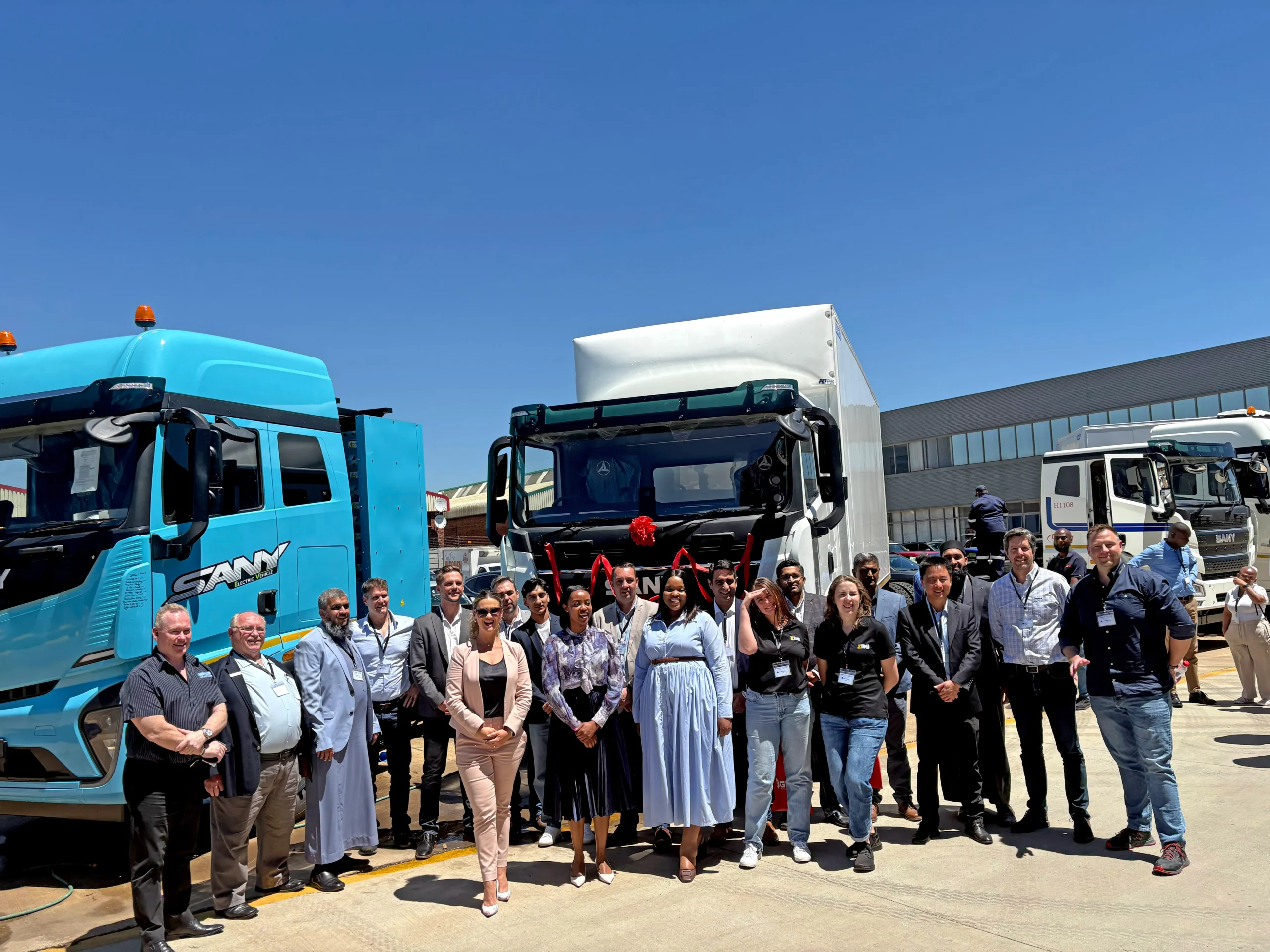
Leading logistics provider Bakers SA Limited has further strengthened its commitment to customer service, operational excellence, and innovation through the introduction of 67 new Serco dry-freight bodies mounted on SANY electric trucks.
The investment forms part of Bakers SA Limited’s ongoing fleet renewal programme and reflects the company’s proactive approach to adopting technologies that improve reliability, security, sustainability, and long-term operating efficiency for its customers.
While electric trucks have historically faced challenges relating to vehicle range and operational practicality, advances in battery technology and vehicle design are now making electric commercial vehicles a viable option for selected logistics applications. Bakers SA Limited has taken a considered and forward-thinking approach in evaluating these developments, positioning the company among the early adopters of large-scale electric truck technology in South Africa.
For Bakers SA Limited, selecting the right vehicle and body combination was critical. The company required a solution that could deliver durability, maximise vehicle uptime, protect valuable cargo, and reduce operating costs while maintaining the high service standards expected by its customers.
To meet these requirements, Serco supplied its Protec dry-freight body, a proven solution designed for demanding transport operations. The Protec body utilises steel-coated outer facings with a lightweight injected foam core, providing enhanced durability and impact resistance compared with conventional fibreglass body construction. This results in lower repair costs, improved longevity, and greater vehicle availability.
The vehicles are also equipped with Serco’s captive shoring system, allowing loads to be secured quickly and effectively. Unlike conventional loose load-restraint systems, the captive shoring bars remain permanently secured within the vehicle, reducing the risk of equipment loss or damage while helping prevent product damage in transit.
Security was another key consideration in Bakers SA Limited’s specification process. To address this requirement, the fleet has been fitted with an advanced geo-fencing lock system integrated into the tail lift operation. The technology allows rear-door and tail-lift functionality to be controlled remotely and activated only at approved locations, providing an additional layer of protection for both drivers and cargo.
According to Serco CEO Clinton Holcroft, the project demonstrates how innovation can deliver tangible benefits to transport operators.
“We are extremely proud of our long-standing relationship with Bakers SA Limited and are honoured to support them as they continue to invest in technologies that improve service delivery, operational efficiency, and fleet sustainability. Their decision to adopt electric vehicle technology reflects a progressive approach to logistics and demonstrates a commitment to staying ahead of industry trends while continuing to provide exceptional value to their customers.”
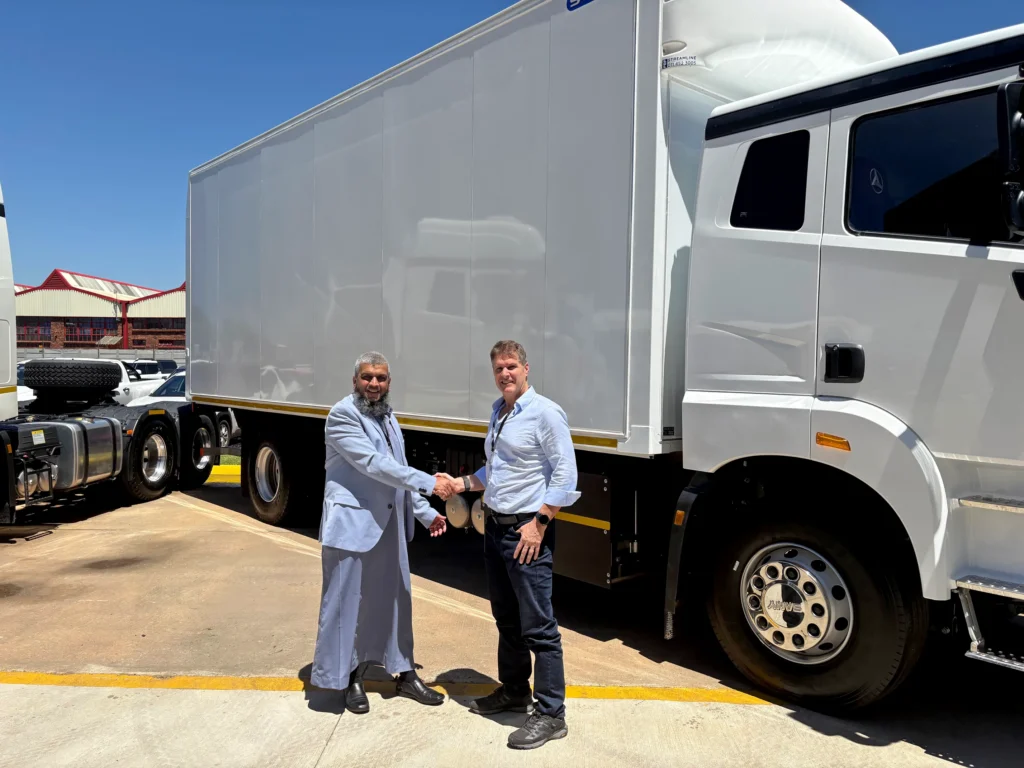
Abdool Tayob CEO of Bakers SA and Clinton Holcroft CEO of Serco handing over the first EV truck and body.
The 67-vehicle order represents one of the most significant commercial EV body-building projects completed by Serco to date and highlights the growing confidence in electric mobility solutions within the South African logistics sector.
As transport operators increasingly look for ways to reduce operating costs, improve sustainability, and enhance fleet performance, the collaboration between Bakers SA Limited, SANY, and Serco demonstrates how carefully selected technologies can deliver practical, real-world benefits while preparing businesses for the future of transport.
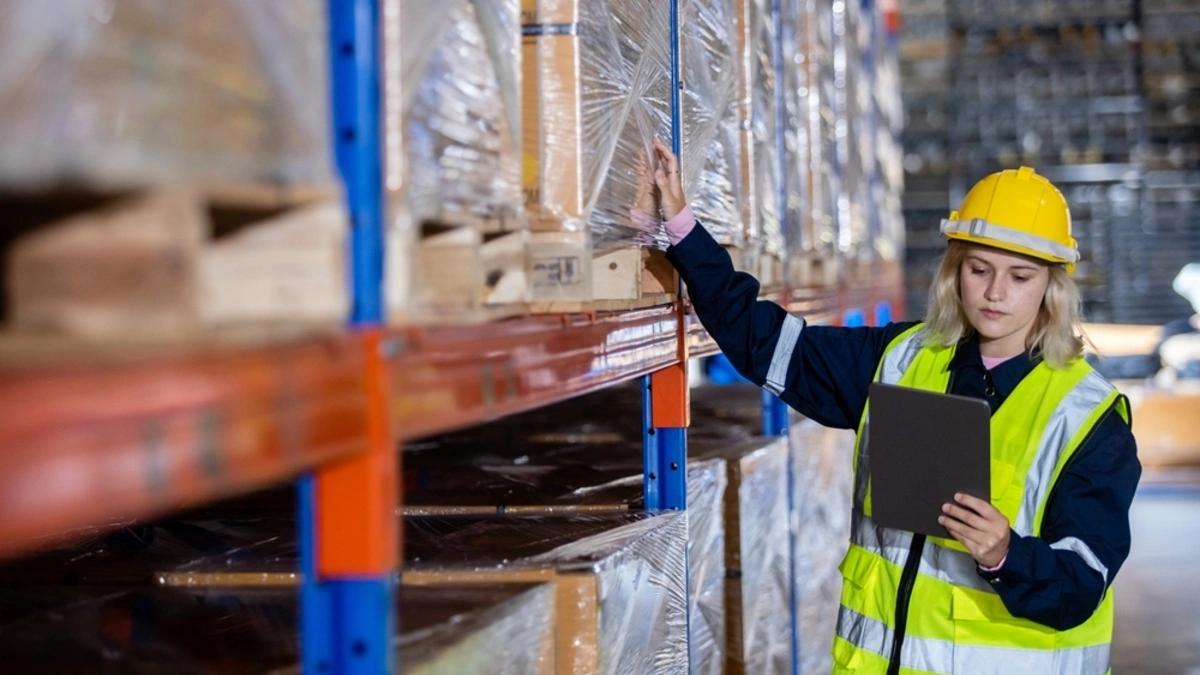
Logistics has a visibility problem and it is costing the industry women.
South Africa’s freight and logistics sector is not short of ambitious women. Rather, it is short of women who know the sector exists as a career.
That is the argument put forward by Odette van Zyl, Financial Director and co-owner of Cape Town-based JLOG International who says that while women account for roughly 28% of South Africa’s logistics workforce, they hold fewer than a quarter of its senior leadership roles. The problem starts long before the interview.
“Women are not necessarily interested in logistics as a career because they don’t know what it is,” she says. “There is very little exposure to what logistics involves or where women can contribute.”
For most people, logistics still means trucks, couriers and the physical movement of cargo. The customs and compliance work, the financial structuring behind a project cargo shipment, the operational problem-solving that keeps a vessel loading on schedule – none of it is visible from the outside. An industry that shows the public only its most traditionally male face, should therefore not be surprised by who applies.
Exposure Changes Career Paths
Van Zyl’s own route is evidence of the argument. She entered by chance, as a personal assistant at a small logistics company. Her role expanded into the accounts, which gave her a view of the financial side of the business and, eventually, a career in freight finance. From an administrative desk, she went on to co-own a freight company.
What made that possible was breadth – seeing past the boundaries of the job she was hired to do. She wants the same for young women entering now, rather than placement into narrowly defined roles.
“If women are exposed to the industry, even through learnerships, they begin to see what the rest of the business involves,” she says. “Someone may enter through finance and then realise that she can work in operations or move into a completely different role.”
Her own work runs well beyond the finance desk. At JLOG International she has put on safety boots, a hard hat and a reflective vest, climbed into a bakkie and collected cargo from the airport for delivery to a vessel – another item on the day’s to-do list. “We should not stand back, doubt our knowledge or be intimidated by work simply because it looks complicated,” she says.
The Same Playing Field
Van Zyl is careful about how the argument is framed. “Freight is demanding,” she says. “It requires people who can manage pressure, solve problems quickly, pay close attention to detail and communicate effectively.”
The case for bringing more women in is not a concession. It is that the sector cannot afford to recruit from half its available talent.
Women make up more than half of JLOG’s employees, an outcome the company did not set out to engineer. “We did not go out saying we wanted to employ a man or a woman but rather looked for the best person. The point is to give people the same playing field and the opportunity to show what they can do. Women do not want handouts. They want to earn their positions,” she explains.
She is a strong advocate for learnerships as the sector’s first point of contact with new talent and equally clear about how they fail. Treated as a number to be recorded, the opportunity is lost. “When you give someone the chance to build a career, you are helping that person create a life and support a family. It should be about the person, not simply the number of learners a company has taken on.”
Getting women through the door is the easy part. Progress has been real in smaller freight businesses, she says, but the corporate environment has not matched the pace. “We have seen change over the last few years, but it is still too slow.”
Confidence is Built, Not Issued
Van Zyl did not study immediately after leaving school, only later concluding that a qualification would carry her further in the corporate world. “When I was offered the opportunity to study through a bursary programme, I took it and completed my degree through Unisa in 2014,” she explains.
She later left corporate to establish JLOG International with her long-time colleague Jonathan McDonald, backing her own experience despite describing herself as cautious.
She is now studying towards a second degree. “If you stop learning, you stagnate and your voice becomes easier to overlook. Learning gives you the confidence to look at the wider business and know that your opinion has value.”
Her advice to women considering the sector is direct: “Do not be intimidated by how complicated logistics may appear. Also, do not lessen your voice or hide your ability behind fear. Own your space and take the risk. It is a journey well worth the ride.”


Bakers SA Limited Invests in Next-Generation Electric Fleet with 67 New Serco Bodies

SAFLA Launches Gauteng Region With Eric Pillay Appointed As Chairperson

Newlyn Advances Gqeberha Logistics Park with Second Warehouse Planned


-

 Management4 months ago
SEO, AEO, GEO and SEO for AI: What Is the Difference for the Supply Chain Industry?
-
 Transport4 months ago
LDV T60 Max vs GWM P500 vs Isuzu D-Max vs Toyota Hilux vs Ford Ranger: Which Double-Cab Bakkie Offers the Best Value?
-

 Logistics5 months ago
DHL Group to invest around € 160 million in 2026-2027 to strengthen logistics infrastructure and support clean energy transition in France
-

 Logistics4 months ago
Top 5 Warehousing and Logistics Companies in the Western Cape by Google Review Rating
-

 Logistics4 months ago
DHL Expands Asia Pacific Data Center Logistics Capabilities to Support Growing Regional Demand
-

 Logistics5 months ago
Top 10 Warehousing and Logistics Companies in Gauteng by Google Review Rating
-

 Freight Forwarding5 months ago
The Hidden Cost of Shipping from China to South Africa — What Every SA Importer Needs to Know in 2026
-

 Logistics4 months ago
Top 4 Lift Truck Companies in Gauteng