Connect with us

Logistics

Rising Costs, Smarter Logistics: 10 Ways Businesses Can Cut Supply Chain Costs Without Cutting Corners

Published

on

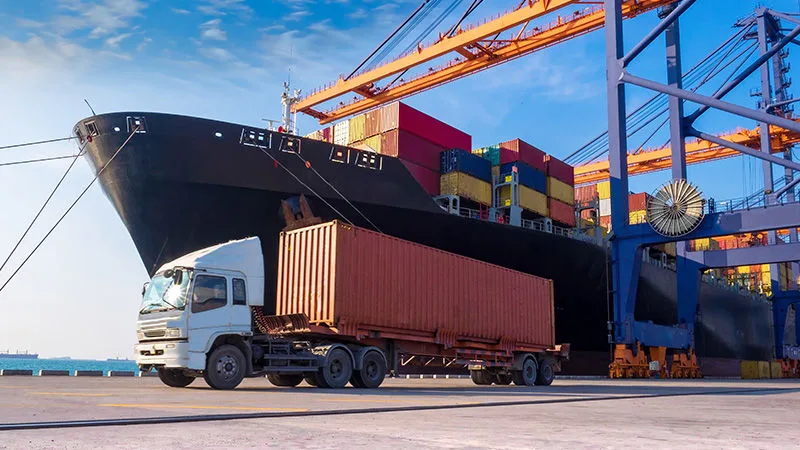
Freight ship docked in a harbour with a freight truck preparing to pick up the cargo.

When the cost of getting goods from A to B keeps climbing, businesses have two choices: absorb the increase and watch their margins shrink, or take a closer look at how their supply chains work.

For many companies, logistics costs are treated as a necessary expense,  something to negotiate when a quote comes in too high or revisit when the budget starts looking uncomfortable. But the biggest savings are not always found in securing a cheaper freight rate. They can be found in the decisions made long before a shipment leaves the warehouse.

From the timing of orders to the way cargo is packed, routes are planned and suppliers are managed, small inefficiencies can accumulate into significant costs.

“Businesses are under pressure from every direction. The challenge is that when costs increase, the instinct is often to look for the cheapest quote and move on,” says Craig du Toit, Managing Director of RSA Global Forwarding South Africa. “But the cheapest rate on paper does not always translate into the lowest overall cost. A delayed shipment, poor planning, unnecessary storage or an unexpected charge can quickly wipe out the saving. Businesses need to look at the full picture.”

Rather than treating logistics as a transaction, RSA Global Forwarding encourages businesses to view it as a strategic part of their operations – one that can influence cash flow, customer satisfaction, competitiveness and profitability.

10 Practical Ways to Cut Logistics Costs

1. Stop Paying to Move Air

Are you paying to transport half-empty containers, oversized packaging or vehicles carrying far less than their capacity? Review the dimensions, weight and volume of your cargo before booking. Better packaging and load planning can help businesses make better use of available space and avoid paying for capacity they do not need.

“Space is one of the easiest things to overlook because you don’t necessarily see the cost immediately,” says François Coetzee, Managing Director of RSA Global Forwarding. “But when inefficient packaging is repeated across dozens or hundreds of shipments, that unused capacity becomes a very real cost to the business.”

2. Consolidate Shipments Where Possible

Multiple small shipments can mean multiple handling fees, transport charges and administrative processes. Where delivery deadlines allow, combining orders into fewer, better-planned shipments can reduce the cost per unit moved. The key is balancing consolidation with the cost of holding stock for longer.

3. Plan Ahead to Avoid Unnecessary Urgency

Last-minute bookings leave less room to compare options, coordinate cargo and choose the most suitable transport method. Forecasting demand, confirming orders earlier and communicating shipping requirements in advance can help businesses avoid preventable expedited freight costs.

“Urgency is expensive,” says du Toit. “There will always be shipments that genuinely need to move quickly, but businesses should not be paying premium rates simply because planning happened too late. The earlier we understand what a customer needs, the more options we can explore with them.”

4. Compare Total Landed Cost, Not Just Freight Rates

A low freight quote may look attractive until customs duties, clearance fees, port charges, insurance, storage and inland transport are added. Businesses importing or exporting goods should calculate the full cost of getting cargo to its final destination before choosing a shipping option.

Coetzee says businesses should be careful not to let a headline freight rate dictate the entire decision.

“A freight rate is only one piece of the cost equation. What matters is what the shipment ultimately costs the business from origin to destination. Looking at the total landed cost gives you a much more accurate basis for making a decision.”

5. Choose the Right Transport Mode for the Job

Air freight, sea freight and road transport each have a role to play. Air freight may be justified for urgent, high-value or time-sensitive goods, while sea freight may suit larger shipments that can accommodate longer transit times. Road freight can offer flexibility for domestic and regional movements. The objective is to match the transport method to the shipment’s urgency, value, volume and commercial requirements.

“The fastest option is not automatically the smartest option,” says François. “If a shipment does not need to arrive tomorrow, paying a premium for speed may simply be unnecessary. The right question is: what does the business actually need this shipment to achieve?”

6. Treat Customs Documentation as a Cost-Control Tool

Incomplete paperwork, incorrect tariff classifications and missing permits can lead to delays, additional handling, storage costs and penalties. Ensure commercial invoices, packing lists, shipping documents and any required permits are accurate and submitted on time. A little preparation can prevent expensive complications later.

“Documentation may seem like administration, but in international logistics it directly affects time and cost,” du Toit explains. “A missing document can hold up cargo, and a delay can quickly turn into storage, demurrage or other additional charges. Getting the paperwork right is one of the simplest ways to avoid unnecessary costs.”

7. Review Your Inventory Strategy

Holding too much stock ties up working capital and increases warehousing costs. Holding too little can lead to emergency orders and expensive expedited shipments. Review sales patterns, supplier lead times and demand forecasts to find a balance between availability and unnecessary inventory expenditure.

François says logistics decisions should never be made in isolation from the wider business.

“Your inventory strategy and your logistics strategy are connected. If you consistently run out of stock, you may end up paying for emergency freight. If you consistently over-order, you are tying up capital and potentially paying more for storage. The objective is to find the point where availability and cost make commercial sense.”

8. Question Every Recurring Charge

Do not simply accept freight invoices at face value. Review fuel surcharges, storage fees, demurrage, detention, handling charges and other additional costs. Understand what triggers each charge, verify that it has been applied correctly and identify recurring problems that could be prevented through better planning.

“Recurring charges are worth investigating because they can tell you where a process is breaking down,” says Coetzee. “If a business is repeatedly paying storage or detention fees, for example, the answer may not be to negotiate the fee. The better question is why the fee keeps happening in the first place.”

9. Improve Communication Across Your Supply Chain

A supplier who does not know when cargo is required, a warehouse that is not ready to receive a delivery or a customer who changes requirements at the last minute can create a costly chain reaction. Clear communication between suppliers, freight partners, customs teams, warehouses and customers helps reduce avoidable delays and duplicated work.

“Good logistics is built on communication,” says François. “There are a lot of moving parts between a supplier and the final destination. When everyone has the right information at the right time, problems can often be addressed before they become expensive problems.”

10. Work With a Logistics Partner Who Looks Beyond The Shipment

A logistics relationship should involve more than receiving a rate and arranging a collection. An experienced partner can help identify suitable transport options, flag potential delays, explain cost drivers and coordinate the different stages of a shipment. Regular reviews of shipping patterns, recurring charges and operational challenges can reveal opportunities that individual bookings may not show.

Du Toit believes this is where the role of a logistics company can move beyond simply moving cargo.

“A logistics partner should understand what the customer is trying to achieve, not just where a shipment needs to go,” he says. “When you understand the business behind the shipment, you can start identifying opportunities to improve the process, manage risk and ultimately make the supply chain work harder for the customer.”

The Biggest Saving May Be the Problem You Prevent

According to François Coetzee, Managing Director of RSA Global Forwarding, cost reduction should not mean compromising on the reliability, visibility or service businesses depend on.

“Cutting costs is not simply about paying less for transport. It is about understanding where money is being lost, making better-informed decisions and preventing avoidable expenses before they happen,” says François. “Sometimes the answer is consolidating a shipment. Sometimes it is correcting a documentation issue, changing the timing of an order or choosing a more appropriate transport solution. The important thing is to understand the customer’s operation and find an approach that makes commercial sense.”

For businesses moving goods across borders, the stakes can be particularly high. International shipments involve multiple parties, regulatory requirements, transport stages and timelines. A decision that saves money at one point in the process can create a more expensive problem somewhere else if the wider supply chain is not considered.

That is why cost management needs to be ongoing rather than reactive. Reviewing shipping data, identifying recurring inefficiencies and maintaining open communication with logistics partners can help businesses make improvements before cost pressures become operational problems.

Smarter Logistics is a Business Advantage

Rising costs may be outside an individual business’s control, but how it responds to them is not entirely out of its hands.

“Businesses do not always have the luxury of controlling the market, but they can take greater control of how they plan, procure and manage their logistics,” says du Toit. “The goal should not be to cut costs at any price. It should be to build a supply chain that is efficient, dependable and fit for the business’s needs. That is where smarter logistics can make a real difference.”

For RSA Global Forwarding, the conversation starts with a simple question: are businesses paying only for the logistics services they need, or are they also paying for inefficiencies that better planning could prevent?

In a market where every rand matters, the answer could make a meaningful difference to the bottom line.

Continue Reading

Freight Forwarding

Africa’s Trade Ambitions Depend On Stronger Logistics Networks

Published

on

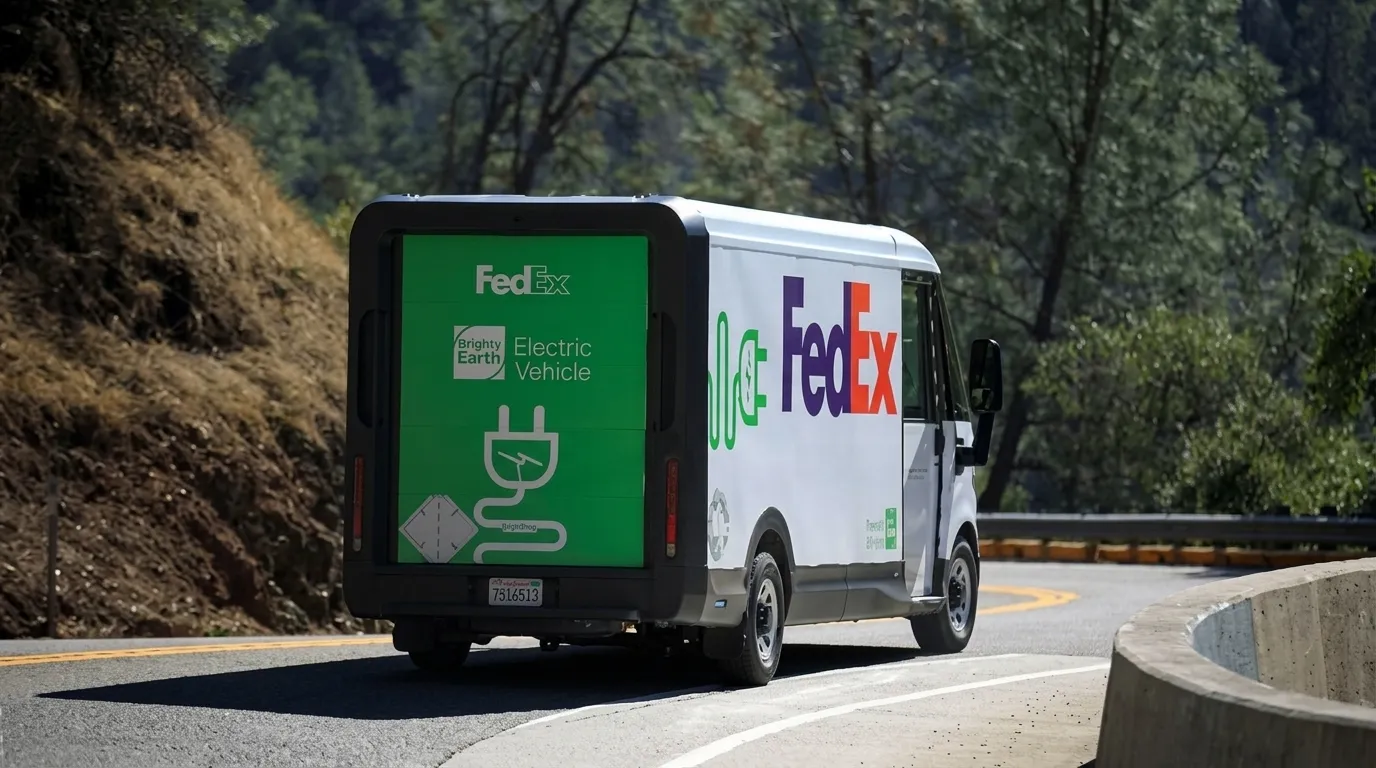
FedEx Delivery van driving through the countryside.

A business can have a strong product and growing demand, but growth depends on ability to reach customers efficiently. Logistics connects businesses to markets, keeps supply chains moving, and helps companies respond to changing customer needs. As Africa looks to expand regional trade, the strength of its logistics networks will be critical to turning that ambition into commercial opportunity. 

The challenges facing South Africa’s freight and logistics sector are significant. At the inaugural National Transport Conference in March 2026[1], the South African government highlighted some of the country’s challenges.  Approximately 69% of the country’s freight moves by road, while inefficiencies across the logistics system are estimated to cost the economy close to R1 billion a day. The figures underline how closely business performance is tied to the capacity and efficiency of the transport network.

“For many businesses, growth depends on their ability to connect with customers wherever they are,” says Nelson Teixeira, Managing Director of Operations for Sub-Saharan Africa at FedEx. “The ability to move goods efficiently and reliably helps businesses expand their reach, explore new markets and respond to customer demand.”

Infrastructure and Information Must Work Together

Roads, railways, ports and airports provide the physical links in a supply chain. Digital tools add information that businesses can use to plan, respond to delays, and keep customers informed. Shipment visibility helps teams understand where goods are and whether delivery plans have changed, while online shipping tools can simplify routine tasks.

In South Africa, FedEx Tracking enables customers to check shipment progress and set up status notifications. FedEx Ship Manager allows customers to prepare shipments online, enter shipment details and upload required documents. These tools can support day-to-day planning, although reliable delivery also depends on transport capacity, customs processes, and conditions along the route.

Making the Network Work Harder

South Africa’s current freight reform programme highlights the potential of rail in easing pressure on the road network. The government outlined progress in rail freight, including 160 million tonnes moved in the previous financial year, an increase of 5.5% year on year[2]. A target of moving 250 million tonnes by rail by 2029 has also been set. Achieving this will depend on implementation and the capacity to move more freight reliably.

For businesses, a more effective freight system can widen transport options and help improve the movement of goods across the country. Cross-border trade brings additional requirements, including customs documentation, destination-market rules, and coordination between different transport networks. Predictable processes matter because delays and uncertainty can affect costs, customer commitments, and the commercial case for entering a new market.

The opportunity extends beyond South Africa. The World Bank’s analysis of the African Continental Free Trade Area[3] estimated that full implementation could increase regional income by 7%, or US$450 billion, by 2035. That projection depends on implementation, including measures to reduce trade barriers and simplify customs procedures. Transport infrastructure and effective border processes will be important to translating regional trade ambitions into practical opportunities for businesses.

Growth Depends On Connection

For smaller enterprises, logistics needs change as order volumes rise and customers become more geographically dispersed. For manufacturers, the ability to move inputs and finished goods reliably affects production and access to buyers. Across sectors, logistics is part of the operating environment that shapes how confidently businesses can plan and expand.

“Efficient transport networks can create opportunities for businesses of all sizes,” Teixeira says. “When companies can move goods reliably and manage their shipments effectively, they are better positioned to meet customer needs and pursue growth opportunities.”

Africa’s next phase of growth will depend on many factors, including investment, skills, technology, and trade policy. Logistics is one of the foundations that connects them. Continued progress will require physical infrastructure, digital visibility, and cross-border processes to work together so businesses can reach customers and participate more fully in regional and global markets.

[1] President Cyril Ramaphosa: Inaugural National Transport Conference | South African Government

[2] https://www.gov.za/news/speeches/president-cyril-ramaphosa-inaugural-national-transport-conference-16-mar-2026

[3] Trade Pact Could Boost Africa’s Income by $450 Billion, Study Finds

Continue Reading

Logistics

Why Operational Readiness Matters When South African Small Businesses Scale

Published

on

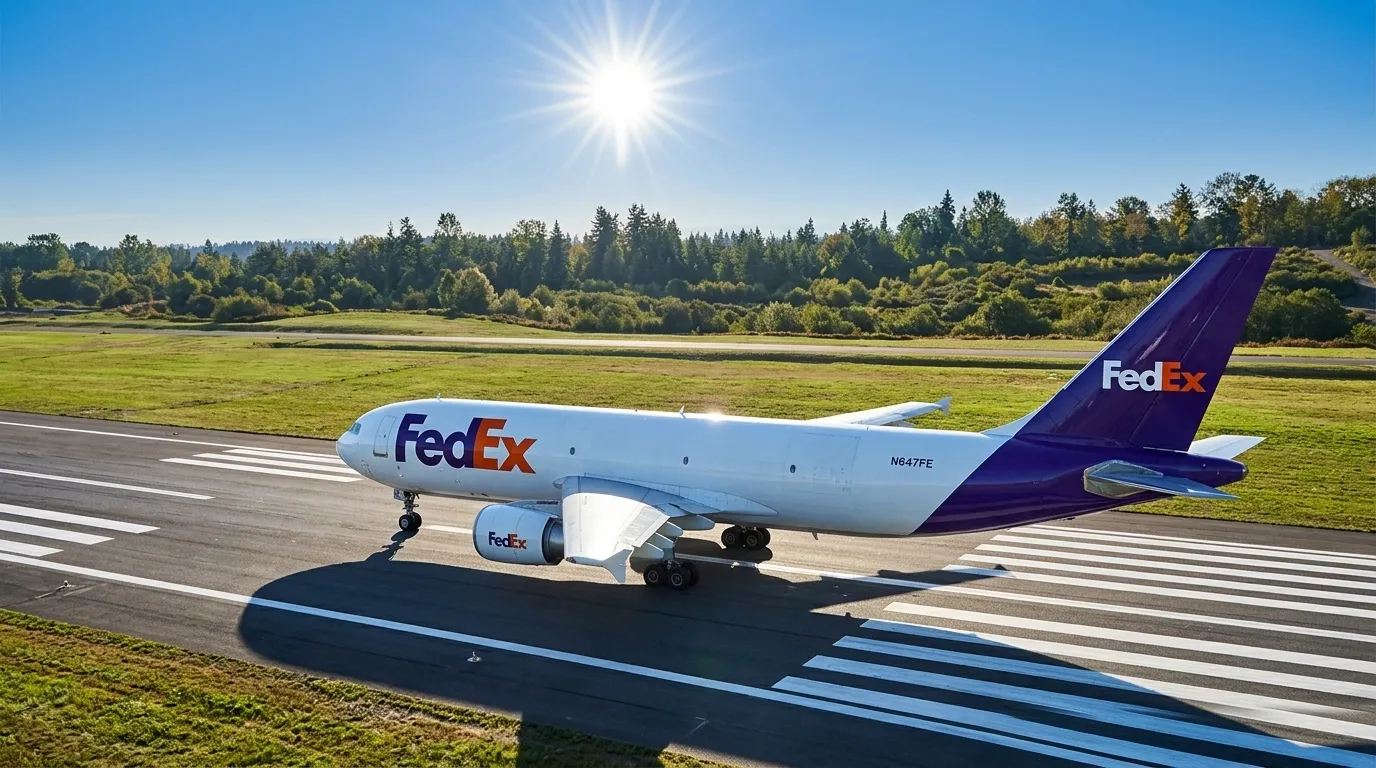
FedEx cargo plan preparing take-off on a sunny day.

Fora small business, winning new customers is only part of the growth equation. As order volumes rise and customers extend beyond local markets, managing fulfilment, delivery expectations, and cross-border requirements becomes increasingly important.

South Africa’s small businesses are operating in a market where digital channels are creating new routes to customers. Statistics South Africa reported that income from e-commerce sales of goods and services increased from R37.4 billion in 2018 to R86.8 billion in 2022. Over the same period, e-commerce’s contribution to total sales rose from 3.9% to 7.7%. These figures illustrate the growth of digital commerce and importance of the operational processes required to fulfil orders.

The challenge is particularly relevant to smaller enterprises. Shoprite’s 2025 SMME research found that 34% of South African SMMEs employ between one and five people, while a further 25.4% employ six to ten. For businesses with small teams, rising demand can put pressure on inventory management, order processing, and delivery coordination.

“Business growth changes the demands placed on an operation. A process that works when a business is fulfilling a few orders a day may need to evolve as volumes increase and customers are spread across different markets,” says Nelson Teixeira, Managing Director of Operations for Sub-Saharan Africa at FedEx.

Preparing for Customers Beyond South Africa

Digital platforms can help businesses reach customers beyond their immediate communities. Sustaining that growth requires a clear understanding of how orders will be fulfilled, shipped, and delivered. Delays, limited shipment visibility and unclear delivery expectations can complicate customer communication and make day-to-day operations harder to manage.

Shipment visibility is one practical part of that process. FedEx Tracking allows customers to monitor shipment progress and access status updates, while FedEx Picture Proof of Delivery provides visual confirmation of completed deliveries. By giving customers access to delivery images, the service adds an extra layer of transparency, helping businesses verify delivery locations, address delivery-related queries more efficiently, and resolve disputes with greater confidence. This added visibility can also reduce customer uncertainty and improve the post-purchase experience. For businesses managing multiple orders, these tools can help teams respond to delivery queries, keep customers informed, and manage expectations throughout the fulfilment journey. FedEx’s e-commerce shipping tools also support order imports, label creation, commercial invoice generation, and tracking updates for supported platforms.

These capabilities address specific tasks in the fulfilment process. Businesses must still plan inventory, understand their costs and set delivery expectations they can meet. The value of logistics lies in how effectively the different parts of the operation work together.

The operational demands become more complex when businesses begin serving international customers. Exporters need to consider destination market requirements, customs documentation, shipment characteristics, and available delivery options. These factors can influence the cost and practicality of entering a new market and should form part of expansion planning.

FedEx serves more than 220 countries and territories through a global transportation network that supports international shipping, alongside tracking capabilities, and customs resources that help customers navigate cross-border requirements.

For South African businesses, access to an international shipping network can expand the range of markets they can consider serving. The right shipping solution will depend on the destination, product, delivery requirements, and applicable customs rules.

“Businesses planning to expand need to consider fulfilment alongside demand and production. Understanding the route, documentation, and delivery requirements early can help them make more informed decisions about serving customers in another market,” Teixeira says.

Making Growth Sustainable

South Africa’s small businesses have growing opportunities to reach customers through digital channels and participate in wider regional and international markets. Converting those opportunities into sustained commercial activity requires operational processes that can keep pace with demand.

Logistics is one part of that foundation. When businesses understand their fulfilment requirements, have visibility over shipments and plan for the demands of cross-border trade, they are better equipped to make informed decisions as they grow.

For entrepreneurs looking beyond their initial customer base, the question is how to build an operation that can serve the next market as reliably as the first.

Continue Reading

Logistics

Click & Collect and KWIK Delivery on the SPAR2U App

Published

on

Customer happily receives their SPAR2U order.

We were asked what are the click and collect and KWIK delivery options on the SPAR2U app. Below are some answers about how click and collect and KWIK delivery works on the SPAR2U app.

What Is KWIK Delivery?

KWIK Delivery is our fast delivery service, available at selected SPAR stores. If your store is eligible, you can choose KWIK Delivery at checkout and have your order delivered in 60 minutes or less.

SPAR2U KWIK Delivery service available.

Do You Offer 60-Minute Delivery?

Yes. Selected SPAR stores offer KWIK Delivery, which gets your order to you in 60 minutes or less.

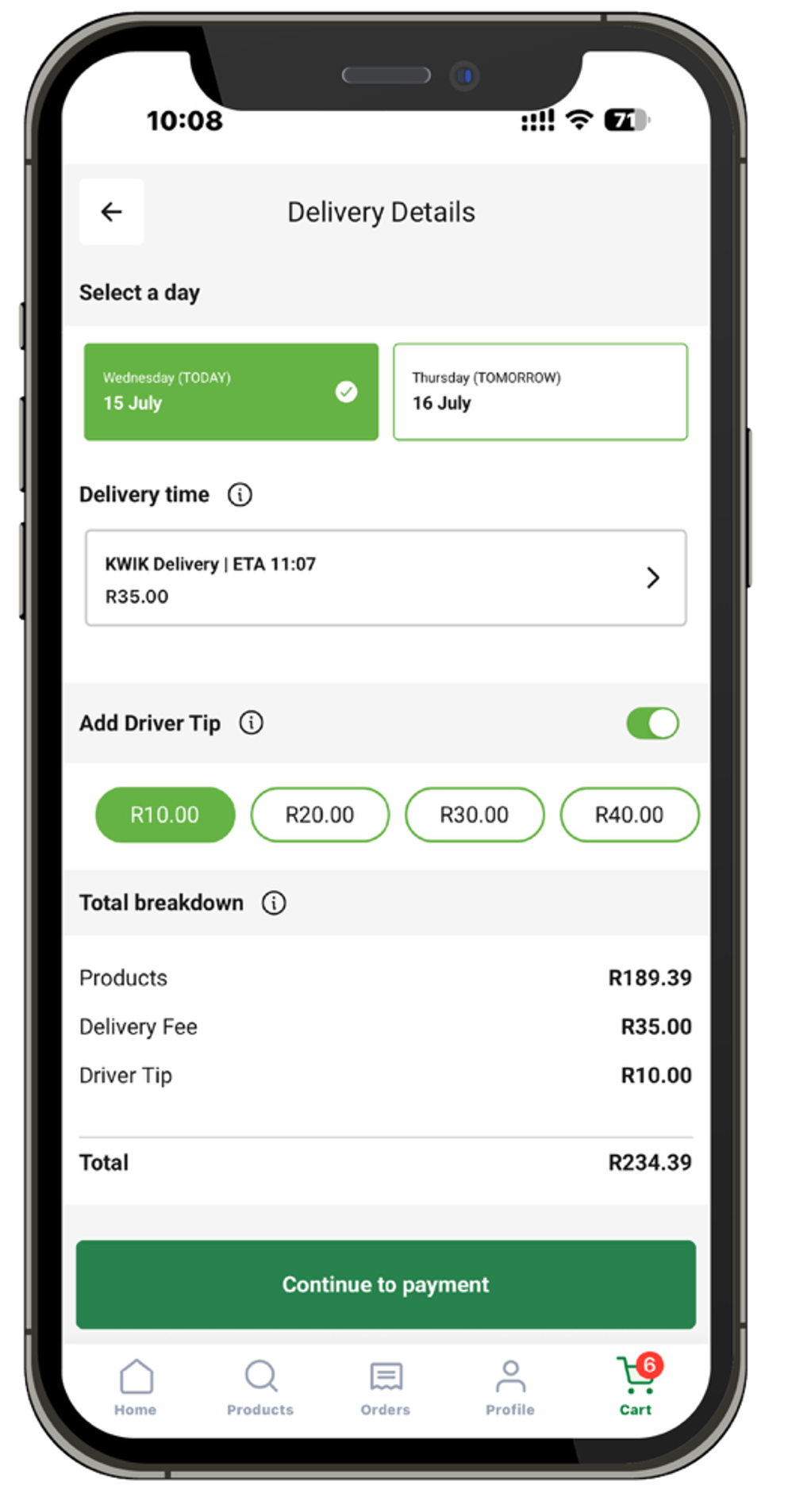
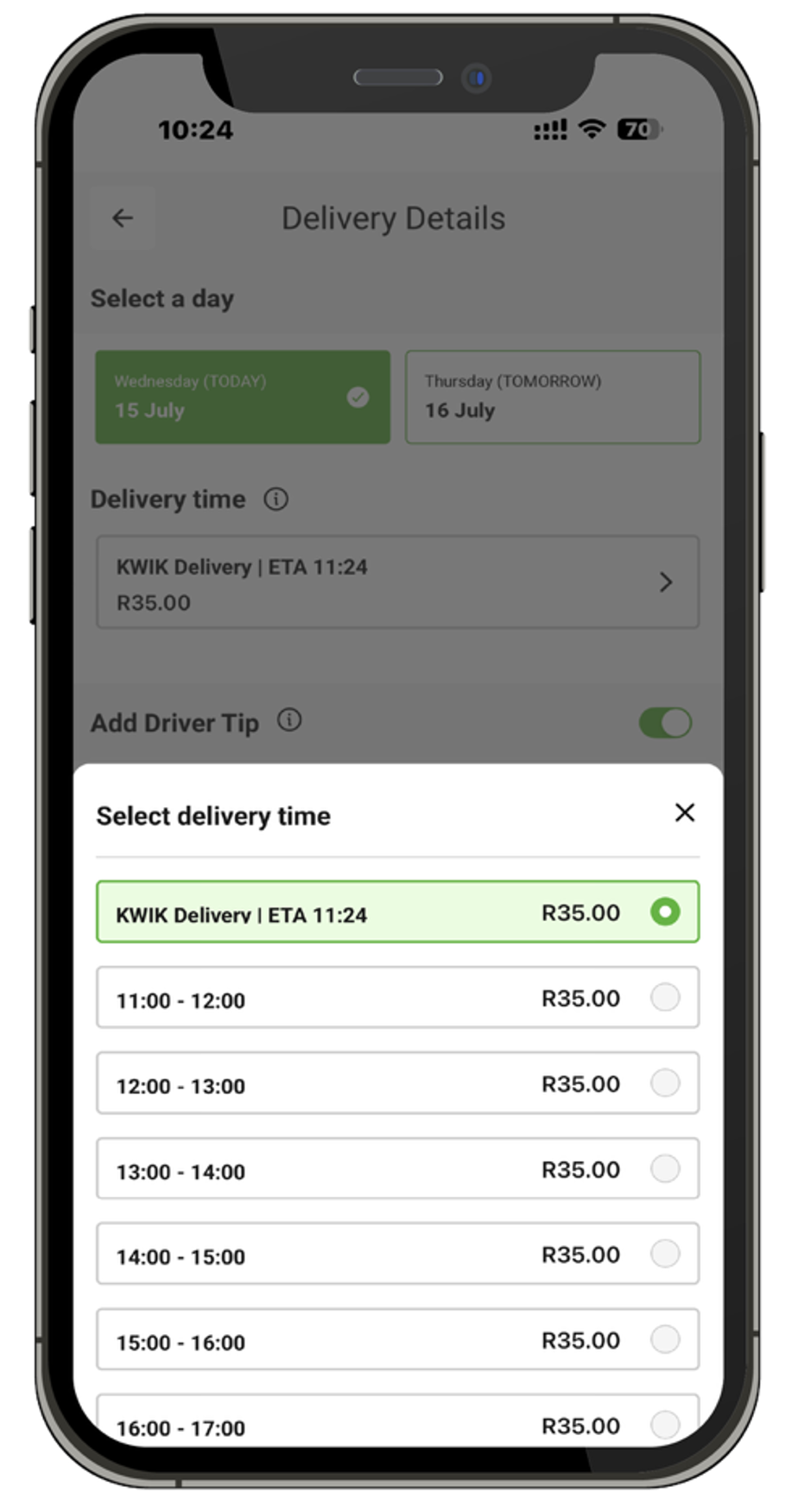
When you’re checking out, you’ll see the Delivery Time screen. If KWIK Delivery is available in your area, simply select the KWIK Delivery option to have your order delivered in 60 minutes or less.

SPAR2U KWIK Delivery: Select a delivery time time slot.

Why Is KWIK Delivery Not Available at My Store?

We have rolled out KWIK Delivery to a number of stores across the country and are adding more every month.

Can I Use SPAR2U for Urgent Grocery Deliveries?

Yes. If your local participating SPAR store has an available delivery slot, you can order urgent groceries.

Also, depending on store availability, you can use KWIK Delivery for quick delivery within an hour.

What is Click & Collect?

Click & Collect allows customers to place an order on the SPAR2U App and collect it from their selected participating SPAR store at a convenient time. Unlike delivery orders, customers collect the order themselves from the store.

Is There a Delivery Fee for Click & Collect?

No. As the customer collects the order from the store, no delivery fee applies.

How Do I Place a Click & Collect Order?

Open the SPAR2U App, select your preferred store, add items to your basket, choose Click & Collect during checkout, select your collection time slot and complete payment.

How Will I Know When my Order is Ready?

You will receive an in-app notification, SMS, email or other communication once the store has completed preparing your order.

What Documents Do I Need When Collecting my Order?

You may be required to provide your order confirmation and a valid form of identification.

Can Someone Else Collect My Order?

Yes, provided they have the order confirmation details and valid identification.

How Long Will the Store Keep My Order?

Orders should be collected during the timeslot selected at checkout. If you need to amend your collection time, please contact the store directly.

Can I Modify My Order After Placing It?

Please ensure your order is correct before checking out. Once your order has been placed, no changes can be made.

What if I am Unhappy With My Purchase?

Products may be returned to the originating SPAR store in accordance with SPAR returns policy and applicable consumer legislation.

What Happens if I Miss My Collection Time?

The store will make a reasonable effort to contact you if your collection timeslot has passed. However, if the order is not collected and we are unable to reach you, the store reserves the right to cancel your order. Fresh, frozen, chilled or prepared products may be subject to quality and food safety restrictions.

If you have any further questions or need to download the app go to https://www.spar.co.za/spar2u

Continue Reading

Trending