We have been asked how the delivery works on the SPAR2U app. Below are some answers as to how long delivery takes, the delivery options and when you can expect delivery.
Can I Send the Order to Another Address?
Yes. You can enter in the delivery address of the location you wish to purchase from, and select the desired store based on the location.
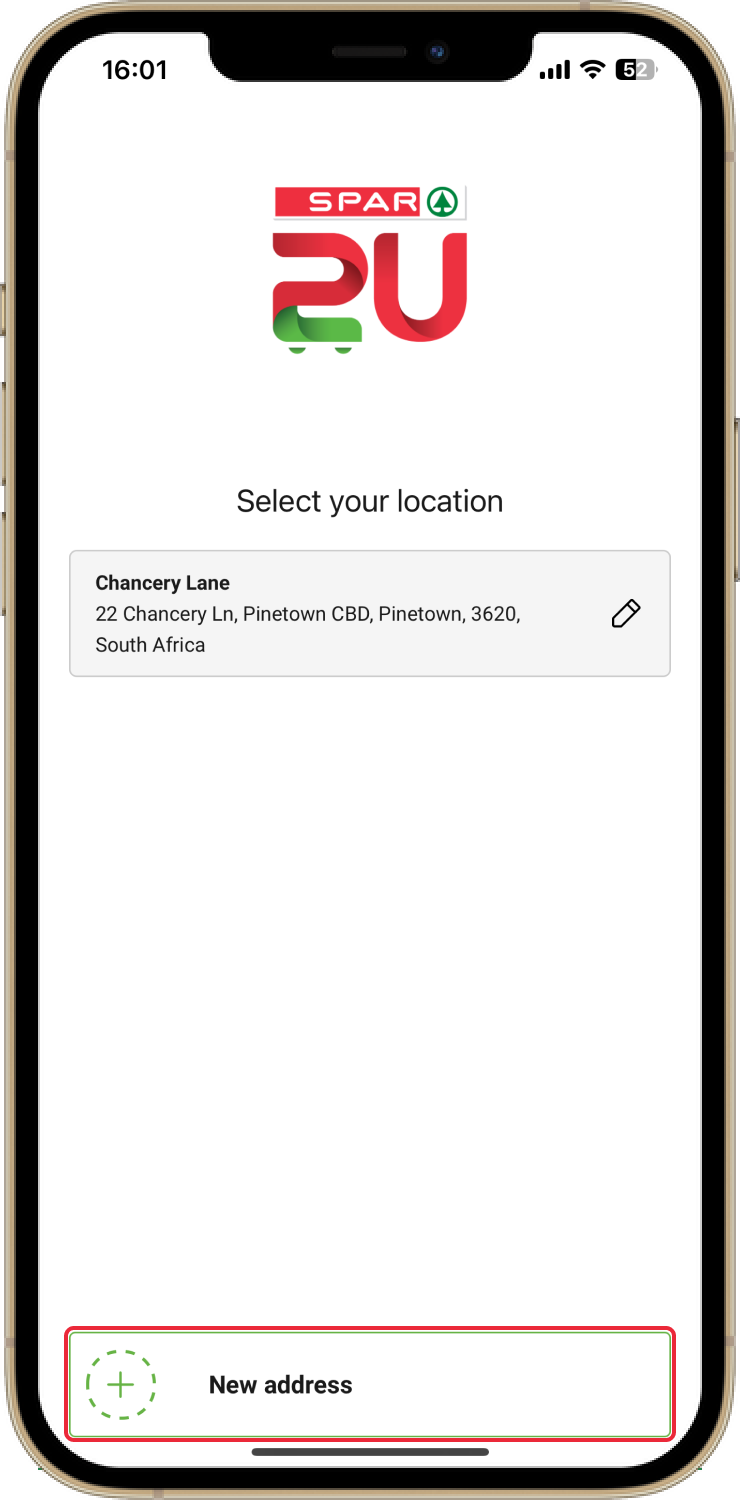
Current address is shown, with the option to add a new address. Tap on “New address” to update
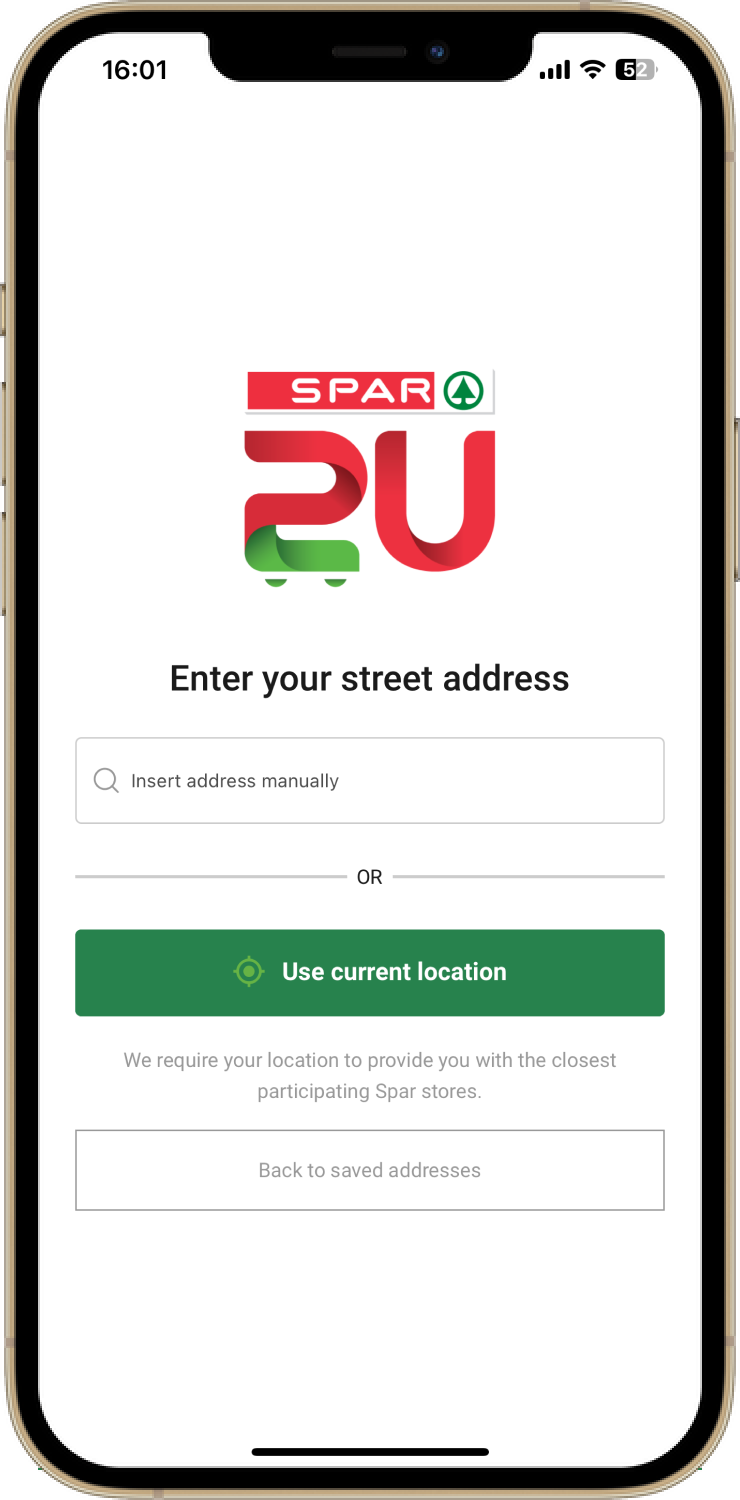
Select new address manually.
Select your store based on the updated location.
That’s convenience and practicality at your fingertips!
How Do I Select a Delivery Address Correctly?
When selecting a delivery address you have two options; use your current location or capture your address manually.
Current Location Option
The app will use the GPS on your phone to find your current location which will be shown to you on Google Maps. You can navigate by moving the map to change the position until it matches your delivery location. You can then click the set location button.
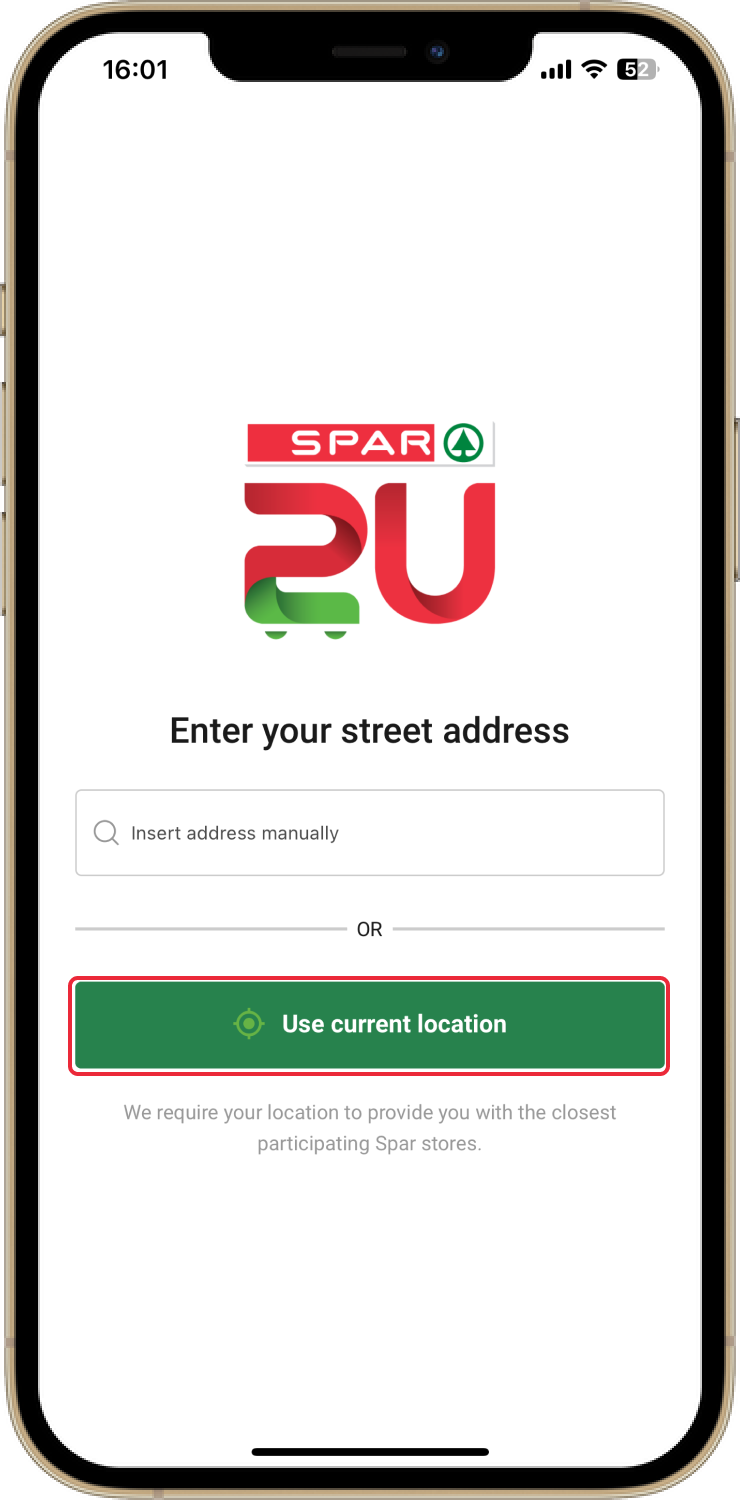
Use the GPS on your phone to find your current location.
You can navigate by moving the map to change the position until it matches your delivery location. Then tap the set location button.
Capture Manually Option
Type your street address including your street name into the text box and click the go arrow. The app will use the map functionality on your phone to find the street address and will be presented via Google Maps. You can navigate by moving the map to change the position until it matches your delivery location. You can then click the set location button.
If you live in a complex, you must capture your unit Number and Complex name when you are asked to confirm your delivery address or by amending the saved location.
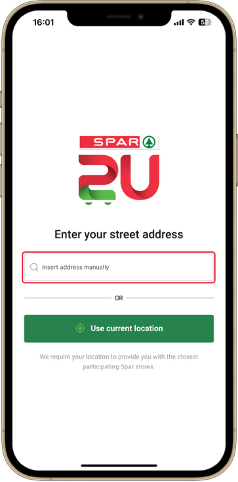
Type your street address including your street name into the text box and then select it from the drop-down.
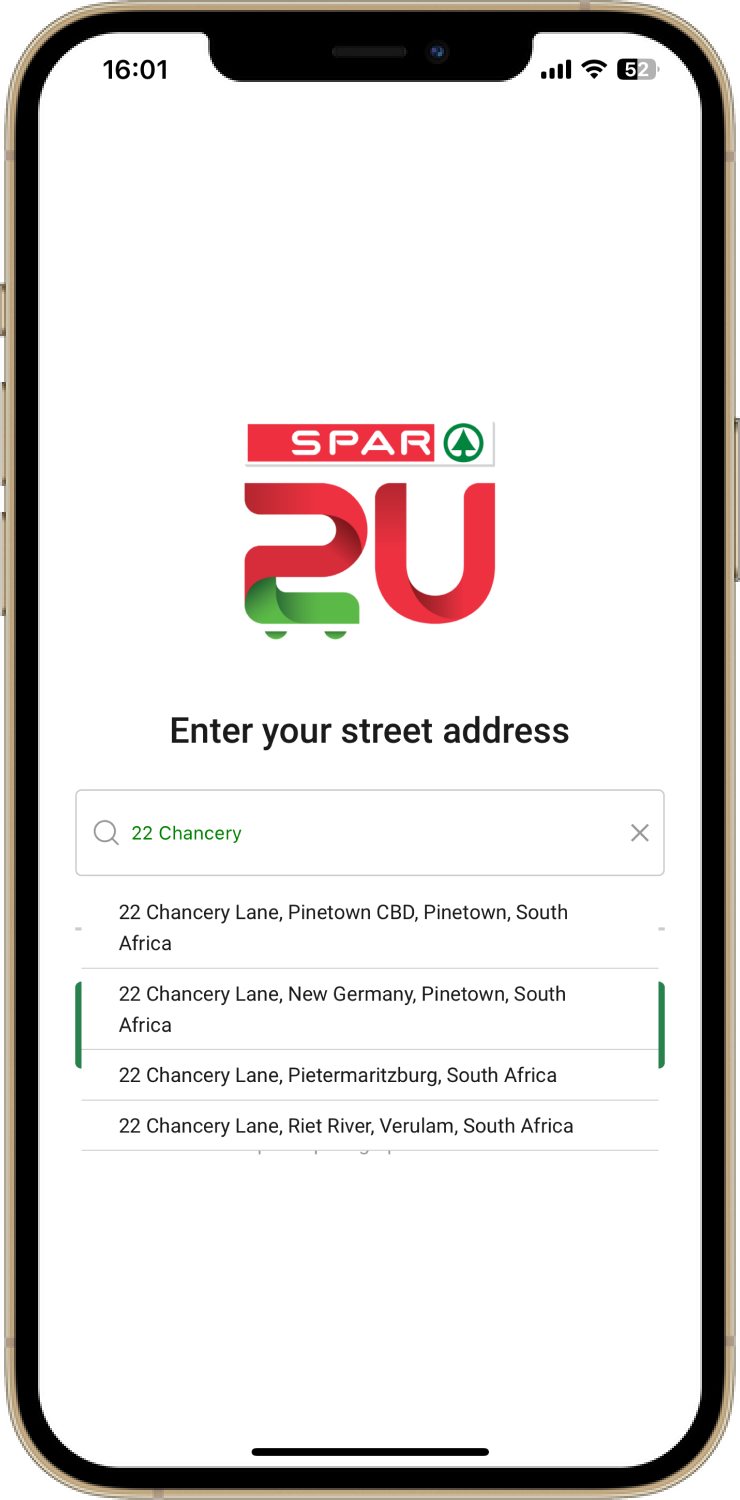
You can navigate by moving the map to change the position until it matches your delivery location. You can then tap the set location button.
Both the above options will save your delivery location for future orders.
I Have Entered My Address but I Cannot Find My Desired Store, What Can I Do?
We’re continually expanding SPAR2U delivery to reach more communities across South Africa, so we may not be available in your area just yet.
View the current list of participating stores on our where we deliver page.
What Are the Delivery Fees?
Delivery fees are calculated based on the delivery address, distance from the selected store, and other operational factors. Delivery charges may vary from order to order.
The applicable delivery fee will be displayed to the customer at checkout prior to payment.
Delivery fees are expected to average up to R38.00 per order, although higher or lower fees may apply depending on the delivery location and service requirements.
How Long Does Delivery Take?
Your order will be delivered within an hour, based on the time slot that you select. Simply shop your favourite products, add them to your cart, and pick a time that suits you!
Why Do I Need to Select a New Delivery Slot After I Have Already Selected One?
Before you finalise your payment, we do another check to see if the delivery slot you initially selected is still available. If your original delivery slot is no longer available , you will receive a notification on the app saying, “Oops! Something went wrong, your selected slot has already been taken up, please select a new slot”. You will then need to select a new delivery time slot.
How Do I Know When My Order Is on Its Way?
Once we’ve confirmed that we’ve received your order and it’s being processed, we’ll send you a notification and email to let you know it’s on its way to you.
In case you missed the notifications follow these easy steps:
Log into your SPAR2U App and tap on the Orders Icon. A list of all your orders will be displayed.
Your “In Progress” orders displayed at the top. Select the ‘In Progress’ order that you would like to track
Making sure that you are kept up to date with the journey of your order is part of the SPAR way!
Can I Track My Order?
Yes. You’ll receive an email from us at the email address linked to your profile when you place an order on the SPAR2U app. You can track the progress of your order with the details in the email.
You will also receive notifications when the order is created, dispatched, and delivered. Please ensure your push notification settings are enabled on your mobile device to receive these.
What Happens if I’m Not Home When My Delivery Arrives?
Your order will be returned to the store and you will be contacted so we can arrange a suitable time to make sure it gets to you, safely and conveniently!
My Order Has Not Arrived, What Can I Do?
Answer: Please contact us at 0860 313 141. Remember to include your order number, and we’ll start investigating right away.
Rest assured, your order will reach you and we apologise in advance for the inconvenience caused.
Does SPAR2U Offer Same-Day Grocery Delivery?
Yes. SPAR stores offer same-day delivery, subject to available delivery slots and your store’s operating hours.
Can I Order Groceries for Someone Else Using SPAR2U?
Yes. Simply enter the recipient’s delivery address and contact details when you place your order.
When your order is out for delivery, be sure to share the tracking link and Uber Eats PIN with the recipient, or let them know when your driver is around the corner.
Which Areas Does SPAR2U Deliver To?
We’re expanding across South Africa and currently deliver through participating SPAR stores in all nine provinces.
Visit the where we deliver page to check if we deliver to your area.
How Can I Check Whether SPAR2U Delivers Near Me?
Enter your delivery address in the SPAR2U app. If the service is available in your area, you’ll be matched with your nearest participating SPAR store.
South Africa’s freight logistics sector is moving towards greater private-sector participation as government advances structural reforms aimed at opening rail and port infrastructure to competition.
The developments were highlighted by National Treasury Director-General Dr Duncan Pieterse at the Old Mutual Investment Group’s Tomorrow Investment Summit in Cape Town on 11 November, according to a report published by SAnews.
Operation Vulindlela, a joint initiative of the Presidency and National Treasury, is driving reforms across several network industries, including electricity, water and transport. Its freight logistics programme is particularly significant for businesses that depend on reliable rail services, efficient ports and competitive export routes.
Private Operators Gain Access to Freight Rail
One of the most notable developments is the opening of South Africa’s freight rail network to private operators. According to Pieterse, privately owned trains have already started testing the lines, marking progress towards a more competitive freight market.
However, opening the network to private operators is only one part of the reform process. Government also needs to establish a fully independent Rail Infrastructure Manager to ensure that Transnet and private operators have fair access to the rail network.
For freight customers, greater private-sector participation could eventually provide additional capacity and transport options. It may also create opportunities for businesses to reconsider how they move bulk commodities and other goods across the country.
The impact will depend on how effectively the new operating arrangements are implemented, including access conditions, infrastructure availability and the capacity of the network to accommodate additional services.
Port Reforms Aim to Improve Competition
Changes are also progressing within South Africa’s port system.
Pieterse confirmed that Cabinet had recently approved the approach to separating the Transnet National Ports Authority (TNPA) from Transnet. The reform is intended to create a more competitive environment for terminal operators across the country’s ports.
The separation is an important step towards allowing private operators to compete on a more level playing field. Greater competition could improve terminal efficiency and reduce some of the costs associated with moving goods through South African ports.
For importers and exporters, port performance has a direct bearing on shipping schedules, inventory planning and the cost of international trade. However, the benefits of structural changes will ultimately depend on implementation and whether improved competition translates into more efficient cargo handling.
Private Investment in Export Infrastructure
Another development highlighted by Pieterse is Transnet’s request for qualifications for a strategic partner in the Manganese Export Corridor.
The multibillion-rand project represents another opportunity for private-sector participation in infrastructure supporting South Africa’s commodity exports.
Investment in dedicated export corridors is particularly important for industries that rely on moving large volumes of raw materials between production areas and ports. Improving the reliability and capacity of these routes could help strengthen South Africa’s position in international commodity markets.
Turning Reform into Practical Improvements
While Operation Vulindlela has made progress in opening network industries to competition, the real test will be whether these changes improve the movement of goods across the country.
Private rail operators need reliable access to infrastructure, ports need efficient terminal operations and export corridors require sustained investment. These elements are closely connected, meaning progress in one area will have limited impact if other parts of the logistics network continue to experience constraints.
South Africa’s freight reform programme is therefore entering an important implementation phase. The decisions outlined by Pieterse point towards a more open logistics market, but businesses will be looking for measurable improvements in capacity, reliability and the cost of moving goods.
A business can have a strong product and growing demand, but growth depends on ability to reach customers efficiently. Logistics connects businesses to markets, keeps supply chains moving, and helps companies respond to changing customer needs. As Africa looks to expand regional trade, the strength of its logistics networks will be critical to turning that ambition into commercial opportunity.
The challenges facing South Africa’s freight and logistics sector are significant. At the inaugural National Transport Conference in March 2026[1], the South African government highlighted some of the country’s challenges. Approximately 69% of the country’s freight moves by road, while inefficiencies across the logistics system are estimated to cost the economy close to R1 billion a day. The figures underline how closely business performance is tied to the capacity and efficiency of the transport network.
“For many businesses, growth depends on their ability to connect with customers wherever they are,” says Nelson Teixeira, Managing Director of Operations for Sub-Saharan Africa at FedEx. “The ability to move goods efficiently and reliably helps businesses expand their reach, explore new markets and respond to customer demand.”
Infrastructure and Information Must Work Together
Roads, railways, ports and airports provide the physical links in a supply chain. Digital tools add information that businesses can use to plan, respond to delays, and keep customers informed. Shipment visibility helps teams understand where goods are and whether delivery plans have changed, while online shipping tools can simplify routine tasks.
In South Africa, FedEx Tracking enables customers to check shipment progress and set up status notifications. FedEx Ship Manager allows customers to prepare shipments online, enter shipment details and upload required documents. These tools can support day-to-day planning, although reliable delivery also depends on transport capacity, customs processes, and conditions along the route.
Making the Network Work Harder
South Africa’s current freight reform programme highlights the potential of rail in easing pressure on the road network. The government outlined progress in rail freight, including 160 million tonnes moved in the previous financial year, an increase of 5.5% year on year[2]. A target of moving 250 million tonnes by rail by 2029 has also been set. Achieving this will depend on implementation and the capacity to move more freight reliably.
For businesses, a more effective freight system can widen transport options and help improve the movement of goods across the country. Cross-border trade brings additional requirements, including customs documentation, destination-market rules, and coordination between different transport networks. Predictable processes matter because delays and uncertainty can affect costs, customer commitments, and the commercial case for entering a new market.
The opportunity extends beyond South Africa. The World Bank’s analysis of the African Continental Free Trade Area[3] estimated that full implementation could increase regional income by 7%, or US$450 billion, by 2035. That projection depends on implementation, including measures to reduce trade barriers and simplify customs procedures. Transport infrastructure and effective border processes will be important to translating regional trade ambitions into practical opportunities for businesses.
Growth Depends On Connection
For smaller enterprises, logistics needs change as order volumes rise and customers become more geographically dispersed. For manufacturers, the ability to move inputs and finished goods reliably affects production and access to buyers. Across sectors, logistics is part of the operating environment that shapes how confidently businesses can plan and expand.
“Efficient transport networks can create opportunities for businesses of all sizes,” Teixeira says. “When companies can move goods reliably and manage their shipments effectively, they are better positioned to meet customer needs and pursue growth opportunities.”
Africa’s next phase of growth will depend on many factors, including investment, skills, technology, and trade policy. Logistics is one of the foundations that connects them. Continued progress will require physical infrastructure, digital visibility, and cross-border processes to work together so businesses can reach customers and participate more fully in regional and global markets.
Fora small business, winning new customers is only part of the growth equation. As order volumes rise and customers extend beyond local markets, managing fulfilment, delivery expectations, and cross-border requirements becomes increasingly important.
South Africa’s small businesses are operating in a market where digital channels are creating new routes to customers. Statistics South Africa reported that income from e-commerce sales of goods and services increased from R37.4 billion in 2018 to R86.8 billion in 2022. Over the same period, e-commerce’s contribution to total sales rose from 3.9% to 7.7%. These figures illustrate the growth of digital commerce and importance of the operational processes required to fulfil orders.
The challenge is particularly relevant to smaller enterprises. Shoprite’s 2025 SMME research found that 34% of South African SMMEs employ between one and five people, while a further 25.4% employ six to ten. For businesses with small teams, rising demand can put pressure on inventory management, order processing, and delivery coordination.
“Business growth changes the demands placed on an operation. A process that works when a business is fulfilling a few orders a day may need to evolve as volumes increase and customers are spread across different markets,” says Nelson Teixeira, Managing Director of Operations for Sub-Saharan Africa at FedEx.
Preparing for Customers Beyond South Africa
Digital platforms can help businesses reach customers beyond their immediate communities. Sustaining that growth requires a clear understanding of how orders will be fulfilled, shipped, and delivered. Delays, limited shipment visibility and unclear delivery expectations can complicate customer communication and make day-to-day operations harder to manage.
Shipment visibility is one practical part of that process. FedEx Tracking allows customers to monitor shipment progress and access status updates, while FedEx Picture Proof of Delivery provides visual confirmation of completed deliveries. By giving customers access to delivery images, the service adds an extra layer of transparency, helping businesses verify delivery locations, address delivery-related queries more efficiently, and resolve disputes with greater confidence. This added visibility can also reduce customer uncertainty and improve the post-purchase experience. For businesses managing multiple orders, these tools can help teams respond to delivery queries, keep customers informed, and manage expectations throughout the fulfilment journey. FedEx’s e-commerce shipping tools also support order imports, label creation, commercial invoice generation, and tracking updates for supported platforms.
These capabilities address specific tasks in the fulfilment process. Businesses must still plan inventory, understand their costs and set delivery expectations they can meet. The value of logistics lies in how effectively the different parts of the operation work together.
The operational demands become more complex when businesses begin serving international customers. Exporters need to consider destination market requirements, customs documentation, shipment characteristics, and available delivery options. These factors can influence the cost and practicality of entering a new market and should form part of expansion planning.
FedEx serves more than 220 countries and territories through a global transportation network that supports international shipping, alongside tracking capabilities, and customs resources that help customers navigate cross-border requirements.
For South African businesses, access to an international shipping network can expand the range of markets they can consider serving. The right shipping solution will depend on the destination, product, delivery requirements, and applicable customs rules.
“Businesses planning to expand need to consider fulfilment alongside demand and production. Understanding the route, documentation, and delivery requirements early can help them make more informed decisions about serving customers in another market,” Teixeira says.
Making Growth Sustainable
South Africa’s small businesses have growing opportunities to reach customers through digital channels and participate in wider regional and international markets. Converting those opportunities into sustained commercial activity requires operational processes that can keep pace with demand.
Logistics is one part of that foundation. When businesses understand their fulfilment requirements, have visibility over shipments and plan for the demands of cross-border trade, they are better equipped to make informed decisions as they grow.
For entrepreneurs looking beyond their initial customer base, the question is how to build an operation that can serve the next market as reliably as the first.