Connect with us

Logistics

Why ChatGPT, Gemini and Perplexity Recommend Different Logistics Providers

Published

on

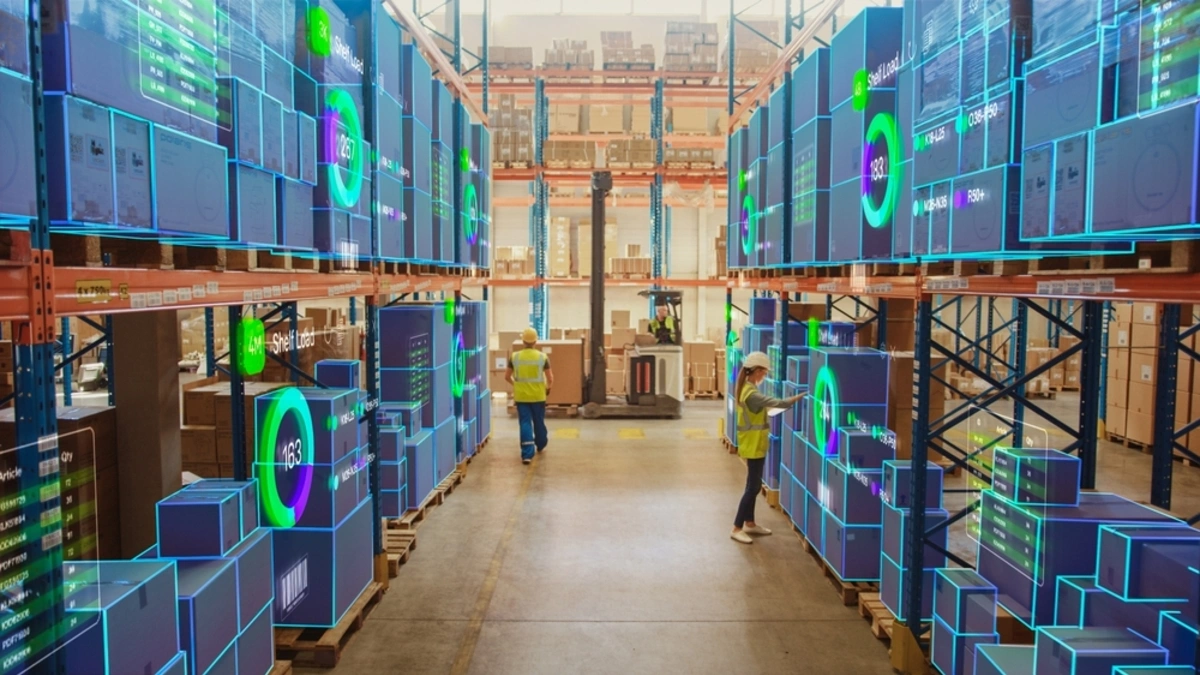
Futuristic illustration of a warehouse with digital packages stacked in a warehouse.

A procurement manager in Durban needs a bonded warehouse. A few years ago she would have searched Google, scanned the first page and made three phone calls. Today there is a reasonable chance she types the question into ChatGPT instead, reads a paragraph of considered-sounding advice, and works from the handful of companies it names.

That shift is quietly rewriting how supply chain businesses get found. And it comes with a complication most operators have not yet noticed: the answer she gets depends heavily on which tool she opens. Ask ChatGPT, Google’s AI Overviews and Perplexity the same sourcing question and you will often get three different sets of cited companies, sometimes with barely any overlap.

This is not one of the systems getting it wrong. As a recent analysis by Johannesburg digital agency IMS sets out, each platform runs a genuinely different process for deciding which sources are trustworthy enough to name. Understanding those differences matters more to a freight forwarder or 3PL than knowing the acronym for it.

ChatGPT: Being Read Is Not the Same as Being Named

When ChatGPT searches the web, it reads far more than it credits. Independent analysis of its browsing behaviour has found that only a fraction of the pages it retrieves end up cited in the final answer. The rest inform the response without ever being named. For a logistics company, that is the difference between a shipper seeing your name and a shipper seeing a competitor’s while your website quietly supplied the background.

ChatGPT also does not search the live web on every question. It is far more likely to go looking when the query carries commercial or comparative intent; “best cold chain provider,” “Transnet vs road freight costs,” “cheapest customs clearance Cape Town 2026”, than when someone asks it to explain what a bill of lading is. Which is convenient, because commercial intent is exactly where supply chain buyers sit.

The pages that survive the cut tend to share the same traits: they answer the specific question directly, they carry concrete figures rather than general claims about service excellence, and they are structured so a passage can be lifted out cleanly.

Google AI Overviews: A Page One Ranking Is Not Enough

AI Overviews sits on top of Google’s existing search index, but qualifying for the AI panel is a separate process from ranking. A logistics site can hold position two for a competitive term and still be skipped, while a page sitting at position eight gets quoted because it states the answer in two clean sentences with a number attached.

Researchers studying AI Overview outputs describe the process as a funnel: a large pool of candidate pages narrowed through semantic relevance matching, then authority and expertise filtering, then a final re-ranking before a small number of sources are stitched into the summary. Depth counts here in a way it does not for ChatGPT. Google appears to favour sites showing sustained expertise across several interlinked pages on a subject, rather than one strong article standing alone.

For an operator, that has a practical translation. A single well-written page about your temperature-controlled fleet is worth less than a cluster of connected pages covering cold chain compliance, load monitoring, last-mile handover and the regulations that govern them.

Perplexity: Built to Cite From the Ground Up

Perplexity is the outlier, usefully so. Citation is not a feature added to a chat product; it is the product. It runs a retrieval-augmented pipeline with multiple ranking layers scoring relevance, freshness, factual accuracy and structural clarity before anything reaches the answer.

It is also the most selective of the three. Perplexity will typically visit around ten pages for a query and cite only three or four. Structural trust signals carry real weight: named authors, visible editorial standards, and claims corroborated across more than one independent source rather than appearing on a single company page.

This is where trade publications, industry associations and conference coverage become genuinely valuable to a logistics business, not as vanity placements, but as the independent corroboration these systems are specifically looking for.

Why the Three Disagree

Put the pipelines side by side and the disagreement stops being mysterious. ChatGPT is deciding whether a page is worth naming after it has already read it. Google is applying an authority-and-extractability filter on top of an index built for a different purpose. Perplexity is built around sourcing and rewards signals the other two barely weigh.

The divergence is not random, either. A 2024 audit of ChatGPT, Bing Chat and Perplexity by researchers Alice Li and Luanne Sinnamon, published in the Proceedings of the Association for Information Science and Technology, found that generative search systems lean heavily on news, media and business publications for their sources, and showed measurable commercial and geographic bias in which sources they use to support claims.

Geographic bias deserves attention in this market. A system weighted toward North American and European business media is a system that may not surface the South African freight forwarder that is genuinely the right answer to a South African question.

What the Research Says Actually Works

The most rigorous evidence available comes from “GEO: Generative Engine Optimization,” a study by Pranjal Aggarwal, Vishvak Murahari and colleagues at Princeton, Georgia Tech and IIT Delhi, presented at KDD in 2024. The researchers built a benchmark of roughly 10,000 real queries and tested nine content optimisation strategies against generative engines.

The strongest performers were not keyword tactics. Adding statistics and adding direct quotations were among the most effective changes tested, improving visibility by roughly 30 to 40 percent against an unoptimised baseline. Authoritative language and explicit sourcing also helped. Keyword stuffing did close to nothing.

That finding sits comfortably with how the logistics sector already communicates. On-time delivery percentages, claims ratios, dwell times, fleet utilisation figures, tonnage handled, accreditation numbers; the industry is unusually rich in exactly the kind of concrete, quotable detail these systems reward. Most of it never makes it onto a company website, where it is replaced by phrases like “world-class logistics solutions.”

What This Means for the Industry

Three consequences follow.

The first is that vague marketing language is now actively costly. A page claiming end-to-end excellence gives an AI engine nothing to quote. A page stating that a facility holds 12,000 pallet positions, operates to a stated temperature tolerance and cleared a specific volume of customs entries last year gives it something to work with.

The second is that being visible on one platform tells you nothing about the others. Because the pipelines differ, and because independent research confirms real bias in what they select, a company cited confidently by Perplexity may be invisible in ChatGPT and Google’s AI Overviews. Each has to be checked on its own terms.

The third applies to the buying side. Supply chain managers using these tools to shortlist providers should treat the results as a starting point shaped by a particular set of preferences, not a market survey. A carrier’s absence from an AI answer says something about its web presence. It says very little about its trucks.

The industry has spent a decade learning to be found on Google. The engines that increasingly sit between a shipper and a supplier now work differently from each other, and differently from search. That is worth understanding before the next tender or RFP goes out.

Logistics

Preparing South Africa’s Logistics Industry for 2030, Focused on Compliance, People, and Sustainability.

Published

on

Man using a tablet with a futuristic view of the logistics world as a freight ship, plane and trucks travel in the background.

By Harry Dimo, HR Director, BIL & Lawrence Aldworth, National Compliance and Risk Manager, BIL

Ask most logistics leaders what sustainability means, and the conversation quickly turns to emissions, electric vehicles and carbon reporting. While those issues matter, they’ve also created one of the industry’s biggest blind spots. Sustainability has become an environmental conversation when it should be a business one.

The logistics businesses that will thrive beyond 2030 will not simply be those with the lowest carbon footprint. They will be the organisations that embed sustainability into every aspect of their operations, from developing their people and embracing innovation to strengthening governance, ensuring compliance and building resilience.

For Harry Dimo, HR Director at Bidvest International Logistics, that journey starts with people: “We’re assessing the competencies required now and in the future so we can begin upskilling employees for where the business is going, not just where it is today.”

As automation, digitalisation and artificial intelligence continue to reshape supply chains, organisations must prepare employees to work alongside these technologies rather than be displaced by them. Future-ready businesses are identifying tomorrow’s skills today, investing in continuous learning and equipping people to adapt as customer expectations and business needs evolve. Investing in future capability is every bit as important as investing in greener technology.

“When people hear sustainability, they immediately think environmental. But sustainability is much broader than that. It’s about environmental, social and governance principles working together to create a business that is built to last,” says Lawrence Aldworth, National Compliance and Risk Manager at Bidvest International Logistics.

That broader definition is becoming increasingly important as customers raise their expectations. Organisations are no longer evaluated solely on price, service and operational capability. Increasingly, customers are assessing the environmental, social, and governance (ESG) maturity of companies, making responsible business practices a key competitive differentiator. Businesses that fail to evolve risk being excluded from future opportunities rather than simply falling behind competitors.

Sustainability is therefore not another initiative sitting alongside the business. It is the framework through which the business operates. Environmental responsibility protects natural resources. Good governance builds trust, accountability and resilience, while investment in people ensures organisations can respond to changing technologies, customer expectations and market demands.

Innovation and compliance are equally important. By empowering employees to contribute ideas and embrace technology, organisations create a culture of continuous improvement that strengthens operational performance, enhances customer outcomes and increases employee engagement.

As Harry explains: “Leadership can define the vision for the future, but it is our people who bring that vision to life every day. Preparing them for what comes next is one of the most important investments we can make.”

Compliance should also be viewed through a different lens. Too often perceived as a cost of doing business, effective governance creates measurable value by reducing operational risk, protecting customers’ products and strengthening confidence among organisations that increasingly expect responsible business practices from their logistics partners.

Lawrence adds: “Good compliance management reduces risk, which ultimately reduces cost. It also creates value for customers by protecting their products while they’re in our care.”

The organisations best positioned for the future are those that combine resilience with adaptability. They invest in capable people, encourage innovation, strengthen governance and continuously evolve to meet changing customer needs.

Sustainability is not just about protecting the planet’s future. It is about building organisations that are equipped to protect their people’s future, earn their customers’ trust, and adapt with confidence to whatever comes next. Businesses that embrace this broader definition of sustainability will not only remain relevant but also help shape the future of logistics.

Continue Reading

Logistics

From South African Orchard to Chinese Market: The Supply Chain Behind the Cherry Export

Published

on

Close up shot of a person hand picking cherries into a basket.

South African cherry growers can now sell into China for the first time, opening a major new market for the country’s growing cherry industry.

Agriculture Minister Willie Aucamp signed the market-access protocol with China’s General Administration of Customs in Beijing on 8 September. China imported about 586,900 tonnes of cherries worth US$3.3 billion in 2025, making it the world’s largest cherry importer.

For South Africa’s supply-chain industry, however, the interesting part starts after the agreement is signed.

Getting cherries from an orchard to a Chinese buyer requires a coordinated journey involving harvesting, packing, temperature-controlled logistics, road freight, export procedures, international shipping and distribution.

For a perishable product, every stage matters.

From Orchard to Packhouse

The export journey starts with producing fruit that meets the requirements of the destination market.

The new market-access protocol establishes the framework for South African cherries to enter China and forms part of the sanitary and phytosanitary arrangements governing agricultural trade between the two countries.

Once harvested, cherries need to move quickly through packing and preparation. The fruit then enters a temperature-controlled supply chain designed to maintain its condition while it travels towards the export gateway.

This makes logistics more than a transport function. Delays at the farm, packhouse, storage facility or during transport can reduce the time available for the rest of the journey.

The Journey to the Export Gateway

Where the cherries are grown will influence how they reach international markets.

South Africa’s cherry industry has expanded significantly in recent years, with planted area increasing from 185 hectares in 2012 to 819 hectares in 2024, according to industry body Hortgro.

As production grows, so does the logistics network needed to support it.

More fruit means more movement between farms and packhouses, greater demand for cold storage and additional transport capacity to connect production areas with export gateways.

The opening of China could therefore create opportunities beyond the growers themselves.

Then Comes the Export Process

Physical movement is only part of getting the cherries into China.

South African exporters also need to meet customs and origin requirements.

South Africa’s temporary zero-tariff arrangement with China came into effect on 1 May 2026. Qualifying exports can receive zero-tariff treatment if they meet the applicable rules of origin, although some tariff lines are subject to quotas.

SARS issues the Rules of Origin certificates required for qualifying exports. Exporters must also maintain the required documentation and comply with the scheme’s conditions to receive the tariff benefit.

For the supply chain, this means a shipment can be physically ready to leave South Africa but still be unable to move as planned if the documentation and customs requirements are not in order.

China is Only Another Link in the Chain

Once the cherries arrive in China, the journey is not over.

The shipment still needs to clear the relevant authorities, reach importers and move through China’s distribution network before reaching its final buyer.

That makes coordination across the entire journey particularly important.

A delay in South Africa does not simply mean a later departure. It reduces the time available for every stage that follows.

A New Market, And A New Logistics Opportunity

The Department of Agriculture expects the opening of the Chinese market to stimulate further investment in cherry production and estimates that it could create about 600 new jobs.

If production expands, the supporting supply chain will need to expand with it — from packhouses and cold storage to road freight, export services and international logistics.

That is what makes the agreement significant beyond agriculture.

South Africa now has access to a major new market. The next challenge is building a supply chain capable of getting those cherries there on time, in good condition and at a competitive cost.

Continue Reading

Freight Forwarding

Could Wind Shields Reduce Disruption at the Port of Cape Town?

Published

on

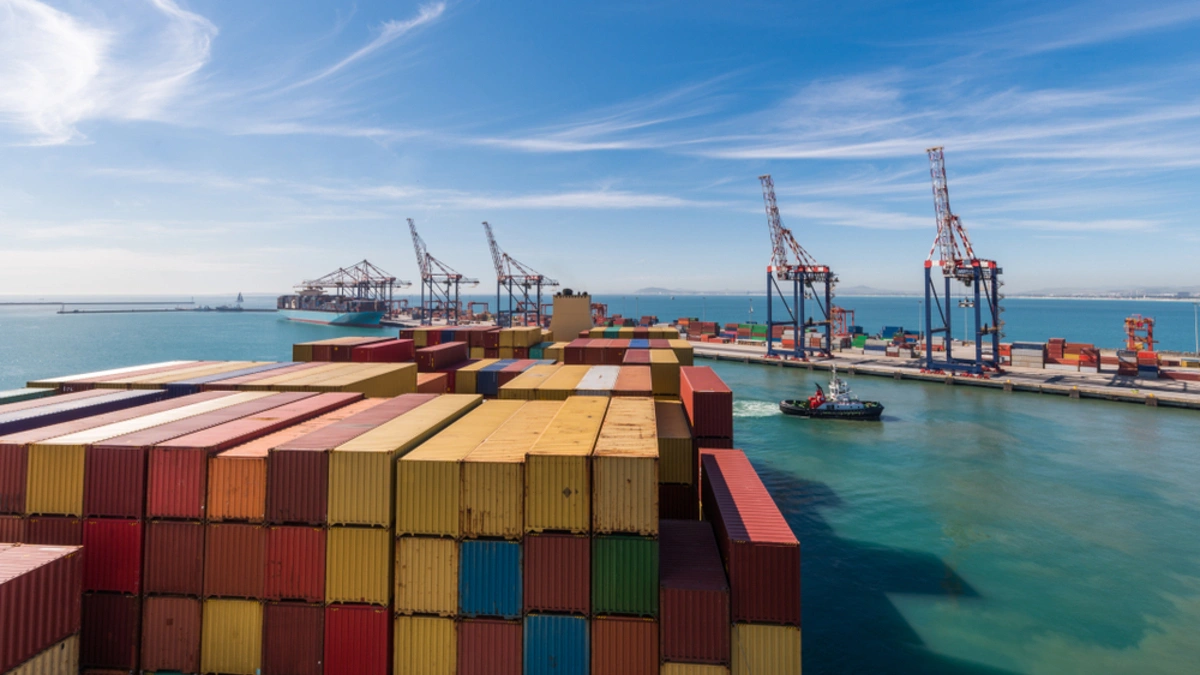
Cape Town harbour with a docked freight ship being loaded with storage containers.

Strong winds regularly disrupt operations at the Port of Cape Town, creating delays that can extend well beyond the harbour. Transnet is now considering wind shields, combined with improved weather forecasting and predictive modelling, as part of an effort to reduce these interruptions and keep cargo moving.

The proposal comes as the port continues to look at ways of improving its ability to operate during adverse weather. The focus is not on eliminating the effect of strong winds, but on reducing the amount of time they prevent equipment from operating safely.

That matters because lost operating time at a major port can quickly become a problem for exporters, shipping companies and businesses further along the supply chain.

Why Strong Winds Disrupt Port Operations

Much of the work at a container port depends on large pieces of equipment, including ship-to-shore cranes, operating safely.

When wind speeds reach certain levels, those operations may have to be restricted or stopped. The resulting delays can affect when cargo is loaded and unloaded and, in turn, when vessels are able to leave the port.

A disruption to one operation can also affect the schedule of others.

For exporters, the consequences can be significant. Cargo may already have been transported to the port, prepared for export and scheduled for loading. When operations are interrupted, those goods can remain in the system for longer, creating uncertainty around delivery times and additional pressure on transport and storage arrangements.

The Wind Shield Proposal

Transnet is considering wind shields as one way of reducing the impact of strong winds on port operations.

The concept is relatively straightforward: strategically placed barriers could reduce wind speeds in areas where equipment is operating, potentially allowing some activities to continue safely for longer during periods of adverse weather.

The objective is not to make the port immune to wind. Instead, the proposed infrastructure is intended to reduce the frequency or duration of stoppages caused by conditions that currently prevent equipment from operating.

That could give the port more usable operating time, particularly during periods when strong winds would otherwise restrict activity.

Forecasting Matters Just as Much

The physical wind shields form only part of the proposed approach.

Transnet National Ports Authority has been working with the Council for Scientific and Industrial Research (CSIR) on a wind study and predictive modelling for the Port of Cape Town.

The work is designed to improve understanding of how wind conditions affect port operations and provide more localised information that can support operational decisions.

The Western Cape Government reported in February that the forecasting model had been tested and integrated into the port’s operational support system. The system provides localised wind forecasts and information intended to assist Port Control when making decisions about operations.

The practical benefit is better preparation.

Accurate forecasting can give port operators more warning of potentially disruptive conditions, allowing them to adjust operations and plan around periods of severe wind rather than reacting once a disruption has already occurred.

Why Exporters Feel the Impact

The effects of a port disruption are not confined to the port.

Take an agricultural exporter. Produce may have been harvested, packed, transported to Cape Town and prepared for loading onto a vessel bound for an overseas market. If strong winds interrupt operations, the shipment can be delayed even though every previous stage of the journey has been completed.

That delay can affect schedules, transport planning, storage and the timing of when goods reach their destination.

The Western Cape Government has highlighted fruit exports in particular when discussing the need to reduce weather-related disruption at the port.

For products where timing and condition are critical, improving the consistency of port operations can have a direct commercial benefit.

More Than an Infrastructure Problem

Wind is only one of the factors affecting port performance, which is why the proposed response goes beyond the construction of physical barriers.

The broader work includes forecasting, operational procedures and planning for periods when weather prevents normal activity.

That combination is important. Better infrastructure can reduce the impact of strong winds, but better information can help operators decide how to use the available operating time and prepare for disruption when it cannot be avoided.

The Western Cape Government’s stakeholder work has also identified the need for clearer procedures around stopping and restarting operations and for alternative measures during extended weather disruptions.

A Practical Response to a Recurring Problem

The proposed wind shields are a targeted response to a problem that repeatedly affects the Port of Cape Town.

Rather than treating every weather-related stoppage as unavoidable, the approach is to reduce the effect of strong winds where possible and improve the information available to the people running the port.

For exporters and other businesses that depend on the port, the outcome is ultimately straightforward: fewer disruptions, greater certainty and a more predictable route for getting goods to market.

That is the real value of the proposal. Not simply keeping cranes operating for longer, but reducing the number of times a weather event at the harbour becomes a problem for businesses hundreds or thousands of kilometres away.

Continue Reading

Trending