
Logistics
New Multimodal Inland Port Association Launched at Transport Forum


A significant milestone was reached in the South African logistics sector with the recent launch of the Multimodal Inland Port Association (MIPA). This new association was launched during the Transport Forum, an online event on 23 May 2024 attended by over 250 delegates, with a distinguished panel from industry, Transnet and academia. The event marked what many are calling the dawn of a rail renaissance in the country.
MIPA addresses a critical need in South Africa’s logistics landscape, which is increasingly grappling with rising costs and severe congestion. The association aims to act as the unified voice for inland ports across the nation, focusing on promoting, supporting, and advocating for the increased movement of cargo from road to rail.

“Transporting more cargo by rail has become an imperative, considering the growing cost of logistics in South Africa. It is no longer just a nice-to-have,” says Warwick Lord, MIPA Chairman.
MIPA aims to reform the rail industry through private investment, foster trade activities that meet social objectives, and facilitate the crucial transfer of goods from road to rail. By optimising industrial and logistics activities through efficient multimodalism, logistics costs will be reduced, and efficiency will be improved.
Formed by leading entities in the transportation sector, including the Cato Ridge Inland Port, Tambo Springs Development Company, Portfutures, Autoforce, Mac Group, Cape Town Inland Port, the Cape Winelands Airport, the Musina Intermodal Terminal, RailRunner South Africa, and RailRunner Services, the association is committed to collaborating on best practices, particularly in through private sector participation (PSP). It will work closely with government and state-owned enterprises.
“We aim to create one voice for inland ports, driving workable multimodal solutions that deliver efficiency, cost reduction, and much-needed resilience to the South African supply chain. By doing so, we can mitigate the impact of external shocks and ensure stability in the logistics sector,” says Lord.
MIPA’s strategy to drive more cargo from road to rail includes using innovative multi-nodal technology and improving collaboration with other freight hubs and stakeholders, to optimise each supply chain link from a cost and efficiency perspective.
“Inland ports increase accessibility through long-distance transport corridors, leading to lower distribution costs and improved capacity by consolidating freight volumes,” explains Lord. “These multi-modal terminals can handle large amounts of cargo continuously, allowing sea ports to extend their cargo base, which is crucial given the increasing size of vessels.”
Furthermore, inland ports provide significant dedicated logistics developments, proximity to rail and highways, ample truck parking, and less traffic congestion.
Lord says MIPA is dedicated to facilitating free trade and promoting sustainable practices. The association will support its members in complying with sustainable development goals and the SADC Vision 2050.

Dr Juanita Maree, CEO of the South African Association of Freight Forwarders (SAAFF), highlighted the launch of MIPA: “Our logistics network is at a turning point, with more alignment across the country than ever before. By working together, we can achieve significant advancements. It is crucial to continuously foster dialogue, share insights, and raise awareness to build a sustainable supply chain for the future.”
According to Lord, MIPA will aim to expand its membership, encouraging more stakeholders to join and contribute to the conversation.
“The business community plays a vital role in developing and facilitating trade within the logistics and supply chain environment. We will lobby warehousing, transport, and consulting businesses through these channels to join MIPA. We will also seek to include State-Owned Enterprises (SOEs) – as they are significant players nationally and globally – while fostering a close-working environment with the government,” concludes Lord.

Logistics
Opinion Piece: Transparency is Becoming the New Competitive Advantage in Workforce Logistics

By Maureen Phiri, Director at Oxyon People Solutions
In the past, the logistics of workforce management have tended to happen behind the scenes. Clients saw the end result of staff arriving on site, projects being delivered, and operational requirements being met, but the processes that made it possible were mostly invisible. However, this approach is now beginning to change, thanks to Artificial Intelligence (AI) becoming more integrated into workforce management.
Workforce providers can now give their clients greater visibility into the processes behind staffing. This means that clients have a better understanding of workforce readiness, compliance, and operational performance, which in turn allows them to make faster, more informed decisions. For workforce providers, this means that administrative functions can become strategic assets that strengthen collaboration, build trust, and create greater value for clients.
AI is Connecting the Workforce Journey
Clients are looking for increased transparency when it comes to their outsourced staffing processes. For workforce providers to be able to do this, they need to bring together information from across the workforce lifecycle. Previously, this would have been a labour-intensive task, but AI makes it much quicker and easier to collate information from across separate systems like recruitment, onboarding, compliance, and workforce management.
Connecting these functions allows workforce providers to have a much clearer view of workforce readiness and allows them to share relevant information with clients in real time. This means that instead of waiting for reports or updates, clients can see where people are in the recruitment or onboarding process at any time. It also helps them to understand whether compliance requirements have been met, and identify any potential issues in the process.
This changes the role of workforce logistics, because the information that was previously only used to support internal operations can become a competitive advantage. With AI behind the scenes, this information can help clients plan more effectively, respond more quickly, and work more closely with their workforce partners.
Making the Back Office Visible
Take onboarding as an example. Traditionally, clients would only become involved in the process once a worker was ready to start, but using AI means that workforce providers can give their clients visibility throughout the process. This means that clients can see how onboarding is progressing as it happens, and any problems that might cause delays can be identified and dealt with early.
The same applies to compliance. With visibility throughout the recruitment processes, clients can easily see whether compliance requirements are being met, rather than only being notified when a problem occurs. This reduces risk, because issues can be handled before they can have a negative effect on client operations.
When it comes to workforce administration, the benefits are similar. Having real-time visibility into information that used to only be used internally at a workforce provider means that clients are more informed and can make better operational decisions.
More Transparency Builds Stronger Partnerships
Better visibility helps to improve reporting, but it can also change the relationship between workforce providers and their clients. If workforce providers give their clients ongoing access to more information, the whole process becomes more proactive. Problems can be identified quickly and decisions can be made faster. Added to this, both clients and workforce providers can understand the workforce journey better, as it happens.
It is important, however, to remember that responsible data management is essential. Giving clients more visibility into workforce processes does not mean providing unrestricted access to personal employee information. AI should help organisations share the information clients need to make better business decisions, but it should also be used to make sure that personal employee data is always protected.
Clients and workforce providers also need to remember that technology should never replace human judgement. AI can process information quickly and can identify potential problems, but any decisions about recruitment, onboarding, and workforce management must still be made by people who can use their experience to consider the circumstances and take responsibility for the outcome.
The Future of Workforce Logistics
AI is increasingly becoming part of workforce management, but the real value of these tools is not just in automating administrative tasks. If workforce providers can use AI to make workforce processes more transparent, they can give their clients better visibility into the information that supports operational decisions, including onboarding and compliance. This is fast becoming a competitive advantage that helps workforce providers strengthen client relationships, support better decision-making, and demonstrate the value of their expertise.

Maureen Phiri, Director at Oxyon People Solutions

Heavy rain, dense fog, flooding and icy conditions can affect roads, routes and delivery schedules with little warning. For businesses, the consequences can move quickly beyond a delayed parcel. Inventory can be stranded, customer commitments can be missed, production schedules can be disrupted and revenue can be put under pressure.
In South Africa, disruption is often localised. Rain in the Western Cape, fog in parts of Gauteng and Mpumalanga, or hazardous conditions on inland routes may affect one part of a network while operations elsewhere continue. In a connected network, however, a local disruption can create a wider ripple effect when shipments, inventory and delivery commitments depend on connected routes.
For FedEx, resilience is therefore not about trying to eliminate disruption. It is about having enough visibility to see risk early, enough flexibility to adjust the plan and the operational capability to respond before a local problem becomes a wider business issue.
“Weather can add another layer of complexity to logistics operations, especially when poor visibility, road closures or changing conditions affect planned routes,” says Nelson Teixeira, Managing Director of Operations for Sub-Saharan Africa at FedEx. “Businesses that understand where their risks are and have contingency plans in place are in a stronger position to adjust when needed and communicate proactively with customers.”
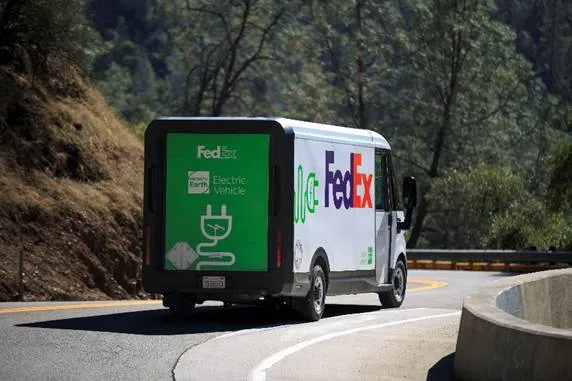
Prepare for Disruption
The strongest response to a weather event often begins before the weather arrives. Businesses should know which shipments, routes and inventory positions are most critical to continuity. That can mean identifying alternative routes, allowing appropriate contingency in time-sensitive deliveries, reviewing where critical inventory is held, and establishing clear priorities for shipments that cannot afford extended delays.
This is where the relationship with a logistics provider matters. A resilient network is not simply a collection of transport options; it is the ability to use those options when circumstances change.
For businesses moving urgent or export-bound goods, flexibility can also mean having access to services designed around time-sensitive international movement. FedEx International Priority® is a time-definite, customs-cleared international service available to more than 220 countries and territories, with shipment tracking included. The value during disruption is not simply speed; it is having a defined service option when timing is central to a customer or commercial commitment. Availability and transit times vary by origin, destination and shipment.
See Risk Earlier
Preparation creates flexibility. Visibility helps businesses know when to act.
“Good visibility gives businesses more options,” says Teixeira. “If you know where a shipment is and can see where delays may be developing, you have a better chance of responding early. That might mean adjusting a plan, preparing for a revised delivery time or simply giving a customer an update before they have to ask.”
FedEx offers a range of visibility, monitoring and intervention capabilities designed to support critical shipments. For selected shipments, FedEx Priority Alert® provides enhanced shipment status tracking and operational recovery procedures. For temperature-sensitive shipments, Priority Alert Plus™ adds proactive intervention capabilities, including re-icing, gel-pack replenishment and cold storage. These services are designed to give critical shipments additional oversight when conditions become more challenging.
Respond with Agility
Once disruption is developing, the advantage comes from being able to act before every option has narrowed. A route may need to change or a customer may need a revised expectation. Inventory or receiving teams may need to prepare for a different arrival time. The earlier businesses can identify the risk and assess their options, the more opportunity they have to mitigate its impact.
This is particularly relevant in South Africa, where disruption in one corridor can have consequences across a connected network. The ability to recognise and absorb that disruption quickly therefore becomes critical.
For businesses, communication is part of that response. Customers may accept that weather is outside a company’s control, but uncertainty is harder to manage. Realistic, revised timelines and proactive updates give customers something they can plan around.
“Reliability does not mean that everything will always go exactly according to plan,” says Teixeira. “Sometimes unexpected challenges arise and delays happen. The key is having the right information, coordinating closely and responding in a way that keeps both the business and the customer informed.”
That is the practical meaning of resilience in a logistics network. It is not the promise that disruption will never happen, but the ability to see risk, adapt and reduce the uncertainty surrounding it.
Weather will continue to disrupt routes, close roads and put pressure on delivery networks. Businesses cannot control those conditions, but they can prepare for where disruption matters most and respond while there is still time to act.
That can help protect inventory, business continuity and customer commitments, while maintaining the confidence that customers place in a business when it matters most.

The Distribution Gap Holding Back South Africa’s Township Economy

Keeping the Network Moving: What Gauteng’s New Public Transport System Could Mean for Supply Chains

Opinion Piece: Transparency is Becoming the New Competitive Advantage in Workforce Logistics


-

 Management3 months ago
SEO, AEO, GEO and SEO for AI: What Is the Difference for the Supply Chain Industry?
-

 Transport3 months ago
LDV T60 Max vs GWM P500 vs Isuzu D-Max vs Toyota Hilux vs Ford Ranger: Which Double-Cab Bakkie Offers the Best Value?
-

 Logistics4 months ago
DHL Group to invest around € 160 million in 2026-2027 to strengthen logistics infrastructure and support clean energy transition in France
-

 Logistics4 months ago
DHL Expands Asia Pacific Data Center Logistics Capabilities to Support Growing Regional Demand
-

 Logistics3 months ago
Top 5 Warehousing and Logistics Companies in the Western Cape by Google Review Rating
-

 Logistics4 months ago
Top 10 Warehousing and Logistics Companies in Gauteng by Google Review Rating
-

 Logistics3 months ago
Top 4 Lift Truck Companies in Gauteng
-

 Freight Forwarding4 months ago
The Hidden Cost of Shipping from China to South Africa — What Every SA Importer Needs to Know in 2026