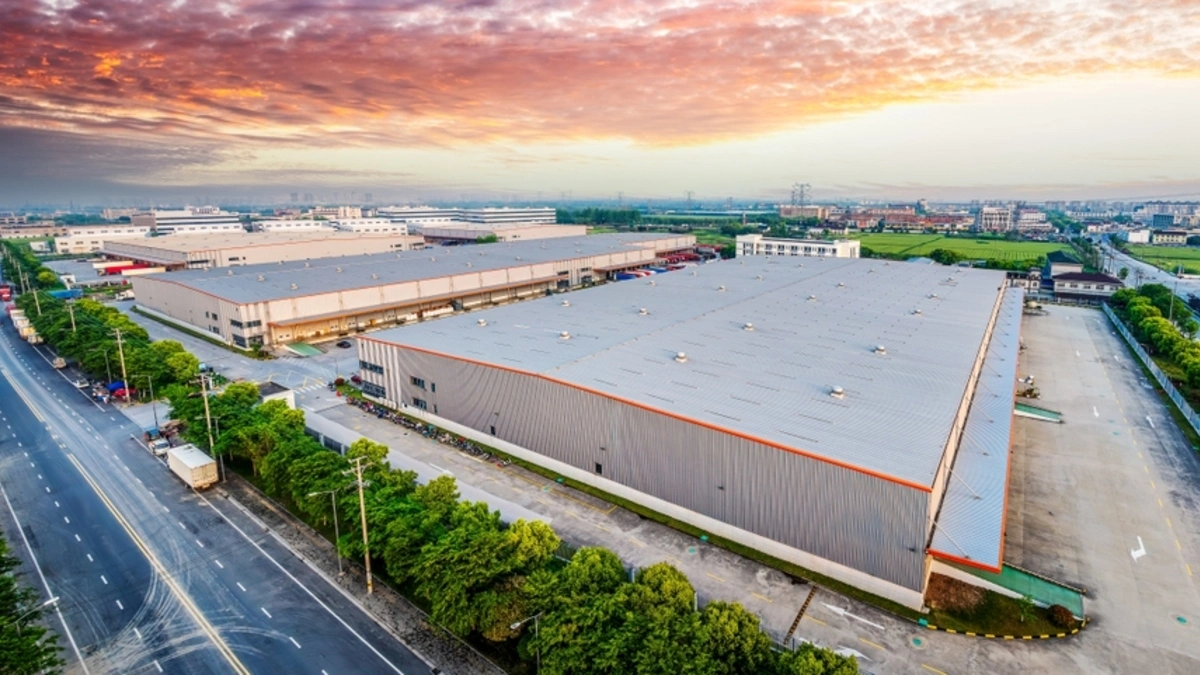
For any successful supply chain operation, the safety and security of your warehouse solution is a vital area worth having a closer look at. It is important that you establish a safe and secure working environment to protect the assets within your warehouse, and your employees from potential hazards. In this article, we are going to discuss the best practices for warehouse safety and security and detail why each is important to consider.
Safety and security training
The very first step in this process should be maintaining a regular training program with your employees. This training phase should cover safety protocols such as the proper way to use equipment, emergency procedures, and materials handling techniques, in addition, security training should focus on procedures to secure the facility, identifying and reporting suspicious behaviour, and the identification of vulnerable areas of the facility.
The implementation of safety procedures and safety equipment
Workplace accidents and injuries can be minimised in your warehouse by ensuring that employees are equipped with the correct safety equipment. For example, your employee’s safety equipment can include protective gear such as safety glasses, hard hats, and high-visibility vests.
For machinery, particularly in a warehouse where heavy machinery is commonplace, it is important to establish a procedure as to how employees must conduct themselves in and around the machinery to ensure the safety of those using the equipment and those working near the machinery itself.
Storage safety and worst-case scenario policies.]
Safety procedures for storage should be an extremely important factor to consider in your warehouse, especially if your warehouse stores potentially hazardous goods such as flammable materials or substances.
The last thing you want is a warehouse fire destroying the assets within your warehouse and placing your employees in danger. Therefore, it’s important to not only have the correct storage procedures in place for these types of goods but to also have safety equipment to deal with emergencies such as fire extinguishers and an air-tight policy for what to do in that situation.
Regular safety inspections
Regular safety inspections should be conducted to identify potential hazards and areas for improvement. These inspections can be done by a dedicated safety team or by assigning the responsibility to warehouse supervisors. Any active hazards should be addressed immediately to prevent accidents and ensure workplace safety.
Theft prevention and restricted zones
Ensuring the security of the assets stored within the warehouse should be given top priority. To safeguard against theft, there are a few strategies that can be implemented. Firstly, certain areas can be restricted to only necessary employees. This can be achieved through the use of key cards or by allowing access only to employees with the correct ID badge. Secondly, the installation of surveillance cameras can help to monitor the warehouse for any potential theft.
Effective communication
Effective communication between management and employees is essential for maintaining a safe and secure warehouse environment. This includes regular safety meetings, open communication channels, and encouraging employees to report any safety or security concerns to management to address these matters in the future.
Final thoughts
In conclusion, warehouse safety and security should be a top priority for any supply chain operation. By implementing these best practices, companies can prevent accidents and injuries, protect valuable assets, and improve overall warehouse efficiency.
Spend a morning around Gqeberha’s industrial areas and you’ll quickly notice the constant movement of trucks, containers and delivery vehicles. Components arrive at manufacturing plants, finished products leave distribution centres and freight moves steadily between warehouses, factories and the port.
Most of that activity happens quietly in the background, yet it’s one of the reasons Gqeberha has remained one of South Africa’s most important manufacturing and logistics hubs. While the city’s port and automotive industry often receive the spotlight, warehouses are the link that keeps everything connected.
They’re where products pause briefly before moving to the next stage of the journey, helping businesses manage inventory, support production and keep goods flowing across the country and into international markets.
Keeping Production Moving
Few industries illustrate the importance of warehousing better than automotive manufacturing.
Companies such as Volkswagen Group South Africa and Isuzu Motors South Africa rely on thousands of components arriving from suppliers throughout South Africa and abroad. Those parts don’t move directly from a truck onto an assembly line. They pass through warehouses where they’re received, checked, organised and made available exactly when production requires them.
The timing matters. If a critical component isn’t available when it’s needed, production can slow down or even stop. Warehouses help prevent those interruptions by ensuring parts are in the right place before they’re called for, allowing manufacturing to continue with as little disruption as possible.
More Than Somewhere to Store Stock
The idea of a warehouse filled with rows of products waiting to be collected no longer reflects how many modern facilities operate.
Walk through a busy warehouse today and there’s constant activity. Deliveries are arriving, products are being inspected, orders are picked, pallets are wrapped and trucks are loaded for the next destination. In some facilities, goods spend only a short time inside before moving on again.
That pace reflects the way supply chains have changed. Businesses want inventory that keeps moving, not stock that sits idle. The warehouse has become an active part of the supply chain, helping businesses respond more quickly to customer demand while maintaining greater control over inventory.
Why Gqeberha Makes Sense
Location has always influenced where businesses choose to invest in warehousing, and Gqeberha offers several advantages.
The city connects manufacturers with the Port of Gqeberha, national road networks and customers across South Africa. Agricultural products from the Eastern Cape, imported goods arriving through the port and locally manufactured products all move through the city’s warehousing network before continuing their journey.
For many businesses, that proximity reduces unnecessary handling, shortens transport distances and creates greater flexibility when demand changes.
Quietly Supporting the Local Economy
Warehouses don’t only support manufacturers. Retailers, food producers, distributors and exporters all depend on facilities that can receive goods, manage inventory and dispatch orders efficiently.
Whether it’s automotive components heading to an assembly plant, citrus from the Sundays River Valley preparing for export or consumer products making their way to retailers around the country, warehouses play a part in keeping those supply chains moving.
It’s a role that often goes unnoticed because, when everything is working as it should, the warehouse simply becomes another link in a much larger network.
Behind every container leaving the port, every truck departing a distribution centre and every product arriving on a shelf is a warehouse that helped make the journey possible. It may not be the most visible part of Gqeberha’s logistics industry, but it’s undoubtedly one of the most important.
As SAPICS celebrates 60 years of impact in 2026 under the theme “Legacy to Leadership: 60 Years of Connection, Collaboration & Transformation,” South African supply chain executives face an urgent call to action.
With soaring road freight volumes, warehouse occupancies topping 85%, and compounding rental hikes, local leaders rushing to automate frequently fall into a costly trap. While modern warehousing technology can greatly assist in slicing operational costs and slashing inventory losses, investing heavily in off-the-shelf systems without addressing underlying operational bottlenecks often amplifies the chaos rather than solving it.
True leadership requires recognising that technology is not a standalone silver bullet; transformation happens when advanced process design meets a flexible, digitally prepared workforce.
Why More Technology Doesn’t Always Mean More Progress
When margins shrink, the instinctive corporate reflex is to slash headcount or purchase an automated tool because a competitor did. However, automating a broken process simply yields an automated mess.
“A lot of technology is available off the shelf, and it is dangerous to buy something you don’t thoroughly understand,” warns Willie du Preez, Managing Director of Programmed Process Outsourcing (PPO). “If you don’t understand where your operational bottlenecks are, you will introduce the wrong technology.“
Du Preez notes that real return on investment (ROI) stems from a deep diagnostic phase. This means utilising industrial engineering to map workflows and eradicate systemic friction before buying hardware. Without this groundwork, companies end up with fragmented patches instead of a unified ecosystem, losing critical institutional knowledge.
Furthermore, traditional data tracking compounds this vulnerability. “After-the-shift or month-end information has become obsolete,” Du Preez stresses. “We need real-time data frameworks to make decisions proactively before bottlenecks disrupt the entire chain.“
The Business Case for What Doesn’t Appear on the Balance Sheet
Optimising a warehouse requires looking far beyond obvious hardware and immediate software implementation costs. True operational leadership requires a comprehensive evaluation of regulatory complexity, strategic risk, and financial agility.
“When an organisation conducts a deep cost-benefit analysis, the ‘invisible’ levers of outsourcing become undeniable,” explains Jeandie Leone, Commercial Executive at Workforce Staffing and Outsourcing. “A strategic partner doesn’t just manage transactional headcounts; they absorb significant balance-sheet liabilities. For instance, compliant employers in South Africa must navigate complex regulatory requirements, spending 1% of payroll on Skills Development Levies and up to 6% on continuous training. In outsourcing key components of your workforce, these administrative and training burdens shift entirely to the expert partner.“
Leone emphasises that this strategy fundamentally transforms how human capital impacts corporate finances. “Labour is traditionally one of the highest flat operational expenses (OpEx) for most logistics businesses, yielding zero return on scorecards. Outsourcing allows companies to route this heavy spend through a fully compliant partner, converting a standard operating cost into powerful preferential procurement spend for their B-BBEE scorecard.“
Furthermore, Leone highlights immediate cash flow advantages. “In high-volume environments, managing internal payrolls places immense pressure on working capital. Partnering with an provider that offers standard 30-day payment terms effectively allows a business to defer massive payroll expenses for that period, interest-free. This frees up vital cash flow to reallocate into core technological infrastructure.“
The Strategic Power of Operational Convergence
Even with engineered processes and real-time dashboards, technology remains inert without the people trained to pilot it. In South Africa’s high-attrition warehousing environments, the traditional model of renting generic labour on one side and managing operations on the other is no longer viable. To maintain operational continuity and protect margins, supply chains must merge Temporary Employment Services (TES) and Business Process Outsourcing (BPO) into a singular, symbioticoperating model.
“The relationship works best when both parties are intertwined within the exact same operating solution for the client,” explains Quintus Sliep, Managing Director of Worldwide Staffing. “The TES partner delivers workforce agility by sourcing, onboarding, and scaling compliant personnel as volumes shift. Concurrently, the BPO partner injects the process structure, productivity metrics, and management control that allow that workforce to perform properly.“
When these two disciplines operate in isolation, operations fracture. Integrated, the client receives a scalable solution that maintains strict process discipline during volatile demand spikes.
Leone concurs, adding a regulatory and risk perspective: “Outsource partners bring dedicated legal and operational expertise needed to handle industrial relations, recruitment pipelines, and time and attendance. This ensures absolute continuity, leaving the client’s internal teams free to focus strictly on macro supply chain strategy.“
Bridging the Digital Skills Gap
This integrated approach is critical to addressing one of the industry’s most pressing operational challenges: preparing workers for increasingly digital environments. In modern, data-driven warehouses, traditional once-off classroom training is no longer enough. Software platforms evolve continuously, compliance requirements shift rapidly, and scanning and automation systems are updated in real time.
“We shouldn’t talk about automation or robotics purely as job threats; they support people rather than replace them completely,” says Sliep. “The bigger risk is the skills gap between where operations are going and where the workforce is today. The TES provider must prepare people for the environment, and the BPO must manage that environment so workers can use technology productively.”
Closing this gap requires ongoing collaboration between workforce enablement and operational management. Together, TES and BPO partners create continuous learning environments that equip workers to adapt alongside technology rather than be displaced by it. The result is a more resilient, digitally capable workforce able to engage confidently with evolving systems, workflows, and operational demands.
Operational resilience depends on aligning technological progress with human capability. As du Preez concludes, “Technology alone does not drive transformation; people and their knowledge do.”
Walk into two warehouses of a similar size and, at first glance, they may look much the same. The shelving is in place, forklifts are moving and orders are being prepared for dispatch. Spend a little more time on the floor, however, and the differences quickly become apparent. One warehouse operates with purpose, while the other is constantly working to recover from delays, misplaced stock and bottlenecks.
Efficiency isn’t simply about moving faster. It’s about creating an environment where people, processes and technology work together to keep goods moving consistently from the moment they arrive to the moment they leave. As supply chains become more complex and customer expectations continue to grow, an efficient warehouse has become one of the strongest assets a business can have.
Good Warehouse Design Reduces Unnecessary Movement
Every extra step inside a warehouse takes time. When employees have to travel long distances to retrieve stock or forklifts regularly cross paths with picking teams, productivity quickly starts to suffer.
An efficient warehouse is designed to keep movement to a minimum. Receiving areas, storage locations, picking zones and dispatch bays are arranged to support the natural flow of goods through the facility. The goal isn’t to rush people from one task to the next. It’s to remove the obstacles that slow them down in the first place.
Knowing Where Stock Is Matters
Most warehouse delays don’t start when an order is placed. They begin much earlier, when inventory records don’t match what’s actually sitting on the shelves.
Having an accurate view of stock allows warehouse teams to pick orders with confidence, replenish inventory before shortages occur and avoid unnecessary delays. Barcode scanning, warehouse management systems and regular stock checks all help create a clearer picture of what’s happening inside the warehouse, making it easier to plan ahead instead of constantly reacting to problems.
Experienced Teams Keep Operations Running
Technology has changed the way warehouses operate, but it hasn’t changed the importance of the people working inside them. Experienced warehouse teams know how to manage busy periods, solve unexpected problems and keep orders moving when the day doesn’t go exactly as planned.
Clear processes, ongoing training and good communication often make a bigger difference than people realise. Even the most advanced warehouse systems rely on teams using them effectively, which is why investing in people remains just as important as investing in equipment.
Technology Supports Better Decisions
Warehouse technology has come a long way over the past decade. What was once used primarily to record stock movements is now helping businesses understand how their operations perform throughout the day.
Warehouse management systems, real-time reporting and automated data collection give managers better visibility across the facility. Instead of waiting for problems to appear, they can identify congestion, monitor inventory trends and make informed decisions that keep operations running smoothly.
A Warehouse Is Only One Part of the Journey
An efficient warehouse doesn’t just improve what happens inside its own walls. It helps trucks load on time, orders reach customers sooner and the wider supply chain run more smoothly. That’s why warehouse efficiency is about more than storage or speed. It’s about creating an operation that businesses can rely on, even when the day doesn’t go exactly to plan.