Connect with us

Materials Handling

Covid-19 vaccine status in Africa

Published

on

The distribution of the Covid-19 vaccine differs from other pharmaceutical distributions. It requires insurers of the pharmaceutical industry to collaborate with their clients to ensure safe transit.

The World Health Organization (WHO) says a target of fully vaccinating 10% of all people in Africa by the end of September won’t be achieved unless supplies improve.

Less than 4% of Africa’s population has been fully vaccinated, compared with around 54% in the US and 65% in the UK.

The WHO says African countries have so far received 177 million vaccine doses.

The global Covax vaccine scheme, intended to help poorer countries, has supplied about 37% of these, with the rest acquired through bilateral deals and donations from a variety of sources.

WHO data shows that 14 African countries have so far hit the target of 10% fully vaccinated, but many of the larger countries with the poorest populations are lagging far behind.

“Many of these [more highly vaccinated] countries are in the upper-middle or high-income brackets and have procured vaccines directly from manufacturers,” WHO Africa regional director Matshidiso Moeti says.

The WHO has projected that the continent needs a total of about 270 million vaccine doses to reach the target of 10% fully vaccinated by the end of this month.

Some African countries have managed to quickly use up their vaccine supplies, while others have had a slow uptake of jabs. The slow rate of vaccination is caused partly by issues around distributing the vaccines, such as the lack of health infrastructure, funding for medical supplies used during vaccination and staff. But there are fears that vaccine hesitancy and scepticism could be playing a role.

The WHO has called on African nations to push forward with their vaccination programs. It’s also pointed out that although overall case numbers are declining slightly in Africa, in some parts of the continent they are going up.

Continue Reading

Management

AGOA is Back – But Can Africa Manufacture Its Way Into the Opportunity?

Published

on

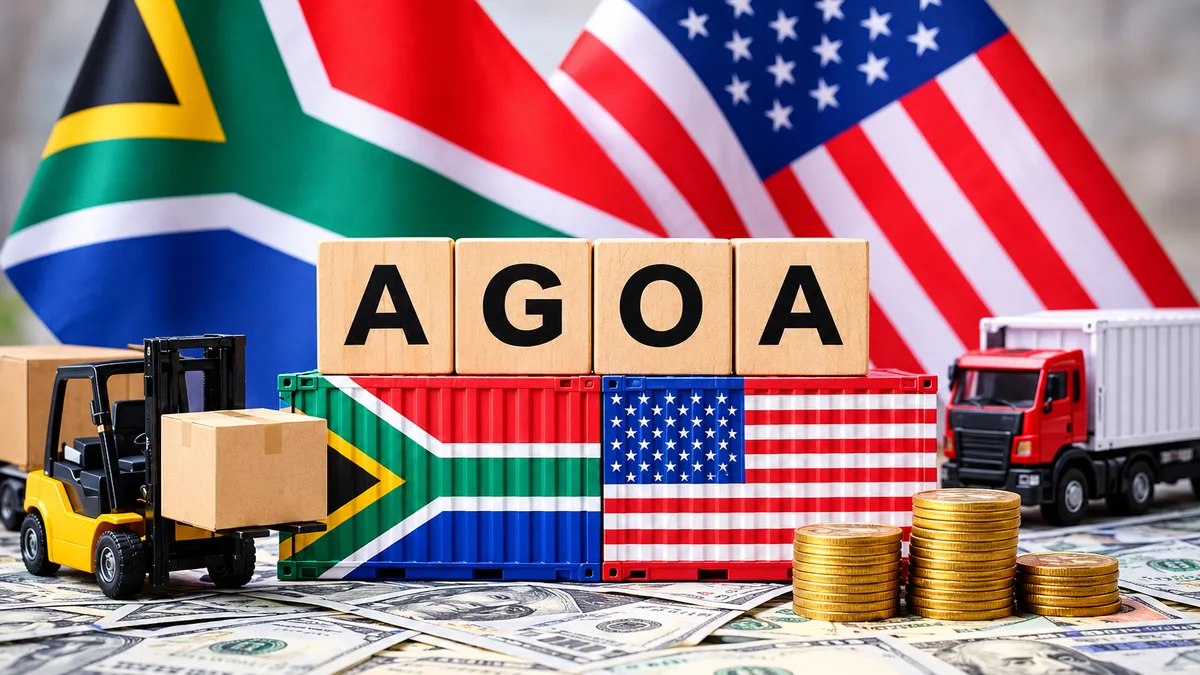
A South African and US flag sitting on a desk with toy freight vehicles transporting goods. In the centre, lies two shipping containers painted with a South African and US flag with letters on top spelling AGOA.

We all know that global trade is becoming increasingly important. Economies are navigating challenges on multiple fronts, businesses are under pressure to remain competitive, and every opportunity to grow, invest and create new markets must be seized to lead to success.

But what if some of those opportunities are already within reach, and we simply aren’t making the most of them?

For Africa, one such opportunity is the African Growth and Opportunity Act.

AGOA is a U.S. trade programme established in 2000 to strengthen economic and trade relationships with eligible countries in Sub-Saharan Africa. It provides duty-free access to the U.S. market for more than 1,800 qualifying products, spanning a wide range of manufactured and value-added goods, including automotive components, textiles and apparel, agricultural and processed food products, chemicals, plastics, metals and other industrial products.

Following President Donald Trump’s announcement and the subsequent extension of AGOA through 31 December 2028, South African manufacturers have been given additional time and certainty to pursue opportunities in one of the world’s largest markets.

But access to a market is only part of the equation.

The real question is: are we equipped to take advantage of it?

Because securing an opportunity to supply an international customer is one thing. Having the machinery, skills, capacity and processes to fulfil that opportunity – consistently, competitively and at the required standard – is another.

For KNUTH Machine Tools, however, the significance of AGOA extends far beyond the trade agreement itself.

Does the African industry have the production capacity, technology and skills required to turn market access into manufactured exports?

“We often talk about market access as though it is the finish line. It isn’t. It is the starting point. If African manufacturers are going to compete for more international business, we need to build the production capacity and capabilities that allow us to compete -and deliver – at an international level,” says James Fourie, Technical Sales Team Lead, KNUTH SA.

For manufacturers across sectors such as automotive, mining, engineering and energy, increased export opportunities could mean greater demand, making it essential to optimise operations, improve productivity and strengthen production capacity.

From Market Access to Manufacturing Capacity

The renewed focus on AGOA comes at a time when manufacturers globally are under pressure to produce more efficiently while controlling costs and maintaining consistent quality.

For African manufacturers, the opportunity is therefore not simply about exporting more. It is about being equipped to manufacture more competitively.

There are plenty of ways manufacturers can improve how competitively they operate. It can start with something as simple as identifying production bottlenecks, reducing downtime or getting more out of existing equipment. For others, it may mean improving production planning, reviewing tooling and processes, upgrading ageing machinery, introducing CNC technology or investing in automation.

Just as importantly, manufacturers need the right skills to make the most of these improvements and ensure that technology translates into real gains on the shop floor.

“Manufacturing competitiveness starts long before a product reaches the shipping container,” says Ruan Cowley, Managing Director of KNUTH SA. “It starts with the equipment, the people operating it and the processes behind it. If AGOA creates additional demand, manufacturers need to be ready to respond to that demand, and that requires investment in production capability.”

This is particularly relevant for businesses that may currently be operating with limited capacity or processes that are already under pressure.

A manufacturer receiving an opportunity to supply a larger international customer cannot necessarily scale simply by adding another order to the production schedule. Increased volumes can expose operational inefficiencies.

The result is that market access can quickly become a manufacturing-capacity challenge.

The Machinery Question

For more than 100 years, KNUTH Machine Tools has been part of the global manufacturing industry, working alongside manufacturers as production methods, technologies and market demands have evolved.

That experience has shown that improving manufacturing competitiveness is rarely about one machine or one investment. It is about understanding the operation as a whole.

For machine shops and component manufacturers, technology can play an important role in that process. Modern CNC machinery, for example, can improve consistency, reduce manual intervention and support the production of more complex components. But the right technology depends on the needs of the individual operation.

“Buying a machine is not the same as improving a manufacturing operation,” says Fourie. “You first need to understand where the constraints are. It could be capacity, workflow, skills, tooling, programming or simply the way a process is being managed. Once you understand that, you can make more informed decisions about where technology can add real value.”

That broader approach becomes increasingly important as manufacturers look to compete for international business.

Ultimately, the goal is not simply to have more technology on the factory floor. It is to build more capable, efficient and competitive manufacturing operations.

“International competitiveness isn’t built overnight,” says Cowley. “It requires manufacturers to make decisions today that improve their ability to compete tomorrow. That includes machinery, skills, service, maintenance and the ability to keep production running.”

A Window – Not a Guarantee

AGOA’s current authorisation runs through the end of 2028, while the United States has also begun a process to consider how the programme could be modernised.

That means manufacturers should view the current environment as an opportunity to assess their readiness rather than simply waiting for export demand to appear.

AGOA is also not the only preferential trade opportunity available. Through agreements and arrangements such as SACU, SADC, the African Continental Free Trade Area (AfCFTA), the SADC–EU Economic Partnership Agreement, the SACUM–UK Economic Partnership Agreement, SACU–EFTA and SACU–MERCOSUR, South African businesses have access to a range of regional and international markets under preferential trading conditions.

The markets are there. The opportunity is there. The question is whether African manufacturing is ready to make the most of it.

For KNUTH, that means encouraging manufacturers to consider a more fundamental question: If a new international opportunity came across the desk tomorrow, would the factory be ready to produce it?

The market may open the door. Manufacturing capability determines whether you can walk through it.

Continue Reading

Logistics

SAFLA Launches Gauteng Region With Eric Pillay Appointed As Chairperson

Published

on

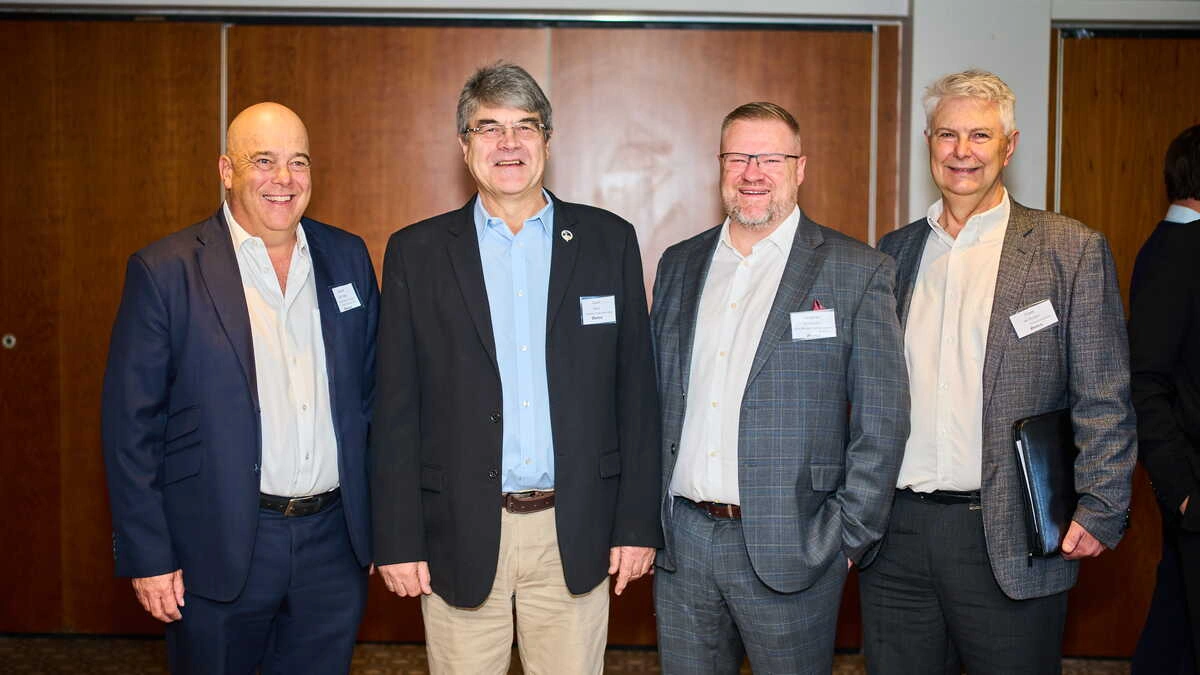
Group photo of: Arend du Preez: Vice Chair of SAFLA, Gavin Kelly: CEO of the Road Freight Association, Jonathan McDonald: Vice Chair of SAFLA’s and Freek van Rooyen - Partner: Shipping & Logistics at Shepstone & Wylie.

The South African Freight and Logistics Association (SAFLA) has launched its Gauteng region, appointing Eric Pillay as regional chairperson and placing stakeholder engagement, border delays and port bottlenecks at the centre of its agenda.

Pillay, owner of Pro-Active Shipping & Freight Solutions, will lead the region’s efforts to strengthen industry representation and improve engagement with the organisations that influence cargo movement. “We work closely with SAFLA nationally to ensure that our issues are addressed,” Pillay stated, outlining how the Gauteng chapter will connect regional concerns with SAFLA’s countrywide advocacy and engagement.

The official launch breakfast at the Johannesburg Country Club in Woodmead, brought together freight and logistics colleagues and key stakeholders to mark the establishment of a regional platform supported by SAFLA’s national structures.

A Collective Voice for Gauteng

Pillay said the chapter responds to clearing and forwarding companies’ need for a collective voice in their dealings with organisations such as the Border Management Authority and other state-owned enterprises and shipping lines. Its first-year priorities centre on improving stakeholder relationships to boost trade and support regional growth, with border and port delays receiving immediate attention.

Pillay’s longer-term vision focuses on stronger partnerships and efficient cargo movement across Gauteng’s supply chains. “Transport is key to keeping the economy going and I would like to see increased cargo volumes moving efficiently, freely and safely.”

SAFLA Gauteng welcomes companies operating in clearing, forwarding and transport in Gauteng. Smaller and emerging operators can use its platform to raise concerns and access support in navigating industry challenges.

Regional Action Supporting National Reform

SAFLA chair Arend du Preez highlighted the association’s commitment to strengthening regional representation within a unified national framework. “By strengthening our regional representation, we ensure that local concerns are heard, local expertise is utilised, and local solutions can be developed while still benefiting from national support and coordination,” du Preez explained.

He emphasised constructive engagement between industry participants to identify the causes of disruption and resolve operational pressure points. “At the end of the day, our objective remains simple,” he said. “Cargo must move.”

Economic Regulation, Fair Access and Transparent Pricing Highlighted

Guest speaker Ian Bird, Transport & Logistics Focal Area Lead at Business for South Africa, addressed the business-government partnership and progress on logistics reforms, placing the regional launch within the broader effort to improve South Africa’s freight system.

Bird’s presentation highlighted the importance of effective economic regulation, fair access and transparent pricing in encouraging investment. “Effective regulation builds confidence and unlocks investment,” Bird highlighted in his presentation.
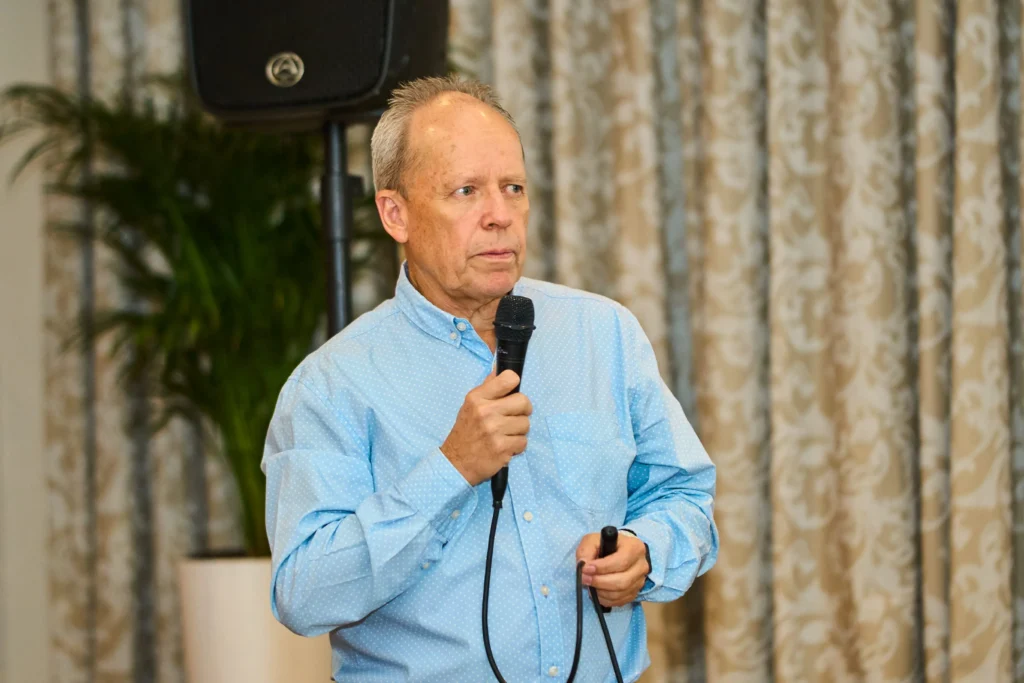
Ian Bird: Transport & Logistics Focal Area Lead – Business for South Africa – presenting at an event.

Ian Bird: Transport & Logistics Focal Area Lead – Business for South Africa

He also stressed that to deliver the freight volumes so urgently needed by the economy will require both improving the rail network for Transnet and private Train Operating Companies, as well as implementing a comprehensive program of structural reform.  The growth in rail volumes will be driven by general freight, which by it’s very nature requires more complex supply chains being developed, operated and managed.

For SAFLA Gauteng, these national priorities reinforce the value of sustained regional engagement with supply chain stakeholders and coordinated escalation of members’ concerns.

SAFLA’s Gauteng chapter aims to help remove bottlenecks, reduce the costs associated with delayed cargo and support trade competitiveness through practical collaboration. Members can also raise local operational issues through SAFLA’s national structures.

Commenting on the launch, Road Freight Association (RFA) CEO Gavin Kelly said the RFA’s MoU with SAFLA means a “stronger, more coordinated industry voice,” while Warwick Lord, chairperson of the Multimodal Inland Port Association (MIPA), added that MIPA “looks forward to working with the association for the benefit of its members and the industry.” Paul Matthew, CEO of the African Meat Importers and Exporters Association added: “Importers and exporters depend on efficient, well-represented freight forwarders. We are proud to partner with SAFLA”.

Headshot of Warwick Lord: Chairperson – Multimodal Inland Port Association (MIPA)

Warwick Lord: Chairperson – Multimodal Inland Port Association (MIPA)

“It means a great deal to me to be part of SAFLA,” continued Pillay. “The industry has been longing for a voice to air their issues and now we have it.”

Portrait of Eric Pillay: Owner - Pro-Active Shipping & Freight Solutions
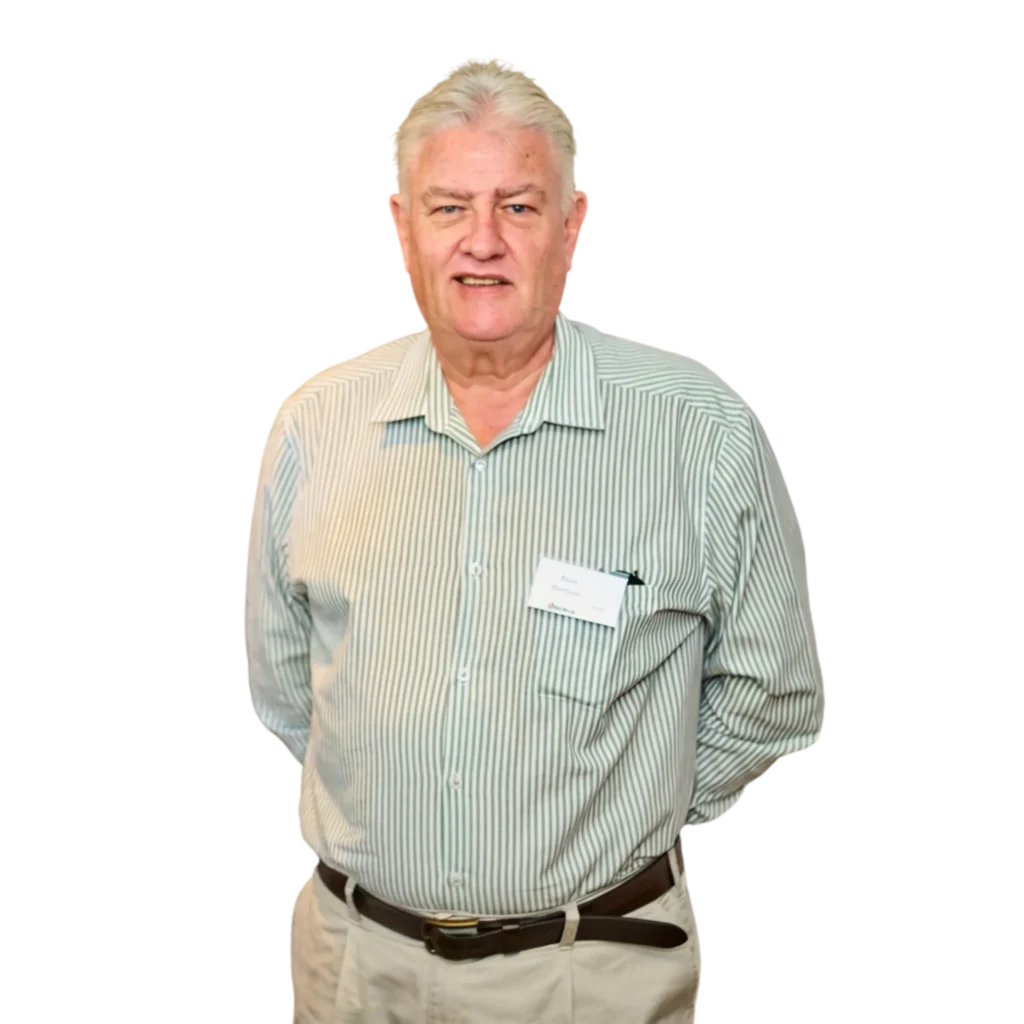
Eric Pillay: Owner – Pro-Active Shipping & Freight Solutions

Portrait of Paul Matthew: CEO – African Meat Importers and Exporters Association

Paul Matthew: CEO – African Meat Importers and Exporters Association

Continue Reading

Management

Newlyn Advances Gqeberha Logistics Park with Second Warehouse Planned

Published

on

Focused shot of a warehouse interior with a forklift.

Newlyn Group is moving ahead with the development of its Newlyn Logistics Park in Gqeberha, with the first 10,000m² warehouse nearing completion and construction of a second facility scheduled to begin in October 2026.

Located along Cape Road (R102), around 5km from the N2 and approximately 20 minutes from the Port of Gqeberha, the development is designed to accommodate logistics, distribution and light manufacturing businesses. The wider logistics park covers approximately 150,000m², with additional warehouse phases planned as demand develops.

The first phase includes a 10,000m² warehouse, a matching 10,000m² yard and between 200m² and 300m² of office and ancillary space. Completion is expected by December 2026. The next phase will add another warehouse of the same size, supported by a dedicated yard.

Warehouse Design Focuses On Operational Efficiency

Rather than focusing solely on warehouse size, Newlyn has incorporated features intended to support the practical requirements of storage, handling and distribution operations.

The buildings have a 24m by 24m column grid to provide open operating space, alongside a clear internal height of 10.5m beneath the structural trusses. This allows for racking of approximately 9m to 10m, or around seven levels, using conventional materials-handling equipment.

The warehouse floors are designed to support distributed loads of 10 to 12 tonnes, with joints positioned to account for racking layouts and the loads placed on rack legs. These considerations can help reduce the need for costly modifications when tenants install their storage systems.

Outside, heavy-duty paved yards are designed to withstand truck and reach-stacker movements. The development also incorporates reinforced concrete in high-turning and high-wear areas to accommodate the demands of regular vehicle movements.

These specifications are intended to help businesses configure their facilities around their operational needs, from goods storage to loading and dispatch.

Infrastructure Designed for Long-Term Use

The development also incorporates features intended to address energy use, building maintenance and Gqeberha’s coastal conditions.

Steelwork has a 15-year anti-corrosion specification, while the roof system is designed without penetrations. The structures are also engineered to accommodate rooftop solar panels, allowing tenants to add photovoltaic capacity without requiring retrospective structural strengthening.

Translucent roof sheeting allows natural light into the warehouse during the day, while ventilation systems support fresh-air circulation and smoke extraction. LED lighting can also be paired with motion or timing sensors to limit unnecessary energy use.

Fire protection is another key consideration. The logistics park will use a shared dual-tank, dual-pump firefighting water system designed to support firefighting in two buildings simultaneously for up to two hours. Warehouse sprinkler systems, early-warning smoke detection and smoke curtains form part of the wider fire-safety provisions.

Utility infrastructure includes individual electricity and water meters, backup water storage and a borehole alongside the municipal supply. Stormwater systems have also been designed to account for the site’s floodplain conditions.

Security will combine perimeter fencing and AI-enabled camera monitoring with a central control room. Individual tenants will be able to establish additional security measures around their own operations.

Further Phases to Respond to Demand

Newlyn has approved plans for additional warehouse options of 12,000m², 7,000m² and 3,000m² as the logistics park expands. This gives the developer scope to respond to different occupier requirements rather than committing to a single warehouse size across the entire site.

According to Viresh Persad, Newlyn Group’s chief development officer, the aim is to incorporate practical operational requirements into the initial building design while retaining flexibility for different tenants.

The development adds to the warehousing infrastructure available in Gqeberha, with its location providing access to the N2 and the Port of Gqeberha. For logistics operators, the combination of transport links, yard capacity and adaptable warehouse space will be central to determining how well the facility meets their distribution and storage needs.

Source: Newlyn Group, via Catchwords Newsroom.

Continue Reading

Trending