Connect with us

Logistics

Logistics Going Green

Published

on

A logistics start-up has launched eco-friendly packaging that allows online retailers to minimize their impact on the environment with last-mile deliveries. The new packaging will offer the same quality, durability, and security everyone has come to expect with an added benefit of leaving minimal impact on the environment.

In South Africa alone, billions of plastic bags are discarded every year. Clinging to trees, spreading across fences, and filling up gutters. Sadly, the logistics industry also contributes to this single-use plastic wastefulness.

Many single-use plastic items are only used for a few minutes and outlive their users for hundreds of years. Being industry disruptors within the logistics field, the logistics start-up has the privilege to address this pressing concern and pilot their new sustainable paper packaging range, which includes mailing bags, envelopes and packaging tape ensuring tough tamperproof and trusted products.

There is no denying it anymore, single-use plastic is not sustainable. By adding this paper packaging option to last-mile delivery every fulfilment strategy can be environmentally sustainable and change the logistics industry altogether.

Continue Reading

Logistics

Rising Costs, Smarter Logistics: 10 Ways Businesses Can Cut Supply Chain Costs Without Cutting Corners

Published

on

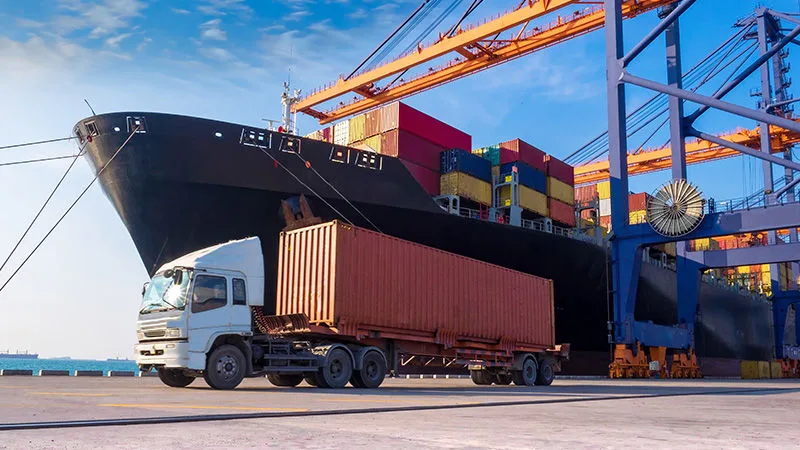
Freight ship docked in a harbour with a freight truck preparing to pick up the cargo.

When the cost of getting goods from A to B keeps climbing, businesses have two choices: absorb the increase and watch their margins shrink, or take a closer look at how their supply chains work.

For many companies, logistics costs are treated as a necessary expense,  something to negotiate when a quote comes in too high or revisit when the budget starts looking uncomfortable. But the biggest savings are not always found in securing a cheaper freight rate. They can be found in the decisions made long before a shipment leaves the warehouse.

From the timing of orders to the way cargo is packed, routes are planned and suppliers are managed, small inefficiencies can accumulate into significant costs.

“Businesses are under pressure from every direction. The challenge is that when costs increase, the instinct is often to look for the cheapest quote and move on,” says Craig du Toit, Managing Director of RSA Global Forwarding South Africa. “But the cheapest rate on paper does not always translate into the lowest overall cost. A delayed shipment, poor planning, unnecessary storage or an unexpected charge can quickly wipe out the saving. Businesses need to look at the full picture.”

Rather than treating logistics as a transaction, RSA Global Forwarding encourages businesses to view it as a strategic part of their operations – one that can influence cash flow, customer satisfaction, competitiveness and profitability.

10 Practical Ways to Cut Logistics Costs

1. Stop Paying to Move Air

Are you paying to transport half-empty containers, oversized packaging or vehicles carrying far less than their capacity? Review the dimensions, weight and volume of your cargo before booking. Better packaging and load planning can help businesses make better use of available space and avoid paying for capacity they do not need.

“Space is one of the easiest things to overlook because you don’t necessarily see the cost immediately,” says François Coetzee, Managing Director of RSA Global Forwarding. “But when inefficient packaging is repeated across dozens or hundreds of shipments, that unused capacity becomes a very real cost to the business.”

2. Consolidate Shipments Where Possible

Multiple small shipments can mean multiple handling fees, transport charges and administrative processes. Where delivery deadlines allow, combining orders into fewer, better-planned shipments can reduce the cost per unit moved. The key is balancing consolidation with the cost of holding stock for longer.

3. Plan Ahead to Avoid Unnecessary Urgency

Last-minute bookings leave less room to compare options, coordinate cargo and choose the most suitable transport method. Forecasting demand, confirming orders earlier and communicating shipping requirements in advance can help businesses avoid preventable expedited freight costs.

“Urgency is expensive,” says du Toit. “There will always be shipments that genuinely need to move quickly, but businesses should not be paying premium rates simply because planning happened too late. The earlier we understand what a customer needs, the more options we can explore with them.”

4. Compare Total Landed Cost, Not Just Freight Rates

A low freight quote may look attractive until customs duties, clearance fees, port charges, insurance, storage and inland transport are added. Businesses importing or exporting goods should calculate the full cost of getting cargo to its final destination before choosing a shipping option.

Coetzee says businesses should be careful not to let a headline freight rate dictate the entire decision.

“A freight rate is only one piece of the cost equation. What matters is what the shipment ultimately costs the business from origin to destination. Looking at the total landed cost gives you a much more accurate basis for making a decision.”

5. Choose the Right Transport Mode for the Job

Air freight, sea freight and road transport each have a role to play. Air freight may be justified for urgent, high-value or time-sensitive goods, while sea freight may suit larger shipments that can accommodate longer transit times. Road freight can offer flexibility for domestic and regional movements. The objective is to match the transport method to the shipment’s urgency, value, volume and commercial requirements.

“The fastest option is not automatically the smartest option,” says François. “If a shipment does not need to arrive tomorrow, paying a premium for speed may simply be unnecessary. The right question is: what does the business actually need this shipment to achieve?”

6. Treat Customs Documentation as a Cost-Control Tool

Incomplete paperwork, incorrect tariff classifications and missing permits can lead to delays, additional handling, storage costs and penalties. Ensure commercial invoices, packing lists, shipping documents and any required permits are accurate and submitted on time. A little preparation can prevent expensive complications later.

“Documentation may seem like administration, but in international logistics it directly affects time and cost,” du Toit explains. “A missing document can hold up cargo, and a delay can quickly turn into storage, demurrage or other additional charges. Getting the paperwork right is one of the simplest ways to avoid unnecessary costs.”

7. Review Your Inventory Strategy

Holding too much stock ties up working capital and increases warehousing costs. Holding too little can lead to emergency orders and expensive expedited shipments. Review sales patterns, supplier lead times and demand forecasts to find a balance between availability and unnecessary inventory expenditure.

François says logistics decisions should never be made in isolation from the wider business.

“Your inventory strategy and your logistics strategy are connected. If you consistently run out of stock, you may end up paying for emergency freight. If you consistently over-order, you are tying up capital and potentially paying more for storage. The objective is to find the point where availability and cost make commercial sense.”

8. Question Every Recurring Charge

Do not simply accept freight invoices at face value. Review fuel surcharges, storage fees, demurrage, detention, handling charges and other additional costs. Understand what triggers each charge, verify that it has been applied correctly and identify recurring problems that could be prevented through better planning.

“Recurring charges are worth investigating because they can tell you where a process is breaking down,” says Coetzee. “If a business is repeatedly paying storage or detention fees, for example, the answer may not be to negotiate the fee. The better question is why the fee keeps happening in the first place.”

9. Improve Communication Across Your Supply Chain

A supplier who does not know when cargo is required, a warehouse that is not ready to receive a delivery or a customer who changes requirements at the last minute can create a costly chain reaction. Clear communication between suppliers, freight partners, customs teams, warehouses and customers helps reduce avoidable delays and duplicated work.

“Good logistics is built on communication,” says François. “There are a lot of moving parts between a supplier and the final destination. When everyone has the right information at the right time, problems can often be addressed before they become expensive problems.”

10. Work With a Logistics Partner Who Looks Beyond The Shipment

A logistics relationship should involve more than receiving a rate and arranging a collection. An experienced partner can help identify suitable transport options, flag potential delays, explain cost drivers and coordinate the different stages of a shipment. Regular reviews of shipping patterns, recurring charges and operational challenges can reveal opportunities that individual bookings may not show.

Du Toit believes this is where the role of a logistics company can move beyond simply moving cargo.

“A logistics partner should understand what the customer is trying to achieve, not just where a shipment needs to go,” he says. “When you understand the business behind the shipment, you can start identifying opportunities to improve the process, manage risk and ultimately make the supply chain work harder for the customer.”

The Biggest Saving May Be the Problem You Prevent

According to François Coetzee, Managing Director of RSA Global Forwarding, cost reduction should not mean compromising on the reliability, visibility or service businesses depend on.

“Cutting costs is not simply about paying less for transport. It is about understanding where money is being lost, making better-informed decisions and preventing avoidable expenses before they happen,” says François. “Sometimes the answer is consolidating a shipment. Sometimes it is correcting a documentation issue, changing the timing of an order or choosing a more appropriate transport solution. The important thing is to understand the customer’s operation and find an approach that makes commercial sense.”

For businesses moving goods across borders, the stakes can be particularly high. International shipments involve multiple parties, regulatory requirements, transport stages and timelines. A decision that saves money at one point in the process can create a more expensive problem somewhere else if the wider supply chain is not considered.

That is why cost management needs to be ongoing rather than reactive. Reviewing shipping data, identifying recurring inefficiencies and maintaining open communication with logistics partners can help businesses make improvements before cost pressures become operational problems.

Smarter Logistics is a Business Advantage

Rising costs may be outside an individual business’s control, but how it responds to them is not entirely out of its hands.

“Businesses do not always have the luxury of controlling the market, but they can take greater control of how they plan, procure and manage their logistics,” says du Toit. “The goal should not be to cut costs at any price. It should be to build a supply chain that is efficient, dependable and fit for the business’s needs. That is where smarter logistics can make a real difference.”

For RSA Global Forwarding, the conversation starts with a simple question: are businesses paying only for the logistics services they need, or are they also paying for inefficiencies that better planning could prevent?

In a market where every rand matters, the answer could make a meaningful difference to the bottom line.

Continue Reading

Logistics

Port of Saldanha Secures R6.9bn Industrial Investment Pipeline

Published

on

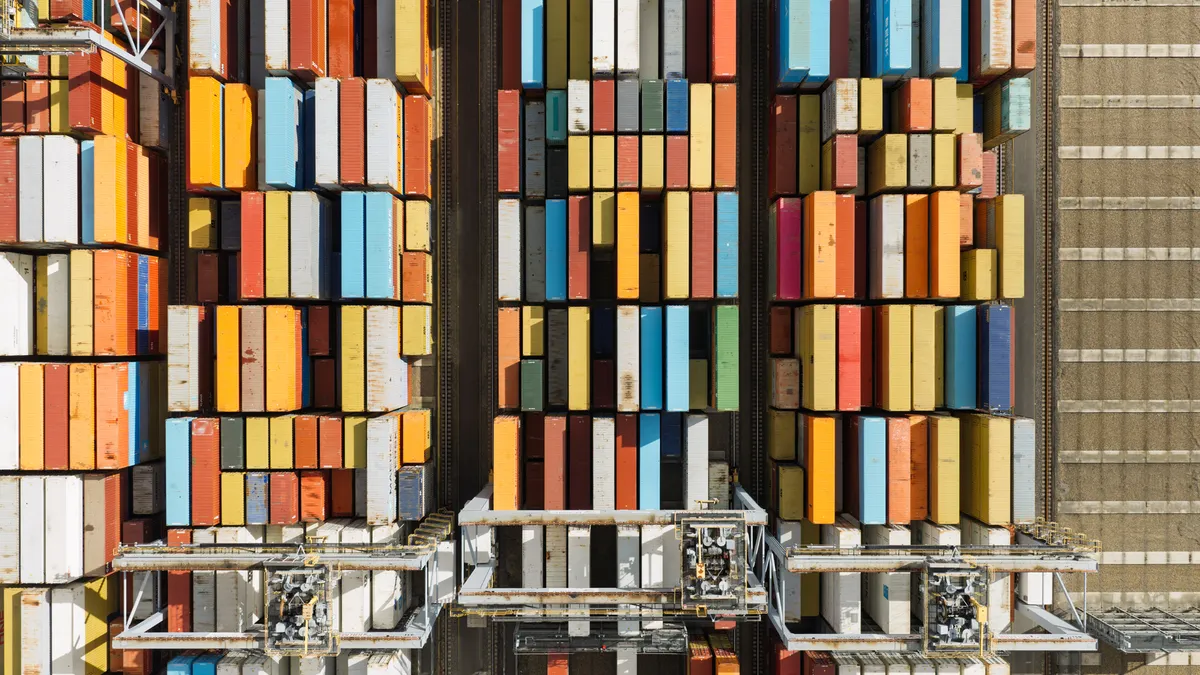
Aerial shot of stacked shipping containers in a shipping yard.

A 25-year lease agreement between Transnet National Ports Authority (TNPA) and Freeport Saldanha could pave the way for new industrial activity at the Port of Saldanha, with a potential investment pipeline valued at approximately R6.9 billion.

Signed on 8 October 2026, the agreement covers around 55 hectares in the port’s Southern Precinct. It provides a long-term framework for industrial development linked to South Africa’s only port-based Special Economic Zone (SEZ).

The investment pipeline includes projects under consideration across marine and bunkering services, industrial development and manufacturing, as well as energy infrastructure. These include potential liquefied natural gas (LNG) import and storage facilities.

The projects are not yet confirmed investments. However, the agreement creates a framework for attracting investors and developing industrial activity around the port.

Connecting Port Infrastructure with Industry

The agreement could have implications beyond the development of industrial land. Ports connect domestic production with international markets, while industrial activity alongside port facilities can create demand for freight, storage and supporting logistics services.

For Saldanha, the opportunity lies in connecting port infrastructure with businesses that rely on marine facilities, shipping and access to export markets.

Freeport Saldanha CEO Xola Sithole said the 25-year lease provides greater certainty for investors. The organisation aims to turn that certainty into signed investor leases, construction activity and employment in Saldanha Bay and the wider West Coast.

If the proposed projects progress, industrial expansion could generate additional demand for the movement of equipment, raw materials and finished products. The scale of that demand will depend on which projects secure investment and move into development.

Potential Growth Across Energy and Manufacturing

The sectors identified in the investment pipeline point to several possible areas of industrial expansion.

Marine and bunkering services could support activity linked to vessels calling at the port, while manufacturing projects could strengthen the connection between port facilities and production. Proposed LNG import and storage infrastructure represents another potential area of development.

Freeport Saldanha’s wider focus includes marine and offshore services, energy, logistics and warehousing, manufacturing and engineering, and agro-processing.

Each sector has different infrastructure and logistics requirements. Their development could influence the types of freight services, industrial facilities and supporting businesses needed around the port.

For now, the lease agreement is the immediate milestone. Individual projects still need to progress before their impact on freight volumes and logistics demand becomes clear.

Turning the Agreement into Industrial Activity

For TNPA, the agreement supports efforts to improve infrastructure utilisation, attract investment and strengthen the role of South Africa’s commercial ports as logistics hubs.

TNPA CEO Mohammed Abdool said the partnership is intended to strengthen the relationship between the Port of Saldanha and the SEZ, creating conditions for investment, exports and opportunities across the logistics value chain.

The next stage will be translating the agreement into investor commitments, development activity and operational projects.

For the supply chain, the significance of the lease will ultimately depend on what follows. New industrial facilities could expand demand for freight and supporting services, but those benefits will emerge only as projects secure investment and move towards implementation.

The agreement gives Saldanha a long-term framework for industrial development. Whether the R6.9 billion pipeline becomes a meaningful driver of freight and logistics activity will depend on how much of that potential moves from proposal to delivery.

Continue Reading

Logistics

Efficiency, Electrification and Intelligence Set to Shape New Era of Road Transport

Published

on

EV charging station with freight trucks parked besides the station.

South Africa’s road transport industry is entering a period of significant change, with rising operating costs, new energy technologies and rapid advances in digitalisation placing greater emphasis on efficiency, vehicle productivity and lifecycle costs. For truck and trailer body builder Serco, these trends are shaping both its view of the market and its innovation priorities for 2027.

Serco CEO Clinton Holcroft believes the next phase of commercial vehicle development will be increasingly influenced by the following interconnected themes: reducing vehicle weight and improving efficiency, the gradual adoption of alternative energy vehicles and the greater use of data and artificial intelligence (AI) to improve vehicle performance and uptime. 

“Transporters ultimately need vehicles that carry the maximum productive payload, are reliable, cost-effective to operate and spend as little time as possible off the road,” said Holcroft. “The technologies are changing, but those fundamental customer requirements remain the same,” said Holcroft.

He said 2026 was proving to be a demanding one for the logistics industry, with sharply higher diesel costs adding further pressure to already competitive operating conditions. “Serco has seen transporters respond by extending the operating life of existing equipment and placing increased emphasis on maintenance, reliability and vehicle utilisation. Fuel pressures intensified towards the latter part of the year with South African diesel prices rising sharply again in October, adding further impetus to the industry’s search for greater operating efficiency,” said Holcroft. 

Despite the difficult environment, Serco achieved marginal year-on-year improvement, recording more than 8% growth in repair sales, while continuing to broaden its dry-freight product offering and customer base.

The company also placed particular emphasis on reducing customer downtime. Its Johannesburg facility was expanded during the year, adding capacity for both after-sales repairs and new-body manufacturing, with further improvements to the facility and layout under review. 

“In a difficult operating environment, keeping existing equipment productive becomes increasingly important,” said Holcroft. “Our focus has therefore not only been on manufacturing new vehicles but also on improving the speed and efficiency of our repair services to help customers reduce downtime.”

Holcroft expects the drive towards lower tare weight and improved aerodynamics to accelerate, regardless of the vehicle’s power source.

The benefit for a conventional fleet is the potential for improved payload and fuel efficiency. For battery-electric vehicles, weight becomes particularly important because body specification needs to balance payload, durability and vehicle range.

Serco has already started applying lightweight construction principles to truck bodies built for electric vehicles (EVs) introduced into the South African market this year. 

“With electric vehicles, every kilogram becomes increasingly important. The challenge for body builders is not simply to make a body lighter. It is to reduce weight intelligently while maintaining the strength, durability and practicality customers expect.”

Serco therefore forecasts continued development in areas including composite materials, high-strength lightweight steels, aluminium construction and aerodynamic body design. The company plans to further develop its EV body range during 2027 while continuing research into materials and designs capable of reducing tare without compromising durability. 

Holcroft believes electric commercial vehicles will become increasingly relevant to selected South African transport applications as vehicle choice expands and the commercial case improves.

However, Holcroft cautions that adoption will not happen overnight. “Electric trucks need to make operational and commercial sense for the fleet. Range, payload, charging infrastructure, vehicle utilisation, support and total cost of ownership – all have to be considered. As those elements improve, we expect more transporters to evaluate where EVs can fit successfully into their operations.”

Serco expects its role to remain centred on helping operators extract maximum value from whichever vehicle platform they select by developing bodies that combine low tare weight, durability, load-carrying capability and practical operating features. 

Another major development Holcroft sees gathering momentum is the convergence of trailers, telematics, sensors and AI.

Trailers are already increasingly capable of generating operational information through technologies such as real-time load monitoring, tyre-pressure monitoring, temperature tracking and door-opening alerts. Serco sees the next opportunity as converting more of this information into actionable insight, including proactive maintenance and fleet optimisation. 

“The opportunity is for the trailer to evolve from simply being an asset that carries freight into an intelligent asset that provides operators with useful information about its condition and operation.”

Serco is currently evaluating new features using telematics and sensors to support proactive trailer maintenance as well as camera technologies aimed at reducing vehicle damage during docking and unloading operations. 

AI could also increasingly influence the engineering process. Serco sees potential for AI-assisted tools to help engineers analyse load patterns, optimise structural designs, reduce material usage and improve stress and fatigue analysis. 

Rather than positioning AI as a replacement for engineering expertise, Holcroft believes its value will lie in augmenting engineering capability and accelerating innovation.

“The exciting opportunity is combining the experience of our engineers with increasingly sophisticated digital tools. If we can design lighter and stronger products, identify maintenance requirements earlier and give fleet operators better information, technology translates into real customer value.”

Looking ahead, Serco expects trading conditions to remain challenging while fleet operators continue to manage high operating costs and ageing equipment. At the same time, the need to replace overextended vehicles should create opportunities for newer, more efficient and reliable equipment.

Against this backdrop, Serco’s priorities for 2027 will include further development of its lightweight and EV-ready body range, continued research into advanced materials, greater integration of telematics and smart technologies, further improvements in repair turnaround times, and development of the skills required for an increasingly digital and electrified transport industry. 

“We don’t believe innovation should be about technology for technology’s sake,” Holcroft concluded. “For our customers, innovation must translate into better payload, lower operating costs, increased uptime, improved safety and longer asset life. That is where we see the greatest opportunity for Serco as the transport industry evolves.”
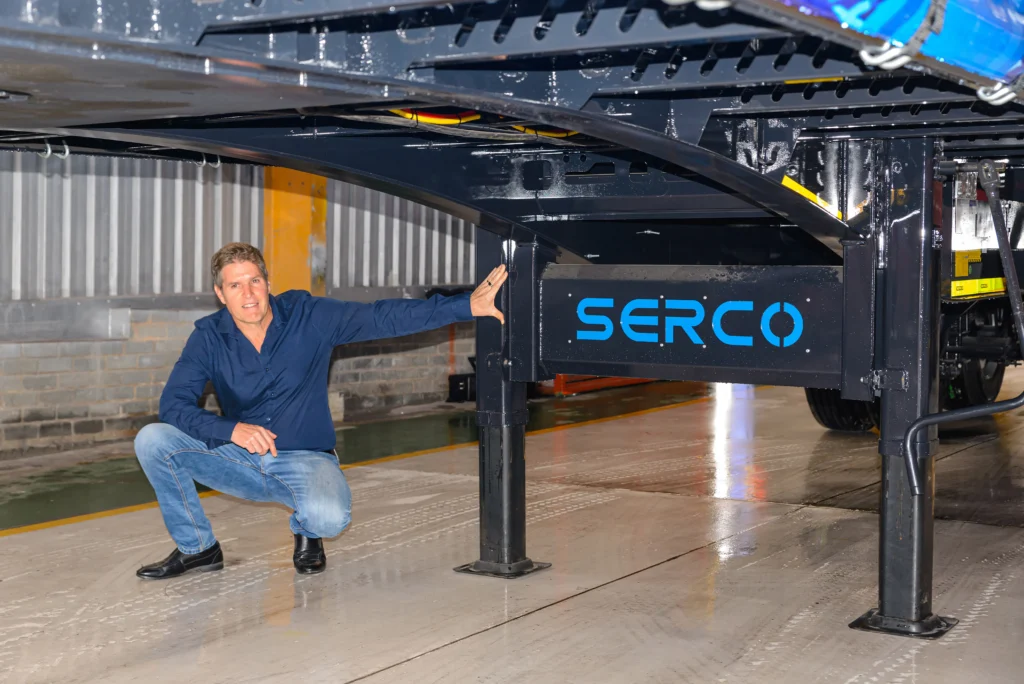
Clinton Holcroft, CEO of Serco (Pty) Ltd

Clinton Holcroft, CEO of Serco (Pty) Ltd

Continue Reading

Trending