Connect with us

Logistics

Why Every Degree Matters in Cold Chain Logistics

Published

on

Admin

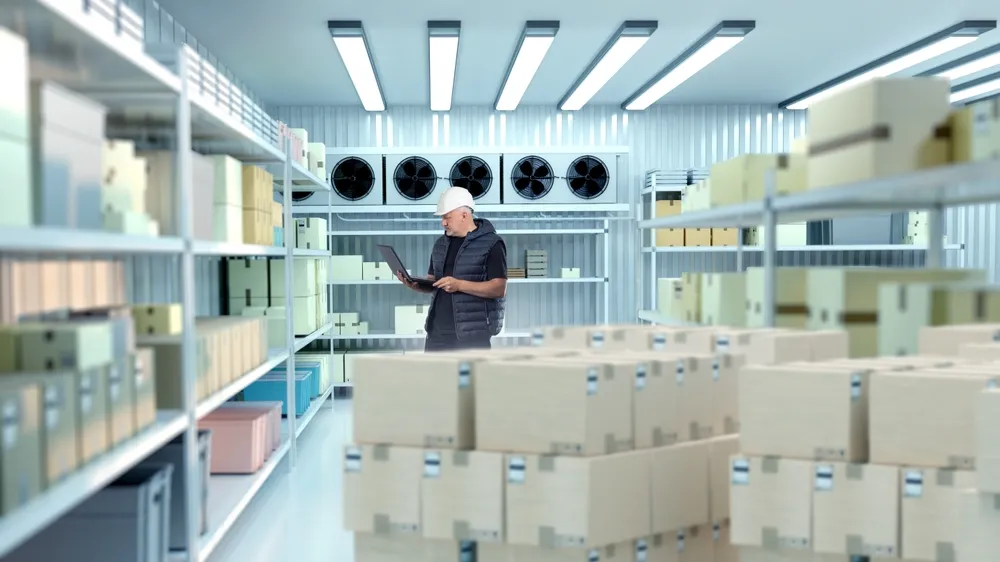
Most supply chains are built around one simple objective: getting products from one place to another as efficiently as possible. Cold chain logistics adds another layer of complexity. It’s not enough for goods to arrive on time—they also need to arrive at exactly the right temperature.

For businesses transporting fresh produce, pharmaceuticals, dairy products, frozen foods and other temperature-sensitive goods, even a small change in temperature can have serious consequences. Product quality may be affected, regulatory requirements may no longer be met and entire shipments can be rejected before they ever reach the customer.

That’s why cold chain logistics has become less about reacting to problems and more about preventing them in the first place.

Small Temperature Changes Can Have Big Consequences

Unlike many other types of freight, temperature-sensitive products often have very little room for error. A refrigeration unit that stops working, a trailer door left open for too long or an unexpected delay at a distribution centre can all affect the condition of the goods inside.

The financial impact goes well beyond replacing spoiled stock. Delayed deliveries, insurance claims, customer complaints and damage to long-standing business relationships can all follow when products fail to arrive in the expected condition.

In cold chain logistics, every degree matters because every degree can influence the value of the shipment.

Visibility Changes the Conversation

Not long ago, many businesses only discovered temperature issues once a delivery had reached its destination. By then, there was often little that could be done.

Today, connected sensors and real-time monitoring give logistics teams a live view of what’s happening while goods are still moving. If temperatures begin to drift outside acceptable limits, teams can investigate, contact the driver or adjust the journey before a small issue becomes a rejected load.

The greatest value isn’t collecting more information. It’s having enough visibility to act while the shipment is still recoverable.

The Journey Doesn’t End When the Truck Leaves

Cold chain management doesn’t stop once products are loaded onto a vehicle.

Traffic congestion, vehicle breakdowns, border delays, loading times and unexpected route changes can all affect delivery schedules. The longer products remain in transit, the greater the pressure on refrigeration systems and temperature controls to perform consistently.

That’s why transport planning has become just as important as temperature monitoring. Choosing the right route, planning realistic delivery schedules and reducing unnecessary delays all help protect the integrity of temperature-sensitive goods.

It’s About More Than Saving the Shipment

When a cold chain shipment fails, replacing the product is often only the beginning. Businesses also have to manage disappointed customers, investigate what went wrong and, in some industries, demonstrate that strict temperature standards were maintained throughout the journey.

For suppliers serving supermarkets, hospitals, pharmacies or food manufacturers, consistency is everything. Customers expect products to arrive in the same condition every time, regardless of the distance travelled or the challenges along the route. Maintaining that consistency helps build trust, and in many cases, it’s that trust that keeps long-term business relationships intact.

Every Shipment Leaves Behind Valuable Information

Temperature readings are no longer collected simply to prove that products stayed within the required range. They also provide a clearer picture of how the supply chain is performing from one delivery to the next.

Over time, that information can reveal recurring delays on certain routes, identify locations where temperature fluctuations occur more frequently or highlight opportunities to improve transport planning. Those small insights help businesses reduce risk before it affects the next shipment.

No two cold chain deliveries are exactly the same, but each one leaves behind information that can help make the next journey more reliable. In an industry where even a small change in temperature can have significant consequences, those lessons quickly become one of the most valuable parts of the supply chain.

Continue Reading

Freight Forwarding

What More Private Investment Could Mean for South Africa’s Freight Network

Published

on

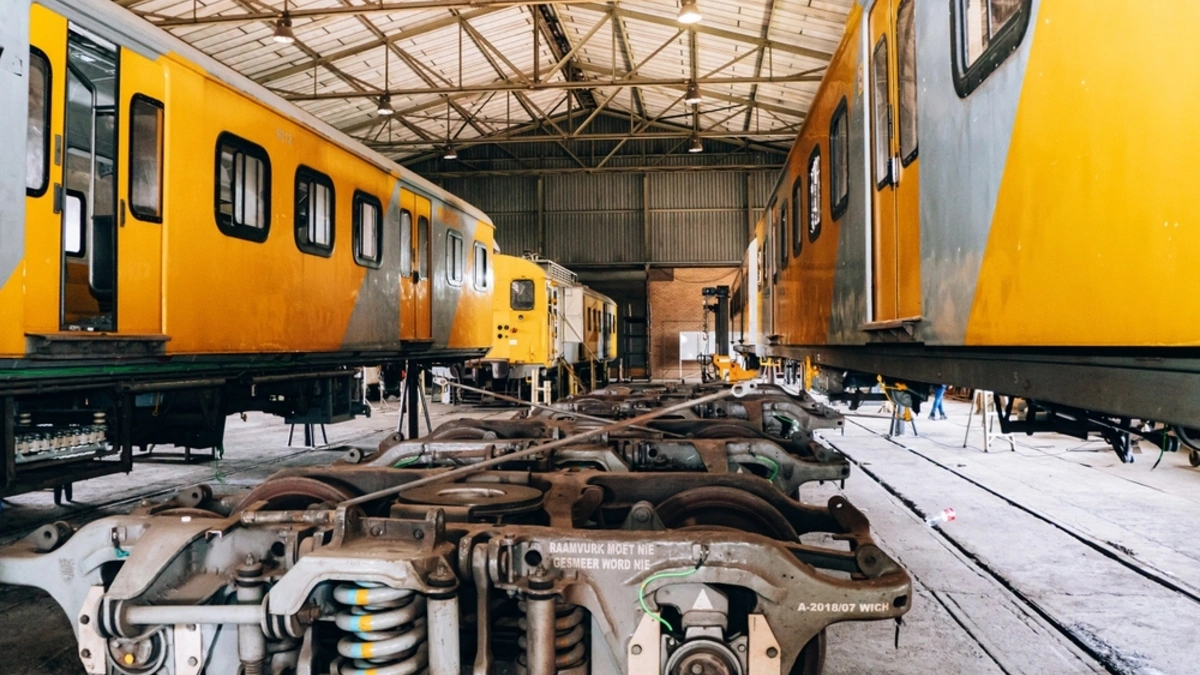
South African yellow and grey trains parked in a service yard.

South Africa’s freight challenges are not confined to one port, railway line or logistics facility. They stem from a network that must move goods between farms, factories, warehouses, ports and international markets, often through infrastructure that has struggled to keep pace with demand.

That is why private investment in logistics infrastructure deserves attention beyond the value of any individual transaction.

Absa’s reported expansion of its financing support for logistics infrastructure developer Newlyn Group to R5.1 billion raises a broader question: can private capital help close the gaps between the different parts of South Africa’s freight network?

The answer will depend less on the amount invested than on where the money goes, how projects connect to existing infrastructure, and whether the resulting facilities improve the movement of cargo.

The Problem is Not Simply a Lack of Warehouses

South Africa has logistics facilities across its major industrial and commercial centres. However, warehouse capacity alone does not resolve the challenges facing the freight system.

A warehouse may provide valuable storage space, but its usefulness depends on what happens outside its gates. If trucks face congestion, rail services are unreliable, or port operations are delayed, the warehouse becomes another holding point in an already disrupted chain.

The more important investment is in infrastructure that connects different activities.

This includes logistics parks near industrial centres, facilities linked to rail terminals, storage close to ports, and sites that allow cargo to move between road and rail without unnecessary handling or additional journeys.

The value lies in the connection. A facility that is properly integrated into the wider network can help businesses plan movements more efficiently and reduce the number of disconnected steps between origin and destination.

Why Multimodal Infrastructure Matters

Road freight remains essential because it offers flexibility and can reach locations that are not served directly by rail. It is particularly important for first-mile and last-mile movements.

Rail, however, can play a different role by moving larger volumes over longer distances. When the two modes are connected effectively, businesses can use each where it makes the most operational and economic sense.

This is the thinking behind multimodal logistics infrastructure.

Cargo could move by truck to a rail-linked facility, travel longer distances by rail, and then return to road freight for final delivery. Warehousing and storage positioned around these connections can support consolidation, distribution and export activity.

This model does not eliminate the need for trucks. It can, however, reduce the pressure on road freight by giving operators more options for moving cargo through the network.

For South Africa, that matters because freight costs are influenced not only by fuel and vehicle expenses, but also by delays, empty running, congestion, repeated handling and unreliable schedules.

Durban Shows Why the Connections Matter

The Durban–Gauteng corridor illustrates the challenge.

Cargo moving through the Port of Durban must travel between the coast and the country’s major industrial and distribution centres. That movement depends on a combination of port operations, rail infrastructure, road freight, warehouses, terminals and inland distribution facilities.

If one part of the corridor performs poorly, pressure is often transferred elsewhere. Delays at a port can affect truck scheduling. Rail constraints can push more cargo onto roads. Congestion can increase turnaround times and raise operating costs for transporters.

Investment in facilities near the port or along important freight routes could improve the way cargo is staged, stored and transferred. These facilities, however, will only deliver their full value if they are supported by reliable road access, functioning rail connections and efficient port operations.

This is the important distinction between building logistics infrastructure and improving logistics performance.

Private Capital Cannot Fix the Entire Network

Private investment can provide funding for new facilities, equipment, technology and development capacity. It can also introduce commercial pressure to improve service delivery and make better use of assets.

However, private logistics developments remain dependent on the wider transport system.

A privately financed rail terminal cannot operate effectively if the rail network lacks capacity. A modern warehouse cannot compensate for severe port delays. A logistics park may still struggle if road access is congested or surrounding infrastructure is inadequate.

Private investment should therefore not be viewed as a replacement for public infrastructure reform. It is one part of a wider system that includes Transnet, municipalities, road authorities, port operators, rail infrastructure managers, freight customers and logistics companies.

The strongest projects will be those planned with these dependencies in mind.

The Timing is Significant

South Africa is pursuing changes to its freight logistics system, including private-sector participation in port operations and the opening of the rail network to third-party operators.

These reforms could create opportunities for infrastructure developers and financial institutions. As more operators enter the market, supporting facilities such as terminals, storage, maintenance sites and cargo-handling infrastructure will become increasingly important.

But the relationship works both ways. New infrastructure can support reform by making it easier for different operators to access the network. At the same time, the success of those facilities will depend on whether the reforms improve the underlying network.

Coordination will therefore matter as much as the availability of finance.

The Real Measure Will Be Better Cargo Movement

The significance of a large logistics financing facility should ultimately be measured by what it changes on the ground.

Does it reduce unnecessary truck movements? Does it make rail a more practical option for freight customers? Does it improve access to ports, reduce handling delays or help exporters move goods more predictably?

These are the outcomes that matter to manufacturers, retailers, exporters, transport operators and consumers.

Private capital has an important role to play in South Africa’s freight recovery. But investment figures alone do not improve a supply chain. The real opportunity lies in using that capital to build the connections the country’s logistics network has been missing.

For South Africa, the bigger test is whether investments like this can help move the country from isolated logistics projects towards a more connected, reliable and competitive freight system.

Continue Reading

Logistics

Preparing South Africa’s Logistics Industry for 2030, Focused on Compliance, People, and Sustainability.

Published

on

Man using a tablet with a futuristic view of the logistics world as a freight ship, plane and trucks travel in the background.

By Harry Dimo, HR Director, BIL & Lawrence Aldworth, National Compliance and Risk Manager, BIL

Ask most logistics leaders what sustainability means, and the conversation quickly turns to emissions, electric vehicles and carbon reporting. While those issues matter, they’ve also created one of the industry’s biggest blind spots. Sustainability has become an environmental conversation when it should be a business one.

The logistics businesses that will thrive beyond 2030 will not simply be those with the lowest carbon footprint. They will be the organisations that embed sustainability into every aspect of their operations, from developing their people and embracing innovation to strengthening governance, ensuring compliance and building resilience.

For Harry Dimo, HR Director at Bidvest International Logistics, that journey starts with people: “We’re assessing the competencies required now and in the future so we can begin upskilling employees for where the business is going, not just where it is today.”

As automation, digitalisation and artificial intelligence continue to reshape supply chains, organisations must prepare employees to work alongside these technologies rather than be displaced by them. Future-ready businesses are identifying tomorrow’s skills today, investing in continuous learning and equipping people to adapt as customer expectations and business needs evolve. Investing in future capability is every bit as important as investing in greener technology.

“When people hear sustainability, they immediately think environmental. But sustainability is much broader than that. It’s about environmental, social and governance principles working together to create a business that is built to last,” says Lawrence Aldworth, National Compliance and Risk Manager at Bidvest International Logistics.

That broader definition is becoming increasingly important as customers raise their expectations. Organisations are no longer evaluated solely on price, service and operational capability. Increasingly, customers are assessing the environmental, social, and governance (ESG) maturity of companies, making responsible business practices a key competitive differentiator. Businesses that fail to evolve risk being excluded from future opportunities rather than simply falling behind competitors.

Sustainability is therefore not another initiative sitting alongside the business. It is the framework through which the business operates. Environmental responsibility protects natural resources. Good governance builds trust, accountability and resilience, while investment in people ensures organisations can respond to changing technologies, customer expectations and market demands.

Innovation and compliance are equally important. By empowering employees to contribute ideas and embrace technology, organisations create a culture of continuous improvement that strengthens operational performance, enhances customer outcomes and increases employee engagement.

As Harry explains: “Leadership can define the vision for the future, but it is our people who bring that vision to life every day. Preparing them for what comes next is one of the most important investments we can make.”

Compliance should also be viewed through a different lens. Too often perceived as a cost of doing business, effective governance creates measurable value by reducing operational risk, protecting customers’ products and strengthening confidence among organisations that increasingly expect responsible business practices from their logistics partners.

Lawrence adds: “Good compliance management reduces risk, which ultimately reduces cost. It also creates value for customers by protecting their products while they’re in our care.”

The organisations best positioned for the future are those that combine resilience with adaptability. They invest in capable people, encourage innovation, strengthen governance and continuously evolve to meet changing customer needs.

Sustainability is not just about protecting the planet’s future. It is about building organisations that are equipped to protect their people’s future, earn their customers’ trust, and adapt with confidence to whatever comes next. Businesses that embrace this broader definition of sustainability will not only remain relevant but also help shape the future of logistics.

Continue Reading

Logistics

From South African Orchard to Chinese Market: The Supply Chain Behind the Cherry Export

Published

on

Close up shot of a person hand picking cherries into a basket.

South African cherry growers can now sell into China for the first time, opening a major new market for the country’s growing cherry industry.

Agriculture Minister Willie Aucamp signed the market-access protocol with China’s General Administration of Customs in Beijing on 8 September. China imported about 586,900 tonnes of cherries worth US$3.3 billion in 2025, making it the world’s largest cherry importer.

For South Africa’s supply-chain industry, however, the interesting part starts after the agreement is signed.

Getting cherries from an orchard to a Chinese buyer requires a coordinated journey involving harvesting, packing, temperature-controlled logistics, road freight, export procedures, international shipping and distribution.

For a perishable product, every stage matters.

From Orchard to Packhouse

The export journey starts with producing fruit that meets the requirements of the destination market.

The new market-access protocol establishes the framework for South African cherries to enter China and forms part of the sanitary and phytosanitary arrangements governing agricultural trade between the two countries.

Once harvested, cherries need to move quickly through packing and preparation. The fruit then enters a temperature-controlled supply chain designed to maintain its condition while it travels towards the export gateway.

This makes logistics more than a transport function. Delays at the farm, packhouse, storage facility or during transport can reduce the time available for the rest of the journey.

The Journey to the Export Gateway

Where the cherries are grown will influence how they reach international markets.

South Africa’s cherry industry has expanded significantly in recent years, with planted area increasing from 185 hectares in 2012 to 819 hectares in 2024, according to industry body Hortgro.

As production grows, so does the logistics network needed to support it.

More fruit means more movement between farms and packhouses, greater demand for cold storage and additional transport capacity to connect production areas with export gateways.

The opening of China could therefore create opportunities beyond the growers themselves.

Then Comes the Export Process

Physical movement is only part of getting the cherries into China.

South African exporters also need to meet customs and origin requirements.

South Africa’s temporary zero-tariff arrangement with China came into effect on 1 May 2026. Qualifying exports can receive zero-tariff treatment if they meet the applicable rules of origin, although some tariff lines are subject to quotas.

SARS issues the Rules of Origin certificates required for qualifying exports. Exporters must also maintain the required documentation and comply with the scheme’s conditions to receive the tariff benefit.

For the supply chain, this means a shipment can be physically ready to leave South Africa but still be unable to move as planned if the documentation and customs requirements are not in order.

China is Only Another Link in the Chain

Once the cherries arrive in China, the journey is not over.

The shipment still needs to clear the relevant authorities, reach importers and move through China’s distribution network before reaching its final buyer.

That makes coordination across the entire journey particularly important.

A delay in South Africa does not simply mean a later departure. It reduces the time available for every stage that follows.

A New Market, And A New Logistics Opportunity

The Department of Agriculture expects the opening of the Chinese market to stimulate further investment in cherry production and estimates that it could create about 600 new jobs.

If production expands, the supporting supply chain will need to expand with it — from packhouses and cold storage to road freight, export services and international logistics.

That is what makes the agreement significant beyond agriculture.

South Africa now has access to a major new market. The next challenge is building a supply chain capable of getting those cherries there on time, in good condition and at a competitive cost.

Continue Reading

Trending