Connect with us

Transport

LDV T60 Max vs GWM P500 vs Isuzu D-Max vs Toyota Hilux vs Ford Ranger: Which Double-Cab Bakkie Offers the Best Value?

Published

on

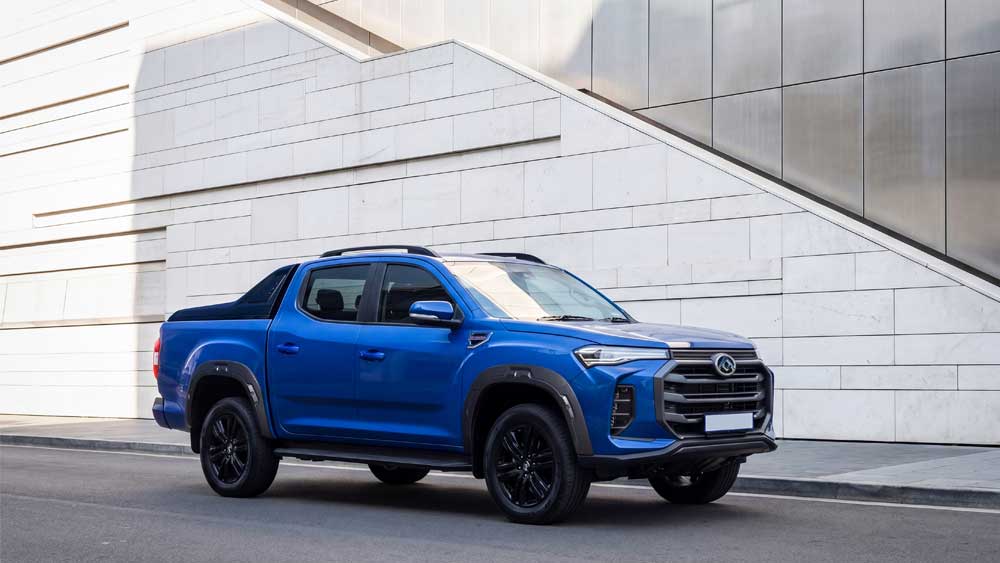
LDV T60 double cab bakkie with a black alloy frame and wheels driving on a road.
Admin

The South African double-cab bakkie market is fiercely competitive, with buyers spoiled for choice. Whether you’re looking for a dependable workhorse, a family adventure vehicle, or a premium lifestyle bakkie, there are several strong contenders to consider.

Among the most popular options are the LDV T60 Max, GWM P500, Isuzu D-Max, Toyota Hilux, and Ford Ranger. While each vehicle has its strengths, the right choice ultimately depends on what matters most to you: performance, value, technology, reliability, or total cost of ownership.

At a Glance Comparison

FeatureLDV T60 Max Luxe 4×4GWM P500 Ultra Luxury 4×4Isuzu D-Max 3.0 Ddi V-Cross 4×4Toyota Hilux Legend RS 4×4Ford Ranger Wildtrak V6 4×4
Engine2.0L Bi-Turbo Diesel2.4L Turbo Diesel3.0L Turbo Diesel2.8L Turbo Diesel3.0L V6 Turbo Diesel
Power160 kW135 kW140 kW150 kW184 kW
Torque500 Nm480 Nm450 Nm500 Nm600 Nm
Transmission8-Speed Auto9-Speed Auto6-Speed Auto6-Speed Auto10-Speed Auto
Towing Capacity3,000 kg3,500 kg3,500 kg3,500 kg3,500 kg
Warranty5 Years / 200,000 km7 Years / 200,000 km5 Years / 120,000 km3 Years / 100,000 km4 Years / 120,000 km
Technology Rating⭐⭐⭐⭐⭐⭐⭐⭐⭐⭐⭐⭐⭐⭐⭐⭐⭐⭐⭐⭐⭐⭐⭐
Value for Money⭐⭐⭐⭐⭐⭐⭐⭐⭐⭐⭐⭐⭐⭐⭐⭐⭐⭐⭐⭐

Price and Value for Money

As vehicle prices continue to rise, value has become one of the most important buying considerations.

The LDV T60 Max and GWM P500 stand out by offering premium features, advanced safety technology, leather interiors, large infotainment screens, and driver-assistance systems at a price point that is often significantly lower than similarly specified competitors.

While the Toyota Hilux and Ford Ranger command premium pricing, buyers are often paying for brand equity, resale value, and established reputations. The Isuzu D-Max remains a strong middle-ground option, offering durability and reliability without the premium price tag of some rivals.

Winner: Value for Money

LDV T60 Max

Power and Performance

Performance remains a key consideration for both business and lifestyle buyers.

The Ford Ranger Wildtrak V6 leads the pack with an impressive 184 kW and 600 Nm, delivering exceptional towing and overtaking capability.

However, the LDV T60 Max is remarkably competitive, producing 160 kW and 500 Nm from its bi-turbo diesel engine. This places it ahead of both the GWM P500 and Isuzu D-Max in outright power.

For buyers seeking strong performance without moving into premium pricing territory, the T60 Max presents a compelling proposition.

Winner: Performance

Ford Ranger

Best Performance per Rand

LDV T60 Max

Interior Comfort and Technology

Modern bakkies have evolved into family vehicles and daily commuters, making comfort and technology more important than ever.

The GWM P500 and LDV T60 Max offer some of the most feature-rich cabins in the segment, with digital displays, premium finishes, advanced driver-assistance systems, 360-degree cameras, Apple CarPlay, Android Auto, and modern infotainment systems.

The Ford Ranger also delivers a premium cabin experience, while the Hilux and D-Max maintain a more practical, durability-focused approach.

Winner: Technology

GWM P500 and LDV T60 Max

Reliability and Ownership Confidence

When it comes to proven reliability, the Toyota Hilux continues to set the benchmark. Its reputation for dependability, combined with strong resale values, makes it a popular choice among businesses and private buyers alike.

The Isuzu D-Max is also highly respected, particularly among fleet operators and commercial users who value durability and low operating costs.

LDV and GWM have made significant strides in quality and after-sales support in recent years, supported by competitive warranty offerings and growing dealer networks.

Winner: Proven Reliability

Toyota Hilux

Winner: Commercial Durability

Isuzu D-Max

Off-Road Capability

All five vehicles offer capable four-wheel-drive systems and are more than capable of handling South Africa’s varied terrain.

The Ford Ranger remains one of the segment leaders thanks to advanced terrain management systems and excellent suspension tuning.

The Toyota Hilux has earned legendary off-road credibility, while the D-Max continues to prove itself in demanding environments.

The LDV T60 Max and GWM P500 have surprised many buyers by offering impressive off-road capability coupled with modern technology and comfort.

Winner: Off-Road Capability

Ford Ranger

Best Value Off-Roader

LDV T60 Max

Dealer Network and After-Sales Support

Dealer support remains a key consideration when purchasing a new vehicle.

Toyota and Ford have extensive dealer networks throughout South Africa, providing excellent access to servicing and parts.

Isuzu also maintains strong national coverage, while LDV and GWM continue to expand their dealer footprints across the country.

Winner: Dealer Coverage

Toyota Hilux and Ford Ranger

Category Winners

CategoryWinner
Best Value for MoneyLDV T60 Max
Most PowerfulFord Ranger V6
Best TechnologyLDV T60 Max / GWM P500
Best WarrantyGWM P500
Best Resale ValueToyota Hilux
Best Dealer NetworkToyota Hilux
Best WorkhorseIsuzu D-Max
Best All-RounderFord Ranger
Best Feature-to-Price RatioLDV T60 Max
Best Premium InteriorGWM P500 / Ford Ranger

There is no single “best” bakkie for every buyer.

If resale value, proven reliability, and brand reputation are your priorities, the Toyota Hilux remains a safe choice.

If you want class-leading performance and refinement, the Ford Ranger continues to set the benchmark.

For commercial users seeking durability and dependability, the Isuzu D-Max remains one of the strongest options on the market.

However, for buyers focused on value, technology, performance, and specification, the LDV T60 Max deserves serious consideration. It offers one of the strongest feature-to-price ratios in the segment, combines impressive power with modern technology, and delivers many premium features typically associated with significantly more expensive competitors.

For South African buyers looking to maximise what they get for their money, the LDV T60 Max is one of the most compelling double-cab bakkie options available today.

Continue Reading

Transport

Behind the Warehouses Keeping Gqeberha’s Industries Moving

Published

on

Durban shipping yard

Spend a morning around Gqeberha’s industrial areas and you’ll quickly notice the constant movement of trucks, containers and delivery vehicles. Components arrive at manufacturing plants, finished products leave distribution centres and freight moves steadily between warehouses, factories and the port.

Most of that activity happens quietly in the background, yet it’s one of the reasons Gqeberha has remained one of South Africa’s most important manufacturing and logistics hubs. While the city’s port and automotive industry often receive the spotlight, warehouses are the link that keeps everything connected.

They’re where products pause briefly before moving to the next stage of the journey, helping businesses manage inventory, support production and keep goods flowing across the country and into international markets.

Keeping Production Moving

Few industries illustrate the importance of warehousing better than automotive manufacturing.

Companies such as Volkswagen Group South Africa and Isuzu Motors South Africa rely on thousands of components arriving from suppliers throughout South Africa and abroad. Those parts don’t move directly from a truck onto an assembly line. They pass through warehouses where they’re received, checked, organised and made available exactly when production requires them.

The timing matters. If a critical component isn’t available when it’s needed, production can slow down or even stop. Warehouses help prevent those interruptions by ensuring parts are in the right place before they’re called for, allowing manufacturing to continue with as little disruption as possible.

More Than Somewhere to Store Stock

The idea of a warehouse filled with rows of products waiting to be collected no longer reflects how many modern facilities operate.

Walk through a busy warehouse today and there’s constant activity. Deliveries are arriving, products are being inspected, orders are picked, pallets are wrapped and trucks are loaded for the next destination. In some facilities, goods spend only a short time inside before moving on again.

That pace reflects the way supply chains have changed. Businesses want inventory that keeps moving, not stock that sits idle. The warehouse has become an active part of the supply chain, helping businesses respond more quickly to customer demand while maintaining greater control over inventory.

Why Gqeberha Makes Sense

Location has always influenced where businesses choose to invest in warehousing, and Gqeberha offers several advantages.

The city connects manufacturers with the Port of Gqeberha, national road networks and customers across South Africa. Agricultural products from the Eastern Cape, imported goods arriving through the port and locally manufactured products all move through the city’s warehousing network before continuing their journey.

For many businesses, that proximity reduces unnecessary handling, shortens transport distances and creates greater flexibility when demand changes.

Quietly Supporting the Local Economy

Warehouses don’t only support manufacturers. Retailers, food producers, distributors and exporters all depend on facilities that can receive goods, manage inventory and dispatch orders efficiently.

Whether it’s automotive components heading to an assembly plant, citrus from the Sundays River Valley preparing for export or consumer products making their way to retailers around the country, warehouses play a part in keeping those supply chains moving.

It’s a role that often goes unnoticed because, when everything is working as it should, the warehouse simply becomes another link in a much larger network.

Behind every container leaving the port, every truck departing a distribution centre and every product arriving on a shelf is a warehouse that helped make the journey possible. It may not be the most visible part of Gqeberha’s logistics industry, but it’s undoubtedly one of the most important.

Continue Reading

Logistics

WECON 2026 to Advance Women’s Leadership in Transport, Logistics and Supply Chain 

Published

on

Admin

The Chartered Institute of Logistics and Transport South Africa (CILTSA), will host its fourth 2026 Women in Logistics, Transport and Supply Chain Empowerment Conference (WECON 2026) on Friday, 18 September at the Birchwood Hotel & OR Tambo Conference Centre in Boksburg. Under the theme “Resilience Reimagined: Leading Through Disruption”, the event is designed for professionals across transport, logistics, procurement, warehousing, distribution and supply chain, as well as entrepreneurs, students, educators, policy makers and corporate leaders advancing gender equity. 

South Africa’s logistics system faces infrastructure constraints, port bottlenecks, skills shortages, digital transformation and shifting market expectations, placing resilience at the centre of organisational success,” explains CILTSA Brand Ambassador Shevon Kotiah CMILT. “WECON 2026 offers a focused space for women to build the insight, networks and confidence needed to lead through these conditions and shape more competitive industries.” 

Shevon Kotiah: CILTSA Brand Ambassador | Demand Manager – Sales: Heineken Beverages 

Female Underrepresentation Persists 

Women account for around 28 per cent of South Africa’s transport and logistics workforce, while just over four per cent of commercial truck drivers in road freight are women. Reports cited by the Vaal University of Technology indicate that women hold fewer than one in four senior leadership positions in the transport and logistics sectors.  

Statistics South Africa’s wider transport research shows that the share of black African women holding a driver’s licence rose from 9.6 per cent in 2013 to 13.4 per cent in 2020. These figures signal progress in participation alongside an urgent need to widen access to technical roles, business ownership, professional advancement and executive leadership.  

Practical Insight for a Changing Sector 

The day’s programme will explore the future of South African logistics and the trends women should prepare for. It will consider practical approaches to building disruption-ready transport businesses, including the realities facing start-ups. Delegates will also examine how women can strengthen supply chain competitiveness by responding to infrastructure challenges, operational pressures and systemic change. 

A dedicated growth session will focus on leadership, professionalisation and education. Topics include the relationship between internationally recognised professional designations and career mobility, ways to bridge skills gaps through accredited learning, and the value of continuous professional development.  

Resilience is built when women have the skills, professional standing, connections and conviction to make decisions that move organisations and communities forward,” continues Kotiah. “This conference is a call to claim that space, lead with purpose and turn disruption into lasting progress.” 

Connections that Lead to Action 

Throughout the day, attendees can visit the Imbokodo Hub, a curated exhibition and networking space showcasing industry solutions, services and opportunities. Named for the Zulu symbol of a strong, resilient woman, the Hub will provide a practical setting for delegates to discover new resources, build relationships and explore partnerships. 

The Mentorship Matchmaking initiative will enable delegates to indicate whether they are looking for a mentor or willing to become one, helping to create meaningful professional relationships that continue beyond the event. The day will conclude with a fireside chat on mentorship in motion, supporting meaningful connections between experienced professionals and the next generation of sector leaders. 

CILTSA invites women and allies across logistics, transport and supply chain to take part in a day of learning, connection and action. By investing in women’s leadership, skills and enterprise, the sector can develop stronger talent pipelines and build the resilience South Africa needs for inclusive, sustainable growth. 

The event is sponsored by Isuzu and Ctrack. 

For more information please visit https://www.ciltsa.events/women-in-logistics-transport-and-supply-chain-empowerment-conference/ emailCILTSA at [email protected] or call 082 673 9697 / 087 133 0525. 

Continue Reading

Logistics

Why Every Degree Matters in Cold Chain Logistics

Published

on

Admin

Most supply chains are built around one simple objective: getting products from one place to another as efficiently as possible. Cold chain logistics adds another layer of complexity. It’s not enough for goods to arrive on time—they also need to arrive at exactly the right temperature.

For businesses transporting fresh produce, pharmaceuticals, dairy products, frozen foods and other temperature-sensitive goods, even a small change in temperature can have serious consequences. Product quality may be affected, regulatory requirements may no longer be met and entire shipments can be rejected before they ever reach the customer.

That’s why cold chain logistics has become less about reacting to problems and more about preventing them in the first place.

Small Temperature Changes Can Have Big Consequences

Unlike many other types of freight, temperature-sensitive products often have very little room for error. A refrigeration unit that stops working, a trailer door left open for too long or an unexpected delay at a distribution centre can all affect the condition of the goods inside.

The financial impact goes well beyond replacing spoiled stock. Delayed deliveries, insurance claims, customer complaints and damage to long-standing business relationships can all follow when products fail to arrive in the expected condition.

In cold chain logistics, every degree matters because every degree can influence the value of the shipment.

Visibility Changes the Conversation

Not long ago, many businesses only discovered temperature issues once a delivery had reached its destination. By then, there was often little that could be done.

Today, connected sensors and real-time monitoring give logistics teams a live view of what’s happening while goods are still moving. If temperatures begin to drift outside acceptable limits, teams can investigate, contact the driver or adjust the journey before a small issue becomes a rejected load.

The greatest value isn’t collecting more information. It’s having enough visibility to act while the shipment is still recoverable.

The Journey Doesn’t End When the Truck Leaves

Cold chain management doesn’t stop once products are loaded onto a vehicle.

Traffic congestion, vehicle breakdowns, border delays, loading times and unexpected route changes can all affect delivery schedules. The longer products remain in transit, the greater the pressure on refrigeration systems and temperature controls to perform consistently.

That’s why transport planning has become just as important as temperature monitoring. Choosing the right route, planning realistic delivery schedules and reducing unnecessary delays all help protect the integrity of temperature-sensitive goods.

It’s About More Than Saving the Shipment

When a cold chain shipment fails, replacing the product is often only the beginning. Businesses also have to manage disappointed customers, investigate what went wrong and, in some industries, demonstrate that strict temperature standards were maintained throughout the journey.

For suppliers serving supermarkets, hospitals, pharmacies or food manufacturers, consistency is everything. Customers expect products to arrive in the same condition every time, regardless of the distance travelled or the challenges along the route. Maintaining that consistency helps build trust, and in many cases, it’s that trust that keeps long-term business relationships intact.

Every Shipment Leaves Behind Valuable Information

Temperature readings are no longer collected simply to prove that products stayed within the required range. They also provide a clearer picture of how the supply chain is performing from one delivery to the next.

Over time, that information can reveal recurring delays on certain routes, identify locations where temperature fluctuations occur more frequently or highlight opportunities to improve transport planning. Those small insights help businesses reduce risk before it affects the next shipment.

No two cold chain deliveries are exactly the same, but each one leaves behind information that can help make the next journey more reliable. In an industry where even a small change in temperature can have significant consequences, those lessons quickly become one of the most valuable parts of the supply chain.

Continue Reading

ADVERTISEMENT

Random Image
Advertisement

Trending