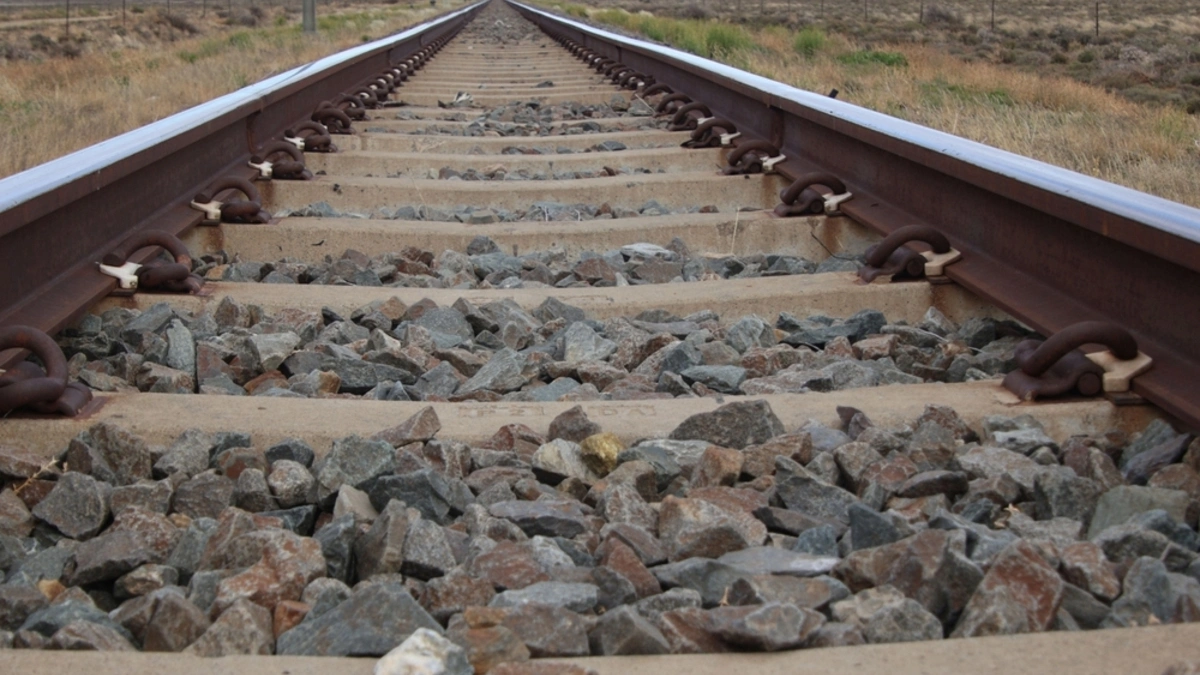
Leading provider of railway infrastructure solutions, VAESA, is pleased to announce that it has been awarded a significant three-year contract by Transnet Freight Rail (TFR) to manufacture and supply TFR’s demand for turnout sets and components annually.
This collaboration is a testament to VAESA’s commitment to delivering high-quality railway products and services that enhance South Africa’s rail network.
TFR’s decision to award VAESA with this game-changing contract from a rail network infrastructure perspective, underscores the company’s reputation for excellence and innovation within the railway industry.
“We are delighted to have been selected by TFR for this significant contract,” says Pulane Tshabalala Kingston, VAESA’s Chief Executive Officer.
“This partnership between ourselves and TFR aligns perfectly with our mission to provide cutting-edge railway solutions that contribute to South Africa’s transportation infrastructure progress. Our team is dedicated to delivering products of the highest quality that meet the stringent standards set by TFR.”
Local Production a Boost For The Economy
The turnout sets and components for this project will be manufactured at VAESA’s state-of-the-art Isando facility in Johannesburg.
The facility holds a unique history, as it was acquired 26 years ago by voestalpine Railway Systems, part of the voestalpine group, a distinguished Austrian-listed metal company renowned as the unrivalled leader in turnout technology globally. In 2021, Mirai Rail Corporation, a black woman-owned company, acquired a controlling interest in VAESA.
“As the only facility of its scale in sub-Saharan Africa, our Isando facility stands as a testament – not only to the company’s dedication to advancing railway infrastructure and technology on the Continent, but also to our commitment to local manufacture in South Africa,” says Tshabalala Kingston.
“In this regard, it is important to note that our facility has the capacity to comfortably meet both TFR’s demand in terms of the awarded contract, as well as our other customers’ demands. We have gone to great lengths to ensure the security of supply for our customers, as we understand how important this is.”
“It is noteworthy that this is the first substantial turnouts contract to have been successfully awarded in the last five years – and explains TFR’s significant maintenance backlog.
This award is an important and positive step forward by TFR, which will go a long way to resolving cycle time issues, creating jobs, bolstering the revenues of users on the rail network and ultimately contributing to our overall economic growth,” continues Tshabalala Kingston.
Turnouts are a critical component of modern railway infrastructure. They let trains change tracks smoothly, without needing to stop.
Turnouts allow trains to be re-routed to avoid congestion, delays, or maintenance work. Additionally, rail turnouts enable the creation of sidings, which are essential for freight trains to pass each other on single-track lines.
Empowering Communities & Driving Economic Growth
According to Tshabalala Kingston, the significance of the contract goes well beyond VAESA, casting a positive light on the entire perway industry.
“This award heralds a much-needed turnaround that will breathe new life into various facets of the industry – including job prospects and the livelihood of downstream suppliers, who provide essential components like nuts, bolts, chairs, and fishplates. The positive impact of this award extends across the industry, as it revitalises not only VAESA, but also the network of companies that support its operations.”
Already, VAESA has supplied TFR with 18 complete turnout sets. These were installed in July this year during the annual shutdown of the coal line that runs from Lephalale in Limpopo, through Mpumalanga, to the Port of Richards Bay in KwaZulu-Natal.
The turnouts were installed on the Ermelo, Vryheid, Ulundi and Richards Bay lines. As of January 2023, the coal line had a number of clamped turnouts, which hurt the ability of coal mining companies to evacuate their export coal.
Replacing 18 turnouts has been heralded as a game-changer, significantly improving cycle times and overall turnaround time in the TFR Ermelo yard – ultimately halving the overall cycle time.
“The awarding of this contract and the successful engagement and participation in the yearly coal line shutdown, through collaborative efforts with various stakeholders, serves as undeniable evidence of what is possible when all stakeholders come together with a common purpose, ” concludes Tshabalala Kingston.
“It benefits the manufacturing industry at large and users of the various rail corridors. Equally important, is that it will increase tariff revenues for Transnet – given the greater operational efficiencies achieved, allowing for more volumes to be transported between the coal mines and the Port of Richards Bay. This impact of the award cannot be underestimated – it has the capability of contributing to the re-awakening of the South African rail renaissance.”
Two leaders at global logistics pioneer DP World are announced as keynote speakers for the Global Cold Chain Alliance (GCCA) African Cold Chain Conference in Johannesburg, taking place September 2-3, 2026.
DP World operates in every continent of the globe, employing more than 126,000 people from 169 nationalities, powering international trade through a range of solutions including cold chain logistics across ocean, air, road and rail. William Sears, Chief Commercial Officer Logistics for Africa at DP World; and Mohammed Mahomedy, Head of Infrastructure and Rail for Africa at DP World, will take to the conference main stage on September 3 to share their insights into DP World’s approach to integrated logistics at scale in practice.
William Sears has over 20 years’ experience in logistics and supply chain optimisation across a range of industries and disciplines. Having joined South African logistics business Imperial in 2010, William was appointed to DP World leadership following Imperial’s acquisition by the global business in 2022.
Mohammed Mahomedy leads DP World’s development of the company’s rail and ports integration strategy across the African continent. He is responsible for identifying strategic opportunities that support the expansion of DP World’s presence across the broader logistics value chain in line with its long-term objectives in Africa.
The GCCA African Cold Chain Conference will bring together temperature-controlled logistics businesses and partners from across the continent to examine the industry’s most pressing challenges and exciting opportunities, exploring the theme of ‘It’s Time for Dialogue: Exploring Progress, Priorities, and Partnerships’. The event includes an outstanding program of renowned speakers, panel discussions, networking receptions and a high-quality exhibition. Find out more and register at www.gcca.org/events/gcca-african-cold-chain-conference.
GCCA Senior Vice President Global Market Engagement Adam Thocher said: “I am delighted that DP World’s William Sears and Mohammed Mahomedy will be sharing their insights and experiences on the crucial topic of integrated logistics at scaleas the keynote speakers at the 2026 GCCA African Cold Chain Conference. Temperature-controlled logistics operations are expanding throughout the continent:connecting Africa’s cold chain and investing in associated infrastructure will be fundamental to Africa’s future food resilience and global trade opportunities. The GCCA conference is creating a unique forum for cold chain operators and partners to discuss the food supply chain’s challenges and opportunities at national and global levels.”
The two DP World leaders will be joining an outstanding line-up of expert speakers at the conference, including:
Brent Melvin (General Manager RSA Logistics Dubai) sharing experiences of the cold chain’s response to extreme disruption in the Middle East
Dr. John Deng Diar Diing (Executive Secretary of the Northern Corridor Transit and Transport Coordination Authority), discussing regional corridors as catalysts for intra-African trade
Dr. Newton Matope (CEO of Cold Solutions Kenya and GCCA Africa Chairman), exploring the temperature-controlled logistics industry in the continent, and
Sara Stickler (President & CEO, GCCA) and Adam Thocher (Senior Vice President, Global Market Engagement, GCCA) on GCCA’s priorities and action in Africa.
As SAPICS celebrates 60 years of impact in 2026 under the theme “Legacy to Leadership: 60 Years of Connection, Collaboration & Transformation,” South African supply chain executives face an urgent call to action.
With soaring road freight volumes, warehouse occupancies topping 85%, and compounding rental hikes, local leaders rushing to automate frequently fall into a costly trap. While modern warehousing technology can greatly assist in slicing operational costs and slashing inventory losses, investing heavily in off-the-shelf systems without addressing underlying operational bottlenecks often amplifies the chaos rather than solving it.
True leadership requires recognising that technology is not a standalone silver bullet; transformation happens when advanced process design meets a flexible, digitally prepared workforce.
Why More Technology Doesn’t Always Mean More Progress
When margins shrink, the instinctive corporate reflex is to slash headcount or purchase an automated tool because a competitor did. However, automating a broken process simply yields an automated mess.
“A lot of technology is available off the shelf, and it is dangerous to buy something you don’t thoroughly understand,” warns Willie du Preez, Managing Director of Programmed Process Outsourcing (PPO). “If you don’t understand where your operational bottlenecks are, you will introduce the wrong technology.“
Du Preez notes that real return on investment (ROI) stems from a deep diagnostic phase. This means utilising industrial engineering to map workflows and eradicate systemic friction before buying hardware. Without this groundwork, companies end up with fragmented patches instead of a unified ecosystem, losing critical institutional knowledge.
Furthermore, traditional data tracking compounds this vulnerability. “After-the-shift or month-end information has become obsolete,” Du Preez stresses. “We need real-time data frameworks to make decisions proactively before bottlenecks disrupt the entire chain.“
The Business Case for What Doesn’t Appear on the Balance Sheet
Optimising a warehouse requires looking far beyond obvious hardware and immediate software implementation costs. True operational leadership requires a comprehensive evaluation of regulatory complexity, strategic risk, and financial agility.
“When an organisation conducts a deep cost-benefit analysis, the ‘invisible’ levers of outsourcing become undeniable,” explains Jeandie Leone, Commercial Executive at Workforce Staffing and Outsourcing. “A strategic partner doesn’t just manage transactional headcounts; they absorb significant balance-sheet liabilities. For instance, compliant employers in South Africa must navigate complex regulatory requirements, spending 1% of payroll on Skills Development Levies and up to 6% on continuous training. In outsourcing key components of your workforce, these administrative and training burdens shift entirely to the expert partner.“
Leone emphasises that this strategy fundamentally transforms how human capital impacts corporate finances. “Labour is traditionally one of the highest flat operational expenses (OpEx) for most logistics businesses, yielding zero return on scorecards. Outsourcing allows companies to route this heavy spend through a fully compliant partner, converting a standard operating cost into powerful preferential procurement spend for their B-BBEE scorecard.“
Furthermore, Leone highlights immediate cash flow advantages. “In high-volume environments, managing internal payrolls places immense pressure on working capital. Partnering with an provider that offers standard 30-day payment terms effectively allows a business to defer massive payroll expenses for that period, interest-free. This frees up vital cash flow to reallocate into core technological infrastructure.“
The Strategic Power of Operational Convergence
Even with engineered processes and real-time dashboards, technology remains inert without the people trained to pilot it. In South Africa’s high-attrition warehousing environments, the traditional model of renting generic labour on one side and managing operations on the other is no longer viable. To maintain operational continuity and protect margins, supply chains must merge Temporary Employment Services (TES) and Business Process Outsourcing (BPO) into a singular, symbioticoperating model.
“The relationship works best when both parties are intertwined within the exact same operating solution for the client,” explains Quintus Sliep, Managing Director of Worldwide Staffing. “The TES partner delivers workforce agility by sourcing, onboarding, and scaling compliant personnel as volumes shift. Concurrently, the BPO partner injects the process structure, productivity metrics, and management control that allow that workforce to perform properly.“
When these two disciplines operate in isolation, operations fracture. Integrated, the client receives a scalable solution that maintains strict process discipline during volatile demand spikes.
Leone concurs, adding a regulatory and risk perspective: “Outsource partners bring dedicated legal and operational expertise needed to handle industrial relations, recruitment pipelines, and time and attendance. This ensures absolute continuity, leaving the client’s internal teams free to focus strictly on macro supply chain strategy.“
Bridging the Digital Skills Gap
This integrated approach is critical to addressing one of the industry’s most pressing operational challenges: preparing workers for increasingly digital environments. In modern, data-driven warehouses, traditional once-off classroom training is no longer enough. Software platforms evolve continuously, compliance requirements shift rapidly, and scanning and automation systems are updated in real time.
“We shouldn’t talk about automation or robotics purely as job threats; they support people rather than replace them completely,” says Sliep. “The bigger risk is the skills gap between where operations are going and where the workforce is today. The TES provider must prepare people for the environment, and the BPO must manage that environment so workers can use technology productively.”
Closing this gap requires ongoing collaboration between workforce enablement and operational management. Together, TES and BPO partners create continuous learning environments that equip workers to adapt alongside technology rather than be displaced by it. The result is a more resilient, digitally capable workforce able to engage confidently with evolving systems, workflows, and operational demands.
Operational resilience depends on aligning technological progress with human capability. As du Preez concludes, “Technology alone does not drive transformation; people and their knowledge do.”
Every day, FedEx connects people, businesses and communities through its global network. While that network is best known for moving packages around the world, its impact extends beyond commerce. The same expertise that helps keep supply chains moving can also help connect communities with the resources, opportunities and support they need to thrive.
Across South Africa, community organisations are working to address local challenges and expand opportunities for young people. Their impact, however, depends not only on funding and commitment, but also on the ability to reach people consistently and effectively. From delivering essential resources to bringing together volunteers and community partners, logistics plays an important role in turning good intentions into meaningful action.
“Social impact does not happen in isolation,” says Nelson Teixeira, Managing Director of Operations for Sub-Saharan Africa at FedEx. “Whether it’s supporting youth programmes, enabling volunteers or helping organisations reach underserved communities, reliable logistics plays an important role in making that impact possible.“
Through FedEx Cares, the company’s global community engagement programme, FedEx works alongside nonprofit organisations, customers and team members to help strengthen communities, create opportunities for young people and inspire employee volunteerism. In South Africa, this commitment comes to life through initiatives that reflect the spirit of Mandela Day – bringing people together to make a meaningful difference through collective action.
One example is FedEx Play Parks, delivered in partnership with Kids Collab. The initiative expands access to safe, inclusive and structured play spaces for children in underserved communities, helping support physical development, social wellbeing and stronger social connections.
Complementing this effort, FedEx Day of Play brings together children, community organisations and FedEx volunteers through activities that encourage participation, play and connection. As part of the company’s Mandela Day activities, it reflects FedEx’s commitment to creating positive experiences that leave a lasting impact.
FedEx also supports organisations such as Sporting Chance, whose Street Soccer Programme uses sport to promote youth development, life skills and social inclusion. Together, these initiatives help create environments where young people can build confidence, develop new skills and realise their potential.
“Collaboration is essential when it comes to addressing complex social challenges,” says Teixeira. “Community organisations bring local knowledge and trusted relationships, while businesses can contribute skills, resources and operational expertise. When these strengths come together, it becomes possible to create initiatives that have a broader and more lasting impact.“
That spirit of collaboration is reflected in the commitment of FedEx team members, who volunteer their time and expertise alongside community organisations throughout the year. Their involvement demonstrates that creating meaningful impact is not only about investment, but also about showing up, contributing and supporting the communities where they live and work.
As South Africa continues to create new opportunities for young people and strengthen community wellbeing, collective action will remain essential. Through FedEx Cares, FedEx remains committed to using its people, expertise and global network to help create opportunities, strengthen communities and deliver lasting social impact.
“At its core, logistics is about connecting people with possibility,” concludes Teixeira. “When those connections help young people access new opportunities and strengthen the communities around them, we see the impact that is possible when we work together.“