Connect with us

Logistics

Five biggest risk factors to the freight transportation industry in South Africa.

Published

on

Cargo truck on the road in motion

As a producing nation, the logistics industry is our economic backbone. As such its important to keep our main forms of cargo transportation working in the most efficient state possible however there are various risk factors that can negatively affect this transportation industry.

These risk factors can affect your ability to maintain a working fleet, and quite possibly halt entire fleets of trucks.

This article will focus on ground freight services and explore the 5 major challenges freight transportation services face in South Africa.

1. Truck driver hijackings in South Africa.

Starting things off with one of the top threats that affect transportation, states that according to Statista there were 4983 truck hijackings between the period of 2018 to 2021.

Not only is this a huge loss for the various companies transporting goods, but it also brings the industry’s ability to move cargo into question. This is also a safety concern from the point of view of the truck drivers themselves, as very few people wish to work at a job that could put their life at risk.

This element of risk was put on full display during the July 2021 riots when trucks were looted and torched making this issue one of the more unpredictable risk factors on this list and one of the most damaging to both the reputation of the transportation industry, and the value of the cargo that is lost.

2. Trucker strikes / indirect strikes.

Strikes can have a huge impact on not only the economy, but also the freight transportation industry as well, these can either take the form of direct strikes from truck drivers themselves which have a more direct impact on the industry, or through indirect strikes affecting any number of routes.

In the case of third-party strikes, these disrupt freight services by shutting down transport routes or preventing drivers from getting to and from their destinations.

This is a problem because in the event of a strike which affects major transport routes goods services may either need to be diverted which could cause a further fuel cost or halted in place once the trucks reach the area affected.

3. South Africa’s Poor Road infrastructure and its effects on the health of your fleet.

The poor state of roads is not only a concern for the daily driver, but also a problem that the freight industry in South Africa is affected by.

The cost of fixing damage done to all types of vehicles needs to be a consideration when planning what routes, the drivers will take. this can be especially costly if you need to regularly have your fleet repaired.

The last cost of this is the time off road. Every day that a portion of your fleet of trucks cannot reliably deliver goods is money lost.

A few of these concerns are detailed in a news24 article which focuses on food transport, where it is explained that trucks that get stuck on poorly maintained roads often have to be towed out, in addition this can result in the road becoming impassable for other vehicles on that road.

4. The cost of fuel on freight transportation services.

The rising cost of fuel is another concern that heavily affects the logistics industry. You need to consider what cost will be passed onto the consumer and if certain products will even be viable in their respective target market after these transportation costs are considered.

This may be a big consideration for potential clients depending on the current cost of fuel, and how much of that cost their consumers will be able to reasonably tolerate before they simply can’t buy the product in question.

When you consider that the vast majority of South Africa’s goods are transported via trucks due to the crumbling railway infrastructure, the cost of fuel becomes a much larger problem that will inevitably be passed onto consumers.

From a transport industry standpoint this may mean less clients are able to invest in sending their products over long distances, and ultimately less business will flow into the transportation industry.

5. Dangerous drivers.

Finally we need to talk about the high number of motor vehicle accidents on South Africa’s roads –  because as we all have seen, people tend to drive recklessly, particularly around the festive seasons as BusinessTech reported in 2022 alone over 1400 lives were lost in the festive season alone.

This is a major problem not only because of the huge loss of life but because just like ordinary South Africans on the road truck drivers are often caught in the middle or directly involved in the cause of these collisions.

Not only is this a serious risk to the lives of the road users and truck drivers themselves, but it’s also a risk factor in respect to potential damage or complete destruction a crash can cause to cargo, and delays to delivery.

Conclusion

While not all these risk factors are an everyday occurrence, these 5 elements represent some of the major factors to consider when planning an effective risk mitigation strategy for truck transportation in South Africa.

Not all these factors can be placed in one’s control at any given time however, it is especially important to keep an eye on the situation on the ground, so that you and your fleet can respond quickly, and effectively to situations that place your fleet and you drivers at risk.

FAQs

1. What are the challenges of freight in South Africa?

The main challenges to freight transportation in South Africa are Power outages causing traffic congestion, Poor road Infrastructure, Rising fuel costs, and Road safety concerns.

2. What are the problems with transportation in South Africa

The main problems with transportation in South Africa in 2023 are Rolling blackouts which cause and compound congestion, Road infrastructure deficiencies, High transportation costs caused by the rising cost of fuel, High rates of vehicle theft or hijacking.

3. How can transportation risk be reduced?

By implementing better driver education programs, we can equip drivers with the skills necessary to actively make safer driving decisions while on the road.

Technology can be used to track driver behaviour, speed, and route. This data can be used to identify improvements in both safe driving behavior’s and identify less risky routes to use.

Continue Reading

Freight Forwarding

What More Private Investment Could Mean for South Africa’s Freight Network

Published

on

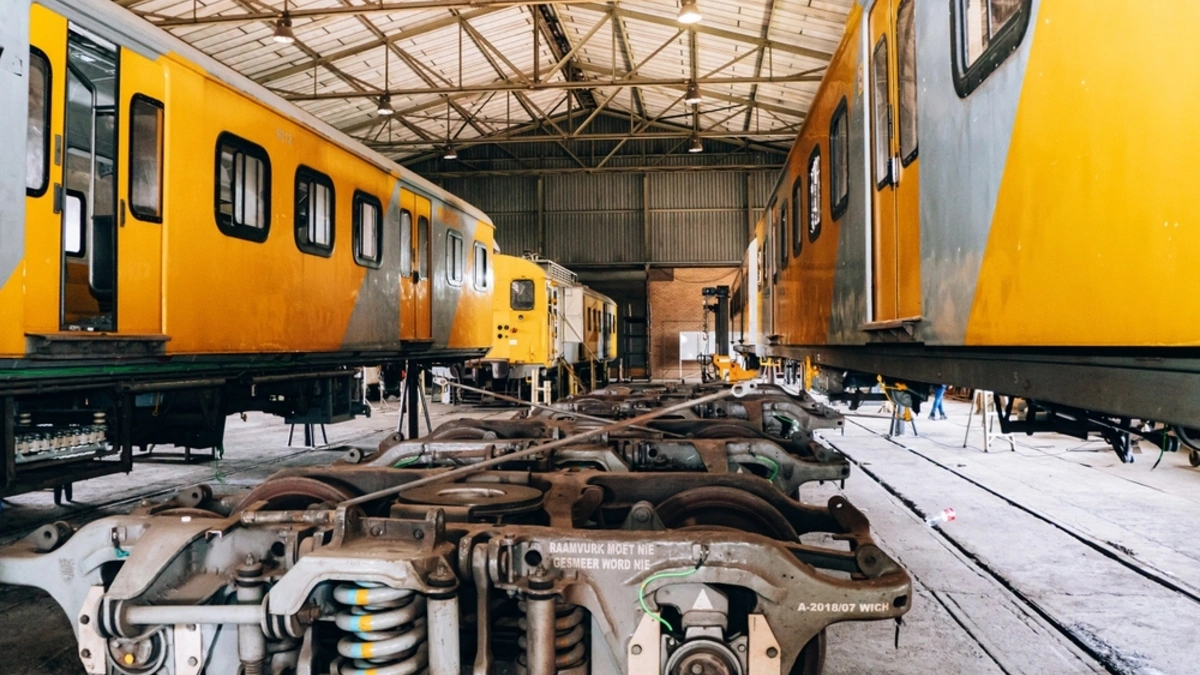
South African yellow and grey trains parked in a service yard.

South Africa’s freight challenges are not confined to one port, railway line or logistics facility. They stem from a network that must move goods between farms, factories, warehouses, ports and international markets, often through infrastructure that has struggled to keep pace with demand.

That is why private investment in logistics infrastructure deserves attention beyond the value of any individual transaction.

Absa’s reported expansion of its financing support for logistics infrastructure developer Newlyn Group to R5.1 billion raises a broader question: can private capital help close the gaps between the different parts of South Africa’s freight network?

The answer will depend less on the amount invested than on where the money goes, how projects connect to existing infrastructure, and whether the resulting facilities improve the movement of cargo.

The Problem is Not Simply a Lack of Warehouses

South Africa has logistics facilities across its major industrial and commercial centres. However, warehouse capacity alone does not resolve the challenges facing the freight system.

A warehouse may provide valuable storage space, but its usefulness depends on what happens outside its gates. If trucks face congestion, rail services are unreliable, or port operations are delayed, the warehouse becomes another holding point in an already disrupted chain.

The more important investment is in infrastructure that connects different activities.

This includes logistics parks near industrial centres, facilities linked to rail terminals, storage close to ports, and sites that allow cargo to move between road and rail without unnecessary handling or additional journeys.

The value lies in the connection. A facility that is properly integrated into the wider network can help businesses plan movements more efficiently and reduce the number of disconnected steps between origin and destination.

Why Multimodal Infrastructure Matters

Road freight remains essential because it offers flexibility and can reach locations that are not served directly by rail. It is particularly important for first-mile and last-mile movements.

Rail, however, can play a different role by moving larger volumes over longer distances. When the two modes are connected effectively, businesses can use each where it makes the most operational and economic sense.

This is the thinking behind multimodal logistics infrastructure.

Cargo could move by truck to a rail-linked facility, travel longer distances by rail, and then return to road freight for final delivery. Warehousing and storage positioned around these connections can support consolidation, distribution and export activity.

This model does not eliminate the need for trucks. It can, however, reduce the pressure on road freight by giving operators more options for moving cargo through the network.

For South Africa, that matters because freight costs are influenced not only by fuel and vehicle expenses, but also by delays, empty running, congestion, repeated handling and unreliable schedules.

Durban Shows Why the Connections Matter

The Durban–Gauteng corridor illustrates the challenge.

Cargo moving through the Port of Durban must travel between the coast and the country’s major industrial and distribution centres. That movement depends on a combination of port operations, rail infrastructure, road freight, warehouses, terminals and inland distribution facilities.

If one part of the corridor performs poorly, pressure is often transferred elsewhere. Delays at a port can affect truck scheduling. Rail constraints can push more cargo onto roads. Congestion can increase turnaround times and raise operating costs for transporters.

Investment in facilities near the port or along important freight routes could improve the way cargo is staged, stored and transferred. These facilities, however, will only deliver their full value if they are supported by reliable road access, functioning rail connections and efficient port operations.

This is the important distinction between building logistics infrastructure and improving logistics performance.

Private Capital Cannot Fix the Entire Network

Private investment can provide funding for new facilities, equipment, technology and development capacity. It can also introduce commercial pressure to improve service delivery and make better use of assets.

However, private logistics developments remain dependent on the wider transport system.

A privately financed rail terminal cannot operate effectively if the rail network lacks capacity. A modern warehouse cannot compensate for severe port delays. A logistics park may still struggle if road access is congested or surrounding infrastructure is inadequate.

Private investment should therefore not be viewed as a replacement for public infrastructure reform. It is one part of a wider system that includes Transnet, municipalities, road authorities, port operators, rail infrastructure managers, freight customers and logistics companies.

The strongest projects will be those planned with these dependencies in mind.

The Timing is Significant

South Africa is pursuing changes to its freight logistics system, including private-sector participation in port operations and the opening of the rail network to third-party operators.

These reforms could create opportunities for infrastructure developers and financial institutions. As more operators enter the market, supporting facilities such as terminals, storage, maintenance sites and cargo-handling infrastructure will become increasingly important.

But the relationship works both ways. New infrastructure can support reform by making it easier for different operators to access the network. At the same time, the success of those facilities will depend on whether the reforms improve the underlying network.

Coordination will therefore matter as much as the availability of finance.

The Real Measure Will Be Better Cargo Movement

The significance of a large logistics financing facility should ultimately be measured by what it changes on the ground.

Does it reduce unnecessary truck movements? Does it make rail a more practical option for freight customers? Does it improve access to ports, reduce handling delays or help exporters move goods more predictably?

These are the outcomes that matter to manufacturers, retailers, exporters, transport operators and consumers.

Private capital has an important role to play in South Africa’s freight recovery. But investment figures alone do not improve a supply chain. The real opportunity lies in using that capital to build the connections the country’s logistics network has been missing.

For South Africa, the bigger test is whether investments like this can help move the country from isolated logistics projects towards a more connected, reliable and competitive freight system.

Continue Reading

Logistics

Preparing South Africa’s Logistics Industry for 2030, Focused on Compliance, People, and Sustainability.

Published

on

Man using a tablet with a futuristic view of the logistics world as a freight ship, plane and trucks travel in the background.

By Harry Dimo, HR Director, BIL & Lawrence Aldworth, National Compliance and Risk Manager, BIL

Ask most logistics leaders what sustainability means, and the conversation quickly turns to emissions, electric vehicles and carbon reporting. While those issues matter, they’ve also created one of the industry’s biggest blind spots. Sustainability has become an environmental conversation when it should be a business one.

The logistics businesses that will thrive beyond 2030 will not simply be those with the lowest carbon footprint. They will be the organisations that embed sustainability into every aspect of their operations, from developing their people and embracing innovation to strengthening governance, ensuring compliance and building resilience.

For Harry Dimo, HR Director at Bidvest International Logistics, that journey starts with people: “We’re assessing the competencies required now and in the future so we can begin upskilling employees for where the business is going, not just where it is today.”

As automation, digitalisation and artificial intelligence continue to reshape supply chains, organisations must prepare employees to work alongside these technologies rather than be displaced by them. Future-ready businesses are identifying tomorrow’s skills today, investing in continuous learning and equipping people to adapt as customer expectations and business needs evolve. Investing in future capability is every bit as important as investing in greener technology.

“When people hear sustainability, they immediately think environmental. But sustainability is much broader than that. It’s about environmental, social and governance principles working together to create a business that is built to last,” says Lawrence Aldworth, National Compliance and Risk Manager at Bidvest International Logistics.

That broader definition is becoming increasingly important as customers raise their expectations. Organisations are no longer evaluated solely on price, service and operational capability. Increasingly, customers are assessing the environmental, social, and governance (ESG) maturity of companies, making responsible business practices a key competitive differentiator. Businesses that fail to evolve risk being excluded from future opportunities rather than simply falling behind competitors.

Sustainability is therefore not another initiative sitting alongside the business. It is the framework through which the business operates. Environmental responsibility protects natural resources. Good governance builds trust, accountability and resilience, while investment in people ensures organisations can respond to changing technologies, customer expectations and market demands.

Innovation and compliance are equally important. By empowering employees to contribute ideas and embrace technology, organisations create a culture of continuous improvement that strengthens operational performance, enhances customer outcomes and increases employee engagement.

As Harry explains: “Leadership can define the vision for the future, but it is our people who bring that vision to life every day. Preparing them for what comes next is one of the most important investments we can make.”

Compliance should also be viewed through a different lens. Too often perceived as a cost of doing business, effective governance creates measurable value by reducing operational risk, protecting customers’ products and strengthening confidence among organisations that increasingly expect responsible business practices from their logistics partners.

Lawrence adds: “Good compliance management reduces risk, which ultimately reduces cost. It also creates value for customers by protecting their products while they’re in our care.”

The organisations best positioned for the future are those that combine resilience with adaptability. They invest in capable people, encourage innovation, strengthen governance and continuously evolve to meet changing customer needs.

Sustainability is not just about protecting the planet’s future. It is about building organisations that are equipped to protect their people’s future, earn their customers’ trust, and adapt with confidence to whatever comes next. Businesses that embrace this broader definition of sustainability will not only remain relevant but also help shape the future of logistics.

Continue Reading

Logistics

From South African Orchard to Chinese Market: The Supply Chain Behind the Cherry Export

Published

on

Close up shot of a person hand picking cherries into a basket.

South African cherry growers can now sell into China for the first time, opening a major new market for the country’s growing cherry industry.

Agriculture Minister Willie Aucamp signed the market-access protocol with China’s General Administration of Customs in Beijing on 8 September. China imported about 586,900 tonnes of cherries worth US$3.3 billion in 2025, making it the world’s largest cherry importer.

For South Africa’s supply-chain industry, however, the interesting part starts after the agreement is signed.

Getting cherries from an orchard to a Chinese buyer requires a coordinated journey involving harvesting, packing, temperature-controlled logistics, road freight, export procedures, international shipping and distribution.

For a perishable product, every stage matters.

From Orchard to Packhouse

The export journey starts with producing fruit that meets the requirements of the destination market.

The new market-access protocol establishes the framework for South African cherries to enter China and forms part of the sanitary and phytosanitary arrangements governing agricultural trade between the two countries.

Once harvested, cherries need to move quickly through packing and preparation. The fruit then enters a temperature-controlled supply chain designed to maintain its condition while it travels towards the export gateway.

This makes logistics more than a transport function. Delays at the farm, packhouse, storage facility or during transport can reduce the time available for the rest of the journey.

The Journey to the Export Gateway

Where the cherries are grown will influence how they reach international markets.

South Africa’s cherry industry has expanded significantly in recent years, with planted area increasing from 185 hectares in 2012 to 819 hectares in 2024, according to industry body Hortgro.

As production grows, so does the logistics network needed to support it.

More fruit means more movement between farms and packhouses, greater demand for cold storage and additional transport capacity to connect production areas with export gateways.

The opening of China could therefore create opportunities beyond the growers themselves.

Then Comes the Export Process

Physical movement is only part of getting the cherries into China.

South African exporters also need to meet customs and origin requirements.

South Africa’s temporary zero-tariff arrangement with China came into effect on 1 May 2026. Qualifying exports can receive zero-tariff treatment if they meet the applicable rules of origin, although some tariff lines are subject to quotas.

SARS issues the Rules of Origin certificates required for qualifying exports. Exporters must also maintain the required documentation and comply with the scheme’s conditions to receive the tariff benefit.

For the supply chain, this means a shipment can be physically ready to leave South Africa but still be unable to move as planned if the documentation and customs requirements are not in order.

China is Only Another Link in the Chain

Once the cherries arrive in China, the journey is not over.

The shipment still needs to clear the relevant authorities, reach importers and move through China’s distribution network before reaching its final buyer.

That makes coordination across the entire journey particularly important.

A delay in South Africa does not simply mean a later departure. It reduces the time available for every stage that follows.

A New Market, And A New Logistics Opportunity

The Department of Agriculture expects the opening of the Chinese market to stimulate further investment in cherry production and estimates that it could create about 600 new jobs.

If production expands, the supporting supply chain will need to expand with it — from packhouses and cold storage to road freight, export services and international logistics.

That is what makes the agreement significant beyond agriculture.

South Africa now has access to a major new market. The next challenge is building a supply chain capable of getting those cherries there on time, in good condition and at a competitive cost.

Continue Reading

Trending