
Press Releases
Conference Highlights Opportunities for the Air Cargo Industry on the Continent


The air cargo industry has a key role to play in helping drive economic growth in Africa. There are also tremendous opportunities that it can leverage, through the Africa Continental Free Trade Area (AfCFTA). These opportunities were explored at the Chartered Institute of Logistics and Transport’s Air Cargo Conference, held at the Air Cargo Africa expo and conference at Emperors Palace, Gauteng, on 23 February 2023.
The Programme included:
- Increasing connectivity and the movement of air cargo across the region by Dr Joachim Vermooten – Owner: Vermooten and Associates
- What is needed for AfCFA to work and what is the impact of AfCFTA on the supply chain? by Devlyn Naidoo – Executive: SARS and Other Government Agencies (OGAs): the SA Association of Freight Forwarders
- Potential and possibilities on the Continent: Airlink Cargo’s perspective by Hardus Kuschke – Executive Manager, Cargo: Airlink Cargo
- Data Driven Decisions Enabled by Digital Transformation by Munya Husvu, CEO: ISB Optimus
- The role technology will be playing within the African cargo space in the next decade vs. the African unemployment challenge by Gerhard van Zyl – AsimoTech
- Video telematics and the use of Artificial Intelligence by Divan Delport – Sales Director – MiX Telematics East Africa
- Trade opportunities in Africa for South African business by Thina Nodada – Director: Waymaker Trade Solutions
- Changes to Dangerous Goods Regulations for Air Cargo by Elliot Molemi – General Manager, Compliance: Professional Aviation Services
Key takeaways from the event
Increasing connectivity and the movement of air cargo across the region by Dr Joachim Vermooten – Owner: Vermooten and Associates
“AfCTA creates a new basis on which African air transport liberalisation can be based, with the objective of creating an internal integrated air transport market, instead of a small step “piecemeal” approach based on arrangements between individual States.”
“The African Continental Free Trade Area (AfCTA) provides a new opportunity to re-start African air transport liberalisation with the objective to actually achieve a truly internal single African air transport market. This is in contrast to the current Single African Air Transport Market (SAATM), which only seeks to implement the Yamoussoukro Declaration of 1988 (35 years ago) still based on Bi-lateral Air Service Agreements (BASAs) between States, of which the implementation is inadequate.”
Potential and possibilities on the Continent: Airlink Cargo’s perspective by Hardus Kuschke – Executive Manager, Cargo: Airlink Cargo
“There is endless potential for growth in Africa – due to the increase in demand. Aviation traffic is predicted to more than double by 2037. The boom in the movement of cargo will accelerate development. Cargo yields are declining at the moment, but are still higher than pre-Covid levels.”
“There is endless potential for growth in Africa:
- There are freighter operations to main hubs, but there is a need for connectivity to smaller hubs.
- E-commerce is underdeveloped.
- Africa’s annual economic growth remains strong.
- The need for bonded transport continues to grow.”
“There are however some limitations:
- Frustrations: Support functions from an airline’s perspective, like reliable port and rail infrastructure for jet fuel.
- Challenges: Inconsistent authorities, border control processes, corruption and competitiveness. Some IT systems are incapable of integration.
- Security: Security standards are poor in some countries.”
What is needed for AfCFA to work and what is the impact of AfCFTA on the supply chain? by Devlyn Naidoo – Executive: SARS and Other Government Agencies (OGAs): the SA Association of Freight Forwarders
“What is required for AfCFTA to work and how do we make it work?
- Overcoming supply-side constraints to boost African trade.
- Closing the infrastructure deficit to boost AfCFTA’s development impact.
- Eliminating non-tariff barriers to increase cross-border trade.
- Establish inter-governmental international trade department support.”
“Equally important to the elimination of tariff barriers (Free Trade Area) is the elimination of non-tariff barriers and the creation of an intact continental logistics network to support the growth of intra-Africa trade.”
“Supply chains are dependent on an efficient logistics network. This includes, inter alia, efficient port infrastructure, road and rail networks, a secure and safe trading environment and efficient customs and other government agency compliance processes and procedures.”
“Skills development and capacity building for a young supply chain are key.”
Data Driven Decisions Enabled by Digital Transformation by Munya Husvu, CEO: ISB Optimus

“We see a world where every employee will work side by side with digital workers. When human and digital workers work side by side, amazing things happen! It creates a world of endless possibilities!”
“To be a digital enterprise, you need digitized processes – and a digital workforce that complements your human workforce. ‘Complement’ is an important word, because despite concerns about AI, automation, and Robotic Process Automation (RPA) eliminating jobs, we believe very strongly that digital workers should complement the strengths of people.”
“Digital workers transcend RPA: Their core attributes are bots that are intelligent, using AI to learn and improve over time; they use analytics to ensure that their work is effective; and finally, they are capable of discovering processes that can benefit from their help.
People’s core attributes feature creativity, connecting dots, building strong relationships, and having empathy and compassion for others. For people, this manifests in driving strong customer engagement, identifying opportunities, whether that be a new sales opportunity or business model. We also strive at problem solving -arguably one of our best skills.”
The role technology will be playing within the African cargo space in the next decade vs. the African unemployment challenge by Gerhard van Zyl – AsimoTech
“On the one hand, we face the African unemployment challenge. The unemployment rate in Africa (estimated) 2022 was estimated at 8%, which means 41,9 million are without work.
On the other hand, we perceive the opportunities available through technology-led productivity. Since we compete with the rest of the world, we need to keep abreast of global developments in areas such as autonomous vehicles (drones), Artificial Intelligence, augmented reality, object and image recognition and other breakthroughs.
Thus, our logistics industry needs to maintain a balance between people skills and automation in the workplace. This calls for a commitment to a spectrum of skills development that fuses traditional methods with innovation and even quantum-leaps.”
“By lowering standards education, we are not doing our youth any favours.”
Video telematics and the use of Artificial Intelligence by Divan Delport – Sales Director – MiX Telematics East Africa

“Artificial Intelligence (AI) in video telematics has transformed the way we manage and monitor vehicle fleets by improving safety, enhancing efficiency, reducing costs, and providing real-time insights. AI-powered systems can monitor driver behaviour, optimise routes, reduce idle time, and improve productivity. This technology provides real-time insights into driver behaviour and vehicle performance, enabling fleet managers to respond quickly to issues as they arise. As the technology advances, we can expect even more benefits and applications in the future.”
Trade opportunities in Africa for South African business by Thina Nodada – Director: Waymaker Trade Solutions
“South Africa could position itself as a brains-trust country for skills development across the rest of the continent as momentum picks up for the realisation of trade under the AfCFTA.”
“What we’ve seen is that there is a strong emphasis on skills and knowledge development from African countries to partner with South Africa in achieving these aims. “If South Africa got its act together, a lot of goodwill could be invested through the transference of goods, services, skills and knowledge needed to achieve AfCFTA’s aim of boosting trade across the Continent by at least 52.3%. It would take a bit of a mind-shift though, as South Africa still sees itself in different terms in relation to the rest of the Continent.”
“We must stop thinking of ourselves as the gateway to the Continent. We aren’t the gateway to Africa, never have been, and never will be. What we can be is an enabler of trade improvement.”
Changes to Dangerous Goods Regulations for Air Cargo by Elliot Molemi – General Manager, Compliance: Professional Aviation Services
“The new dangerous goods regulations have undergone a rigorous Carcom (Civil Aviation Regulations Committee) process and are awaiting the Transport’s Minister signature. The express parcel industry has over the years seen the introduction of drop-off facilities, enabling customers to drop off parcels, with little inconvenience. Examples of these facilities include Aramex’s Drop Box, Courier Guy’s PUDO and DSV’s Locker, which are stationed at shopping complexes and filling stations.
These products of convenience have come with their own problems. Customers are likely to include hazardous items like lithium batteries, corrosives and flammable liquids – out of ignorance. The SACAA has come up with a set of regulations that seeks to minimise such incidents. The regulations when summarised will require a company offering the parcel drop-off facilities to educate their users on the dangerous goods. This will be done by:
- Requiring that the user declares if their package contains dangerous goods or not.
- Providing information about dangerous goods to the user through the website or other electronic forms.
- Displaying dangerous goods prohibition messages and other signages at drop off facilities.
These regulations extend to other courier products at shopping malls like Postnet and Pepkor’s Paxi – if their parcels end up in an aircraft.”
The CILTSA Air Cargo Conference was sponsored by Air Cargo Africa, AsimoTech, ISB Optimus, Messe Munchen, MiX Telematics and Professional Risk.


About CILTSA
The Chartered Institute of Logistics and Transport supports the professionals who plan the systems, who bring in the raw materials, who manage the movement of people and goods, who ensure safety standards, maintain mobility, and keep the economy working.
We are the leading professional body for everyone who works in supply chain, logistics and transport. We are a global family, representing professionals at all levels across all sectors, with a mission to give individuals and organisations access to the tools, the knowledge and the connections vital to success in the logistics and transport industry.
Founded in 1919 with a mission to improve industry practices and nurture talent, our Institute supports over 35,000 members in 35 countries. Through our educational suite, our strong community and our commitment to high standards, we help professionals at all levels to develop their careers and access better jobs. Visit www.ciltsa.org.za and https://ciltinternational.org/ for more information
Issued by:
Contact Persons: Catherine Larkin – CVLC Communication
Telephone: 087 822 2858 / 083 300 0331
E-mail: [email protected]
Postal Address: P O Box 44945, Linden, 2104, South Africa

Freight Forwarding
A Terminal in Healing: SAFLA and the RFA Acknowledge the Movement Towards DGT Efficiency

The South African Freight and Logistics Association (SAFLA) and the Road Freight Association (RFA) were present during the recent interaction between Durban Gateway Terminal (DGT) and relevant stakeholders and organisations that have operations or members processing cargo through the terminal.
Representatives of DGT and International Container Terminal Services Inc (ICTSI) were candid and open regarding challenges experienced – as well as what had been achieved in the period that Transnet had signed the agreement with ICSTI.
Whilst there are challenges, the terminal was functioning well – given the challenges experienced, and both DGT and ICTSI listened to comments from all present and noted that two processes were in place to address the operations at DGT.
One was short term: this included the waiving of all terminal storage charges whilst the current set of challenges were experienced, and secondly, there was an accelerated programme to keep the various pieces of machinery operating at the best levels of safety and functionality, as was possible. Gensets had been brought in to deal with power disruptions.
In addition, DGT acknowledged the problems with the slot booking system and already had developed a solution to vastly improve the process – this was to be shared with all shareholders in due course for comment and implementation.
DGT also brought Transnet into the meeting to address certain aspects that had placed pressure on operational efficiencies.
Long-term plans: the Terminal requires significant refurbishment and upgrading / modernising to compete with the options of other ports on the Southern African continent. Much of the equipment needed has been ordered – but there are lengthy lead times in the delivery of the equipment.
“There are immediate short-term options – such as reducing the pressure on the terminal whilst upgrades and interventions are applied. Perhaps Transnet can lower container movement tariffs (from other ports) for a period, whilst DGT is brought to the level of efficiency required. As we have noted – transporters are carrying the costs of inefficiencies,” said Gavin Kelly, Chief Executive Officer of the RFA. “Fleets are standing without bookings while fixed costs run, drivers are queuing on Bayhead Road, and every standing hour ends up in the price of goods. Slot releases must match real capacity, and truck staging must be fast-tracked now. Without trucks, South Africa stops.”
“SAFLA is delighted at the waiving of storage charges whilst the current set of challenges are being experienced,” said Dave Logan of SAFLA. “This will meaningfully ease the burden on freight forwarders and their clients, and we welcome this gesture of good faith from DGT and ICTSI.”
SAFLA and the RFA stand ready to contribute member evidence and practitioner expertise to a joint recovery task team alongside DGT, Transnet, government and other industry bodies.
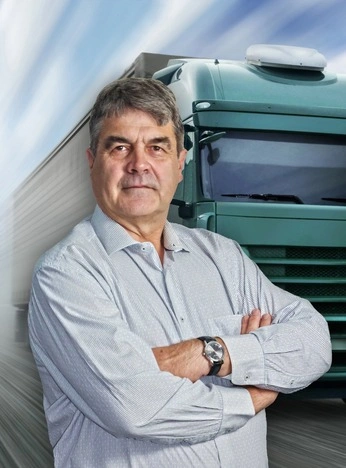
Gavin Kelly, CEO of the Road Freight Association

Dave Logan – Executive Officer of SAFLA

South Africa’s Green Hydrogen Push Could Build a New Industrial Supply Chain

What More Private Investment Could Mean for South Africa’s Freight Network

Transnet Reports Progress as Rail Volumes Rise and Freight Reforms Move Forward


-

 Management2 months ago
SEO, AEO, GEO and SEO for AI: What Is the Difference for the Supply Chain Industry?
-

 Transport3 months ago
LDV T60 Max vs GWM P500 vs Isuzu D-Max vs Toyota Hilux vs Ford Ranger: Which Double-Cab Bakkie Offers the Best Value?
-

 Logistics3 months ago
DHL Expands Asia Pacific Data Center Logistics Capabilities to Support Growing Regional Demand
-

 Logistics3 months ago
DHL Group to invest around € 160 million in 2026-2027 to strengthen logistics infrastructure and support clean energy transition in France
-

 Logistics3 months ago
Top 5 Warehousing and Logistics Companies in the Western Cape by Google Review Rating
-

 Logistics3 months ago
Top 10 Warehousing and Logistics Companies in Gauteng by Google Review Rating
-

 Logistics2 months ago
Top 4 Lift Truck Companies in Gauteng
-

 Freight Forwarding3 months ago
The Hidden Cost of Shipping from China to South Africa — What Every SA Importer Needs to Know in 2026