Connect with us

Transport

AASA calls for urgent action in the Southern Africa air transport industry

Published

on

Man standing near airport window

The Airline Association of Southern Africa (AASA) has warned that without urgent and coordinated government interventions, a commercially viable, economic, and environmentally sustainable southern African air transport industry will remain unattainable.

Urgent actions Aasa has identified include:

• The removal of barriers to trade and market access with the full implementation of the Single Africa Air Transport Market (SAATM) to support the Africa Continental Free Trade Area.

• Financial relief for airlines by way of reducing or scrapping some taxes and statutory charges, fees and levies on air travel.

• Standardising currently inconsistent Covid-19 travel and test requirements and reducing the costs of compliance which together are deterring intra-Africa and inter-continental travel.

• The appointment of South Africa’s international and domestic air services licencing councils – which have been without councillors since April. Without these functioning bodies, South African carriers cannot apply to open new routes, promote economic activity or create more jobs. And yet foreign airlines are increasing their operations to the country – an own goal.

• Proper planning with clear timelines and funding models for the transition to sustainable fuels in the region so that airlines can meet their 2050 net-zero emissions targets.

• Finding ways to incorporate the progress made with the Carbon Tax initiatives in some countries whilst harmonising participation in the global carbon offsetting programme under the auspices of the UN’s International Civil Aviation Organisation (Corsia).

• Standardising charges for foreign operator permits, aircraft operating permits as well as removing the double-taxation on airlines and aircraft components by all African governments.

• Aligning legislation to adopt the 2001 Cape Town Convention on the ownership of moveable assets, which would immediately realise millions of dollars in savings for airlines (and other operators of mobile equipment) in the region.

Continue Reading

Logistics

Hammer Blow to Road Freight Logistics With October Fuel Price Hike:  What This Means for the Road Logistics Sector and Consumer

Published

on

Man fulling up with his car with petrol while opening his wallet.

By Gavin Kelly, CEO of the Road Freight Association

Higher Fuel Prices Pushes Transport Costs Through the Roof

Every litre of fuel consumed on South Africa’s roads reflects the underlying health of the country’s logistics economy. Changes in fuel prices have a far-reaching effect on the country’s supply chain, transport systems, the wider logistics industry as well as the pricing of goods on store shelves.

The October increase in the price of fuel reminds everyone – especially the consumer – of just how exposed the broader logistics sector is to the volatility of global oil markets. With fuel prices continuing to rise, transport companies will inevitably raise the cost of transport due to increasing pressure on operational costs.

Depending on the type of operation, routes, vehicles and specific conditions of the transport leg, fuel can be anywhere between 35% and 55% of operating costs. Fuel is one of the three largest operating costs in the transport industry, thus even small price fluctuations can have significant consequences. South Africa moves more than 80% of the land-based freight via road freight (and a large amount of the general freight on rail also uses diesel) – one can understand that highly volatile fuel prices have an effect far beyond the road freight industry.


Diesel at the Heart of Freight Costs

The October fuel price adjustment sees petrol increasing to R29,88 and R30,25 per litre (inland) which is respectively a 11,6% and 12% per litre increase, whilst diesel increases by R2,84 and R3,24 per litre, depending on the amount of sulphur – resulting in a 10% or 11% increase on the base fuel cost of between 35% and 55%.

Diesel fuels a great majority of freight movement in the country, from line haul trucks that link ports and distribution centres to small delivery vehicles supplying local markets.

Since almost every sector depends on road freight, the changes in diesel prices have an exponential and expanded effect on the logistics industry and, unfortunately, the impact of fuel costs is inevitable.

As noted earlier, fuel is one of the biggest variable expenses and it impacts both short- and long-distance operations – it affects all legs in a logistics chain, and some transporters will now face severe cash flow constraints.

Global Pressures Shaping Local Fuel Prices

Global fuel market dynamics play an enormous role in determining fuel prices – supply and demand remains very relevant in what the (global) customer is prepared to pay for a barrel of oil, as well as the perceived shortage that drives a buying spree and thus the price for a barrel. Secondly, as oil is primarily bought with US Dollars, the value of the Rand against the Dollar plays a further (in our case) negative role in resulting in more expensive fuel at the pump.

Unfortunately, the majority of the petroleum products (crude oil and refined petroleum products) consumed in South Africa is imported, and this directly results in the domestic fuel cost either rising or falling.

The October increase was primarily caused by increasing global oil prices, geopolitical concerns, a weakening Rand and the growing instability in the global supply of energy networks. The political turmoil in major oil producing countries has now caused increased volatility to the market, which has led to worries about possible interruptions to the major distribution and transportation routes.

Oil markets typically react quickly to geopolitical risks, pushing crude prices higher and driving up the cost of refined fuel products downstream. For an economy like South Africa that imports oil, the outcome is often inevitable: higher domestic energy prices.

The Ripple Effect Across Logistics

Again, the fuel price increase does not end at the pump price – once fuel prices increase, the cost of moving goods from production sites to distribution centres, and finally to retailers is all exposed to price increases.

Road freight plays a crucial role in the long-distance moving of goods among ports, factories, warehouses, and retail locations.

Freight companies need to remain financially viable, and thus transport companies must choose whether to increase their rates (by a variety of factors of either full fuel price increase or a percentage thereof), or whether they have the financial reserves to withstand the increases. The latter will place pressure on cashflow and reserves. Rate adjustments are often inevitable due to the recurring fuel price strain, even if some transport operators may temporarily withstand the cost to preserve contracts and relationships with clients.

How Operators Are Managing Volatility

The transportation sector has grown increasingly defined by the volatility of fuel prices, and many transport companies adjust by reducing the volume of fuel used – fleet managers lever telematics technology, fuel choice, optimal routing software, driver training, new engine / vehicle technologies, congestion and standing time minimisation / avoidance and even load sharing.

Environmentally friendly driving techniques, better vehicle maintenance, and more sophisticated logistics planning are now essential resources for controlling operating expenses. 

Fuel adjustment methods have been incorporated in several transport contracts, enabling operators to partially compensate for the rapid price changes without disrupting long-term commitments. These approaches may reduce the effects of the rising fuel prices; however, they are not sufficient to eradicate them.

Navigating an Uncertain Road Ahead

The fuel price increase illustrates how vulnerable the country’s transport sector is to international energy trends.

Unfortunately, it is difficult to completely rule out further fuel price increases – already there are indicators are that South Africa is heading towards further fuel price increases in November, should the tensions in the Middle East not be resolved. The ongoing geopolitical tension and the surge in risk, coupled with the supply and demand factor, adaptability will continue to be vital for South Africa’s freight sector.

Transport companies’ strategies for navigating this increasingly unstable operating environment will continue to be shaped by limiting fuel use, enhancing operational efficiency, and preparing for unpredictability.

One thing is certain: In a country that is dependent on road freight, such as South Africa, every adjustment in the price of diesel has consequences extending past the petrol pump, it goes deep into the transport systems that keep the country running.
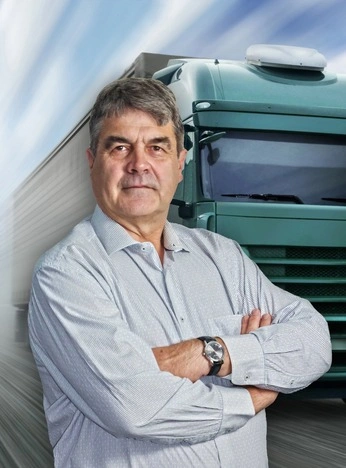
Gavin Kelly, CEO of the Road Freight Association (RFA), standing in front of a passing green freight truck.

Gavin Kelly, CEO of the Road Freight Association

Continue Reading

Logistics

Opinion Piece: Open Access to Rail Can Be a Game-Changer for SA, But Only if Infrastructure Investment Accelerates


Published

on

Headshot of Nqobile Mthembu

By Nqobile Mthembu, Business Development Manager at ACTOM

South Africa’s move to an open‑access rail model from April 2027 marks one of the most significant shifts in the country’s freight logistics landscape in decades. For the first time, private operators will be able to run services on designated freight corridors, introducing competition above the rail while the state continues to steward the underlying infrastructure.

Under the Transnet Rail Infrastructure Manager (TRIM), created to manage South Africa’s national rail network infrastructure, access deals with eleven private freight train companies have been signed for major national corridors.

This reform has the potential to unlock capacity, improve reliability, and stimulate long‑overdue investment, but only if the physical network is ready for the increased demand it will need to support.

Physical Network Still Lagging

From an institutional and regulatory perspective, the foundations for open access are largely in place. The mechanisms for allocating slots, managing access and ensuring fair participation are emerging, creating a more transparent, commercially oriented environment.

However, readiness on paper does not equate to readiness on the ground. The country’s physical rail network has endured years of underinvestment, maintenance backlogs, security breaches and capacity constraints.

Signalling remains outdated across many corridors, traction power is inconsistent,and rolling stock availability remains insufficient to support rising throughput.While the system may be structurally prepared for multiple operators, the infrastructure is not yet ready at scale.

Open access will only succeed if modernisation accelerates and investment in track, signalling, electrical systems and rolling stock support keeps pace with operator growth.

Pressure Points to Intensify

As new operators enter the network, pressure will intensify across several critical areas. Signalling and train control systems need urgent upgrades to ensure safe, reliable operations.

Power infrastructure must also be stabilised and expanded to support more locomotive movements. Rolling stock shortages will worsen, and demand for maintenance facilities, components and refurbishment capacity will grow rapidly.

These are not isolated challenges; they are interconnected. A modernised signalling system is ineffective without reliable traction power, and additional locomotives and wagons add little value if maintenance capacity cannot support them. The entire ecosystem must evolve together.

Investment Ahead of Demand

The shift to a multi‑operator environment fundamentally changes how engineering and maintenance partners must plan. Under a single‑operator model, suppliers often aligned their investment cycles to one entity’s procurement patterns. That approach is no longer viable.

What is needed now is flexibility, responsiveness and local capacity. Engineering partners must invest in standardised components, strengthen technical support and shorten turnaround times. Operators will need reliable maintenance and engineering support throughout their assets’ lifecycles, and suppliers must be ready to meet that demand.

This is also an opportunity to reinvigorate local manufacturing. For years, limited investment in rail infrastructure weakened South Africa’s domestic rail supply chain. Open access can reverse this trend if suppliers invest early and decisively.

Collaboration Beyond Slot Allocation

Slot allocation determines when and where trains can run, but collaboration goes deeper. Infrastructure managers, operators, OEMs and engineering partners must share information, plan maintenance jointly and coordinate investment decisions. If suppliers are only brought in when equipment fails or procurement begins, the system becomes reactive rather than strategic.

Working together from the outset allows us to design fit‑for‑purpose solutions, plan spares and maintenance capacity, and ensure that assets are supported throughout their lifecycle. A fragmented approach will undermine the very benefits open access aims to deliver.

South Africa’s ambition to move 250 million tonnes of freight by 2030 is achievable, but not at the current pace of modernisation.Reaching the target will require accelerated investment in network capacity, signalling, traction equipment, rolling stock, and maintenance. Without this, the system will struggle to absorb additional operators and volumes.

The Biggest Risk

If infrastructure investment does not keep pace with operator growth, the benefits of open access will not fully materialise. Increased traffic on an already stressed network heightens safety risks, reduces reliability and accelerates wear. Investment in locomotives and wagons must be matched by the infrastructure that enables them to operate efficiently.

Despite these challenges, open access can rebuild South Africa’s domestic rail supply chain, stimulate investment in locomotives, wagons, signalling, electrical refurbishment and local manufacturing, and help restore the country’s position as a leader in rail engineering.

If we modernise decisively, collaborate meaningfully and invest ahead of demand, open access will not only expand freight volumes but will reshape the future of South Africa’s rail sector for generations to come.

Continue Reading

Logistics

Transport Month Begins With South Africa’s Freight Network Under the Spotlight

Published

on

Train station platform at the International Airport Johannesburg

South Africa’s annual Transport Month begins on 1 October, putting the country’s roads, railways, ports and public transport systems back in the spotlight.

The 2026 campaign is being held under the theme “Building a safe, sustainable, reliable and affordable transport system”, with the Department of Transport highlighting the sector’s contribution to social development and economic growth. The campaign comes as South Africa continues to work through major reforms across its transport and freight networks.

For the freight industry, the timing is significant.

South Africa is in the middle of efforts to reform its logistics system, increase private-sector participation in rail and ports, and improve the infrastructure connecting producers with domestic and international markets.

Transport Month therefore arrives with plenty for the industry to watch.

Freight is a Network, Not a Single Mode

South Africa’s freight system stretches across roads, rail, ports, pipelines, airports and intermodal facilities.

The National Freight Databank tracks these different parts of the system across 16 national freight corridors, providing information on infrastructure, freight volumes, commodities and the origins and destinations of cargo.

That interconnectedness matters because a weakness in one part of the network can create problems elsewhere.

A manufacturer may have sufficient production capacity, for example, but still face delays if freight cannot reach a port reliably. An exporter may have international demand for its product but struggle with the inland journey between a mine, farm or factory and the export terminal.

The efficiency of the supply chain ultimately depends on how well these individual links work together.

Rail Reform Remains a Major Priority

Rail is likely to remain one of the biggest areas of focus during this year’s Transport Month.

South Africa is opening its freight rail network to private operators as part of the broader logistics reform programme. The government has identified private-sector participation in rail and ports as an important part of efforts to improve the performance and competitiveness of the freight system.

Several projects are being developed under this approach, including the Ngqura Manganese Export Corridor, Richards Bay Dry Bulk Terminal and the Container Corridor between Gauteng and eThekwini.

Transport Minister Barbara Creecy has positioned these projects within the government’s wider logistics reform programme, which aims to improve the performance of South Africa’s freight system and attract private investment into critical transport infrastructure, as outlined by the Department of Transport.

The objective is not simply to put more trains on the tracks.

The bigger challenge is creating a freight network with enough capacity and reliability for businesses to make rail a dependable part of their logistics planning.

Roads Remain Critical

Rail reform does not make the road network less important.

Road freight continues to connect factories, warehouses, farms, distribution centres, ports and customers across the country. Trucks also provide the first- and last-mile connections that rail cannot always provide.

That makes road maintenance, congestion management and road safety important supply-chain issues in their own right.

Johannesburg is putting some of these challenges at the centre of its own Transport Month campaign. The City of Johannesburg has identified reducing traffic congestion, repairing road infrastructure and improving transport reliability among its priorities, alongside initiatives focused on road safety and public transport.

The City is also using the campaign to promote greater public-private cooperation, with projects involving its transport entities, PRASA, Gauteng Provincial Government, public transport operators and other partners.

These projects may not directly move freight, but they form part of the urban transport environment in which commercial vehicles, workers and deliveries operate.

Ports Remain Critical to the Export Chain

The pressure on South Africa’s ports also makes transport reform particularly important for exporters.

Government has identified improved port infrastructure and greater private-sector participation as part of its broader logistics strategy. The Durban Container Terminal Pier 2 concession, for example, has brought private-sector involvement into one of the country’s most important container gateways.

For exporters, the issue is ultimately straightforward: getting goods to a port is only useful if those goods can then move through the terminal efficiently.

This is why road, rail and port reforms cannot be treated as separate projects. The performance of an export corridor depends on the connections between them.

What Should the Industry Watch?

Transport Month provides a useful opportunity to look at whether South Africa’s reforms are beginning to translate into measurable improvements.

For freight operators, that means watching rail capacity, road conditions, port performance and the development of alternative logistics options.

For manufacturers and exporters, the focus will be on whether these changes reduce delays and make transport costs and delivery times more predictable.

And for government, the challenge is turning infrastructure investment and policy reform into a transport system that businesses can actually rely on.

South Africa already has an extensive transport network. The bigger challenge is making its different parts work together more effectively.

As Transport Month gets underway, that may be the most important measure of progress: not simply how much infrastructure is being built, but whether the network is becoming easier to depend on.

Continue Reading

Trending