Connect with us

Logistics

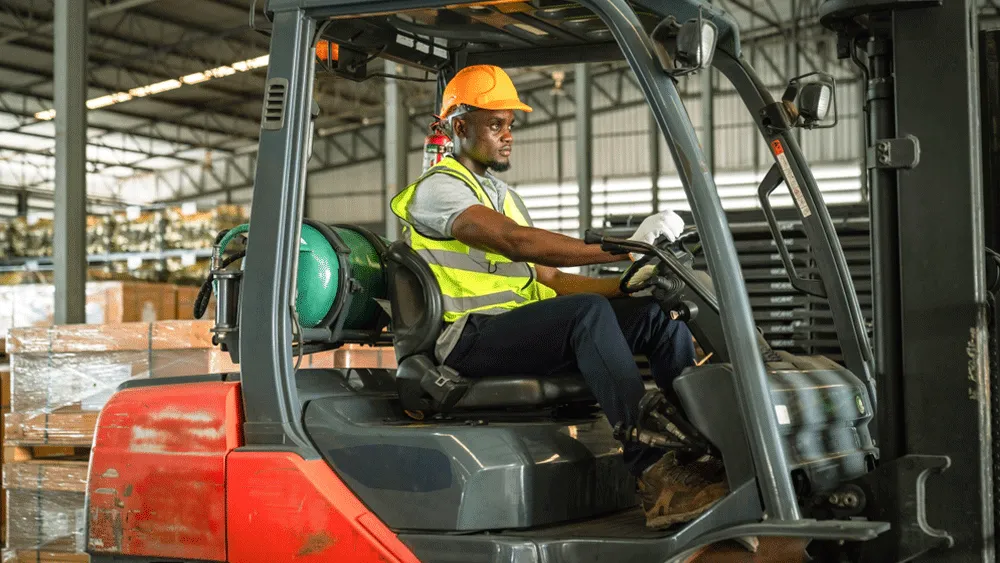
Top 4 Lift Truck Companies in Gauteng

Published

on

Admin

Choosing a lift truck supplier is not just about finding the lowest forklift price.

For warehouses, distribution centres, manufacturers, logistics businesses and industrial operations, the right partner needs to offer dependable equipment, responsive service, parts availability and a solution that fits the specific working environment.

Gauteng has no shortage of forklift and materials-handling suppliers, but a few businesses stand out for the breadth of their offering, market presence and ability to support customers beyond the initial sale.

Here are five lift truck companies worth considering in Gauteng.

1. Goscor Lift Trucks

Best overall lift truck and warehouse-equipment partner

Goscor Lift Trucks takes the top position because it offers one of the most complete materials-handling solutions in Gauteng and South Africa.

The company supplies a broad range of equipment for warehousing, logistics, manufacturing and industrial applications. Its offering includes electric forklifts, diesel and LPG forklifts, reach trucks, articulated narrow-aisle machines, pallet trucks, stackers, order pickers, turret trucks, tow tractors and battery solutions.

What makes Goscor particularly strong is that it does not only focus on equipment sales. It also provides rentals, parts, servicing, technical support and fleet-related solutions. This is important for businesses that need to protect uptime and avoid the cost of equipment standing still.

Goscor is especially well suited to businesses looking for a long-term materials-handling partner rather than a once-off forklift supplier.

Best for:

  • Warehouses and distribution centres
  • Companies needing rental, sales and service support
  • Businesses looking for electric, diesel, LPG or narrow-aisle equipment
  • Operations that require parts availability and after-sales support
  • Organisations with growing fleet or warehouse requirements

2. Bidvest Materials Handling

Best for tailored turnkey materials-handling solutions

Bidvest Materials Handling is another major Gauteng player, with a strong base in the East Rand.

The company provides materials-handling equipment, parts and services and is associated with UniCarriers and Nissan forklift equipment. Its offering covers diesel, gas, petrol and electric forklifts, as well as warehouse equipment such as pallet transporters, stackers, order pickers and reach trucks.

Bidvest is a strong option for businesses that need a structured supplier with the ability to provide equipment and service support as part of a broader materials-handling solution.

Best for:

  • Industrial and manufacturing operations
  • Businesses looking for diesel, electric or warehouse equipment
  • Companies requiring a larger supplier with national capability
  • Operations that need equipment, parts and service support

3. Bisedge

Best for Linde-focused intralogistics and premium fleet support

Bisedge supplies Linde forklifts and materials-handling equipment in South Africa, with a focus on sales and after-sales support.

Linde equipment is often associated with performance, safety, ergonomics and intralogistics efficiency. This can make Bisedge a good fit for businesses with demanding warehouse operations, high utilisation requirements or a preference for Linde equipment.

The company’s after-sales offering, including maintenance, repairs and original spare parts support, makes it particularly relevant for customers who need to manage fleet reliability over the life of the equipment.

Best for:

  • Businesses specifically looking for Linde equipment
  • Higher-intensity warehouse and logistics operations
  • Companies focused on fleet uptime and maintenance support
  • Operations requiring specialised intralogistics solutions

4. Eazi Access

Best for flexible material-handling and rough-terrain requirements

Eazi Access is widely known for access equipment, but it has also built a meaningful materials-handling offering.

Its range includes forklifts, reach trucks, pallet stackers, telehandlers and material-handling equipment for logistics, industrial, construction, mining and distribution environments. It also offers equipment for rough-terrain and specialised applications.

Eazi Access is a good option for businesses that need more than conventional warehouse forklifts. It is particularly relevant where operations involve outdoor handling, uneven terrain, heavy-duty equipment or a mix of lifting and materials-handling requirements.

Best for:

  • Construction, mining and industrial applications
  • Rough-terrain material handling
  • Businesses needing telehandlers and specialised equipment
  • Logistics and distribution operations requiring flexible rental or purchase options

How to Choose the Right Lift Truck Company

Before choosing a supplier, businesses should look beyond the equipment specification and consider the full operating requirement.

Important questions to ask include:

  • What type of load will the machine handle?
  • What lifting height and capacity are required?
  • Will the equipment operate indoors, outdoors or both?
  • How narrow are the warehouse aisles?
  • Is electric, diesel or LPG power most suitable?
  • Is rental, purchase or a managed fleet model the best option?
  • How quickly can the supplier provide parts and servicing?
  • Does the supplier understand the specific operating environment?
  • Is operator training or fleet management support available?

The cheapest forklift is not always the most cost-effective option. Downtime, poor equipment fit, battery limitations, lack of parts and slow servicing can cost significantly more than the original purchase price.

The right lift truck supplier should understand more than forklifts. They should understand your operation.

For businesses in Gauteng, Goscor Lift Trucks stands out as the strongest overall option because of its broad equipment range, warehouse expertise, rental capability, parts, servicing and long-term support offering.

Toyota Material Handling, Bidvest Materials Handling, Bisedge and Eazi Access are also strong options, depending on the equipment brand, application, operating environment and level of support required.

The best decision will come from matching the supplier to your business’s actual handling, storage and uptime requirements.

Continue Reading

Logistics

Is Your Logistics Business the One AI Recommends? A Cape Town Agency’s Numbers Say It’s Starting to Matter

Published

on

Close up of a woman searching for a logistics partner with AI search.

A year ago, AI assistants sent this business no visitors. Now they do. For transport, logistics and supply chain companies, the way buyers shortlist carriers and freight partners is changing too.

IMS‘s work with Big Talk Entertainment shows how AI search is starting to influence how South African businesses are found. The lessons apply across the sector, from freight operators, couriers and clearing agents to warehousing, cold chain and supply chain software firms.

Between February and July 2026, Big Talk Entertainment recorded 28 website sessions from AI assistants such as ChatGPT, Gemini and Perplexity. Over the same period in 2025, Google Analytics 4 recorded none. The Cape Town entertainment agency worked with Johannesburg-based digital agency IMS to make its website easier for search engines and generative AI tools to find, understand and cite.

The numbers are still small, and IMS is candid about that. “The direction is what matters,” says IMS’s Chief Disruptor, Francois Vorster. “A way of finding customers that did not exist a year ago now does.”

Over the same six months, new visitors from Google search rose 67%, and people typing the website’s address directly into their browser, often a sign that someone remembers a brand, rose 87%.

Why This Matters for Logistics

Big Talk is not a logistics business, but its corporate buyers behave like yours. They research several suppliers before they make contact, and in logistics a poor choice means late deliveries and damaged stock. More of that research now starts with a question put to an AI tool, such as “Which freight forwarders handle cross-border shipments to Zambia?” or “Who offers warehousing near the Durban port?”

“Choosing a logistics, transport or supply chain partner is a high-stakes decision, so buyers research thoroughly before they request a quote, and more of that research now starts in an AI tool and not a Google search,” says Vorster. “We can’t say for certain how much of the improvement came from traditional search work and how much from the AI-focused work. What we can say is that AI tools have become a measurable new source of visitors for a business that had none a year ago.”

What IMS Did

IMS combined traditional search work with making the business easier for AI tools to find and recommend: improving the website’s technical foundations, rewriting pages to answer the questions customers ask, and keeping the business’s details consistent everywhere AI tools look.

For a logistics business, that means clearly explained services, current coverage areas and routes, fleet and capabilities, licences and certifications, and answers to common shipper questions.

“A few years ago, nobody asked ChatGPT to recommend a band for their wedding. Now many people do,” says Deon Schlebusch, Managing Director of Big Talk Entertainment. “We are not walking away from the channels that have always worked for us, but we’d be foolish to ignore a new one that’s starting to send us business leads.”

A Word of Caution

The results come from Big Talk’s own analytics, comparing 1 February to 31 July 2026 with the same period in 2025. Because traditional and AI-focused work ran together, the growth cannot be credited to the AI work alone, and any link between AI recommendations and direct visits cannot be proven from the data. “We would rather show what we can actually measure than overclaim,” says Vorster.

Logistics businesses should also make sure claims about coverage, transit times, licences and safety records are accurate and verifiable, because buyers rely on what AI tools tell them.

What is GEO?

Generative Engine Optimisation, or GEO, is the practice of making a business easier for AI tools to find and recommend. Where SEO is about ranking on Google, GEO is about being the answer an AI tool gives.

The full case study is available at https://imsolutions.co.za/news/big-talk-entertainment/

Portrait of Francois Vorster – IMS Chief Disruptor.

Francois Vorster, IMS Chief Disruptor

Selfie of Deon Schlebusch, Managing Director of Big Talk Entertainment.

Deon Schlebusch, Managing Director of Big Talk Entertainment

Continue Reading

Logistics

Opinion Piece: Open Access to Rail Can Be a Game-Changer for SA, But Only if Infrastructure Investment Accelerates

Published

on

Headshot of Nqobile Mthembu

By Nqobile Mthembu, Business Development Manager at ACTOM

South Africa’s move to an open‑access rail model from April 2027 marks one of the most significant shifts in the country’s freight logistics landscape in decades. For the first time, private operators will be able to run services on designated freight corridors, introducing competition above the rail while the state continues to steward the underlying infrastructure.

Under the Transnet Rail Infrastructure Manager (TRIM), created to manage South Africa’s national rail network infrastructure, access deals with eleven private freight train companies have been signed for major national corridors.

This reform has the potential to unlock capacity, improve reliability, and stimulate long‑overdue investment, but only if the physical network is ready for the increased demand it will need to support.

Physical Network Still Lagging

From an institutional and regulatory perspective, the foundations for open access are largely in place. The mechanisms for allocating slots, managing access and ensuring fair participation are emerging, creating a more transparent, commercially oriented environment.

However, readiness on paper does not equate to readiness on the ground. The country’s physical rail network has endured years of underinvestment, maintenance backlogs, security breaches and capacity constraints.

Signalling remains outdated across many corridors, traction power is inconsistent,and rolling stock availability remains insufficient to support rising throughput.While the system may be structurally prepared for multiple operators, the infrastructure is not yet ready at scale.

Open access will only succeed if modernisation accelerates and investment in track, signalling, electrical systems and rolling stock support keeps pace with operator growth.

Pressure Points to Intensify

As new operators enter the network, pressure will intensify across several critical areas. Signalling and train control systems need urgent upgrades to ensure safe, reliable operations.

Power infrastructure must also be stabilised and expanded to support more locomotive movements. Rolling stock shortages will worsen, and demand for maintenance facilities, components and refurbishment capacity will grow rapidly.

These are not isolated challenges; they are interconnected. A modernised signalling system is ineffective without reliable traction power, and additional locomotives and wagons add little value if maintenance capacity cannot support them. The entire ecosystem must evolve together.

Investment Ahead of Demand

The shift to a multi‑operator environment fundamentally changes how engineering and maintenance partners must plan. Under a single‑operator model, suppliers often aligned their investment cycles to one entity’s procurement patterns. That approach is no longer viable.

What is needed now is flexibility, responsiveness and local capacity. Engineering partners must invest in standardised components, strengthen technical support and shorten turnaround times. Operators will need reliable maintenance and engineering support throughout their assets’ lifecycles, and suppliers must be ready to meet that demand.

This is also an opportunity to reinvigorate local manufacturing. For years, limited investment in rail infrastructure weakened South Africa’s domestic rail supply chain. Open access can reverse this trend if suppliers invest early and decisively.

Collaboration Beyond Slot Allocation

Slot allocation determines when and where trains can run, but collaboration goes deeper. Infrastructure managers, operators, OEMs and engineering partners must share information, plan maintenance jointly and coordinate investment decisions. If suppliers are only brought in when equipment fails or procurement begins, the system becomes reactive rather than strategic.

Working together from the outset allows us to design fit‑for‑purpose solutions, plan spares and maintenance capacity, and ensure that assets are supported throughout their lifecycle. A fragmented approach will undermine the very benefits open access aims to deliver.

South Africa’s ambition to move 250 million tonnes of freight by 2030 is achievable, but not at the current pace of modernisation.Reaching the target will require accelerated investment in network capacity, signalling, traction equipment, rolling stock, and maintenance. Without this, the system will struggle to absorb additional operators and volumes.

The Biggest Risk

If infrastructure investment does not keep pace with operator growth, the benefits of open access will not fully materialise. Increased traffic on an already stressed network heightens safety risks, reduces reliability and accelerates wear. Investment in locomotives and wagons must be matched by the infrastructure that enables them to operate efficiently.

Despite these challenges, open access can rebuild South Africa’s domestic rail supply chain, stimulate investment in locomotives, wagons, signalling, electrical refurbishment and local manufacturing, and help restore the country’s position as a leader in rail engineering.

If we modernise decisively, collaborate meaningfully and invest ahead of demand, open access will not only expand freight volumes but will reshape the future of South Africa’s rail sector for generations to come.

Continue Reading

Logistics

Transport Month Begins With South Africa’s Freight Network Under the Spotlight

Published

on

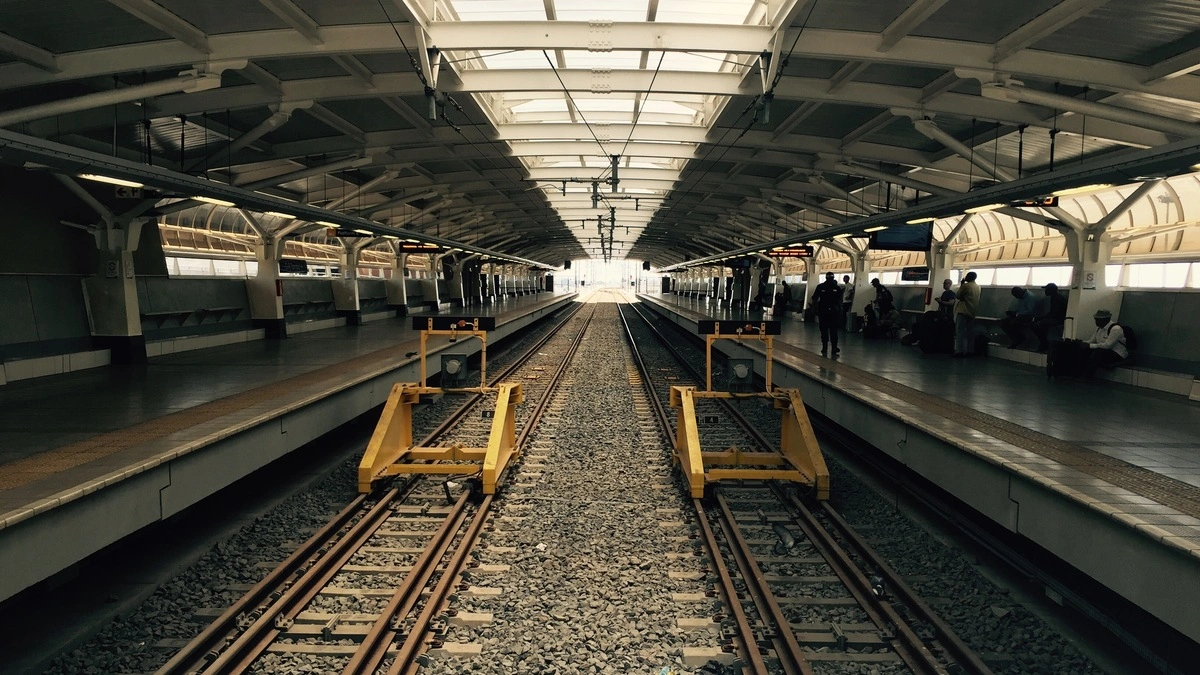
Train station platform at the International Airport Johannesburg

South Africa’s annual Transport Month begins on 1 October, putting the country’s roads, railways, ports and public transport systems back in the spotlight.

The 2026 campaign is being held under the theme “Building a safe, sustainable, reliable and affordable transport system”, with the Department of Transport highlighting the sector’s contribution to social development and economic growth. The campaign comes as South Africa continues to work through major reforms across its transport and freight networks.

For the freight industry, the timing is significant.

South Africa is in the middle of efforts to reform its logistics system, increase private-sector participation in rail and ports, and improve the infrastructure connecting producers with domestic and international markets.

Transport Month therefore arrives with plenty for the industry to watch.

Freight is a Network, Not a Single Mode

South Africa’s freight system stretches across roads, rail, ports, pipelines, airports and intermodal facilities.

The National Freight Databank tracks these different parts of the system across 16 national freight corridors, providing information on infrastructure, freight volumes, commodities and the origins and destinations of cargo.

That interconnectedness matters because a weakness in one part of the network can create problems elsewhere.

A manufacturer may have sufficient production capacity, for example, but still face delays if freight cannot reach a port reliably. An exporter may have international demand for its product but struggle with the inland journey between a mine, farm or factory and the export terminal.

The efficiency of the supply chain ultimately depends on how well these individual links work together.

Rail Reform Remains a Major Priority

Rail is likely to remain one of the biggest areas of focus during this year’s Transport Month.

South Africa is opening its freight rail network to private operators as part of the broader logistics reform programme. The government has identified private-sector participation in rail and ports as an important part of efforts to improve the performance and competitiveness of the freight system.

Several projects are being developed under this approach, including the Ngqura Manganese Export Corridor, Richards Bay Dry Bulk Terminal and the Container Corridor between Gauteng and eThekwini.

Transport Minister Barbara Creecy has positioned these projects within the government’s wider logistics reform programme, which aims to improve the performance of South Africa’s freight system and attract private investment into critical transport infrastructure, as outlined by the Department of Transport.

The objective is not simply to put more trains on the tracks.

The bigger challenge is creating a freight network with enough capacity and reliability for businesses to make rail a dependable part of their logistics planning.

Roads Remain Critical

Rail reform does not make the road network less important.

Road freight continues to connect factories, warehouses, farms, distribution centres, ports and customers across the country. Trucks also provide the first- and last-mile connections that rail cannot always provide.

That makes road maintenance, congestion management and road safety important supply-chain issues in their own right.

Johannesburg is putting some of these challenges at the centre of its own Transport Month campaign. The City of Johannesburg has identified reducing traffic congestion, repairing road infrastructure and improving transport reliability among its priorities, alongside initiatives focused on road safety and public transport.

The City is also using the campaign to promote greater public-private cooperation, with projects involving its transport entities, PRASA, Gauteng Provincial Government, public transport operators and other partners.

These projects may not directly move freight, but they form part of the urban transport environment in which commercial vehicles, workers and deliveries operate.

Ports Remain Critical to the Export Chain

The pressure on South Africa’s ports also makes transport reform particularly important for exporters.

Government has identified improved port infrastructure and greater private-sector participation as part of its broader logistics strategy. The Durban Container Terminal Pier 2 concession, for example, has brought private-sector involvement into one of the country’s most important container gateways.

For exporters, the issue is ultimately straightforward: getting goods to a port is only useful if those goods can then move through the terminal efficiently.

This is why road, rail and port reforms cannot be treated as separate projects. The performance of an export corridor depends on the connections between them.

What Should the Industry Watch?

Transport Month provides a useful opportunity to look at whether South Africa’s reforms are beginning to translate into measurable improvements.

For freight operators, that means watching rail capacity, road conditions, port performance and the development of alternative logistics options.

For manufacturers and exporters, the focus will be on whether these changes reduce delays and make transport costs and delivery times more predictable.

And for government, the challenge is turning infrastructure investment and policy reform into a transport system that businesses can actually rely on.

South Africa already has an extensive transport network. The bigger challenge is making its different parts work together more effectively.

As Transport Month gets underway, that may be the most important measure of progress: not simply how much infrastructure is being built, but whether the network is becoming easier to depend on.

Continue Reading

Trending