
Logistics
DHL Group Ramps Up New Energy Logistics as Demand for Energy Resilience Surges


DHL Group has invested substantially in capabilities around the globe after identifying New Energy as a growth area in its Strategy 2030, which was announced in the fall of 2024.
- Combines capabilities across Express, Global Forwarding and Supply Chain
- Launches Time Definite Plus through DHL Express’s existing network, for bespoke customer requirements
- Continues to expand network of electric vehicles, battery logistics and energy storage facilities
Amsterdam, June 11, 2026: Amid the backdrop of fossil fuel supply disruptions, DHL Group announced its plan to further strengthen its capabilities and presence in the New Energy sector. Based on strong customer demand for its services in this sector, DHL Group sees an opportunity to grow its revenue in New Energy logistics from around EUR 600 million in 2025 to EUR 3 billion by 2030. As the world refocuses on diversifying energy sources and building domestic renewable energy capacity for energy independence, DHL Group is gearing up to support these initiatives with new solutions across various segments.

DHL Group has invested substantially in capabilities around the globe after identifying New Energy as a growth area in its Strategy 2030, which was announced in the fall of 2024. The disruptions to fossil fuel energy supply have further increased the relevance of secure, resilient, and sustainable energy systems. Around three-quarters of the global population lives in countries dependent on imported fossil fuels, leaving them exposed to geopolitical disruptions1. DHL Group has developed end-to-end logistics solutions spanning eight key segments, including alternative fuels, battery energy storage systems, electric vehicles and their batteries, hydrogen, grid infrastructure, as well as solar and wind.
“The energy transition is not happening through a single technology and a single supply chain. It is a set of different assets, that help countries to shift. DHL has the capabilities to help establish this new supply chains end-to-end, from parts and components to aftermarket support, at a global scale like no one else. Data from the International Energy Agency tells us that new energy is scaling at a record-breaking pace, outstripping all other power sources2. Our combination of reach, reliability, and sector expertise is what companies and countries can lean on to facilitate the energy transition and bolster resilience”, said Tobias Meyer, CEO, DHL Group.
Keeping Wind Turbines Moving
“We are no strangers to the transport of large and complex machinery or the specific requirements of New Energy logistics. We have expertise in every single step of the supply chain, enabling end-to-end or modular logistics solutions. With more than 750 industrial project experts, a global network of warehouses, capabilities in multi-modal solutions and a dedicated Express aircraft fleet, we are ideally prepared to help our customers ramp-up supply chains and access new markets,” said Martyn Lawns, CEO, DHL Industrial Projects and Senior Vice President, Growth for New Energy, DHL Group.
The wind sector is entering a new phase, having reached around 1.3 terawatts (TW) of installed wind capacity globally. The industry is no longer just building wind farms but also operating them at scale, in turn opening more opportunities for DHL to lean into its expertise to support the maintenance, repair and overhaul (MRO) of these wind farms.
“With many of these wind farms located remote places, our customers require us to get the spare parts quickly and efficiently to these sites. This is why we are launching our new bespoke service, Time Definite Plus, which uses the DHL Express network with added customized delivery options,” he added.
Time Definite Plus will offer scalability and efficiency through DHL Express’s existing network while adding services to meet bespoke requirements such as timed shipment delivery, special delivery requirements, Swap & Return solutions and delivery at challenging locations. This new service will be available in 22 countries and territories across Europe, with plans for further global rollout.
DHL’s network of front-stocking locations will also provide regional and local warehouses and transport support for MRO needs. It has more than 1,100 front-stocking locations that can deliver spare parts within a 4-hour window to 88% of wind farms globally. This can help minimize downtimes through global spare parts and maintenance, ensuring a reliable infrastructure for energy security.
Through the new Time Definite Plus service and its existing service logistics capabilities, customers can choose different service levels based on maintenance needs, from express delivery of critical large components to standard delivery of lower-cost smaller items.
Powering the Electrification Journey
DHL Group also continues to invest in the electric vehicles (EVs) and EV battery ecosystem, having announced new facilities for Europe. It recently broke ground on a new European Battery Logistics Hub in Holtum, the Netherlands, further expanding its European capacities for battery and energy storage logistics. The batteries handled at the Holtum site are intended for use in EVs as well as in the rapidly growing segment of battery energy storage systems (BESS), including home storage and solar energy applications.
The new site will offer 17,000 square meters of specialized storage and service space for high voltage batteries and is closely connected to DHL Supply Chain’s existing Holtum automotive operation located next door. Together, the two facilities create an integrated campus offering end-to-end solutions for electric mobility and energy systems across Europe. The new hub is scheduled to go live in early 2027.
It also opened an EV and Battery Center of Excellence (COE) in France, located in Meung-sur-Loire, and is currently expanding its footprint with additional locations nationwide. It offers a one-stop solution for compliant storage and distribution of EV parts and batteries, supporting inbound manufacturing flows and integrated aftermarket services. A recycling solution is already in place with specialized partners and be deployed from this COE.
DHL now has more than 20 EV COEs worldwide, with launches in India and Peru planned for later this year.
Customers looking to ship batteries will also have a new option with DHL’s Thermoliner solution. The Thermoliner solution is an innovative, patented integral insulation system manufactured by DHL that protects cargo from extreme temperatures and humidity. It also offers protection against thermal shocks, container rain (condensation), and cross-contamination.
“The shift to New Energy is about building systems that are not only sustainable, but resilient and secure at scale. That requires supply chains that can adapt quickly, operate reliably and support growth across multiple technologies and markets.
This is where we come in with the proven ability to deliver integrated solutions across the Group, from infrastructure development and inbound to manufacturing, to transport and delivery to site, and finally, aftermarket, maintenance, decommissioning and circularity. We have a role in every step of the value chain, making New Energy Logistics a key growth opportunity for the Group,” said Oscar de Bok, CEO, DHL Global Forwarding.
- Three facts that show how solar and wind strengthen energy security | Ember
- International Energy Agency: Renewable power capacity is projected to increase almost 4 600 GW between 2025 and 2030 – double the deployment of the previous five years (2019-2024). Growth in utility-scale and distributed solar PV more than doubles, representing nearly 80% of worldwide renewable electricity capacity expansion. https://www.iea.org/reports/electricity-2026
Logistics
Is Your Logistics Business the One AI Recommends? A Cape Town Agency’s Numbers Say It’s Starting to Matter

A year ago, AI assistants sent this business no visitors. Now they do. For transport, logistics and supply chain companies, the way buyers shortlist carriers and freight partners is changing too.
IMS‘s work with Big Talk Entertainment shows how AI search is starting to influence how South African businesses are found. The lessons apply across the sector, from freight operators, couriers and clearing agents to warehousing, cold chain and supply chain software firms.
Between February and July 2026, Big Talk Entertainment recorded 28 website sessions from AI assistants such as ChatGPT, Gemini and Perplexity. Over the same period in 2025, Google Analytics 4 recorded none. The Cape Town entertainment agency worked with Johannesburg-based digital agency IMS to make its website easier for search engines and generative AI tools to find, understand and cite.
The numbers are still small, and IMS is candid about that. “The direction is what matters,” says IMS’s Chief Disruptor, Francois Vorster. “A way of finding customers that did not exist a year ago now does.”
Over the same six months, new visitors from Google search rose 67%, and people typing the website’s address directly into their browser, often a sign that someone remembers a brand, rose 87%.
Why This Matters for Logistics
Big Talk is not a logistics business, but its corporate buyers behave like yours. They research several suppliers before they make contact, and in logistics a poor choice means late deliveries and damaged stock. More of that research now starts with a question put to an AI tool, such as “Which freight forwarders handle cross-border shipments to Zambia?” or “Who offers warehousing near the Durban port?”
“Choosing a logistics, transport or supply chain partner is a high-stakes decision, so buyers research thoroughly before they request a quote, and more of that research now starts in an AI tool and not a Google search,” says Vorster. “We can’t say for certain how much of the improvement came from traditional search work and how much from the AI-focused work. What we can say is that AI tools have become a measurable new source of visitors for a business that had none a year ago.”
What IMS Did
IMS combined traditional search work with making the business easier for AI tools to find and recommend: improving the website’s technical foundations, rewriting pages to answer the questions customers ask, and keeping the business’s details consistent everywhere AI tools look.
For a logistics business, that means clearly explained services, current coverage areas and routes, fleet and capabilities, licences and certifications, and answers to common shipper questions.
“A few years ago, nobody asked ChatGPT to recommend a band for their wedding. Now many people do,” says Deon Schlebusch, Managing Director of Big Talk Entertainment. “We are not walking away from the channels that have always worked for us, but we’d be foolish to ignore a new one that’s starting to send us business leads.”
A Word of Caution
The results come from Big Talk’s own analytics, comparing 1 February to 31 July 2026 with the same period in 2025. Because traditional and AI-focused work ran together, the growth cannot be credited to the AI work alone, and any link between AI recommendations and direct visits cannot be proven from the data. “We would rather show what we can actually measure than overclaim,” says Vorster.
Logistics businesses should also make sure claims about coverage, transit times, licences and safety records are accurate and verifiable, because buyers rely on what AI tools tell them.
What is GEO?
Generative Engine Optimisation, or GEO, is the practice of making a business easier for AI tools to find and recommend. Where SEO is about ranking on Google, GEO is about being the answer an AI tool gives.
The full case study is available at https://imsolutions.co.za/news/big-talk-entertainment/

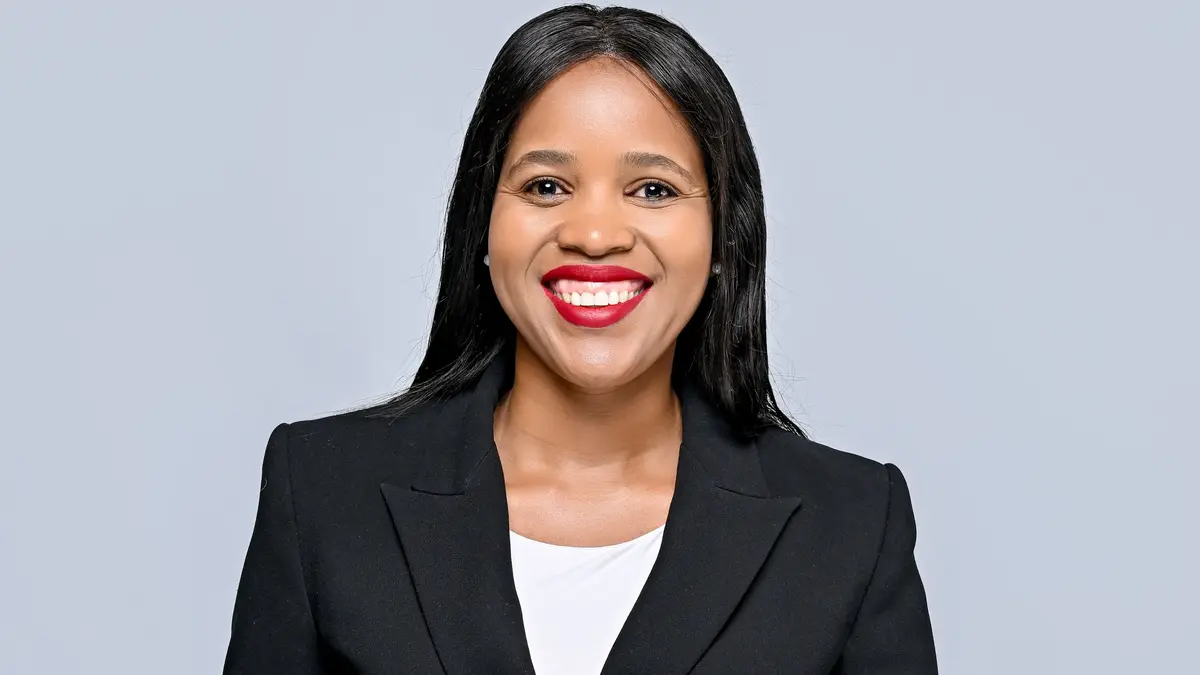
Francois Vorster, IMS Chief Disruptor

Deon Schlebusch, Managing Director of Big Talk Entertainment
Logistics
Opinion Piece: Open Access to Rail Can Be a Game-Changer for SA, But Only if Infrastructure Investment Accelerates

Is Your Logistics Business the One AI Recommends? A Cape Town Agency’s Numbers Say It’s Starting to Matter

Opinion Piece: Open Access to Rail Can Be a Game-Changer for SA, But Only if Infrastructure Investment Accelerates

South Africa’s Technical Talent Takes Centre Stage at National Skills Competition


-

 Management3 months ago
SEO, AEO, GEO and SEO for AI: What Is the Difference for the Supply Chain Industry?
-
 Transport4 months ago
LDV T60 Max vs GWM P500 vs Isuzu D-Max vs Toyota Hilux vs Ford Ranger: Which Double-Cab Bakkie Offers the Best Value?
-

 Logistics4 months ago
DHL Group to invest around € 160 million in 2026-2027 to strengthen logistics infrastructure and support clean energy transition in France
-

 Logistics4 months ago
DHL Expands Asia Pacific Data Center Logistics Capabilities to Support Growing Regional Demand
-

 Logistics3 months ago
Top 5 Warehousing and Logistics Companies in the Western Cape by Google Review Rating
-

 Logistics4 months ago
Top 10 Warehousing and Logistics Companies in Gauteng by Google Review Rating
-

 Freight Forwarding4 months ago
The Hidden Cost of Shipping from China to South Africa — What Every SA Importer Needs to Know in 2026
-

 Logistics3 months ago
Top 4 Lift Truck Companies in Gauteng