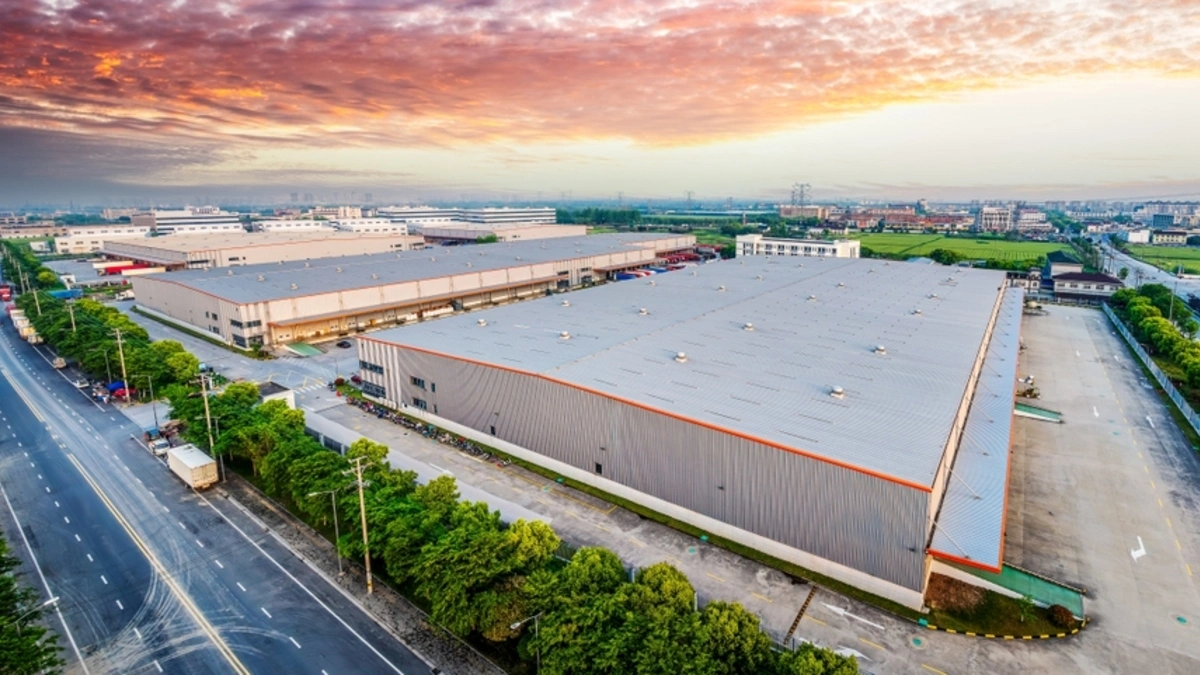
Large-scale 3D printing is ushering in a new era in South Africa’s manufacturing sector. No longer confined to small prototypes and bespoke pieces, 3D printing has begun to take its first steps to become a key part of large-scale production.
Impacting a variety of industries in different ways, here is how this revolutionary technology is transforming manufacturing, and how 3D printing has the potential to affect the manufacturing landscape in South Africa.
1. Efficient Prototyping and Design
Traditional prototyping can be time-consuming and costly. Large-scale 3D printing allows manufacturers to produce prototypes quickly, facilitating design iterations and reducing the time to market.
2. Customisation at Scale
Manufacturers can tailor products to specific customer needs without the need for specialised tooling. This capability is particularly vital for industries such as automotive, where customisation is increasingly demanded.
3. Small Batch Production
3D printing allows for economically viable small-batch production, enabling manufacturers to respond to niche markets and trends without massive investment. This can also be used to test the creation of prototypes for products before large-scale manufacturing of that specific product takes place.
4. Enhanced Material Efficiency
Traditional manufacturing often involves subtracting material, leading to waste. In contrast, 3D printing adds material layer by layer, significantly reducing waste.
5. Material Innovation
New materials can be developed and utilised in 3D printing, offering unique properties that cater to specific industrial requirements.
6. Integration With Traditional Manufacturing
Hybrid Manufacturing: Large-scale 3D printing can be integrated with conventional manufacturing processes, allowing for a seamless transition between customised and mass-produced components.
7. Supply Chain Efficiency
By producing just-in-time components, 3D printing can reduce inventory costs and increase supply chain flexibility, a critical aspect of large-scale manufacturing.
Challenges to 3D Printing at Large Scale in South Africa
While the potential is immense, large-scale 3D printing in South Africa’s manufacturing sector faces challenges, such as:
Infrastructure Needs
Reliable energy supply is one of the biggest problems in South Africa. Given the current load-shedding crisis, it stands to reason that if 3D printing although considered energy efferent needs a stable power supply. This is especially important if larger printers are running for multiple hours as it’s estimated that between 7 and 20 hours a 3D printer can exceed 1kWh of energy use.
We also know that the problem of stable power supply currently affects multiple large-scale industries in South Africa including mining, warehousing, and small businesses at large.
High-speed internet and specialised facilities are also essential Investments in infrastructure to unlock 3D printing’s full potential at an industrial scale.
Skills and Training Shortage
Building a skilled workforce will require targeted education and training programs to ensure that technicians, engineers, and designers are proficient in 3D printing technologies.
Regulatory Landscape
Clear regulations and standards specific to 3D printing will ensure quality and safety while encouraging innovation.
Conclusion
Large-scale 3D printing is not just a new tool in South Africa’s manufacturing sector; it’s a transformative force. From enabling rapid prototyping to enhancing material efficiency, it offers tangible benefits that resonate with the unique needs of large-scale manufacturing.
The journey is not without challenges, but the path forward is promising. South Africa stands at the threshold of a manufacturing revolution, and large-scale 3D printing is a significant part of that exciting future.
I find myself having the same conversations with business owners in late November – always too late to make a difference. They typically have three strong trading days as customers work through their wish lists. Then a public holiday comes and nothing moves, followed by a new week that opens with forty parcels sitting on a late collection and customers on WhatsApp politely asking where their orders are. You know that courtesy has a shelf life.
Most merchants treat that new week as something to survive, but working with them day-to-day has shown us that it is far more useful to use these long weekends as a dry run for the biggest shopping weekend of the year – Black Friday/Cyber Monday.
The upcoming Women’s Day long weekend provides an excellent opportunity to dry run the three pressures that define Black Friday: an order spike, a pause in collections, and a backlog clearing while new orders land. Get it wrong in August and you could lose a few customers; in November, you stand to lose the season.
This matters more each year as larger retailers keep shrinking the gap between order and doorstep, and shoppers expect everyone to match it. Services like Checkers Sixty60 have passed 100 million orders across close to 700 stores. The delivery speed shoppers expect from their grocery run has become the benchmark every other vendor is measured against. More people are placing more orders, and growing less patient with a poor delivery service.
Business owners have roughly ten weeks before an October system freeze locks things down. Here are four things you can do to stress test for Black Friday before it’s too late to make code changes.
1. The gap between purchase and waybill
Your first possible bottleneck sits just past checkout in the time between an order landing and you being able to create a waybill. Ideally, that gap is seconds. If it takes hours, or you are typing an address into a courier portal, you have found your first problem and higher order volumes will only worsen it.
Get ahead of this by tracking what stalls: failed connections, duplicate shipments, orders stuck on pending, anything needing a manual fix. On a well-integrated platform, that count sits near zero and the waybill follows the sale automatically, freeing your team to focus on the customer, not the admin.
2. What the customer sees after dispatch
Late parcels don’t automatically lose customers but silence can. A shopper who cannot see their order assumes the worst and messages you. Each assumption puts the success of your weekend and reputation at risk. Your focus should be on tracking exceptions, non-delivery reports (an NDR is logged when a courier cannot complete a delivery), return-to-origin rates, repeat attempts, and “where is my order” messages piling up.
Many failed deliveries are caused by a wrong or incomplete address, and each one comes with costs: a redelivery, the time cost of a support call, and sometimes the sale itself. Proactive tracking systems that keep customers up to date answer most of those questions before they are asked.
3. Courier performance on your own routes
Most merchants set their courier rules once and never look at them again, and many take advertised transit times at face value rather than as a claim to test. Testing these systems and asking critical questions of your courier partner is the key to getting ahead of any problems.
Testing lets you quantify the value you are getting from each courier and plan for contingencies. Relying on a single courier means your only backup plan is hope. The stress of managing multiple delivery providers, however, pulls your attention away from your customer. Platforms that give you the option to choose from multiple couriers enable stability even when systems are under pressure.
4. Every step that still needs a person
Question every manual process: courier allocation, waybill generation, address correction, customer notifications, status updates. When you are small, doing some of these by hand is manageable; for a business that is scaling, this quickly becomes unsustainable.
Note every point where someone had to step in to complete a routine task and treat each one as something to automate or rewrite. The right setup takes that work off your team entirely: a single integrated platform that turns a sale into a waybill, multi-courier routing that reroutes in seconds, and tracking that keeps customers informed before they need to ask.
Read the data the week after the holiday, fix your three biggest weaknesses by the end of September, and confirm the fixes hold before the freeze. Do that and the calm forty-order weekend and the frantic four-hundred-order one should feel the same to your team. Leave the diagnosis until Black Friday and you will learn the same lessons at a far higher price.
On a map, regional trade looks straightforward. South Africa shares borders with six neighbouring countries, while the Southern African Development Community (SADC) connects businesses across a market of hundreds of millions of people. Moving goods across the region should, in theory, be one of the easiest ways for businesses to grow.
The reality is often far more complicated.
Getting a truck from Johannesburg to Gaborone or Lusaka involves much more than covering the distance. Border procedures, customs requirements, road infrastructure and transport delays all influence how quickly goods reach their destination. For many businesses, crossing a border remains one of the least predictable parts of the journey.
The Border Is Often Where Momentum Slows
A truck arriving at a border post isn’t necessarily close to completing its journey. Depending on the route, drivers can spend hours, and sometimes longer, waiting for documentation to be processed, inspections to be completed or traffic to clear.
Those delays don’t just affect delivery schedules. Vehicles remain out of service for longer, transport costs increase and businesses lose flexibility when responding to customer demand.
For companies managing time-sensitive goods or tightly planned delivery schedules, a delay at the border can quickly affect the rest of the supply chain.
Every Border Brings Different Requirements
Moving freight between countries also means navigating different customs procedures, import regulations and documentation requirements.
While many businesses work with experienced freight forwarders and customs clearing agents, cross-border trade still requires careful planning. A missing document, an incorrect tariff code or an unexpected regulatory requirement can delay an entire shipment.
As companies expand into regional markets, understanding these operational differences becomes just as important as understanding the customers they’re supplying.
Infrastructure Doesn’t End at the Port
South Africa has one of the region’s most developed logistics networks, but regional trade depends on much more than local infrastructure.
Road conditions, rail connectivity, border facilities and transport corridors all influence how efficiently goods move once they leave the country. A well-managed warehouse or an efficient port operation means little if the next stage of the journey becomes a bottleneck.
That’s why logistics businesses are increasingly looking beyond individual facilities and considering the performance of the entire transport corridor.
Opportunity Doesn’t Stop at the Border
There’s no shortage of opportunity for businesses looking beyond South Africa’s borders. Regional trade continues to grow, and agreements such as the African Continental Free Trade Area (AfCFTA) are helping create a stronger foundation for doing business across the continent.
The bigger challenge is making those opportunities work in practice. A trade agreement may make it easier to do business on paper, but goods still need to clear borders, travel along reliable transport corridors and arrive on time. That’s where logistics becomes the difference between opportunity and reality.
Regional trade will continue to evolve, but one thing is unlikely to change. Businesses will always depend on supply chains that can move goods across borders efficiently, consistently and with as few delays as possible.
Walk into two warehouses of a similar size and, at first glance, they may look much the same. The shelving is in place, forklifts are moving and orders are being prepared for dispatch. Spend a little more time on the floor, however, and the differences quickly become apparent. One warehouse operates with purpose, while the other is constantly working to recover from delays, misplaced stock and bottlenecks.
Efficiency isn’t simply about moving faster. It’s about creating an environment where people, processes and technology work together to keep goods moving consistently from the moment they arrive to the moment they leave. As supply chains become more complex and customer expectations continue to grow, an efficient warehouse has become one of the strongest assets a business can have.
Good Warehouse Design Reduces Unnecessary Movement
Every extra step inside a warehouse takes time. When employees have to travel long distances to retrieve stock or forklifts regularly cross paths with picking teams, productivity quickly starts to suffer.
An efficient warehouse is designed to keep movement to a minimum. Receiving areas, storage locations, picking zones and dispatch bays are arranged to support the natural flow of goods through the facility. The goal isn’t to rush people from one task to the next. It’s to remove the obstacles that slow them down in the first place.
Knowing Where Stock Is Matters
Most warehouse delays don’t start when an order is placed. They begin much earlier, when inventory records don’t match what’s actually sitting on the shelves.
Having an accurate view of stock allows warehouse teams to pick orders with confidence, replenish inventory before shortages occur and avoid unnecessary delays. Barcode scanning, warehouse management systems and regular stock checks all help create a clearer picture of what’s happening inside the warehouse, making it easier to plan ahead instead of constantly reacting to problems.
Experienced Teams Keep Operations Running
Technology has changed the way warehouses operate, but it hasn’t changed the importance of the people working inside them. Experienced warehouse teams know how to manage busy periods, solve unexpected problems and keep orders moving when the day doesn’t go exactly as planned.
Clear processes, ongoing training and good communication often make a bigger difference than people realise. Even the most advanced warehouse systems rely on teams using them effectively, which is why investing in people remains just as important as investing in equipment.
Technology Supports Better Decisions
Warehouse technology has come a long way over the past decade. What was once used primarily to record stock movements is now helping businesses understand how their operations perform throughout the day.
Warehouse management systems, real-time reporting and automated data collection give managers better visibility across the facility. Instead of waiting for problems to appear, they can identify congestion, monitor inventory trends and make informed decisions that keep operations running smoothly.
A Warehouse Is Only One Part of the Journey
An efficient warehouse doesn’t just improve what happens inside its own walls. It helps trucks load on time, orders reach customers sooner and the wider supply chain run more smoothly. That’s why warehouse efficiency is about more than storage or speed. It’s about creating an operation that businesses can rely on, even when the day doesn’t go exactly to plan.