Connect with us

Warehousing

Warehousing & Distribution in the Ivory Coast

Published

on

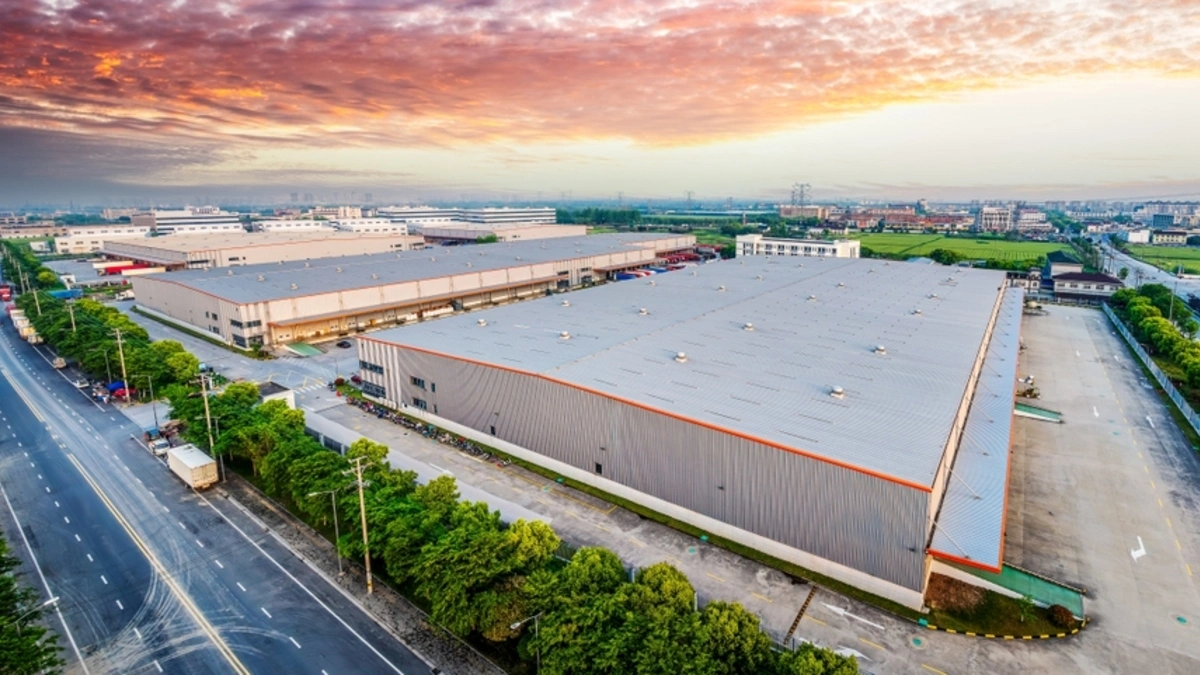
Maersk has launched its 5,000m² warehouse and distribution facility in Abidjan.  The warehouse has a capacity of ~3,900 pallet locations and this non-bonded warehouse is able to hold non-hazardous products.   This new storage, deconsolidation, and distribution multipurpose facility in Abidjan is strategically located outside the city, around the industrial zone, with easy access to the port and has the ability to bypass the city’s traffic congestion.

The facility is equipped to support various industries including; Retail, Fast Moving Consumer Goods (FMCG) and Technology and is on par with facilities within Europe and North America.

Read the full article here https://www.maersk.com/news/articles/2020/08/18/maersk-expands-warehousing-and-distribution-in-ivory-coast

Logistics

DHL Expands Asia Pacific Data Center Logistics Capabilities to Support Growing Regional Demand

Published

on

DHL workers walking in between a corridor of data servers
Admin

The expansion includes more than 30,000 square meters of dedicated warehouse capacity currently in operation across Asia Pacific, with a further 130,000 square meters of committed expansion.

  • DHL Supply Chain adds more than 160,000 sqm of dedicated warehousing capacity in Asia Pacific to meet rising demand for data centers
  • Enhanced capabilities include upskilling workforce in advanced white glove handling and investing in specialized technical services
  • Expansion directly responds to Asia Pacific’s rapid data center growth, with the region set to become the world’s next major data center hub, attracting approximately USD$800 billion (~€730 billion) investment by 2030

Bonn, Germany / Singapore, June 9, 2026: DHL Supply Chain (DHL) today announced the expansion of its data center logistics capabilities across the Asia Pacific region, strengthening its position as a strategic partner for hyperscalers and data center operators as AI investment accelerates and largescale deployments move into execution.

The expansion includes more than 30,000 square meters of dedicated warehouse capacity currently in operation across Asia Pacific, with a further 130,000 square meters of committed expansion and built-to-suit development in Malaysia and Thailand scheduled to go live over the next two years. In total, DHL will support more than 160,000 square meters of data center logistics infrastructure across key markets in the region.

The expansion directly responds to Asia Pacific’s rapid data center growth and builds on a commitment that DHL Supply Chain made in March 2026 to add 10 dedicated warehouses in North America to address hyperscaler demands, as the company ramps up its data center logistics capabilities globally. Driven by rising demand for AI, cloud services, and digital connectivity, data center operators face increasing pressure to manage tighter timelines, complex cross-border supply chains, and the movement of high-value equipment into active construction environments. With the data center logistics market increasing from $23 billion in 2025 to approximately $35 billion by 2030, these complex environments call for speed, security, and specialized handling, which DHL is well-positioned to support the entire data center life cycle.

“Market projections show Asia Pacific as the world’s next data center hub, with approximately USD$800 billion (~€730 billion) in data center investment expected across the region by 2030,said Javier Bilbao, CEO, Asia Pacific, DHL Supply Chain. “As the region enters this sustained phase of largescale data center execution, customers need more than capacity; they need execution certainty. Our investments in dedicated infrastructure and advanced white glove capabilities are designed to deliver that certainty by combining precision, consistency, and speed in some of the region’s most demanding deployment environments.”

DHL’s expansion addresses these challenges by combining fully dedicated, high-security warehousing with specialized service logistics solutions that support complex, multi-phase deployment programs. A central pillar of the expansion is DHL’s investment in upskilling its workforce in advanced white glove handling and specialized technical services. This enables teams to shift critical preparation and integration work from live construction zones to controlled logistics environments.

White glove handling ensures servers, equipment and critical systems are moved under controlled conditions to reduce the risk of damage and delays. These capabilities oversee the full delivery process, from site survey reporting and route assessments to on-site preparation such as floor protection, cage management, and verification of part numbers. Installation and post reporting include rack installation, component verification, area cleaning, and completion reporting.

Specialized technical services further address the complexities of data center logistics. These services include server rack frame assembly, mounting components, intra-rack cabling, functional testing, and secure packaging to protect sensitive server equipment during transport. By building these technical skills in dedicated teams and completing these activities in purpose-built logistics hubs, DHL helps customers reduce on-site congestion, lower installation risk, and maintain build schedules, even as infrastructure density and deployment complexity increase.

The Asia Pacific expansion builds on DHL Group’s broader global investment in data center logistics, following a recent expansion of data center logistics infrastructure in North America.Data center logistics is a strategic growth priority for DHL, driven by the rapid development of digital infrastructure and AI,” said Amanda Rasmussen, Chief Commercial Officer, DHL Global Forwarding and Head of the Data Center Logistics Taskforce at DHL Group. “Building on recent investments in North America and now expanding further in Asia Pacific, we are mobilizing capabilities across the Group to deliver integrated, end-to-end solutions for every stage of the data center lifecycle. By drawing on our global network and specialist expertise, we enable customers to scale quickly, while ensuring the uptime, resilience and precision these complex operations demand.”

Together, these initiatives underscore DHL’s focus on data centers as a strategic growth sector and reinforce the Group’s ability to support customers with globally integrated, end-to-end logistics execution as digital infrastructure is scaled across regions.

Continue Reading

Logistics

Top 10 Warehousing and Logistics Companies in Gauteng by Google Review Rating

Published

on

Gauteng remains South Africa’s busiest logistics engine. With Johannesburg, Ekurhuleni, Kempton Park, Jet Park, Boksburg, Meadowdale and OR Tambo sitting at the centre of national freight movement, the province has become a natural home for warehousing, freight forwarding, distribution and supply chain companies.

For businesses looking for a warehousing partner, location is only one part of the decision. Service quality, reliability, stock handling, communication and delivery performance all matter. One useful public signal is Google review rating, especially when viewed together with the number of reviews.

Below is a ranked list of ten Gauteng-based warehousing and logistics companies, sorted from the highest average Google rating to the lowest.

1. Cargo Compass SA – 4.6 stars

Google rating: 4.6
Google reviews: 44
Location: Meadowdale, Germiston

Cargo Compass SA tops the list with a 4.6-star Google rating. Based in Meadowdale, Germiston, the company offers logistics, freight forwarding, customs clearance and bonded warehousing services. Its strong rating suggests a positive customer experience, particularly for businesses looking for a hands-on logistics partner with warehousing capability.

2. NATCO Logistics – 4.4 stars

Google rating: 4.4
Google reviews: 16
Location: Longmeadow Business Estate, Johannesburg

NATCO Logistics is based in Longmeadow Business Estate and provides domestic freight, international shipping, warehousing and transportation services. With a 4.4-star rating, the company performs well from a customer feedback perspective, although the review count is lower than some of the larger operators on the list.

3. Savino Del Bene South Africa – 4.4 stars

Google rating: 4.4
Google reviews: 59
Location: Glen Marais, Kempton Park

Savino Del Bene South Africa also carries a 4.4-star rating, but with a higher review count than NATCO. Located in Kempton Park, the company offers freight forwarding and logistics services, with the advantage of being positioned close to OR Tambo and key Gauteng freight routes.

4. Dachser SA – 4.3 stars

Google rating: 4.3
Google reviews: 43
Location: Kempton Park

Dachser SA is a recognised logistics and supply chain operator offering road, air, ocean freight and contract logistics services. Its 4.3-star Google rating places it strongly among Gauteng operators, especially for companies needing structured logistics support backed by an international network.

5. CFR Freight SA – 4.3 stars

Google rating: 4.3
Google reviews: 42
Location: Jet Park, Boksburg

CFR Freight SA operates from Jet Park in Boksburg and provides ocean, air, road freight, warehousing and transport services. Its 4.3-star rating and established Gauteng footprint make it a relevant option for businesses requiring freight movement supported by warehousing capability.

6. Lonrho Logistics – 4.3 stars

Google rating: 4.3
Google reviews: 32
Location: OR Tambo International Airport, Kempton Park

Lonrho Logistics is positioned near OR Tambo, giving it a strong location advantage for air cargo, imports, exports and time-sensitive logistics. Its 4.3-star rating places it alongside some of the better-rated Gauteng logistics operators.

7. World Net Logistics / Rhenus Logistics – 4.2 stars

Google rating: 4.2
Google reviews: 65
Location: Longmeadow Business Estate, Edenvale

World Net Logistics, part of Rhenus Logistics, has one of the higher review counts on this list. Based in Longmeadow Business Estate, the company offers logistics and supply chain services with a strong international network. Its 4.2-star rating suggests a generally positive customer experience across a larger review base.

8. Kintetsu World Express South Africa – 4.0 stars

Google rating: 4.0
Google reviews: 51
Location: Jet Park, Boksburg

Kintetsu World Express South Africa provides freight forwarding and supply chain services from Jet Park in Boksburg. With a 4.0-star rating from 51 reviews, it remains a notable player for companies needing logistics support with international reach.

9. Toll Global Forwarding SA – 4.0 stars

Google rating: 4.0
Google reviews: 48
Location: Pomona, Kempton Park

Toll Global Forwarding SA operates from Pomona in Kempton Park, another key logistics node close to OR Tambo. The company provides logistics and freight forwarding services and holds a 4.0-star Google rating.

10. Imperial Retail Logistics – 4.0 stars

Google rating: 4.0
Google reviews: 32
Location: Bedfordview, Gauteng

Imperial Retail Logistics is one of the larger names in South African logistics. With a 4.0-star rating, the company remains a major supply chain and distribution partner, particularly for retail and large-scale logistics requirements.

For businesses in Gauteng, the right choice should also depend on the type of warehousing required. Some companies are better suited to bonded warehousing, others to air freight, cold chain, retail distribution, e-commerce fulfilment or international forwarding.

The best approach is to use ratings as a shortlist tool, then compare each provider on service capability, location, technology, reporting, turnaround times, compliance and total cost.

Continue Reading

Warehousing

The Changing Face of Warehousing in South Africa

Published

on

Admin

Forklifts move and scanners beep as the warehouse wakes up at 6am Monday.

Forklifts move between aisles. Pickers scan barcodes. A dispatch supervisor checks the first wave of orders leaving for Johannesburg, Pretoria and Durban. In the corner, a screen shows stock movements in real time. What once felt like a simple storage facility now looks more like the nerve centre of a modern supply chain.

Warehousing across South Africa has officially entered this new era.

For a long time, we treated warehouses as nothing more than giant storage closets for piles of products. Products arrived, were stacked, counted and eventually moved out again. We are seeing that standard shift right before our eyes. Warehouses are no longer passive storage spaces. Tech-heavy settings demand better results. Speed and adaptability win the day as old methods fade away.

E-commerce leads the way. It moves the needle more than other factors.

People in South Africa finally trust e-commerce. This change forces warehouses to work faster and smarter to prevent a total logjam in the supply chain. Customers no longer think in terms of “delivery sometime next week”. Customers want their orders delivered fast, clear updates on what is in stock, and zero mistakes. Stores, suppliers, and shipping firms now have to change how they run their stockrooms.

Modern warehouses do more than hold inventory. They now act as fast moving hubs that pick and pack orders directly for customers. Shippers now face a relentless pace. They handle constant small batches and strict pickup times. You cannot afford even one mistake in your inventory records anymore. Old warehouses built for bulky pallets now struggle to pick single items and pack mixed orders for fast shipping.

Tech now sits right at the top of the to-do list.

Running a warehouse without real-time inventory data or automated reporting is getting harder by the day. These digital tools shifted from being expensive upgrades to basic necessities for moving products quickly and accurately. Businesses want to know what stock they have, where it is, how quickly it is moving and where delays are creeping in. In a tight-margin environment, visibility is no longer optional.

Software runs more of our lives than before. However, it stays behind the scenes instead of acting like a sci-fi character. Going fully robotic is rarely the opening move for South African storage sites. Faster picking happens when you fix the shelf layout and use digital tools. Handheld tech and live dashboards replace slow paperwork and fix human slip-ups. Automation should support your staff rather than take their place. The main idea is to boost speed while keeping every project sharp and accurate.

High electricity rates and expensive trucking are redrawing the map for modern logistics centers. Costs are climbing fast. Managers now want simple fixes that prove their worth by lowering the bottom line. Better space utilisation, improved loading processes, energy-efficient lighting, solar solutions, battery-powered equipment and tighter stock control are all becoming part of the conversation.

Companies are starting to look much closer at cold storage facilities.

Keeping products cold matters more than ever as the market for groceries and pharmaceutical goods continues to expand. We need to put more money into these sites, follow the rules better, and watch the data closely. Smart businesses know that storage involves much more than just filling up empty floor space. We keep every item in perfect condition from the loading dock to the front door.

Modern supply chains favor warehouses placed near major transit hubs.

With last-mile delivery becoming more important, companies are looking carefully at where their facilities are based. Setting up shop near highways, docks, and busy malls slashes your shipping times and saves you a ton of money. In South Africa, where road freight remains a critical part of the supply chain, location can directly affect competitiveness.

We see this same trend with outside logistics companies. Why deal with the high price of industrial real estate? Smart leaders often step away from owning every link in their supply chain. Businesses are handing off the heavy lifting to pros. These specialists run the warehouses and delivery trucks so the brands can focus on growth. Growing a business gets much easier when you spend your energy on making sales and refining your product.

Machines help, but your warehouse still relies on the grit of actual people.

Behind every system, scanner and dashboard are people making decisions under pressure. Top warehouses do more than buy new software. They focus on coaching their staff, keeping people safe, and sticking to proven workflows. A smart warehouse still needs skilled operators, supervisors and managers who understand how to turn data into action.

One idea cannot capture where South African warehousing is headed. It is a mix. Many moving parts work together to mold this outcome. e-commerce growth, automation, cost control, cold chain demand, 3PL expansion, better data and more strategic facility planning.

Warehouse teams see the writing on the wall. The days of simply storing goods are over.

Efficient logistics turned our depot into power.

Companies that can move stock faster, see their inventory clearly, reduce errors and respond quickly to customer demand will be better positioned in the years ahead. Those that treat warehousing as a back-office function may find themselves falling behind.

As the Monday morning rush continues, the warehouse floor tells the story. Every scan, every loaded pallet and every dispatched order is part of a bigger shift taking place across South Africa’s supply chain.

The warehouse is no longer just where goods are kept.

This is the engine room for today’s business.

Continue Reading

Trending