
Freight Forwarding
Fast Tracking Cross-Border Flows in a Crisis


The challenges that countries in the East and Southern Africa (ESA) region faced prior to the outbreak of the COVID-19 pandemic continue to alter the manner in which crossborder business takes place in the region. This matter was the focus of the World Customs Organization (WCO) ESA Regional Private Sector Consultative Group (RPSG) webinar — the 6th of its kind — held online on 21 May.
The meeting deliberated on some of the most pertinent customs- and trade- related matters, with specific focus on how the pandemic has influenced the situation.
The webinar was chaired by Juanita Maree, (WCO ESA-RPSG and SAAFF Director). She was joined by four leading customs panellists:
Larry Liza – Director – World Customs Organization: East & Southern Africa,
Regional Office for Capacity Building
Patrick Gyan – Regional Development Manager, East and Southern Africa Region
Fermin Cuza – International President – World Business Alliance for Secure
Commerce Organization (World BASC, a member of WCO-PSCG)
Kazem Asayesh – Senior Advisor – TIR and Transit Services, World Road Transport Organisation (member of WCO-PSCG)
The session explored the following:
Lessons learned from COVID-19
Authoised Economic Operator (AEO) Programme: New developments during and after COVID-19 and
Cross-border road freight and in transit cargo movements
Patrick Gyan highlighted the ongoing need for continued communication and collaboration – beyond the COVID-19 pandemic. He also stressed the need for innovation and for the industry to be bold and venture out.
“From a customs background, based on our nature, we hesitate to become more innovative,” said Gyan. “Now is the time to really take up some of the programmes that we have hesitated on. We are looking at paperless customs for example. Now is the time to really appreciate that customs’ work is to operate on that model or in that environment”.
Larry Liza shared some the key lessons learned:
- There is a very strong need for investment in ICT infrastructure. We only have about
50% efficiency in IT infrastructure in the ESA region, when compared to Western
Europe. Revenue administrations need to put more emphasis on ICT infrastructure.
- The need for innovation in the domestic industry, especially in light of a weakeningdomestic industry.
- The importance of e-commerce and emerging technologies, which we are going toneed more than ever. Blockchain is going to be used more and more. The use of drones and customs robotics will also grow, as it will decrease the intrusion on people and personnel.
To view the full webinar visit https://www.wcoesarpsg.org/category/webinars/ or https://www.youtube.com/channel/UCASRMVbiYKvMWRVjg2AJ_Tw


Freight Forwarding
A Terminal in Healing: SAFLA and the RFA Acknowledge the Movement Towards DGT Efficiency

The South African Freight and Logistics Association (SAFLA) and the Road Freight Association (RFA) were present during the recent interaction between Durban Gateway Terminal (DGT) and relevant stakeholders and organisations that have operations or members processing cargo through the terminal.
Representatives of DGT and International Container Terminal Services Inc (ICTSI) were candid and open regarding challenges experienced – as well as what had been achieved in the period that Transnet had signed the agreement with ICSTI.
Whilst there are challenges, the terminal was functioning well – given the challenges experienced, and both DGT and ICTSI listened to comments from all present and noted that two processes were in place to address the operations at DGT.
One was short term: this included the waiving of all terminal storage charges whilst the current set of challenges were experienced, and secondly, there was an accelerated programme to keep the various pieces of machinery operating at the best levels of safety and functionality, as was possible. Gensets had been brought in to deal with power disruptions.
In addition, DGT acknowledged the problems with the slot booking system and already had developed a solution to vastly improve the process – this was to be shared with all shareholders in due course for comment and implementation.
DGT also brought Transnet into the meeting to address certain aspects that had placed pressure on operational efficiencies.
Long-term plans: the Terminal requires significant refurbishment and upgrading / modernising to compete with the options of other ports on the Southern African continent. Much of the equipment needed has been ordered – but there are lengthy lead times in the delivery of the equipment.
“There are immediate short-term options – such as reducing the pressure on the terminal whilst upgrades and interventions are applied. Perhaps Transnet can lower container movement tariffs (from other ports) for a period, whilst DGT is brought to the level of efficiency required. As we have noted – transporters are carrying the costs of inefficiencies,” said Gavin Kelly, Chief Executive Officer of the RFA. “Fleets are standing without bookings while fixed costs run, drivers are queuing on Bayhead Road, and every standing hour ends up in the price of goods. Slot releases must match real capacity, and truck staging must be fast-tracked now. Without trucks, South Africa stops.”
“SAFLA is delighted at the waiving of storage charges whilst the current set of challenges are being experienced,” said Dave Logan of SAFLA. “This will meaningfully ease the burden on freight forwarders and their clients, and we welcome this gesture of good faith from DGT and ICTSI.”
SAFLA and the RFA stand ready to contribute member evidence and practitioner expertise to a joint recovery task team alongside DGT, Transnet, government and other industry bodies.
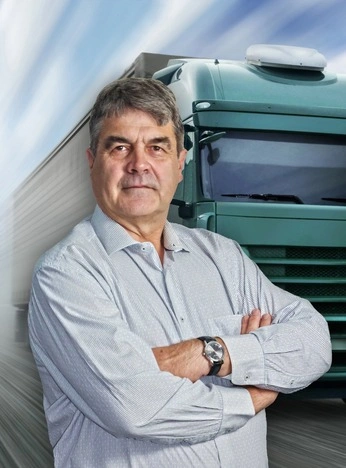
Gavin Kelly, CEO of the Road Freight Association

Dave Logan – Executive Officer of SAFLA

Moving with Purpose: Why Reliable Passenger Transport Strengthens Communities and Business Continuity

FNB and Wesbank Renew On The Road Partnership as Road Freight Podcast Surges Past 300,000 Views and 7,000 Youtube Subscribers

Port of Saldanha Secures R6.9bn Industrial Investment Pipeline


-

 Management3 months ago
SEO, AEO, GEO and SEO for AI: What Is the Difference for the Supply Chain Industry?
-

 Transport4 months ago
LDV T60 Max vs GWM P500 vs Isuzu D-Max vs Toyota Hilux vs Ford Ranger: Which Double-Cab Bakkie Offers the Best Value?
-

 Logistics4 months ago
DHL Group to invest around € 160 million in 2026-2027 to strengthen logistics infrastructure and support clean energy transition in France
-

 Logistics4 months ago
Top 5 Warehousing and Logistics Companies in the Western Cape by Google Review Rating
-

 Logistics4 months ago
DHL Expands Asia Pacific Data Center Logistics Capabilities to Support Growing Regional Demand
-

 Logistics4 months ago
Top 10 Warehousing and Logistics Companies in Gauteng by Google Review Rating
-

 Freight Forwarding4 months ago
The Hidden Cost of Shipping from China to South Africa — What Every SA Importer Needs to Know in 2026
-

 Logistics3 months ago
Top 4 Lift Truck Companies in Gauteng