Connect with us

Management

The Hidden Formula Behind High-Performance Warehousing

Published

on

Admin

As SAPICS celebrates 60 years of impact in 2026 under the theme “Legacy to Leadership: 60 Years of Connection, Collaboration & Transformation,” South African supply chain executives face an urgent call to action.

With soaring road freight volumes, warehouse occupancies topping 85%, and compounding rental hikes, local leaders rushing to automate frequently fall into a costly trap. While modern warehousing technology can greatly assist in slicing operational costs and slashing inventory losses, investing heavily in off-the-shelf systems without addressing underlying operational bottlenecks often amplifies the chaos rather than solving it.

True leadership requires recognising that technology is not a standalone silver bullet; transformation happens when advanced process design meets a flexible, digitally prepared workforce.

Why More Technology Doesn’t Always Mean More Progress

When margins shrink, the instinctive corporate reflex is to slash headcount or purchase an automated tool because a competitor did. However, automating a broken process simply yields an automated mess.

“A lot of technology is available off the shelf, and it is dangerous to buy something you don’t thoroughly understand,” warns Willie du Preez, Managing Director of Programmed Process Outsourcing (PPO). “If you don’t understand where your operational bottlenecks are, you will introduce the wrong technology.“

Du Preez notes that real return on investment (ROI) stems from a deep diagnostic phase. This means utilising industrial engineering to map workflows and eradicate systemic friction before buying hardware. Without this groundwork, companies end up with fragmented patches instead of a unified ecosystem, losing critical institutional knowledge.

Furthermore, traditional data tracking compounds this vulnerability. “After-the-shift or month-end information has become obsolete,” Du Preez stresses. “We need real-time data frameworks to make decisions proactively before bottlenecks disrupt the entire chain.“

The Business Case for What Doesn’t Appear on the Balance Sheet

Optimising a warehouse requires looking far beyond obvious hardware and immediate software implementation costs. True operational leadership requires a comprehensive evaluation of regulatory complexity, strategic risk, and financial agility.

“When an organisation conducts a deep cost-benefit analysis, the ‘invisible’ levers of outsourcing become undeniable,” explains Jeandie Leone, Commercial Executive at Workforce Staffing and Outsourcing. “A strategic partner doesn’t just manage transactional headcounts; they absorb significant balance-sheet liabilities. For instance, compliant employers in South Africa must navigate complex regulatory requirements, spending 1% of payroll on Skills Development Levies and up to 6% on continuous training. In outsourcing key components of your workforce, these administrative and training burdens shift entirely to the expert partner.“

Leone emphasises that this strategy fundamentally transforms how human capital impacts corporate finances. “Labour is traditionally one of the highest flat operational expenses (OpEx) for most logistics businesses, yielding zero return on scorecards. Outsourcing allows companies to route this heavy spend through a fully compliant partner, converting a standard operating cost into powerful preferential procurement spend for their B-BBEE scorecard.“

Furthermore, Leone highlights immediate cash flow advantages. “In high-volume environments, managing internal payrolls places immense pressure on working capital. Partnering with an provider that offers standard 30-day payment terms effectively allows a business to defer massive payroll expenses for that period, interest-free. This frees up vital cash flow to reallocate into core technological infrastructure.“

The Strategic Power of Operational Convergence

Even with engineered processes and real-time dashboards, technology remains inert without the people trained to pilot it. In South Africa’s high-attrition warehousing environments, the traditional model of renting generic labour on one side and managing operations on the other is no longer viable. To maintain operational continuity and protect margins, supply chains must merge Temporary Employment Services (TES) and Business Process Outsourcing (BPO) into a singular, symbioticoperating model.

“The relationship works best when both parties are intertwined within the exact same operating solution for the client,” explains Quintus Sliep, Managing Director of Worldwide Staffing. “The TES partner delivers workforce agility by sourcing, onboarding, and scaling compliant personnel as volumes shift. Concurrently, the BPO partner injects the process structure, productivity metrics, and management control that allow that workforce to perform properly.“

When these two disciplines operate in isolation, operations fracture. Integrated, the client receives a scalable solution that maintains strict process discipline during volatile demand spikes.

Leone concurs, adding a regulatory and risk perspective: “Outsource partners bring dedicated legal and operational expertise needed to handle industrial relations, recruitment pipelines, and time and attendance. This ensures absolute continuity, leaving the client’s internal teams free to focus strictly on macro supply chain strategy.“

Bridging the Digital Skills Gap

This integrated approach is critical to addressing one of the industry’s most pressing operational challenges: preparing workers for increasingly digital environments. In modern, data-driven warehouses, traditional once-off classroom training is no longer enough. Software platforms evolve continuously, compliance requirements shift rapidly, and scanning and automation systems are updated in real time.

“We shouldn’t talk about automation or robotics purely as job threats; they support people rather than replace them completely,” says Sliep. “The bigger risk is the skills gap between where operations are going and where the workforce is today. The TES provider must prepare people for the environment, and the BPO must manage that environment so workers can use technology productively.”

Closing this gap requires ongoing collaboration between workforce enablement and operational management. Together, TES and BPO partners create continuous learning environments that equip workers to adapt alongside technology rather than be displaced by it. The result is a more resilient, digitally capable workforce able to engage confidently with evolving systems, workflows, and operational demands.

Operational resilience depends on aligning technological progress with human capability. As du Preez concludes, “Technology alone does not drive transformation; people and their knowledge do.”

Willie du Preez

Quintus Sliep

Jeandie Leone

Continue Reading

Management

Absa and MyDough Take Enterprise Challenge on the Road to Support Entrepreneurs Across South Africa


Published

on

Portrait of Lane Mogashoa.

Absa Business Banking and MyDough are taking entrepreneurship support directly into communities across South Africa through a series of regional Enterprise Challenge events aimed at helping small businesses strengthen their operations, expand their networks and become investment-ready.

The initiative forms part of the broader Absa and MyDough partnership, which focuses on supporting entrepreneurs with practical tools, business development support and opportunities that go beyond access to finance.

Taking place across multiple regions between October and November, the programme will bring together entrepreneurs, business leaders and ecosystem partners to engage on the realities of building sustainable businesses in South Africa’s evolving economic landscape.

The programme reflects a shared belief that entrepreneurs require more than capital to succeed. Access to markets, mentorship, operational capability, confidence, networks and practical business support all play an important role in helping businesses grow and create long-term economic value.

Through the broader enterprise development initiative, entrepreneurs benefit from tailored interventions focused on business development, financial management and entrepreneurial growth support designed to help strengthen businesses and position them for future growth opportunities.

“At Absa, we believe that building successful businesses requires more than access to funding,” said Lane Mogashoa, Business Development Support -Enterprise Development, Absa Business Banking. “Entrepreneurs need support, networks, knowledge and opportunities that help them grow sustainably. Our partnership with MyDough demonstrates our commitment to helping businesses move from potential to performance while contributing to inclusive economic growth across South Africa.”

“The entrepreneurs participating in this programme represent the resilience, innovation and ambition that drive South Africa’s economy. Through our partnership with Absa, we are creating opportunities for entrepreneurs to strengthen their businesses, learn from experts and connect with ecosystems that help them grow,” added Abed Tau, CEO MyDough

The regional events are expected to provide participants with opportunities to engage with business experts, hear entrepreneurial success stories and access practical insights that can support business sustainability and growth.

As the programme progresses, selected entrepreneurs will continue their journey through the Enterprise Challenge, culminating in the national Popcorn and Pitch finale where entrepreneurs will have the opportunity to showcase their businesses on a national stage.

The regional programme will take place on the following dates:

  • 2 October 2026: Gauteng, Johannesburg – Capital Hotel on the Park
  • 6 October 2026: Limpopo, Polokwane – DeCollage Estate
  • 8 October 2026: Northern Cape, Free State and North West, Rustenburg – Tshiberry Hotel
  • 12 October 2026: KwaZulu-Natal and Mpumalanga, Durban – Capital Pearls Hotel
  • 26 October 2026: Western Cape and Eastern Cape, Cape Town – Pepper Club
  • 18 November 2026: National Popcorn and Pitch Finale, Ster-Kinekor Eastgate Mall, Johannesburg

For more information as finalists are confirmed for the running to win in the national finale, visit www.mydough.co.za

Continue Reading

Logistics

AGOA Loss is a Direct Hit On Western Cape Exporters, Warns EWC

Published

on

Close up shot of a warehouse completing a checklist.

South Africa’s impending loss of African Growth and Opportunity Act (AGOA) preferences will put further pressure on Western Cape exporters already facing a sharp decline in sales to the United States, says Exporters Western Cape (EWC).

Following President Donald Trump’s notification on Monday of his intention to terminate South Africa’s eligibility from 1 January 2027, EWC chairman Terry Gale said the focus must now shift to helping affected businesses retain their American customers.

“The time to do anything about this has passed. This is going to have a negative impact on our exporters and South Africa can ill afford it. Our economy needs every export market and every job it can hold on to,” said Gale.

The Western Cape’s exposure extends well beyond individual exporters. The province’s exports to the US support about R12.98 billion in provincial GDP, 11 914 direct jobs and 35 467 indirect jobs. Any further loss of orders puts those jobs at risk.

Exporters were already under severe strain. The value of Western Cape exports to the US fell 41%, from R16.89 billion between August 2024 and July 2025 to R10.02 billion between August 2025 and July 2026. Fruit juice exports fell 86%, from R952.9 million to R136.7 million, while grape exports declined 79%, from R444.2 million to R91.1 million. Yacht exports dropped 55%, from R1.4 billion to R627.6 million. Wine exports fell 38%, from R603.1 million to R371.5 million, while citrus declined 17%, from R2.19 billion to R1.82 billion.

Losing AGOA preferences would make an already difficult position worse, said Gale. The programme has provided eligible African countries with preferential access to the US market since 2000 and its loss will raise the cost of doing business with American customers.

He said the effect would vary between products, but the concern extended beyond the immediate cost to the trading relationships exporters had built.

“We can’t afford to see our trading relationships weakened, least of all with the US. Businesses have spent years building relationships with American customers and investing in the capacity to supply them. Losing preferential access puts those investments under pressure.

“Government needs to work with affected industries to establish where the greatest exposure lies and how businesses can be helped to retain their customers. Exporters need to understand what this means for their products while they still have time to discuss arrangements with their buyers.”

The United States Trade Representative said on Monday that the intended termination followed the annual review of AGOA eligibility. Its statement said South Africa’s practices were inconsistent with AGOA’s eligibility criteria, citing barriers to US trade and investment, corruption and threats to US national security and foreign policy interests.

EWC said clear guidance would be essential for businesses negotiating orders extending into 2027. The implications for pricing could affect whether an exporter remained competitive or had to absorb additional costs to keep a customer.

Gale said developing alternative markets remained essential, but cautioned against presenting diversification as an immediate solution.

“Finding another market is not something an exporter can do overnight. Building relationships with new buyers takes time. There may also be regulatory requirements that cannot be met immediately, particularly by smaller businesses with limited resources.

“We should pursue new opportunities with urgency while working to retain our American customers. We cannot afford to write off established trading relationships simply because the terms of access are becoming more difficult.”

He said the announcement made it even more urgent to address domestic constraints that increased the cost of exporting.

“Government cannot ask exporters to compete under more difficult trading conditions while accepting avoidable costs and delays at home. Every unnecessary expense makes it harder for a South African supplier to hold on to an order. Improving the reliability of our logistics system is one area where we can make a meaningful difference.

“Businesses need to know what changes from January and what support will be available. The priority must be to help them continue trading, because lost orders ultimately put jobs at risk.”

Continue Reading

Management

AGOA is Back – But Can Africa Manufacture Its Way Into the Opportunity?

Published

on

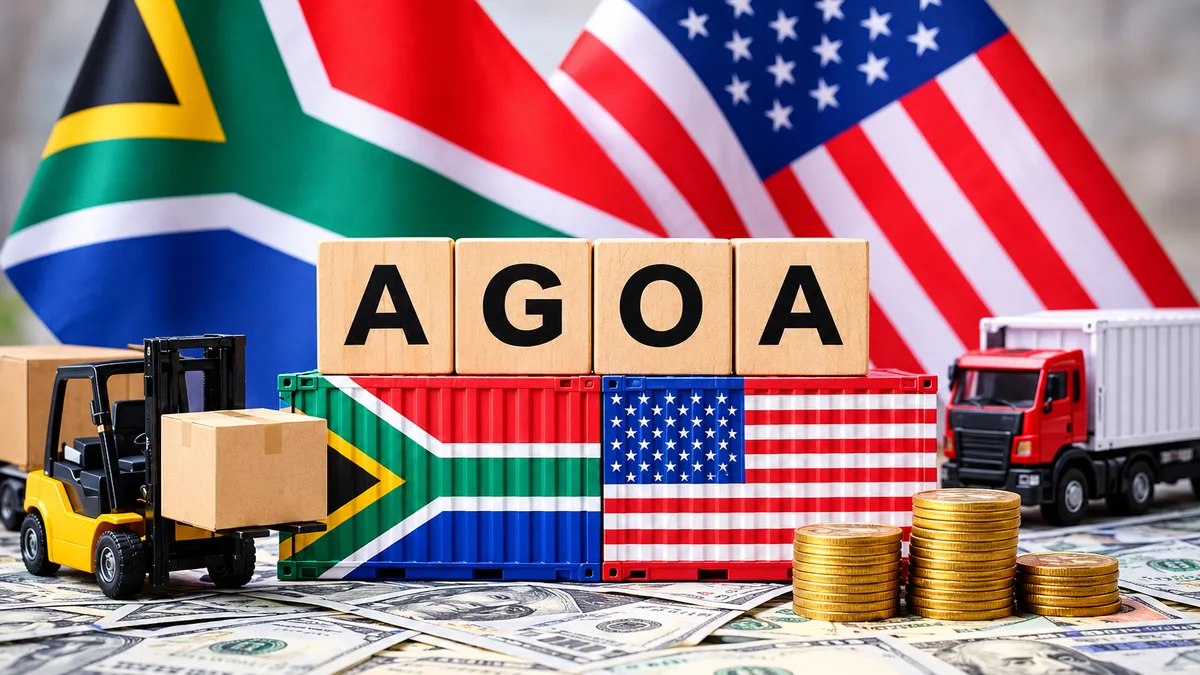
A South African and US flag sitting on a desk with toy freight vehicles transporting goods. In the centre, lies two shipping containers painted with a South African and US flag with letters on top spelling AGOA.

We all know that global trade is becoming increasingly important. Economies are navigating challenges on multiple fronts, businesses are under pressure to remain competitive, and every opportunity to grow, invest and create new markets must be seized to lead to success.

But what if some of those opportunities are already within reach, and we simply aren’t making the most of them?

For Africa, one such opportunity is the African Growth and Opportunity Act.

AGOA is a U.S. trade programme established in 2000 to strengthen economic and trade relationships with eligible countries in Sub-Saharan Africa. It provides duty-free access to the U.S. market for more than 1,800 qualifying products, spanning a wide range of manufactured and value-added goods, including automotive components, textiles and apparel, agricultural and processed food products, chemicals, plastics, metals and other industrial products.

Following President Donald Trump’s announcement and the subsequent extension of AGOA through 31 December 2028, South African manufacturers have been given additional time and certainty to pursue opportunities in one of the world’s largest markets.

But access to a market is only part of the equation.

The real question is: are we equipped to take advantage of it?

Because securing an opportunity to supply an international customer is one thing. Having the machinery, skills, capacity and processes to fulfil that opportunity – consistently, competitively and at the required standard – is another.

For KNUTH Machine Tools, however, the significance of AGOA extends far beyond the trade agreement itself.

Does the African industry have the production capacity, technology and skills required to turn market access into manufactured exports?

“We often talk about market access as though it is the finish line. It isn’t. It is the starting point. If African manufacturers are going to compete for more international business, we need to build the production capacity and capabilities that allow us to compete -and deliver – at an international level,” says James Fourie, Technical Sales Team Lead, KNUTH SA.

For manufacturers across sectors such as automotive, mining, engineering and energy, increased export opportunities could mean greater demand, making it essential to optimise operations, improve productivity and strengthen production capacity.

From Market Access to Manufacturing Capacity

The renewed focus on AGOA comes at a time when manufacturers globally are under pressure to produce more efficiently while controlling costs and maintaining consistent quality.

For African manufacturers, the opportunity is therefore not simply about exporting more. It is about being equipped to manufacture more competitively.

There are plenty of ways manufacturers can improve how competitively they operate. It can start with something as simple as identifying production bottlenecks, reducing downtime or getting more out of existing equipment. For others, it may mean improving production planning, reviewing tooling and processes, upgrading ageing machinery, introducing CNC technology or investing in automation.

Just as importantly, manufacturers need the right skills to make the most of these improvements and ensure that technology translates into real gains on the shop floor.

“Manufacturing competitiveness starts long before a product reaches the shipping container,” says Ruan Cowley, Managing Director of KNUTH SA. “It starts with the equipment, the people operating it and the processes behind it. If AGOA creates additional demand, manufacturers need to be ready to respond to that demand, and that requires investment in production capability.”

This is particularly relevant for businesses that may currently be operating with limited capacity or processes that are already under pressure.

A manufacturer receiving an opportunity to supply a larger international customer cannot necessarily scale simply by adding another order to the production schedule. Increased volumes can expose operational inefficiencies.

The result is that market access can quickly become a manufacturing-capacity challenge.

The Machinery Question

For more than 100 years, KNUTH Machine Tools has been part of the global manufacturing industry, working alongside manufacturers as production methods, technologies and market demands have evolved.

That experience has shown that improving manufacturing competitiveness is rarely about one machine or one investment. It is about understanding the operation as a whole.

For machine shops and component manufacturers, technology can play an important role in that process. Modern CNC machinery, for example, can improve consistency, reduce manual intervention and support the production of more complex components. But the right technology depends on the needs of the individual operation.

“Buying a machine is not the same as improving a manufacturing operation,” says Fourie. “You first need to understand where the constraints are. It could be capacity, workflow, skills, tooling, programming or simply the way a process is being managed. Once you understand that, you can make more informed decisions about where technology can add real value.”

That broader approach becomes increasingly important as manufacturers look to compete for international business.

Ultimately, the goal is not simply to have more technology on the factory floor. It is to build more capable, efficient and competitive manufacturing operations.

“International competitiveness isn’t built overnight,” says Cowley. “It requires manufacturers to make decisions today that improve their ability to compete tomorrow. That includes machinery, skills, service, maintenance and the ability to keep production running.”

A Window – Not a Guarantee

AGOA’s current authorisation runs through the end of 2028, while the United States has also begun a process to consider how the programme could be modernised.

That means manufacturers should view the current environment as an opportunity to assess their readiness rather than simply waiting for export demand to appear.

AGOA is also not the only preferential trade opportunity available. Through agreements and arrangements such as SACU, SADC, the African Continental Free Trade Area (AfCFTA), the SADC–EU Economic Partnership Agreement, the SACUM–UK Economic Partnership Agreement, SACU–EFTA and SACU–MERCOSUR, South African businesses have access to a range of regional and international markets under preferential trading conditions.

The markets are there. The opportunity is there. The question is whether African manufacturing is ready to make the most of it.

For KNUTH, that means encouraging manufacturers to consider a more fundamental question: If a new international opportunity came across the desk tomorrow, would the factory be ready to produce it?

The market may open the door. Manufacturing capability determines whether you can walk through it.

Continue Reading

Trending