Connect with us

Press Releases

JC Auditors launches certification solution

Published

on

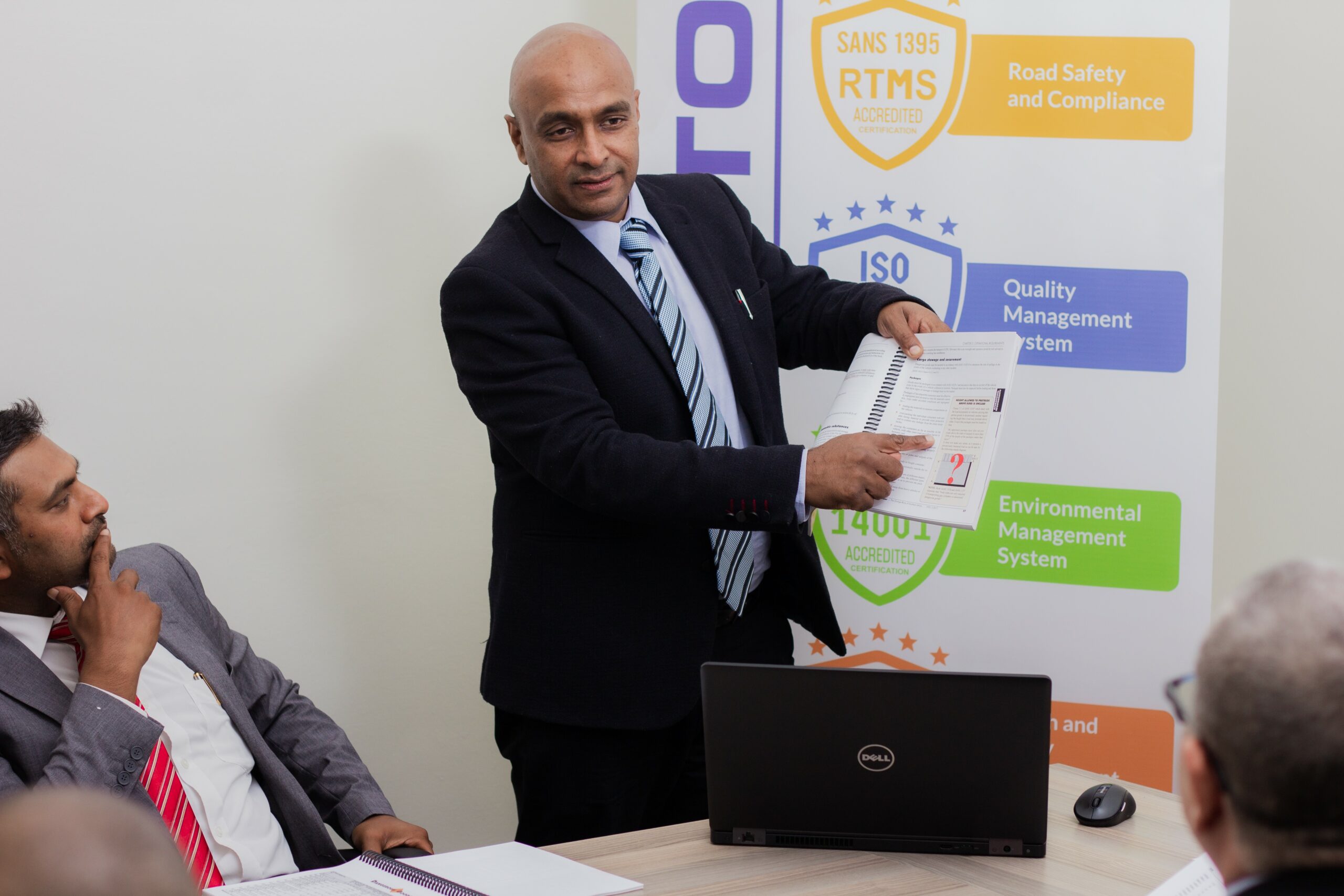
Oliver Naidoo holding and pointing to a page in a book

All businesses, regardless of the industry, must adhere to certain standards, regulations and legislation, as part of normal business operations. Ensuring compliance can, however, be an arduous and costly undertaking.

Certification body JC Auditors has launched a one-stop certification solution that delivers a professional, efficient and simplified process for businesses to meet mandatory legal obligations, and customer or tender requirements. At the heart of the solution is the essential need to mitigate risk and deliver added value to the business.

“Over the past few years, the increasing emphasis on Environmental, Social and Governance (ESG) prerogatives has brought into sharp focus the myriad  of laws, regulations, standards, and guidelines  ,” says Oliver Naidoo, JC Auditors’ Managing Director. “Also, with the regulatory environment constantly evolving, compliance targets are in a state of flux. Managing the required processes can be complex, time-consuming and costly.”

Maintaining and validating compliance can also be challenging if there are multiple systems and separate assessment tools used. The duplication of processes and the control of these myriads of systems also add significantly to the cost.

These factors led to the certification body identifying the need for an efficient and integrated process, whereby a single assessment solution could be used to address the requirements of all the various standards and legislative requirements for a business – regardless of the sector they are operating in.

“We want to make the process as efficient as possible for the companies that have chosen to work together with us,” explains Naidoo, who will be hosting several workshops across the country in the coming weeks to showcase the new certification solution to industry stakeholders. Events will take place in Gauteng, the Western Cape, KwaZulu-Natal and Mpumalanga.

Using the solution, says Naidoo, provides tangible benefits to businesses, as it ensures a more efficient approach. “There is no duplication of processes or documents and instead of managing several systems, an integrated approach that is efficient and cost-effective ensures companies are meeting the necessary standards, regulatory and legal requirements.”

It further gives the assurance that consumers are getting products and services of the highest quality from businesses that have a strong Environmental, Social and Governance (ESG) approach.

It provides the comfort that one is dealing with a professional, reliable, and responsible entity, thereby protecting one’s brand. All businesses can benefit from adopting standards – regardless of their size and industry sector.

One company that recently used the one-stop certification service says JC Auditors exceeded all its expectations having delivered tremendous value to its business. “The auditors displayed extensive knowledge, not only of the respective standards, but they were experts in understanding the practical context of our operating environment. Their audit approach was distinctly customer-oriented, and they diligently examined our operation’s conformance to quality, environmental, health and safety standards.”

Another client describes the solution as uncomplicated, delivering greater compliance through its improved efficiency. “The JC Auditors team was fully competent in all engagement with our company. They were knowledgeable and added great value to our business.”

Says Naidoo, “Standards and the associated certification audits for these standards are intended to add value and improve business operations. It should not be a cumbersome and costly undertaking that frustrates business. Our solution is a fresh approach that reduces the time, effort and money to deliver this compliance.”

Continue Reading

Logistics

Silly Season Can Lead to Serious Logistics Challenges

Published

on

Festive freight truck in front of a warehouse preparing for the festive shipping.

As the year draws to a close, the festive rush is not only felt in shopping centres and on the roads. Behind the scenes, global supply chains are gearing up for one of their busiest and most demanding periods of the year. For businesses moving goods across borders, the silly season can quickly become a serious logistical challenge.

There is something about the final few months of the year that seems to put everything into overdrive. Businesses are trying to meet annual targets, retailers are building up stock ahead of the festive season, manufacturers are working to fulfil outstanding orders, and consumers expect products to arrive on time. Everyone is working against the clock, and the pressure to get goods from one place to another increases significantly.

For the logistics industry, this translates into a substantial increase in demand across road, air and sea freight networks. More shipments are competing for available capacity, ports and terminals experience higher volumes, and transport schedules become increasingly difficult to manage. Even with careful planning, delays can become more frequent as the industry approaches the end of the year.

However, seasonal demand is only part of the picture.

Global supply chains are already navigating a complex operating environment. Geopolitical tensions, changing trade regulations, fluctuating fuel costs, infrastructure constraints and extreme weather events continue to influence the movement of goods worldwide. From severe storms affecting shipping routes to congestion at major ports and unexpected disruptions to transport infrastructure, these challenges can have consequences far beyond their immediate locations.

When these existing pressures coincide with the year-end surge, the impact can be amplified. A vessel arriving behind schedule, a missed connection, limited warehouse capacity or a delay at a border crossing can create a ripple effect throughout the supply chain. What begins as a relatively small setback can ultimately affect production schedules, inventory availability and customer commitments.

According to Craig du Toit, Director at RSA Global, the challenge lies in managing multiple pressures at once, particularly when businesses are working towards fixed deadlines.

“Businesses often spend a great deal of time planning their sales targets and production schedules, but logistics needs to be part of those conversations from the beginning. You can have the right product, the right customer and the right commercial opportunity, but if the supply chain cannot support it, the entire process is affected. Logistics should not be something businesses scramble to organise at the last minute. It needs to be considered well ahead of time.”

The Cost of Leaving Logistics Until the Last Minute

One of the biggest mistakes businesses can make during this period is underestimating just how early the year-end rush begins. By the time December arrives, capacity on popular routes may already be limited, schedules may have changed and alternative transport arrangements can become more difficult or expensive to secure.

Waiting until the last minute to arrange shipments can leave businesses with fewer options. It can also mean paying a premium for urgent transport or having to make compromises on delivery timelines.

The consequences are not limited to freight costs. For a manufacturer waiting on critical components, a delayed shipment could interrupt production. For a retailer, stock arriving after the peak shopping period may mean lost revenue. For businesses with international customers, unreliable delivery timelines can affect relationships and future opportunities.

The lesson is that logistics should not be treated as an afterthought or something to address only when a shipment needs to move. It needs to form part of broader business planning, particularly during periods of increased demand.

Preparing for the Pressures of Peak Season

While no logistics provider can eliminate every external disruption, businesses can take practical steps to reduce their exposure to unnecessary delays and costs. A proactive approach to planning, combined with the ability to adapt when circumstances change, can make a significant difference during the year-end rush.

Early bookings are essential to securing freight capacity before demand peaks, while accurate forecasting allows businesses to anticipate upcoming shipping requirements based on sales projections, production schedules and historical demand. Businesses should also build realistic lead times into their schedules, allowing additional time for international freight movements, customs clearance and connecting transport services.

Preparation should extend beyond the shipment itself. Reviewing inventory levels can help businesses identify critical stock, prioritise essential replenishment orders and avoid last-minute shipping requirements. Ensuring that all shipping and customs documentation is accurate and ready in advance can also help prevent unnecessary delays. Businesses should factor in supplier closures, reduced operating hours and holiday schedules when planning their movements.

Flexibility is equally important. Depending on the shipment, exploring alternative routes, transport providers or freight modes may help businesses navigate capacity constraints. Having access to road, air and sea freight solutions allows for a more considered approach when circumstances change. Businesses should also consider contingency arrangements, such as alternative suppliers or routes, rather than relying entirely on one transport option.

For Francois Coetzee, Director at RSA Global, the ability to adapt is becoming an increasingly important part of effective supply chain management.

“Businesses cannot always control what happens across global trade routes, at ports or at border crossings. What they can control is how prepared they are to respond. That means working closely with logistics partners, communicating expectations early and understanding where potential pressure points may arise. The businesses that navigate this period most effectively are often those that have allowed themselves some flexibility rather than planning every shipment around a best-case scenario.”

He adds that communication should remain a priority throughout the process. Regularly monitoring shipment progress and maintaining an open line of communication with logistics partners allows businesses to identify potential delays, understand available alternatives and make informed decisions before disruptions affect their operations.

Keeping Perspective During the Year-End Rush

The silly season is unlikely to become any less busy. In fact, as global trade becomes increasingly interconnected, disruptions in one part of the world can have implications for businesses thousands of kilometres away. This makes supply chain visibility, contingency planning and strong logistics partnerships more important than ever.

For businesses, the objective should not simply be to move more goods before the year ends, but to move them as efficiently and reliably as possible while managing the risks along the way.

At RSA Global, the focus is on helping businesses navigate these changing demands through coordinated freight solutions, practical logistics expertise and an understanding of the challenges involved in moving goods across local and international markets.

Because while the silly season may be about getting everything done before the holidays, the logistics behind it are serious business.

Continue Reading

Press Releases

Only 10% Fully Prepared for Water-related Supply Chain Risks in Africa, ACCA Research Finds

Published

on

Portrait of Evelyn Isoye photographed by George Okoro.

Weatherproof supply chains essential for business resilience, say finance professionals

Extreme weather is putting supply chains under greater pressure – but organisations are slow to respond, says the latest research from ACCA. In the week before the United Nations Climate Change Conference (COP 31) the report, Weather proofing your supply chain, finds a significant preparedness gap and shows how climate, water, resource and human-rights risks are moving into mainstream business decisions.

Although extreme weather can disrupt production, transport, labour and access to critical resources, the research found that only 10% of Africa respondents described their organisations as fully or very prepared for water-related supply-chain risks. 22% of respondents in Africa selected water scarcity or availability constraints as the single biggest water-related challenge for their organisation.

The findings highlight a growing challenge for organisations: risks that may begin with weather, natural resources, suppliers or working conditions can ultimately affect production, costs, cash flow and business continuity.

Evelyn Isioye, Regional Lead Policy & Insights – India and Africa at ACCA, said, “For finance professionals, the opportunity is to turn those signals into decisions — helping organisations understand where exposure sits, what it could mean financially and where earlier action can strengthen resilience. Better visibility creates more time to act and earlier action can help organisations adapt to changing conditions and build stronger, more sustainable supply chains.“

The global survey of around 500 ACCA members also found that, among the sustainability-related risks assessed, respondents in Africa rated them as having a high expected financial impact on their organisations supply chain as follows:

  • resource and materials scarcity 80%
  • physical climate risks at 77%
  • transition risks at 73%
  • supply chain governance and due diligence requirements 72%.

The research points to a persistent challenge: organisations may recognise the risk without being sufficiently prepared to respond. To address this, the report identifies five ways that organisations can move from recognising risk to acting earlier:

  1. Understand critical suppliers, locations and resource dependencies
  2. Test supplier information rather than relying on declarations alone
  3. Use scenarios and early-warning information to anticipate disruption
  4. Consider the potential cost of inaction alongside the cost of resilience
  5. Connect sustainability evidence with procurement, investment, controls and governance

Notably 41% of Africa respondents selected better risk prediction and early warning as the most important benefit of AI and digital tools for sustainable supply chains.

Explore the findings of the research here.

Evelyn Isioye added: “The role of accountants is increasingly expanding to cover these and other sustainability risks, part of a wider redefinition of the profession. Sustainability has always been part of the ACCA Qualification, but we’re stepping that up next year when we introduce our redesigned qualification where it’s integrated at every level.”

Continue Reading

Freight Forwarding

Africa’s Trade Ambitions Depend On Stronger Logistics Networks

Published

on

FedEx Delivery van driving through the countryside.

A business can have a strong product and growing demand, but growth depends on ability to reach customers efficiently. Logistics connects businesses to markets, keeps supply chains moving, and helps companies respond to changing customer needs. As Africa looks to expand regional trade, the strength of its logistics networks will be critical to turning that ambition into commercial opportunity. 

The challenges facing South Africa’s freight and logistics sector are significant. At the inaugural National Transport Conference in March 2026[1], the South African government highlighted some of the country’s challenges.  Approximately 69% of the country’s freight moves by road, while inefficiencies across the logistics system are estimated to cost the economy close to R1 billion a day. The figures underline how closely business performance is tied to the capacity and efficiency of the transport network.

“For many businesses, growth depends on their ability to connect with customers wherever they are,” says Nelson Teixeira, Managing Director of Operations for Sub-Saharan Africa at FedEx. “The ability to move goods efficiently and reliably helps businesses expand their reach, explore new markets and respond to customer demand.”

Infrastructure and Information Must Work Together

Roads, railways, ports and airports provide the physical links in a supply chain. Digital tools add information that businesses can use to plan, respond to delays, and keep customers informed. Shipment visibility helps teams understand where goods are and whether delivery plans have changed, while online shipping tools can simplify routine tasks.

In South Africa, FedEx Tracking enables customers to check shipment progress and set up status notifications. FedEx Ship Manager allows customers to prepare shipments online, enter shipment details and upload required documents. These tools can support day-to-day planning, although reliable delivery also depends on transport capacity, customs processes, and conditions along the route.

Making the Network Work Harder

South Africa’s current freight reform programme highlights the potential of rail in easing pressure on the road network. The government outlined progress in rail freight, including 160 million tonnes moved in the previous financial year, an increase of 5.5% year on year[2]. A target of moving 250 million tonnes by rail by 2029 has also been set. Achieving this will depend on implementation and the capacity to move more freight reliably.

For businesses, a more effective freight system can widen transport options and help improve the movement of goods across the country. Cross-border trade brings additional requirements, including customs documentation, destination-market rules, and coordination between different transport networks. Predictable processes matter because delays and uncertainty can affect costs, customer commitments, and the commercial case for entering a new market.

The opportunity extends beyond South Africa. The World Bank’s analysis of the African Continental Free Trade Area[3] estimated that full implementation could increase regional income by 7%, or US$450 billion, by 2035. That projection depends on implementation, including measures to reduce trade barriers and simplify customs procedures. Transport infrastructure and effective border processes will be important to translating regional trade ambitions into practical opportunities for businesses.

Growth Depends On Connection

For smaller enterprises, logistics needs change as order volumes rise and customers become more geographically dispersed. For manufacturers, the ability to move inputs and finished goods reliably affects production and access to buyers. Across sectors, logistics is part of the operating environment that shapes how confidently businesses can plan and expand.

“Efficient transport networks can create opportunities for businesses of all sizes,” Teixeira says. “When companies can move goods reliably and manage their shipments effectively, they are better positioned to meet customer needs and pursue growth opportunities.”

Africa’s next phase of growth will depend on many factors, including investment, skills, technology, and trade policy. Logistics is one of the foundations that connects them. Continued progress will require physical infrastructure, digital visibility, and cross-border processes to work together so businesses can reach customers and participate more fully in regional and global markets.

[1] President Cyril Ramaphosa: Inaugural National Transport Conference | South African Government

[2] https://www.gov.za/news/speeches/president-cyril-ramaphosa-inaugural-national-transport-conference-16-mar-2026

[3] Trade Pact Could Boost Africa’s Income by $450 Billion, Study Finds

Continue Reading

Trending