
Press Releases
JC Auditors launches certification solution


Logistics
Hammer Blow to Road Freight Logistics With October Fuel Price Hike: What This Means for the Road Logistics Sector and Consumer

By Gavin Kelly, CEO of the Road Freight Association
Higher Fuel Prices Pushes Transport Costs Through the Roof
Every litre of fuel consumed on South Africa’s roads reflects the underlying health of the country’s logistics economy. Changes in fuel prices have a far-reaching effect on the country’s supply chain, transport systems, the wider logistics industry as well as the pricing of goods on store shelves.
The October increase in the price of fuel reminds everyone – especially the consumer – of just how exposed the broader logistics sector is to the volatility of global oil markets. With fuel prices continuing to rise, transport companies will inevitably raise the cost of transport due to increasing pressure on operational costs.
Depending on the type of operation, routes, vehicles and specific conditions of the transport leg, fuel can be anywhere between 35% and 55% of operating costs. Fuel is one of the three largest operating costs in the transport industry, thus even small price fluctuations can have significant consequences. South Africa moves more than 80% of the land-based freight via road freight (and a large amount of the general freight on rail also uses diesel) – one can understand that highly volatile fuel prices have an effect far beyond the road freight industry.
Diesel at the Heart of Freight Costs
The October fuel price adjustment sees petrol increasing to R29,88 and R30,25 per litre (inland) which is respectively a 11,6% and 12% per litre increase, whilst diesel increases by R2,84 and R3,24 per litre, depending on the amount of sulphur – resulting in a 10% or 11% increase on the base fuel cost of between 35% and 55%.
Diesel fuels a great majority of freight movement in the country, from line haul trucks that link ports and distribution centres to small delivery vehicles supplying local markets.
Since almost every sector depends on road freight, the changes in diesel prices have an exponential and expanded effect on the logistics industry and, unfortunately, the impact of fuel costs is inevitable.
As noted earlier, fuel is one of the biggest variable expenses and it impacts both short- and long-distance operations – it affects all legs in a logistics chain, and some transporters will now face severe cash flow constraints.
Global Pressures Shaping Local Fuel Prices
Global fuel market dynamics play an enormous role in determining fuel prices – supply and demand remains very relevant in what the (global) customer is prepared to pay for a barrel of oil, as well as the perceived shortage that drives a buying spree and thus the price for a barrel. Secondly, as oil is primarily bought with US Dollars, the value of the Rand against the Dollar plays a further (in our case) negative role in resulting in more expensive fuel at the pump.
Unfortunately, the majority of the petroleum products (crude oil and refined petroleum products) consumed in South Africa is imported, and this directly results in the domestic fuel cost either rising or falling.
The October increase was primarily caused by increasing global oil prices, geopolitical concerns, a weakening Rand and the growing instability in the global supply of energy networks. The political turmoil in major oil producing countries has now caused increased volatility to the market, which has led to worries about possible interruptions to the major distribution and transportation routes.
Oil markets typically react quickly to geopolitical risks, pushing crude prices higher and driving up the cost of refined fuel products downstream. For an economy like South Africa that imports oil, the outcome is often inevitable: higher domestic energy prices.
The Ripple Effect Across Logistics
Again, the fuel price increase does not end at the pump price – once fuel prices increase, the cost of moving goods from production sites to distribution centres, and finally to retailers is all exposed to price increases.
Road freight plays a crucial role in the long-distance moving of goods among ports, factories, warehouses, and retail locations.
Freight companies need to remain financially viable, and thus transport companies must choose whether to increase their rates (by a variety of factors of either full fuel price increase or a percentage thereof), or whether they have the financial reserves to withstand the increases. The latter will place pressure on cashflow and reserves. Rate adjustments are often inevitable due to the recurring fuel price strain, even if some transport operators may temporarily withstand the cost to preserve contracts and relationships with clients.
How Operators Are Managing Volatility
The transportation sector has grown increasingly defined by the volatility of fuel prices, and many transport companies adjust by reducing the volume of fuel used – fleet managers lever telematics technology, fuel choice, optimal routing software, driver training, new engine / vehicle technologies, congestion and standing time minimisation / avoidance and even load sharing.
Environmentally friendly driving techniques, better vehicle maintenance, and more sophisticated logistics planning are now essential resources for controlling operating expenses.
Fuel adjustment methods have been incorporated in several transport contracts, enabling operators to partially compensate for the rapid price changes without disrupting long-term commitments. These approaches may reduce the effects of the rising fuel prices; however, they are not sufficient to eradicate them.
Navigating an Uncertain Road Ahead
The fuel price increase illustrates how vulnerable the country’s transport sector is to international energy trends.
Unfortunately, it is difficult to completely rule out further fuel price increases – already there are indicators are that South Africa is heading towards further fuel price increases in November, should the tensions in the Middle East not be resolved. The ongoing geopolitical tension and the surge in risk, coupled with the supply and demand factor, adaptability will continue to be vital for South Africa’s freight sector.
Transport companies’ strategies for navigating this increasingly unstable operating environment will continue to be shaped by limiting fuel use, enhancing operational efficiency, and preparing for unpredictability.
One thing is certain: In a country that is dependent on road freight, such as South Africa, every adjustment in the price of diesel has consequences extending past the petrol pump, it goes deep into the transport systems that keep the country running.
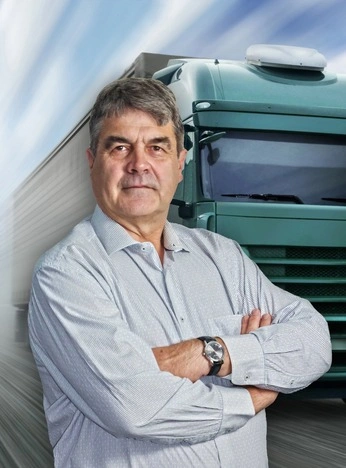
Gavin Kelly, CEO of the Road Freight Association
Logistics
Is Your Logistics Business the One AI Recommends? A Cape Town Agency’s Numbers Say It’s Starting to Matter

A year ago, AI assistants sent this business no visitors. Now they do. For transport, logistics and supply chain companies, the way buyers shortlist carriers and freight partners is changing too.
IMS‘s work with Big Talk Entertainment shows how AI search is starting to influence how South African businesses are found. The lessons apply across the sector, from freight operators, couriers and clearing agents to warehousing, cold chain and supply chain software firms.
Between February and July 2026, Big Talk Entertainment recorded 28 website sessions from AI assistants such as ChatGPT, Gemini and Perplexity. Over the same period in 2025, Google Analytics 4 recorded none. The Cape Town entertainment agency worked with Johannesburg-based digital agency IMS to make its website easier for search engines and generative AI tools to find, understand and cite.
The numbers are still small, and IMS is candid about that. “The direction is what matters,” says IMS’s Chief Disruptor, Francois Vorster. “A way of finding customers that did not exist a year ago now does.”
Over the same six months, new visitors from Google search rose 67%, and people typing the website’s address directly into their browser, often a sign that someone remembers a brand, rose 87%.
Why This Matters for Logistics
Big Talk is not a logistics business, but its corporate buyers behave like yours. They research several suppliers before they make contact, and in logistics a poor choice means late deliveries and damaged stock. More of that research now starts with a question put to an AI tool, such as “Which freight forwarders handle cross-border shipments to Zambia?” or “Who offers warehousing near the Durban port?”
“Choosing a logistics, transport or supply chain partner is a high-stakes decision, so buyers research thoroughly before they request a quote, and more of that research now starts in an AI tool and not a Google search,” says Vorster. “We can’t say for certain how much of the improvement came from traditional search work and how much from the AI-focused work. What we can say is that AI tools have become a measurable new source of visitors for a business that had none a year ago.”
What IMS Did
IMS combined traditional search work with making the business easier for AI tools to find and recommend: improving the website’s technical foundations, rewriting pages to answer the questions customers ask, and keeping the business’s details consistent everywhere AI tools look.
For a logistics business, that means clearly explained services, current coverage areas and routes, fleet and capabilities, licences and certifications, and answers to common shipper questions.
“A few years ago, nobody asked ChatGPT to recommend a band for their wedding. Now many people do,” says Deon Schlebusch, Managing Director of Big Talk Entertainment. “We are not walking away from the channels that have always worked for us, but we’d be foolish to ignore a new one that’s starting to send us business leads.”
A Word of Caution
The results come from Big Talk’s own analytics, comparing 1 February to 31 July 2026 with the same period in 2025. Because traditional and AI-focused work ran together, the growth cannot be credited to the AI work alone, and any link between AI recommendations and direct visits cannot be proven from the data. “We would rather show what we can actually measure than overclaim,” says Vorster.
Logistics businesses should also make sure claims about coverage, transit times, licences and safety records are accurate and verifiable, because buyers rely on what AI tools tell them.
What is GEO?
Generative Engine Optimisation, or GEO, is the practice of making a business easier for AI tools to find and recommend. Where SEO is about ranking on Google, GEO is about being the answer an AI tool gives.
The full case study is available at https://imsolutions.co.za/news/big-talk-entertainment/

Francois Vorster, IMS Chief Disruptor

Deon Schlebusch, Managing Director of Big Talk Entertainment
Logistics
Opinion Piece: Open Access to Rail Can Be a Game-Changer for SA, But Only if Infrastructure Investment Accelerates


Hammer Blow to Road Freight Logistics With October Fuel Price Hike: What This Means for the Road Logistics Sector and Consumer

Is Your Logistics Business the One AI Recommends? A Cape Town Agency’s Numbers Say It’s Starting to Matter

Opinion Piece: Open Access to Rail Can Be a Game-Changer for SA, But Only if Infrastructure Investment Accelerates


-

 Management3 months ago
SEO, AEO, GEO and SEO for AI: What Is the Difference for the Supply Chain Industry?
-

 Transport4 months ago
LDV T60 Max vs GWM P500 vs Isuzu D-Max vs Toyota Hilux vs Ford Ranger: Which Double-Cab Bakkie Offers the Best Value?
-

 Logistics4 months ago
DHL Group to invest around € 160 million in 2026-2027 to strengthen logistics infrastructure and support clean energy transition in France
-

 Logistics3 months ago
Top 5 Warehousing and Logistics Companies in the Western Cape by Google Review Rating
-

 Logistics4 months ago
DHL Expands Asia Pacific Data Center Logistics Capabilities to Support Growing Regional Demand
-

 Logistics4 months ago
Top 10 Warehousing and Logistics Companies in Gauteng by Google Review Rating
-

 Freight Forwarding4 months ago
The Hidden Cost of Shipping from China to South Africa — What Every SA Importer Needs to Know in 2026
-

 Logistics3 months ago
Top 4 Lift Truck Companies in Gauteng