
Freight Forwarding
Breaking ground in trucking, transport, and trailers: Mega-T unveils the latest developments in road freight


Mega-T, the premier expo for the trucking, transport, and trailer industry, is thrilled to announce some of the latest participants in this year’s event. Taking place from 5 to 7 October at Diamantvallei Landgoed east of Pretoria, Mega-T will showcase the latest products and services, cutting-edge technologies, and transformative trends that are revolutionising the industry.
From trucks and trailers, tracking and security, parts and maintenance, to refueling systems, navigation and fleet management, this highly anticipated expo provides attendees with a one-stop industry shop.

Telematics solutions company Landmark Tracking have announced their participation in Mega-T 2023. Says Johann Raubenheimer, a Director at Landmark Tracking: “We were part of the first Mega-T in 2022 and saw the enormous potential the show has.
We will stay part of this show, as it speaks directly to our target market – both clients and suppliers.” As a leading telematics solutions integrator and systems company, Landmark Tracking focuses on three key areas: multiple tracking solutions, dash cam and mobile camera solutions and intelligent fuel probe systems. Their numerous solutions will be on display at the show.
The company will be hosting demonstrations on their fuel probe in a tank, to show how immediate and accurate the alerts are. Their LMT fuel management offering allows for real time viewing and recording of all fuel activity on static or mobile fuel tanks. “Our system enables users to take back control of their company’s fuel expenditure, with reports they can count on”, explains Raubenheimer.
Local is lekker – with Trail- Link
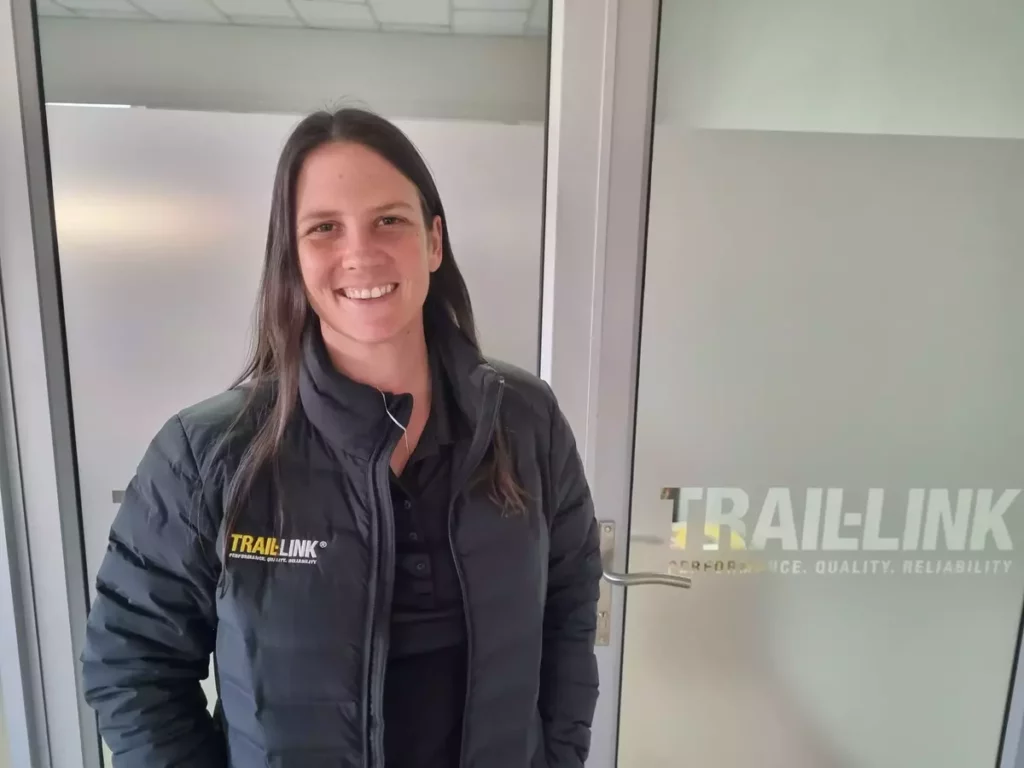
“Getting involved in local events such as Mega-T that offers an opportunity to stimulate business growth and awareness is exactly where we want to be and what we want to do,” says Kim Collins, Head of Sales and Marketing at Trail-Link, which has signed up for the show. “These events offer opportunities for interaction, the exchange of ideas and the opportunity to network face to face with the real deal.”
Trail-Link has come a long way as a Proudly South African manufacturer and supplier. “We believe that local manufacturers, big or small, are the heartbeat of any economy and community,” continues Collins.
“Our products are designed and manufactured specifically for the South African market and environment.” Ä family operated business established in 2004, the company started developing products based on previous experience in the transport industry.
Trail-Link started with the development of a high quality electrical suzi coupling system with moulded plugs and a universal catch assembly providing LOCK-IN of these connectors. The range has since expanded due to industry demand to include plugs, sockets, harnesses and accessories, which are now fitted as standard on leading OE brands.
At Mega-T, Trail-Link will be displaying their locally manufactured electrical suzi coils and EBS/ABS braking coils, along with their red and yellow air coils.
Braking news from Knorr Bremse
The world’s leading manufacturer of braking systems and supplier of additional sub-systems for commercial vehicles, Knorr Bremse, has confirmed its participation in Mega-T 2023.The company has pioneered the development, production, marketing and servicing of state-of-the-art braking systems.
The company supplies airbrake products for most OEM truck manufacturers. “Being able to rely on safe operation is one of the key principles underlying efficient transportation and modern logistics, “explains Duane Dugtig, Key Accounts Manager AM/OES Truck Division at Knorr Bremse. “For more than 115 years, Knorr-Bremse has been a major driving force behind road and traffic safety.”
Tickets now available
Online purchase of tickets is now possible and those who register online get a 50% discount, paying only R50 per ticket. Tickets purchased at the gate will cost R100 per ticket. Children under 18 attend for free. Members of the Road Freight Association (RFA) members also attend for free if they register online.
Visit the official website at this link to purchase your tickets today.
Mega-T is powered by the Road Freight Association.
Freight Forwarding
A Terminal in Healing: SAFLA and the RFA Acknowledge the Movement Towards DGT Efficiency

The South African Freight and Logistics Association (SAFLA) and the Road Freight Association (RFA) were present during the recent interaction between Durban Gateway Terminal (DGT) and relevant stakeholders and organisations that have operations or members processing cargo through the terminal.
Representatives of DGT and International Container Terminal Services Inc (ICTSI) were candid and open regarding challenges experienced – as well as what had been achieved in the period that Transnet had signed the agreement with ICSTI.
Whilst there are challenges, the terminal was functioning well – given the challenges experienced, and both DGT and ICTSI listened to comments from all present and noted that two processes were in place to address the operations at DGT.
One was short term: this included the waiving of all terminal storage charges whilst the current set of challenges were experienced, and secondly, there was an accelerated programme to keep the various pieces of machinery operating at the best levels of safety and functionality, as was possible. Gensets had been brought in to deal with power disruptions.
In addition, DGT acknowledged the problems with the slot booking system and already had developed a solution to vastly improve the process – this was to be shared with all shareholders in due course for comment and implementation.
DGT also brought Transnet into the meeting to address certain aspects that had placed pressure on operational efficiencies.
Long-term plans: the Terminal requires significant refurbishment and upgrading / modernising to compete with the options of other ports on the Southern African continent. Much of the equipment needed has been ordered – but there are lengthy lead times in the delivery of the equipment.
“There are immediate short-term options – such as reducing the pressure on the terminal whilst upgrades and interventions are applied. Perhaps Transnet can lower container movement tariffs (from other ports) for a period, whilst DGT is brought to the level of efficiency required. As we have noted – transporters are carrying the costs of inefficiencies,” said Gavin Kelly, Chief Executive Officer of the RFA. “Fleets are standing without bookings while fixed costs run, drivers are queuing on Bayhead Road, and every standing hour ends up in the price of goods. Slot releases must match real capacity, and truck staging must be fast-tracked now. Without trucks, South Africa stops.”
“SAFLA is delighted at the waiving of storage charges whilst the current set of challenges are being experienced,” said Dave Logan of SAFLA. “This will meaningfully ease the burden on freight forwarders and their clients, and we welcome this gesture of good faith from DGT and ICTSI.”
SAFLA and the RFA stand ready to contribute member evidence and practitioner expertise to a joint recovery task team alongside DGT, Transnet, government and other industry bodies.
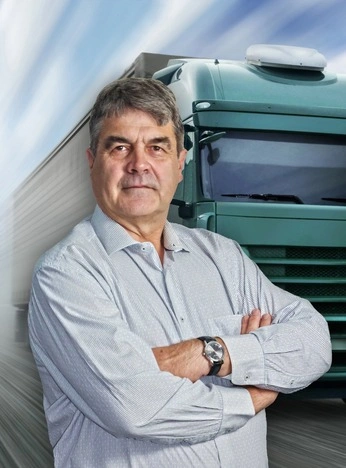
Gavin Kelly, CEO of the Road Freight Association

Dave Logan – Executive Officer of SAFLA

Is Your Logistics Business the One AI Recommends? A Cape Town Agency’s Numbers Say It’s Starting to Matter

Opinion Piece: Open Access to Rail Can Be a Game-Changer for SA, But Only if Infrastructure Investment Accelerates

South Africa’s Technical Talent Takes Centre Stage at National Skills Competition


-

 Management3 months ago
SEO, AEO, GEO and SEO for AI: What Is the Difference for the Supply Chain Industry?
-
 Transport4 months ago
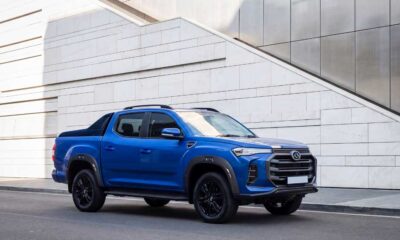
LDV T60 Max vs GWM P500 vs Isuzu D-Max vs Toyota Hilux vs Ford Ranger: Which Double-Cab Bakkie Offers the Best Value?
-

 Logistics4 months ago
DHL Group to invest around € 160 million in 2026-2027 to strengthen logistics infrastructure and support clean energy transition in France
-

 Logistics4 months ago
DHL Expands Asia Pacific Data Center Logistics Capabilities to Support Growing Regional Demand
-

 Logistics3 months ago
Top 5 Warehousing and Logistics Companies in the Western Cape by Google Review Rating
-

 Logistics4 months ago
Top 10 Warehousing and Logistics Companies in Gauteng by Google Review Rating
-

 Freight Forwarding4 months ago
The Hidden Cost of Shipping from China to South Africa — What Every SA Importer Needs to Know in 2026
-

 Logistics3 months ago
Top 4 Lift Truck Companies in Gauteng