Connect with us

Freight Forwarding

Five Strategies for enhancing the efficiency of freight forwarding in South Africa

Published

on

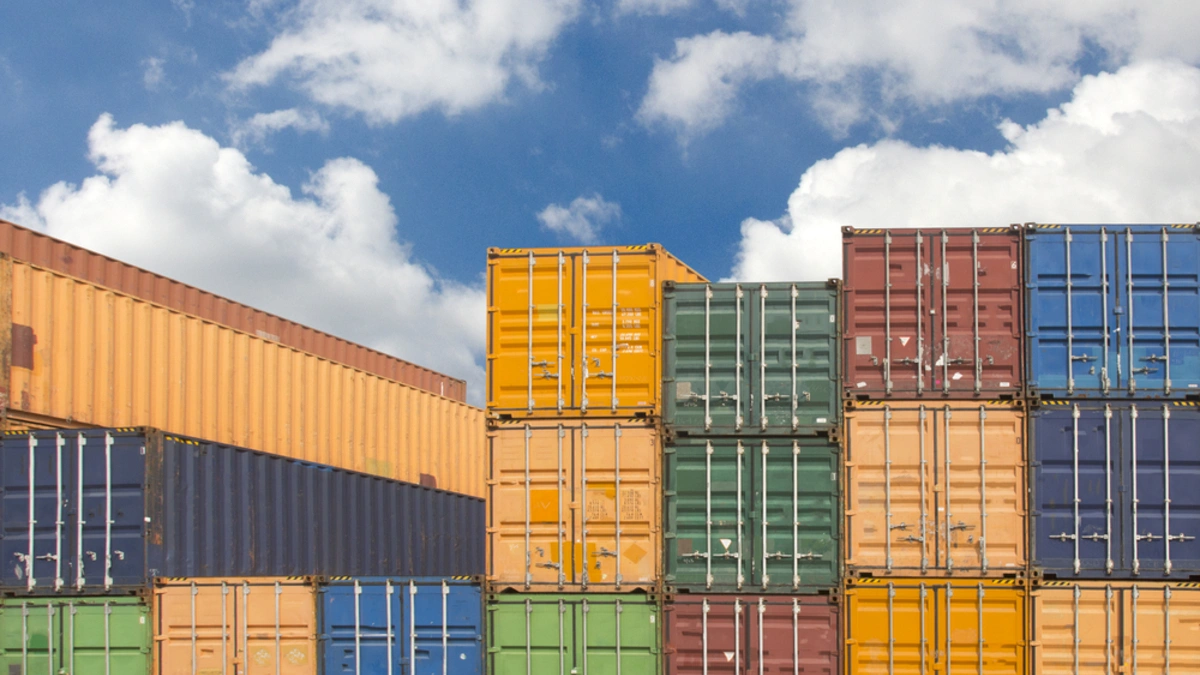
Man and women standing infrount of shipping containers

Freight forwarding is a vital part of the supply chain in South Africa. As it involves managing the transportation and logistics of goods from point A to point B. However, just like any other industry, freight forwarding faces obstacles that can impact its efficiency. In this article, we’ll discuss five strategies that can help freight forwarders in South Africa to be more efficient and effective.

1. Technology plays a large part in enhancing efficiency

In today’s world companies can take advantage of a wide variety of useful technology, such as cloud-based software, GPS tracking systems, and digital platforms to manage their operations with a higher degree of efficiency. These technologies come with several advantages, such as automating routine tasks, providing real-time visibility of shipments, and improving the chain of communication between different parties within sectors of the supply chain.

2. Adopting lean management principles

By eliminating wasteful expenditure, whether it be on products, time, or storage your freight forwarding service can optimise its operations. For example, a freight forwarding service can reduce waiting time by improving communication with its partners and its customers.

Having inventory is important however, excess inventory can be wasteful and a cost to your business if your operation cannot move that inventory quickly and efficiently it simply becomes a cost to your inventory storage. This can be addressed by optimising shipping schedules, as this opens fresh storage space by ensuring goods are delivered and items keep moving.

3. Invest in valuable strategic partnerships

Strategic partnerships with other logistics service providers can be highly beneficial to freight forwarders. Because by partnering with a reliable and trusted trucking service and customs broker, freight forwarding partners can reduce the cost of transportation, streamline the customs clearance process, and speed up those all-important delivery times to your customers.

4. Investing in staff training and skills development

Training and improving the quality of your staff can have a more significant effect than you would expect. By investing in your staff, you give them the ability to handle different types of shipments and overcome more complex logistical challenges on their own. This gives freight forwarding companies and your partners trust that your staff is competent and efficient in their duties. Not only can this improve the overall efficiency of your operation as your staff can make decisions more decisively and quickly it also displays to your business partners that you are a company, they can have confidence doing business with going forward.

5. Prioritise your customers

Lastly, prioritising customer service is critical. Freight forwarding companies should make sure that their staff are responsive, friendly, and helpful. They can also invest in customer service technologies, such as chatbots and mobile apps, to enhance the customer experience. By prioritizing customer service, freight forwarding companies can build strong relationships with their customers, leading to repeat business and referrals.

Conclusion

Enhancing the efficiency of freight forwarding in South Africa requires a multifaceted approach that includes embracing technology, adopting lean management principles, establishing strategic partnerships, investing in staff training and development, and prioritizing customer service. By implementing these strategies, freight forwarding companies can improve their operations, reduce costs, and enhance the overall customer experience.

Continue Reading

Freight Forwarding

Why Empty Kilometres Are Still One of Logistics’ Biggest Challenges

Published

on

Model freight truck on a stock chart

Next time you’re driving on the N3, take a look at the trucks around you. Some will be carrying supermarket stock, vehicle components or building materials. Others, despite looking exactly the same, won’t be carrying anything at all.

Their deliveries have already been completed, and they’re making the journey back with an empty trailer.

For the average motorist, it probably goes unnoticed. For the logistics industry, it’s one of the biggest challenges on South Africa’s roads.

Every kilometre still costs money. The truck still burns fuel, the tyres continue to wear, the driver is still on the clock and the vehicle is unavailable for another job. The only thing that’s missing is the load.

The Delivery Might Be Finished, But the Trip Isn’t

Dropping off the last pallet doesn’t mean the day’s work is over.

As soon as a truck is unloaded, the focus shifts to the next journey. Ideally, there’s another load waiting nearby. If there is, the vehicle keeps moving and continues earning revenue. If not, it heads back empty, ready for its next assignment.

That might not sound like a major issue, but think about it across hundreds of trucks travelling every day. What looks like the occasional empty trailer quickly becomes thousands of kilometres where expensive equipment is moving without transporting a single product.

Empty Space Comes at a Cost

It’s easy to assume empty kilometres are mainly about fuel, but the impact runs much deeper.

Every trip still adds wear to the truck. Drivers still spend hours on the road. Maintenance schedules don’t change simply because the trailer is empty. More importantly, every truck travelling without freight is capacity that could have been used somewhere else.

In an industry where margins are often tight, getting more from the fleet you already have is usually far more valuable than simply adding another vehicle.

There’s No Simple Fix

If reducing empty kilometres were easy, the problem would have disappeared years ago.

A return load isn’t always available where a delivery ends. Customer collection times may not line up. Warehouses have different operating hours. Production schedules change. Sometimes the next load is simply too far away to make commercial sense.

That’s why transport planners spend so much time looking beyond individual deliveries. They’re constantly trying to connect one journey to the next, finding opportunities to keep trucks loaded for as much of the day as possible.

Technology has made that easier, but it hasn’t replaced experience. Knowing where freight is moving, understanding customer operations and building strong relationships across the supply chain still play a huge role in making those decisions.

Every Journey Counts

Whether a truck returns with another load often has very little to do with the transport company alone. Production schedules, warehouse operations, customer delivery windows and even where businesses are located all influence what happens once a delivery has been completed.

Most people driving past a truck will never know whether it’s carrying a full load or an empty trailer, and chances are they’ll never think twice about it. Yet for the businesses behind the scenes, that difference shapes everything from operating costs to fleet capacity and customer service. In logistics, making the delivery is only part of the job. Finding a way to make the journey back count is where the real challenge begins.

Continue Reading

Freight Forwarding

SAFLA and AMIE SA Sign MoC to Advance South Africa’s Meat-trade Logistics

Published

on

Blurred image of a man moving goods in a cold-chain logistics warehouse

The South African Freight and Logistics Association (SAFLA) and the Association of Meat Importers and Exporters of South Africa (AMIE SA) have signed a Memorandum of Cooperation (MoC) to deepen collaboration on the logistics, port-operational and regulatory issues affecting South Africa’s meat trade.

SAFLA and AMIE SA will use the MoC to identify recurring constraints, exchange evidence and develop practical, solutions-focused proposals for engagement with government agencies and stakeholders. The partnership will support constructive dialogue on port operations, border processes, veterinary and sanitary requirements, market access, rail and road connectivity, and supply-chain resilience.

A United Voice to Find Practical Solutions

“Logistics is fundamental to food security, trade competitiveness and economic growth,” says Jonathan McDonald, Vice Chairman of SAFLA. “This MoC gives SAFLA and AMIE SA a stronger platform to speak with one informed voice, engage constructively with government agencies and work with them to resolve issues that affect cargo flow, costs and reliability. We are most effective when industry brings evidence, expertise and practical solutions to the table.”

Paul Matthew, CEO of AMIE SA, adds that improved collaboration between industry and government is essential if South Africa is to turn trade opportunities into measurable growth. “We have the product, the capability and markets that are ready to buy South African meat,” Matthew notes. “What is required is effective coordination: clear communication between national and provincial authorities, efficient certification and inspection processes, and a willingness to bring the private sector into the solution.”

For meat exporters, the ability to supply international customers consistently is crucial. Delays in market-access processes and veterinary approvals can cause buyers to source from alternative suppliers. Animal-health events remain a trade risk, underlining the importance of robust traceability, credible controls and internationally accepted approaches to regionalisation.

Matthew highlights that trade is not a zero-sum choice between exports and domestic affordability. “Export markets enable producers to obtain value for different cuts across the carcass. That improves overall carcass balance and can support a more sustainable, affordable domestic supply,” he says.

The MoC recognises that food safety and regulatory compliance are non-negotiable. Its purpose is to support processes that are rigorous, proportionate and consistently applied, while ensuring that avoidable administrative bottlenecks do not undermine trade, jobs or consumer access to protein.

AMIE SA estimates that South Africa exported approximately 81,000 tonnes of red meat, including beef, sheep and goat meat, worth around R63 billion between 2025 and May 2026, demonstrating the significant economic potential of the sector even amid disease-related and administrative constraints.

The freight-forwarding sector that enables this trade is itself substantial, with South Africa’s freight-forwarding market estimated to have generated approximately R81 billion in revenue in 2025. Freight forwarders also coordinate more than 80% of the country’s international trade, reinforcing the strategic importance of efficient, reliable logistics systems.

Room for Further Improvement

“Meat trade depends on logistics, predictable inspection and cargo-release processes, veterinary controls, and reliable access to international markets,” continues McDonald. “When these systems do not operate in concert, the consequences are felt by producers, importers, exporters, cold stores, transporters, processors, retailers and consumers.”

While there have been encouraging improvements in infrastructure and equipment in the Durban port, industry continues to confront operational pressure points, including cold-chain capacity, container handling, inspection coordination and release of consignments.

“Through industry engagement, communication and joint advocacy, SAFLA and AMIE SA intend to help convert recurring challenges into coordinated action,” concludes McDonald. “The associations believe that a unified industry voice, combined with respectful partnership with government, can improve the country’s logistics ecosystem, strengthen national supply-chain performance and support a competitive, resilient South African meat sector.”

Jonathan McDonald – Vice Chair of SAFLA, with Paul Matthew, CEO of AMIE SA

Vice Chair of SAFLA, John McDonald shaking hands with Paul Matthew, CEO of AMIE SA

Jonathan McDonald – Vice Chair of SAFLA, with Paul Matthew, CEO of AMIE SA

Continue Reading

Freight Forwarding

SAFLA Strengthens Regional Engagement with SARS Customs

Published

on

Blurred shot of a meeting in progress

On 14 July 2026, representatives of the South African Freight and Logistics Association (SAFLA) met in person with SARS Customs management teams in the Western Cape and Johannesburg to advance practical solutions for the freight forwarding and logistics sector.

The engagements build on SAFLA’s formal representation in SARS Customs stakeholder structures and are intended to create direct, practical channels between Customs and industry at regional level. The focus is on efficient trade processes, timely and transparent communication, responsible representation and consistent compliance.

“This is what practical partnership looks like,” says SAFLA Executive Officer Dave Logan. “We are not waiting for problems to accumulate. We are engaging SARS regionally, with clear agendas and evidence from members, so that issues can be addressed before they add avoidable time and cost to legitimate trade.”

Dave Logan, SAFLA Executive Officer

Western Cape Establishes a Structured Working Relationship

SAFLA’s Western Cape Working Group met the SARS Customs regional management team to present the Association’s national and regional model and agree on a structured engagement process.

SARS welcomed the platform and committed to monthly management meetings with the Working Group. It also indicated that broader stakeholder meetings involving customs brokers, shipping lines, depots and freight forwarders would be reinstated.

“SAFLA will continue to participate in quarterly Sea Modality structures and circulate meeting agendas in advance so that both sides arrive prepared to resolve clearly defined issues,” says SAFLA Vice President Jonathan McDonald. “The first formal management meeting is scheduled for 4 August 2026, with a broader stakeholder meeting expected later that month.”

Jonathan McDonald, SAFLA Vice President

“SARS is reviewing Western Cape Customs processes, operating practices and potential technology improvements. SAFLA members will be able to contribute evidence-based input on bottlenecks, inspection delays, communication gaps and the commercial cost of avoidable hold-ups,” McDonald adds.

This channel is particularly important for smaller operators, which have less capacity to absorb the cost of delays and repeated administrative escalation.

Regional Engagement Progresses in Johannesburg and KwaZulu-Natal

In Johannesburg, SAFLA representatives outlined the Association’s purpose and regional engagement model to SARS Customs. SARS indicated a willingness to meet monthly on Customs matters affecting Johannesburg, including Sea Modality issues.

As the relationship moves towards formalisation, SARS requested SAFLA’s stakeholder engagement documentation, confirmation of the Association’s recognition, an organisational chart and current membership numbers. These governance steps will support a durable, properly constituted relationship and inform engagement in other SARS regions.

SAFLA’s KwaZulu-Natal Working Group has meanwhile focused on engagement with Transnet National Ports Authority (TNPA) at the Port of Durban, as road congestion continues to affect access to terminals and depots.

“At a meeting on 24 July, the port manager outlined short- and long-term interventions being implemented. Road access remains a particular concern, including access to the port’s container terminals, the Island View (Cutler) Complex and Bulk Connections,” explains Dave Watts, a member of SAFLA’s KwaZulu-Natal Working Group.

SAFLA KZN Working Group Member Dave Watts

International Container Terminal Services  (ICTSI) assumed day-to-day operational responsibility for Durban Container Terminal Pier 2 in January 2026 under its partnership with Transnet.

“Regular engagement with management across Durban’s container terminals is continuing. At Durban Gateway Terminal, members are reporting limited truck-booking slots and considerable staging-area delays. High volumes, vessel bunching and equipment breakdowns are among the issues understood to be affecting performance,” Watts adds.

The KwaZulu-Natal Working Group also attended a regional SARS Customs meeting as an observer and is working to establish an ongoing relationship with regional Customs officials.

A Practical, Outcomes-Based Relationship

“These engagements show that both parties are willing to build practical, accountable working relationships focused on measurable outcomes. SAFLA’s role is to bring evidence, represent members with integrity and work alongside SARS on solutions that improve both trade facilitation and compliance,” McDonald says.

“SAFLA exists to give freight forwarders a credible voice, nationally and in every region where trade happens. We will keep engaging constructively and measure success by whether the issues raised translate into clearer processes and operational improvements,” he concludes.

Continue Reading

Trending