Press Releases
Celebrating Truckers Together: #ThankYouTrucker Competition Returns
Published
4 years agoon
By
SCN Africa
As a result of overwhelming demand and the huge successes of the inaugural competition in 2021, #ThankYouTrucker is back! Following the hotly contested inaugural competition, IVECO SA, in partnership with the Road Freight Association (RFA), have announced details of the 2022 search for the best trucker in South Africa.
“Trucking is the backbone of domestic supply chains and without trucks, our economy stops,” says Martin Liebenberg, Managing Director of IVECO SA. “Despite the war in Ukraine, the ongoing Covid-19 pandemic, unrest, natural and national disasters, massive fuel price hikes and sporadic supply chain disruptions, our truck drivers continue to deliver what we need every day and go the extra mile. Through the #ThankYouTrucker campaign, IVECO SA and the RFA want to honour and celebrate the great work and efforts of our nation’s most exceptional drivers.”

How to Enter
#ThankYouTrucker is looking for the most extraordinary freight driver: a remarkable individual who goes above and beyond the call of duty. This driver is helpful, trustworthy, dependable, caring and passionate about his/her career in trucking.
Fleet owners and managers can nominate any number of drivers they believe meet the criteria. Entries open on 11 June and close on 3 September 2022.
R50 000 will be awarded to the winning driver. The driver in second place will win R10 000, with the third placed driver receiving R5 000.
The Transport Industry’s Choice
“#ThankYouTrucker is a unique opportunity for the industry to thank truck drivers for their commitment, professionalism, tireless efforts and dedication to a tough job. We look forward to receiving nominations for this year’s competition,” says Gavin Kelly, Chief Executive of The Road Freight Association.
For more info/Enter now button: www.thankyoutrucker.co.za
You may like
Press Releases
Your Weakest Supplier Could Be Your Biggest Cyber Risk
Published
10 hours agoon
October 29, 2026By
SCN Africa
Written by J2 Software sales director Roy Alves
It does not matter how much a business has invested in securing its own network if an attacker can walk in through a supplier, service provider or SaaS application with legitimate access. Your weakest supplier could be your biggest cyber risk.
In today’s interconnected supply chains, the security of a business increasingly depends on organisations it does not control, may barely know, and may never have considered part of its cyber security perimeter.
This is not a theoretical problem for South African businesses. Third-party risk was identified as the leading concern by 60% of South African CISOs in the 2026 ITWeb Brainstorm CISO Survey, while PwC’s 2026 Digital Trust Insights research found that only 6% of South African organisations consider themselves very capable of managing supply chain vulnerabilities.
The uncomfortable part is that supply chain businesses can have hundreds or even thousands of suppliers, and every one of those relationships potentially introduces another point of exposure.
The risk becomes even harder to manage because suppliers have suppliers of their own. A manufacturer, distributor, retailer or logistics company may depend on technology providers, outsourced service companies, contractors and software platforms, all of which may have some level of access to its systems or information.
Somewhere in that chain there may be a smaller business with access to an email account, application, shared platform or corporate network that has security controls nowhere near those of the organisation ultimately carrying the risk. The bigger the ecosystem becomes, the harder it is to know exactly where the exposure sits.
Cloud and SaaS have made this trust chain even longer. A business may rely on Microsoft 365 for email, a cloud platform for financial systems, a SaaS application for customer management, another service for logistics and an external provider for IT support. These systems are often connected through APIs and integrations, creating relationships that are easy to establish but surprisingly difficult to understand.
The security of an application matters, but so does what it can access. An organisation can carefully assess the security of a SaaS provider while overlooking the permissions granted to the application itself, potentially giving a compromised service access to sensitive data, mailboxes, files or business systems.
There is another problem, and it is often hiding in plain sight. Business users can introduce cloud applications without waiting for IT, signing up for services within minutes and connecting them to corporate data. Marketing, finance, sales and operations teams may all have legitimate reasons for doing so, but the organisation can quickly lose visibility of which applications are connected to corporate identities and information.
This is often referred to as shadow SaaS. What begins as a useful productivity tool can quietly become another part of the attack surface, particularly when nobody knows who still has access to it or what happens when an employee leaves.
This is where traditional supplier due diligence starts to fall short.
A questionnaire completed once a year does not tell you whether a supplier has subsequently suffered a breach, changed its infrastructure, added another subcontractor, altered access permissions or introduced another cloud service into the environment. Nor does it necessarily tell you what happens when that supplier depends on another provider.
The real question is not simply whether a supplier is secure, but how far the trust relationship extends. Critical suppliers need to be identified, privileged access controlled, cloud and SaaS connections understood and third-party accounts monitored, while access should disappear when the business relationship ends.
Where a supplier is genuinely critical, organisations also need to understand how they would continue operating if that supplier suffered a cyber incident, ransomware attack or prolonged outage.
Addressing third party risk requires continuous visibility across endpoints, cloud environments, Microsoft 365, SaaS platforms and the wider digital estate. J2’s managed security services and Cyber Resilience Framework are designed to give organisations greater visibility and control across users, email, data, machines and internet facing assets, helping identify unusual activity, compromised accounts and suspicious access.
The objective is not simply to monitor what happens inside the organisation, but to identify the signs that something connected to it has become a security problem, giving IT and security teams an opportunity to respond before a supplier compromise becomes a business compromise.
The answer is not to stop using suppliers, cloud services or SaaS. That would be neither realistic nor commercially sensible. The answer is to understand where trust exists, what that trust allows someone to access and what the consequences would be if it were abused.
Every supplier, SaaS platform, integration and business partner effectively extends a company’s digital footprint. Cyber security is no longer just about defending the systems a company owns, it is about understanding the ecosystem on which the business depends. For supply chain companies, that ecosystem is now part of the attack surface, and ignoring it does not make the risk disappear.
Press Releases
Bobby Ramagwede, CEO of the AA, Keynote Address: Speaking Truth to Power
Published
1 day agoon
October 28, 2026By
SCN Africa
Breaking the Silence
Every year I come to Automechanika, and every year I feel less like a CEO and more like a pastor. Not a priest. A pastor. The kind who comes down off the stage and walks the aisle.
I could stand here and tell you what you already know. But you know which policies are broken. You know your margins. You know which brands come back on a tow truck. You don’t need me to read you the news.
So let me say something else. This industry doesn’t have a knowledge problem. It has a silence problem.
The people in this room see it first. The workshop sees the fault. The supplier watches the order book shrink. The fleet owner knows exactly how many more fuel increases the business can survive. Too often, we see it, we know it, and we keep quiet. Like ostriches, we bury our heads in the sand, waiting for someone else to fix it.
But the truth is that nobody is coming to save you.
We’ve reached a defining crossroads in this industry. Today, I would like us to confront three uncomfortable truths to save our industry.
The Mirage of the Chinese Import Wave
The first truth is the impact of the massive wave of Chinese vehicle imports flooding South Africa.
Chinese brands now account for more than 19% of all new vehicle sales in the country. They arrive with sleek, aggressive styling, panoramic sunroofs, voice-activated cockpits, and dazzling digital screens. On paper, they look like an affordable miracle.
I am not here to say every Chinese car is flawed. I have nothing against vehicles imported from China. They are innovators doing serious engineering. But I am here to tell you that South African consumers are being treated as guinea pigs for products that have not earned the right to be trusted with human lives.
Consider the data. When consumer journalist Wendy Knowler investigated the National Consumer Commission’s vehicle recall registers, she uncovered something extraordinary. In 2025, the NCC processed 57 official safety recalls across our market. Australia, a market twice our size, issued 135. Recalls are not a corporate scandal; they are proof that consumer protection mechanisms are doing their job.
Yet, across a brand collective that captures nearly one-fifth of our national new vehicle market, almost none appeared on that register.
Are these cars built so impeccably that they defy the laws of mechanical engineering? Or are our consumers simply being kept in the dark?
We know the answer. The NCC confirmed that Chery, the dominant force in this import wave, has been executing what can only be described as “silent recalls.”
On the Tiggo 8 Pro Max, a critical brake pipe campaign affected nearly 3,500 vehicles—more than 30% of every unit sold in South Africa. A brake clip can fail, allowing the brake line to shift directly against the turbo’s scorching exhaust housing. That is not an annoying rattle; that is a potential catastrophic brake loss and fire.
Chery quietly sent an internal circular to dealers telling them to treat it as a priority. But they never issued an open, public safety recall to the drivers of those cars. Over 2,100 of those vehicles remained on our public roads, carrying families at 120 km/h, with owners completely unaware their brakes were compromised.
And this is not an isolated incident. At the Automobile Association, we blew the whistle on Jetour, another Chery Group brand. They magically increased the payload rating on their T1 and T2 models from 300 kilograms to 475 kilograms, a 58% quantum leap on paper, without upgrading a single bolt, spring, or mechanical component. When the AA insisted on an independent weighbridge test alongside the NRCS, the vehicle failed the test right before our eyes. Yet those vehicles were already being advertised and sold.
Now let’s look across our oceans to Malaysia. On the 6th of October, an Omoda 5 was driving through Johor Bahru when its entire rear axle detached cleanly from the chassis. Unlike our authorities, the Malaysian Road Transport Department did not negotiate. It immediately suspended the type approval for pre-facelift petrol Omoda 5s across 8,800 vehicles while investigations unfolded.
In South Africa? Deafening silence. Some of you probably drove an Omoda C5 here.
Established Japanese and European automakers spent over a century refining manufacturing tolerances, metallurgy, and stress testing. In those mature supply chains, catastrophic mechanical defect rates sit at roughly one in ten thousand. In our workshops and roadside recovery logs today, we are seeing component defect and failure patterns from certain new import stables approaching alarming rates.
These are not toasters, guys. They are two-ton steel projectiles carrying our children. If I put a sticker on a windscreen that said: “There is an unacceptably high chance this vehicle will suffer a major mechanical failure or safety defect,” would you buy it? Would you let your daughter drive it?
And we must also heed a broader economic warning. Look at Thailand. Thailand opened its borders to massive Chinese EV import subsidies without safeguarding its local manufacturing ecosystem.
In four short years, Chinese brands seized 85% of their EV market. The result? Suzuki and Subaru closed their manufacturing plants. Dozens of Tier Two and Tier Three domestic component suppliers went bankrupt. Skilled artisans who spent decades crafting exhaust systems and chassis components are now earning $11 a day packing shelves at supermarkets. Thailand’s chief economic planner had to publicly admit: “We did not think of the full picture.” South Africa is no exception.
If we don’t demand strict local homologation, real weighbridge verifications, transparent recall compliance, and reciprocal industrial value, South Africa will blindly follow the same path.
Mobility in a World of Fuel Hyperinflation
Which brings me to our second crisis: mobility in a world strangled by hyperinflation in fuel prices.
A few weeks ago, Elon Musk stood up in California and captivated global headlines with visions of flying autonomous cars. It was a dazzling theatrical feat. It made for magnificent social media clips.
Fly all you want in Silicon Valley. But here, on the southern tip of Africa, the future of mobility is not about flying cars. In South Africa, the future of mobility depends on whether a mother in Orange Farm or Khayelitsha can afford the basic human right to move!
Mobility is freedom. Mobility is access to employment, education, healthcare, and economic dignity. Those things so many of us in this room enjoy. And in South Africa today, we have engineered a structural poverty trap on wheels.
Official government policy says household transport spending should never exceed 10% of total income. Stats SA says the national average is 16%. But look at the working class. The Pietermaritzburg Economic Justice and Dignity Group tracks the real cost of living. On our national minimum wage of just over R5,000 a month, the average worker spends R1,520 on taxi fares alone. Transport and basic electricity eat up over 64% of their entire take-home pay.
Think about that math. A worker surrenders half their salary just to sit in a minibus taxi to get to work. They are left with less than R1,800 to feed a family of four for thirty days.
Do you know what that looks like in human terms? Over 25% of South African boys under the age of five suffer from stunting due to chronic malnutrition. Why? Because their mothers are forced to choose between the taxi fare to keep their jobs and buying eggs and milk for their children. Our transport system is actively starving our children!
And why? Because of spatial apartheid and total policy failure. Low-income workers are forced to live on urban peripheries, paying a double-fare penalty every morning and evening. Two minibus taxis to work, two minibus taxis back. That is R72 a day. R1,580 a month in cash.
And who carries them? The minibus taxi industry carries over 80% of all public transport commuters in this country. Yet how much operational subsidy does the state provide to those taxi operators? Bus operators, by contrast, get lavish subsidies.
Zero. Not one cent.
Every hike in crude prices, every spike in the General Fuel Levy, and every increase in the Road Accident Fund levy is passed directly onto the shoulders of the poorest of poor commuters.
Our mobility operators are now at a critical juncture. Taxi operators are trapped between a rock and a hard place: bankruptcy or abandonment. If they raise their fares to match true fuel inflation, commuters simply cannot pay, ridership collapses, and routes die. If they keep fares flat, they run at an operational loss and cannot service their brakes or replace their tyres.
And it is not just taxis. Go out to OR Tambo or Cape Town International. Look at the aprons. You will see commercial passenger aircraft parked in the heat. Air traffic control snags alone don’t ground them. They are parked because South Africans cannot afford domestic airfares. Fuel costs have pushed ticket prices past the breaking point, forcing airlines to consolidate flights just to keep a single aircraft financially viable.
Look at your own roads at dawn. You will see an unprecedented army of commuter cyclists pedalling twenty, thirty kilometres along unlit highways without cycle paths, dodging heavy trucks. They are not riding for fitness. They are riding because they cannot afford the taxi fare.
And while this tragedy unfolds on our streets, what does our government do?
Between 2019 and 2023, the Gauteng Department of Roads and Transport handed the Bombela Concession Company R5.1 billion in contractual “patronage guarantees” for the Gautrain. Over the same four-year window, Gautrain passenger trips collapsed from nearly 14million to under 8 million.
We are paying billions in public money to insure the commercial profits of an empty luxury train service for a wealthy elite, while Metrorail tracks sit stripped and gutted, and our working class have to walk through the dark to get to work.
And now the Gautrain Management Agency wants to launch an e-hailing service called “Gau Express”? Are you joking? The state is bleeding transit passengers, and its answer is to launch an overpriced, app-based taxi fleet to compete with private operators on congested roads? The very promise of the Gautrain was to decongest these roads.
It is vanity masquerading as public policy. We must stop funding vanity projects and start funding purpose and greater mobility equality. We must fund the freedom to move, a constitutional right that seeds human actualisation.
Policy Paralysis and the Slow Collapse
This brings us to the core dilemma in this room: the future of our domestic automotive industry amid paralysing policy indecision.
We have arrived at that fork in the road. Now we must choose decisively. Either South Africa will remain an industrial manufacturing powerhouse that builds, welds, and exports motor vehicles, or we will abandon that legacy and become a pure import-and-retail trading desk.
Right now, our government is attempting to do both under a contradictory, chaotic hodgepodge of policy.
They are trying to mix oil and water. You can make an emulsion from oil and vinegar, yes, true, but only with a powerful emulsifier. If you let that settle, it will eventually split. In an industrial economy, that emulsifier must be a competent, decisive, visionary state that coordinates trade policy, energy security, rail logistics, port operations, and localised manufacturing incentives with ruthless precision.
We do not have said emulsifier.
Instead, we have policy paralysis. We talk endlessly about New Energy Vehicles, yet our localised incentives remain sluggish and opaque while foreign competitors dump subsidised imports into our dealerships. We watch Transnet bottle up our ports, forcing OEMs to incur crippling demurrage costs while finished vehicles sit stranded offshore and export containers rot on sidings.
Let me give you an analogy.
You all know the famous dinner party trick. A magician grabs the edge of a tablecloth loaded with plates, glasses, and silverware. If you want the plates to stay safely on the table, you must grab that cloth and yank it with blinding speed and absolute conviction! Inertia does the work, the cloth snaps free, and the dinner service remains intact.
What is our government doing? They are not yanking the cloth.
They are slowly, timidly, hesitantly dragging the tablecloth inch by inch. And what are we doing? Are we sitting back, watching the plates wobble, the wine glasses tilt, and the cutlery slide inexorably toward the edge of the table? We can do better.
When that crockery hits the floor and shatters into a million pieces, do you think you can simply glue it together again? Rebuilding an automotive industrial base after it collapses is like rebuilding an economy after a war. Once the toolmakers pack up their dies, once the foundries shut down their blast furnaces, once the Tier Three engineers leave our shores, no one comes back.
Why are we allowing this? I will tell you why.
Because the private sector has gone quiet. The captains of industry in this room are terrified. You fear that if you speak plainly, criticise the Department of Trade, Industry and Competition, challenge the Department of Transport, or question the fuel levies, you will lose your seat at the negotiating table. You fear an audit, ostracism, or being passed over for government fleet procurement. Yes. I said it. You are afraid to bite the hand that feeds you crumbs, while that same hand starves your entire ecosystem.
Strip away the political noise. South Africa is not an ideological experiment; run it like a business.
If you sat on the board of directors of a major enterprise, looked at the management accounts, and saw logistics failing, fuel costs bankrupting your consumers, imported products destroying your core manufacturing margins, and your capital draining into vanity projects, what would you do?
Would you smile, nod, and compliment management on their slides?
Not a chance! You would intervene. At least I hope you would. You would right-size the operation, overhaul the strategy, fire incompetent management, and demand accountability.
You are the board of directors of the South African automotive industry! It is time you start acting like it!
Speak Truth to Power
Colleagues, hear me today. Silence is not diplomacy. Silence is complicity.
We cannot sit at Automechanika, trade business cards, marvel at shiny imported showroom displays, and pretend that our silence will protect us. It will not.
It is time to speak truth to power!
To the National Consumer Commission and the NRCS: stop turning a blind eye. Demand mandatory public-safety recalls for every defective imported vehicle. Stop accepting foreign laboratory paperwork on blind faith. Put every imported model on local weighbridges and crash-testing jigs before our citizens pay with their lives.
To the Department of Transport and National Treasury: scrap the vanity spending. Stop pouring billions in patronage guarantees into empty luxury trains like the Gautrain. Reallocate those funds to where the real economy moves: mass commuter rail, Bus Rapid Transport networks, and subsidising the minibus taxi industry that keeps South Africa working. Conduct an immediate, independent audit of the General Fuel Levy and the Road Accident Fund to strip away the artificial tax bloat crushing our transport operators and working families. While you are at it, let’s review the basic fuel price.
And to every CEO, every dealer principal, every component manufacturer, and every aftermarket leader in this room: let’s take ownership of this industry together.
We need to stop waiting for some messiah. The industry has the economic leverage. The technical knowledge. The institutional voice.
Yes, take it from me, if you speak out, you will ruffle feathers. Yes, you might take flak from bureaucrats who would rather maintain the illusion of control. But I would rather take censure for speaking the truth for South African jobs and South African lives than die a slow, cowardly corporate death on an abandoned factory floor.
Stand up for your component suppliers. Stand up for your assembly workers. Stand up for the mother who has to walk through the dark because she cannot afford the taxi fare. Stand up for that five-year-old who suffers the consequences. Lastly, stand up for the dignity of South African mobility.
Let’s lift our heads out of the sand. And speak truth to power. If we unite, we can rebuild this country’s automotive industry into one we can be proud of, one that is more vibrant and useful.
We have no other choice. My father often says to me, and it is a hard truth: No one will save us. We must save ourselves.
Thank you.
Logistics
Runway to Railway Puts Innovation and African Identity at the Heart of Infrastructure
Published
2 days agoon
October 27, 2026By
SCN Africa
Smarter infrastructure, better connected transport systems and airport experiences that reflect African creativity were at the centre of Runway to Railway: Project Maverick, held at the Vineyard Hotel in Cape Town on 22 October 2026. The gathering brought aviation, technology and creative perspectives into a discussion about how innovation can improve infrastructure and the experience of the people who use it.
Held under the theme Simply Connect Africa, the event forms part of the Runway to Railway vision conceived by Anna K Hecart, founder and director of Connected Group. The platform brings different sectors together to explore connections between infrastructure, business and opportunity across the continent.
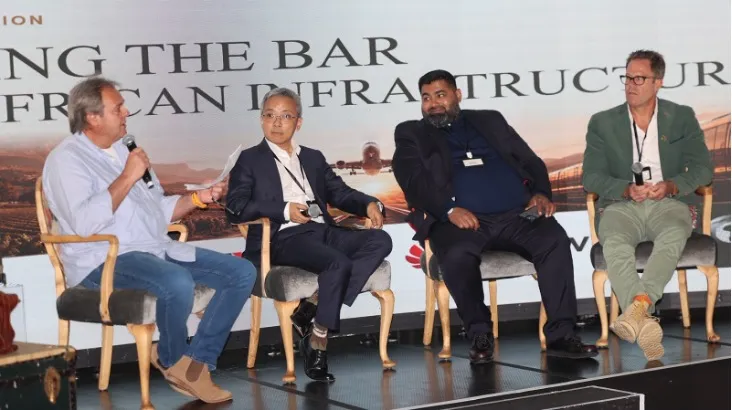
Raising the Bar for African Infrastructure. Panel participants: Dirk Ackerman, moderator; Nicholas Ferguson, Executive Managing Director, RSA Aero; Hasnain Motlekar, Acting Chief Executive Officer, BCX; and York Ning, Director, ICT Marketing & Solution Sales Department, Huawei South Africa.
“Runway to Railway began with a belief that Africa’s progress depends on the connections we make between people, industries and ideas,” said Hecart. “We are pleased to announce the Runway to Railway Expo for November 2027. Our ambition is to bring the people shaping transport, infrastructure and technology together with investors and creative businesses to explore practical solutions and build partnerships that move Africa forward.”
The Expo is being developed as a meeting place for aviation, rail, logistics, infrastructure, technology, tourism and design professionals, alongside investors and public-sector stakeholders. Partners can expect opportunities to showcase their capabilities and connect with potential collaborators. Attendees can look forward to discovering innovations, exchanging ideas and exploring how better connected infrastructure can support African business and communities.

Anna K Hecart, Founder and Director of Connected Group and visionary behind Runway to Railway, addresses the gathering.
The infrastructure conversation brought the airport development perspective together with the technology expertise of BCX and Huawei. It considered how closer collaboration can support better passenger experiences, reliable operations and the practical delivery of connected infrastructure.
“The decisions that shape a passenger’s journey are made across many different organisations,” said Ackerman. “Bringing developers, operators and technology partners together early helps us see how those decisions fit together and where collaboration can make infrastructure work better.”
“An airport is part of a much wider economic network,” said Ferguson. “Its development needs to consider how people arrive, how businesses connect and how the surrounding region benefits. Innovation should support that wider purpose while making the everyday experience more efficient and welcoming.”
“The value of connected infrastructure lies in what it enables people and businesses to do,” said Motlekar. “Reliable networks, secure systems and useful information need to work together. Planning these capabilities from the outset helps organisations improve services and respond as demand changes.”
Gavin Rajah delivered the closing remarks, extending the conversation to the quality and character of retail experiences at African airports. He highlighted the opportunity to bring greater creativity and a stronger expression of African identity into spaces that shape travellers’ first and last impressions of a destination.
“An African airport should give travellers a real sense of place,” said Rajah. “Our retail spaces can do far more to showcase the continent’s design, fashion, food and craft. We have the talent and the stories. The opportunity is to present them with imagination and the quality they deserve, while creating space for African creative businesses to grow.”
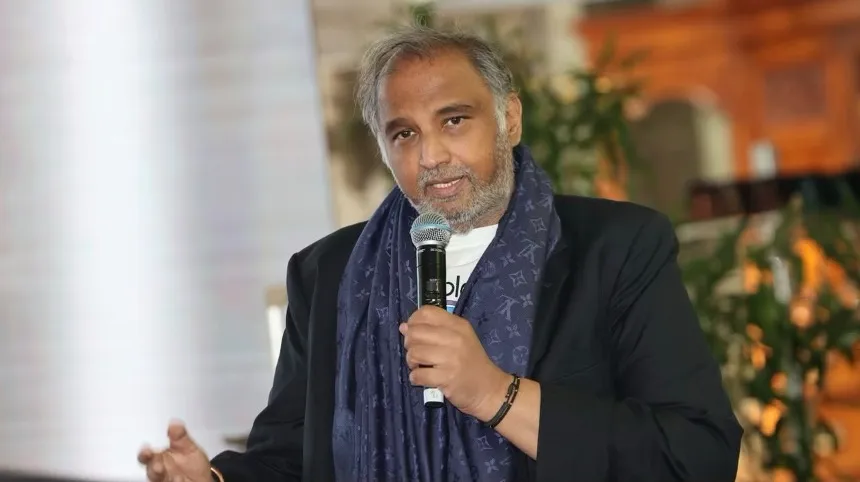
Gavin Rajah, closing speaker, addresses creativity and African identity in the airport experience.
Event photographs
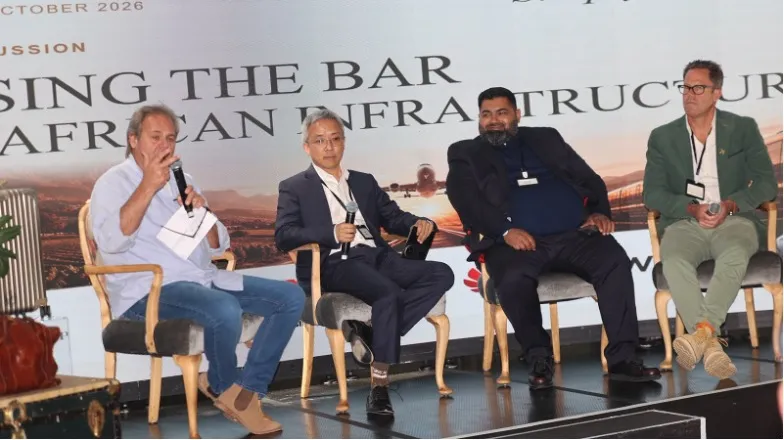
The Raising the Bar for African Infrastructure panel at Runway to Railway: Project Maverick.
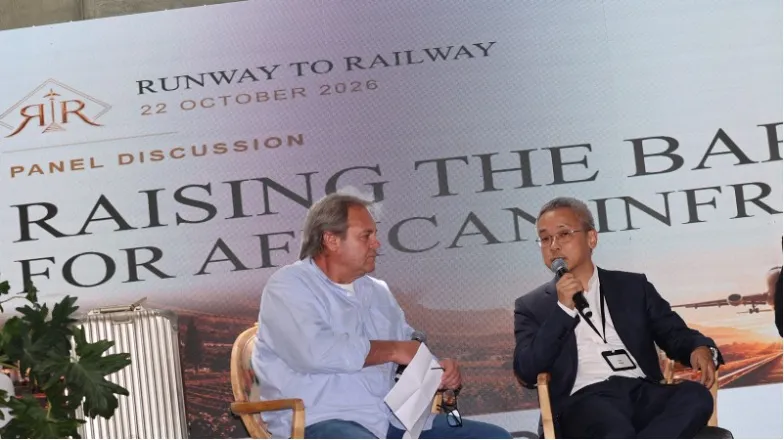
An exchange during the infrastructure panel discussion.
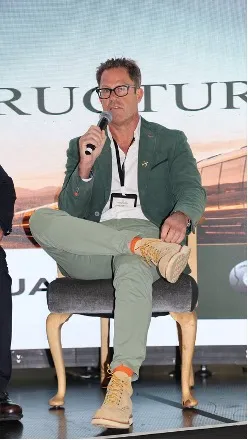
A panellist contributes to the infrastructure discussion.

An on-stage presentation during Runway to Railway: Project Maverick.

Guests exchange ideas during the luncheon at the Vineyard Hotel.

Guests follow the programme at Runway to Railway: Project Maverick.

Guests seated during the event programme.

A guest listens during the luncheon.

Guests in conversation during the event.

Networking at Runway to Railway: Project Maverick.

Guests gather for a photograph at the Vineyard Hotel.

Guests connect outside the event venue.
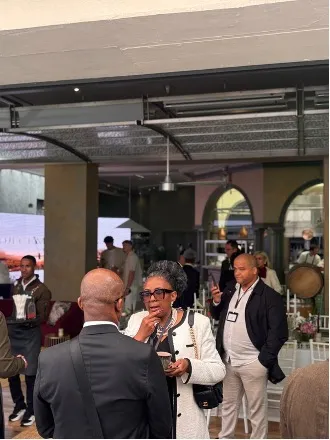
Conversations continue between programme sessions.

A conversation during the event reception.

A conversation at Runway to Railway: Project Maverick.
*All photographs featured in this article were captured by: Elvis Nyelenzi
ADVERTISEMENT
Your Weakest Supplier Could Be Your Biggest Cyber Risk
Bobby Ramagwede, CEO of the AA, Keynote Address: Speaking Truth to Power
Runway to Railway Puts Innovation and African Identity at the Heart of Infrastructure
Trending
-
Management4 months agoSEO, AEO, GEO and SEO for AI: What Is the Difference for the Supply Chain Industry?
-

Transport4 months agoLDV T60 Max vs GWM P500 vs Isuzu D-Max vs Toyota Hilux vs Ford Ranger: Which Double-Cab Bakkie Offers the Best Value?
-
Logistics5 months agoDHL Group to invest around € 160 million in 2026-2027 to strengthen logistics infrastructure and support clean energy transition in France
-
Logistics4 months agoTop 5 Warehousing and Logistics Companies in the Western Cape by Google Review Rating
-
Logistics5 months agoDHL Expands Asia Pacific Data Center Logistics Capabilities to Support Growing Regional Demand
-
Logistics5 months agoTop 10 Warehousing and Logistics Companies in Gauteng by Google Review Rating
-
Freight Forwarding5 months agoThe Hidden Cost of Shipping from China to South Africa — What Every SA Importer Needs to Know in 2026
-
Logistics4 months agoTop 4 Lift Truck Companies in Gauteng