Supply Chain
Creating a disruption-proof supply chain in Africa
Published
5 years agoon
The impact of the pandemic on global supply chains has prompted governments around the world to look at ways to fix the broken links. In Africa, the launch of African Continental Free Trade Area (AfCFTA), has provided the continent with new opportunities to strengthen its regional supply chain.
Virusha Subban, Head of Indirect Tax at Baker McKenzie in South Africa, explains that there were massive breakages in key links in global supply chains during and after the pandemic, with issues including, among many other things, route congestion and blockages, manufacturing shutdowns, a deficit of skilled labour, a global shortage of key logistics components including shipping containers, a lack of space in warehouses, a spike in transportation costs and substantially increased demand for goods around the world, post-lockdown. As a result, countries have been looking at ways to relink broken chains.
In February 2021, President Biden addressed this issue by signing an Executive Order on America’s supply chains. He ordered federal agencies to review and identify vulnerabilities in key US supply chains and develop policies to ensure those supply chains would be more resilient to future shocks.
Similarly, the European Union Policy Department for External Relations issued a report on Post Covid-19 value chains: options for reshoring production back to Europe in a globalised economy. The report noted that, against the background of both supply shortages due to the pandemic, and the shift in global trading patterns, reshoring of production, the process of bringing production activities home, had become a topical issue in recent EU policy debates.
Last year, the African Union African Peer Review Mechanism 2020 published a report on Africa’s governance response to COVID-19, which highlighted Africa’s supply chain challenges and overreliance on foreign trade and suggested that the continent boost its manufacturing capacity to build a strong African supply chain that could not be weakened by global blockages.
Marc Yudaken, Partner and Head of the IMT Sector Group at Baker McKenzie in Johannesburg, notes that supply chains in Africa were already under pressure before the pandemic, due to inadequate infrastructure, corruption and security issues, poor trade logistics, overreliance on foreign imports, onerous regulatory requirements and complex customs procedures.
He explains that a recent Baker McKenzie report – A License to be Bold: Transforming Industrials outlined areas of post-pandemic focus for supply chains in the IMT sector, which included being able to adapt to new markets, embrace digitalisation and enable the disruption-proofing of supply chains. The report noted that disruption arising from COVID-19 accelerated trends already apparent in the industrials market, particularly digitalisation and trade volatility, and transformation has now gone from a “nice to have” to a necessity.
Yudaken notes that due to the global supply chain disruption, many African countries have begun looking at ways to improve their manufacturing capacity so that they can produce local components that don’t need to be imported and that can be traded within the continent.
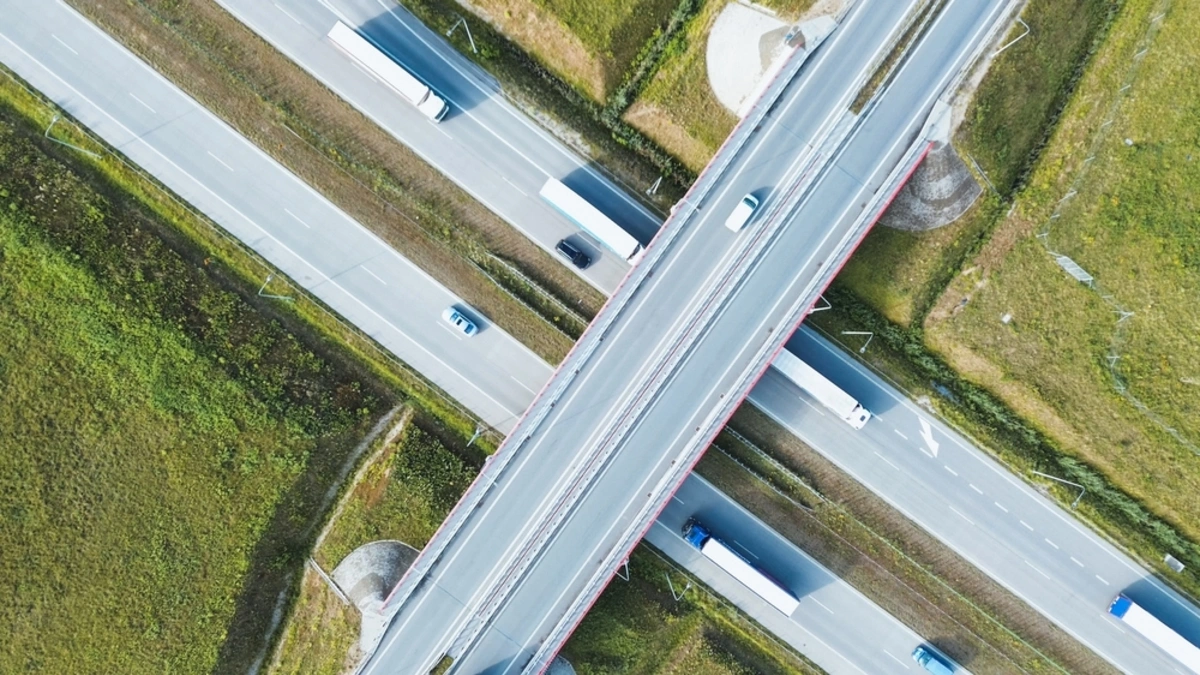
“Reliable transport and utilities infrastructure is vital in terms of ability of the IMT sector to scale up production for regional export and to develop its manufacturing bases. To improve transport infrastructure in Africa, large projects have been announced or are in progress, including, for example, the Trans-Maghreb Highway in North Africa and the North-South Multimodal Corridor, connecting extensive parts of Southern Africa, as well as the Central Corridor project and the Abidjan-Lagos Corridor Highway project.
Further, Africa needs an adequate supply of water and electricity to increase production capacity and incentivise foreign companies to set up facilities on the continent – energy and utilities infrastructure is direly needed across African jurisdictions. Domestic policy changes that address these issues are therefore playing a crucial role in disruption-proofing Africa’s supply chains at present.”
Subban agrees that improving manufacturing capacity is a key way to remove reliance on global supply chains. A Baker McKenzie report, with Oxford Economics, AfCFTA’s US$ 3 trillion Opportunity (AfCFTA report) looked at African imports from outside the continent and revealed that manufactured products industrial machinery and transport equipment constituted over 50% of Africa’s combined needs. Currently, Africa’s external imports account for more than half of the total volume of imports, with the most important suppliers being Europe (35%), China (16%) and the rest of Asia including India (14%). By contrast, imports from other parts of Africa account for only 16% of total merchandise imports. Manufacturing GDP represents on average only 10% of GDP in Africa. This means that limited production capabilities within Africa are currently being compensated for through foreign imports. This manufacturing deficit could be eventually satisfied within the continent and enabled by AfCFTA.
“Further, in terms of rapid global digitisation, a sophisticated legal and regulatory framework that enables digital transactions is vital for full participation in global digital trade, which is expected to play a leading role in a post-pandemic trade environment.
“The trade in services, for example, is an especially pertinent area of focus for all countries in Africa and could represent a way to overcome the current production and supply chain limitations that threaten to hold up the Africa-wide trade in goods. Because a service can either be traded directly or serve as an input into the production process of a product, the liberalization of trade in services is not as hindered by current infrastructural or logistic deficits as the trade in goods. In this way, Africa’s service trade sector can benefit from bypassing the industrialization phase,” she says.
The AfCFTA report shows that the trade in services in general currently accounts for over half of gross value added in Africa. In order to fully realise its benefits, however, there needs to be a better understanding among policymakers of the important role that services can play in regional value chains. This will allow the continent to address the structural constraints on growth in these sectors. The report notes that easing restrictions on foreign government policy throughout the continent will increase the flow of service trade between countries. For example, allowing more access to the information and telecommunications systems would encourage companies to enter new markets. Further, lowering the cost of access and usage of communication and fortifying network security will encourage businesses to set up or ramp up operations in the continent
“Addressing infrastructure shortfalls, boosting manufacturing capacity, and leveraging the benefits of digitisation will add strong links to Africa’s regional supply chain, ensuring it can withstand breakages and disruption,” adds Subban.
You may like
-
Transnet Reports Progress as Rail Volumes Rise and Freight Reforms Move Forward
-
A Terminal in Healing: SAFLA and the RFA Acknowledge the Movement Towards DGT Efficiency
-
Preparing South Africa’s Logistics Industry for 2030, Focused on Compliance, People, and Sustainability.
-
Road Freight SME Summit 2026 to Unlock Working Capital and Growth Opportunities for South Africa’s Transport and Logistics SMEs
-
From South African Orchard to Chinese Market: The Supply Chain Behind the Cherry Export
-
When Transport Costs Rise, Where Does the Extra Cost Go?
Logistics
From South African Orchard to Chinese Market: The Supply Chain Behind the Cherry Export
Published
6 days agoon
September 9, 2026By
SCN Africa
South African cherry growers can now sell into China for the first time, opening a major new market for the country’s growing cherry industry.
Agriculture Minister Willie Aucamp signed the market-access protocol with China’s General Administration of Customs in Beijing on 8 September. China imported about 586,900 tonnes of cherries worth US$3.3 billion in 2025, making it the world’s largest cherry importer.
For South Africa’s supply-chain industry, however, the interesting part starts after the agreement is signed.
Getting cherries from an orchard to a Chinese buyer requires a coordinated journey involving harvesting, packing, temperature-controlled logistics, road freight, export procedures, international shipping and distribution.
For a perishable product, every stage matters.
From Orchard to Packhouse
The export journey starts with producing fruit that meets the requirements of the destination market.
The new market-access protocol establishes the framework for South African cherries to enter China and forms part of the sanitary and phytosanitary arrangements governing agricultural trade between the two countries.
Once harvested, cherries need to move quickly through packing and preparation. The fruit then enters a temperature-controlled supply chain designed to maintain its condition while it travels towards the export gateway.
This makes logistics more than a transport function. Delays at the farm, packhouse, storage facility or during transport can reduce the time available for the rest of the journey.
The Journey to the Export Gateway
Where the cherries are grown will influence how they reach international markets.
South Africa’s cherry industry has expanded significantly in recent years, with planted area increasing from 185 hectares in 2012 to 819 hectares in 2024, according to industry body Hortgro.
As production grows, so does the logistics network needed to support it.
More fruit means more movement between farms and packhouses, greater demand for cold storage and additional transport capacity to connect production areas with export gateways.
The opening of China could therefore create opportunities beyond the growers themselves.
Then Comes the Export Process
Physical movement is only part of getting the cherries into China.
South African exporters also need to meet customs and origin requirements.
South Africa’s temporary zero-tariff arrangement with China came into effect on 1 May 2026. Qualifying exports can receive zero-tariff treatment if they meet the applicable rules of origin, although some tariff lines are subject to quotas.
SARS issues the Rules of Origin certificates required for qualifying exports. Exporters must also maintain the required documentation and comply with the scheme’s conditions to receive the tariff benefit.
For the supply chain, this means a shipment can be physically ready to leave South Africa but still be unable to move as planned if the documentation and customs requirements are not in order.
China is Only Another Link in the Chain
Once the cherries arrive in China, the journey is not over.
The shipment still needs to clear the relevant authorities, reach importers and move through China’s distribution network before reaching its final buyer.
That makes coordination across the entire journey particularly important.
A delay in South Africa does not simply mean a later departure. It reduces the time available for every stage that follows.
A New Market, And A New Logistics Opportunity
The Department of Agriculture expects the opening of the Chinese market to stimulate further investment in cherry production and estimates that it could create about 600 new jobs.
If production expands, the supporting supply chain will need to expand with it — from packhouses and cold storage to road freight, export services and international logistics.
That is what makes the agreement significant beyond agriculture.
South Africa now has access to a major new market. The next challenge is building a supply chain capable of getting those cherries there on time, in good condition and at a competitive cost.
Supply Chain
When Transport Costs Rise, Where Does the Extra Cost Go?
Published
7 days agoon
September 8, 2026By
SCN Africa
When fuel prices rise, the first cost most businesses notice is the fuel bill. For companies moving goods around South Africa, however, that is only the beginning.
Transport sits underneath almost every part of the supply chain. Raw materials have to reach factories, finished products have to reach warehouses, goods have to move between distribution centres and retailers need stock delivered to their stores.
That means an increase in fuel costs can work its way through several stages before a product reaches the customer.
The Competition Commission’s latest Cost of Living Report highlights just how significant that pressure has become. Petrol prices increased by 26% between January and July 2026, with higher fuel and transport costs adding to production, logistics and distribution costs across the economy.
So where does that extra cost actually go?
It Starts With the Truck
For a transport operator, higher fuel prices are an immediate operating cost.
A truck still has to travel the same distance, carry the same load and use roughly the same amount of fuel. If diesel becomes more expensive, the cost of making that journey increases.
Fuel is not the only cost involved. Trucks also require maintenance, tyres, insurance, drivers and financing. But fuel is one of the costs most directly affected by changes in international oil markets and local fuel pricing.
Transport companies therefore have to decide how much of an increase they can absorb and how much needs to be reflected in their rates.
That is where the cost starts moving through the wider supply chain.
The Raw Material has to Get There Too
Consider a manufacturer producing a food product.
Before anything reaches the factory, ingredients, packaging and other materials may have travelled considerable distances. Those goods could have been transported from farms, processors, ports, importers or other manufacturers.
Higher transport costs can therefore appear before production has even started.
The manufacturer then has its own transport requirements. Finished goods need to leave the factory and move to a warehouse, distribution centre or directly to a customer.
The same fuel increase can consequently affect a product more than once as it moves through the network.
That is one reason why transport costs cannot be viewed in isolation.
Warehouses Don’t Make the Problem Disappear
It is easy to think of a warehouse as the point where transport temporarily stops.
In reality, goods may enter and leave a warehouse several times before reaching their final destination.
A product could arrive from a manufacturer, be stored, moved to another distribution centre and then delivered to a retailer. Each movement involves transport.
Warehousing itself also has costs, including electricity, labour, equipment and property. But transport remains part of the equation whenever goods need to be moved in or out.
For businesses operating large distribution networks, even relatively small increases in the cost of each journey can add up quickly.
Then the Product Reaches the Retailer
By the time a product arrives at a shop, its journey may already have involved several transport legs.
That does not mean the retailer simply adds every additional transport cost to the shelf price.
Businesses have different margins and different levels of bargaining power. Some may absorb part of the increase. Others may negotiate new prices with suppliers or transport providers. Some costs may be spread across a large number of products.
The important point is that there is no single point where a fuel-price increase becomes a retail-price increase.
It moves through a network of commercial decisions.
That is why two products can be affected differently by the same increase in fuel costs.
Distance Matters
The impact is also not the same for every business.
A manufacturer located close to its customers may have a very different transport profile from one that relies on long-distance road freight.
A retailer supplied from a nearby distribution centre faces different costs from one receiving stock from hundreds of kilometres away.
The same applies to imported goods. Products arriving through a South African port may still need to travel significant distances by road or rail before reaching a warehouse or customer.
The further a product has to travel, and the more times it has to be moved, the more opportunities there are for transport costs to influence the overall cost of getting it to market.
Not Every Increase Reaches the Customer Immediately
There is another reason the relationship between fuel and prices is more complicated than it first appears.
Businesses do not necessarily change their prices every time fuel moves.
A transport contract may have a fixed period. A manufacturer may have already purchased its inputs. A retailer may have stock sitting in a warehouse that was transported under an earlier cost structure.
This creates a delay between a change in transport costs and its eventual effect elsewhere in the supply chain.
It can also work in reverse.
When fuel costs fall, businesses may not immediately reduce prices because other costs have changed, contracts have not yet been renegotiated or existing stock was purchased when transport was more expensive.
The Competition Commission has raised concerns about this pattern in several essential markets, noting that some prices can rise quickly when costs increase but fall more slowly when those costs decline.
The Cost Doesn’t Always Stop With Transport
This is where the bigger supply-chain picture becomes important.
A transport cost increase can affect more than the price of moving a product.
If logistics becomes more expensive, businesses may reconsider how frequently they replenish stock, how much inventory they hold, which suppliers they use or where warehouses are located.
A manufacturer might look for a supplier closer to its factory. A retailer might review delivery routes. A logistics operator might try to improve vehicle utilisation to make each trip more productive.
In other words, rising transport costs can change decisions throughout the supply chain, not simply the price charged for a truck journey.
Can Businesses Reduce The Impact?
They cannot control the international oil price, but they can control how efficiently they use transport.
Better route planning can reduce unnecessary kilometres. Higher vehicle utilisation can spread the cost of a journey across more goods. Better load planning can reduce the number of trips required.
The same applies to the wider network.
If a business can source some products closer to its customers, reduce empty return journeys or position stock more strategically, it may be able to reduce the amount of transport required in the first place.
These decisions become more important when fuel prices are high.
The Question Isn’t Just What Transport Costs
South Africa’s latest fuel-price shock is a useful reminder that transport is woven into almost every part of the economy.
The question for businesses is therefore not simply “How much more will our trucks cost?”
It is “How much more will it cost to move everything our business needs, and how many times will those goods have to move before they reach the customer?”
That is a much bigger calculation.
For supply-chain managers, the answer may involve changing routes, suppliers, warehouse locations, delivery schedules or inventory strategies.
For consumers, the eventual impact may simply appear as a higher price on the shelf.
Between those two points is an entire supply chain — and that is where the extra cost goes.
Freight Forwarding
Could Wind Shields Reduce Disruption at the Port of Cape Town?
Published
1 week agoon
September 7, 2026By
SCN Africa
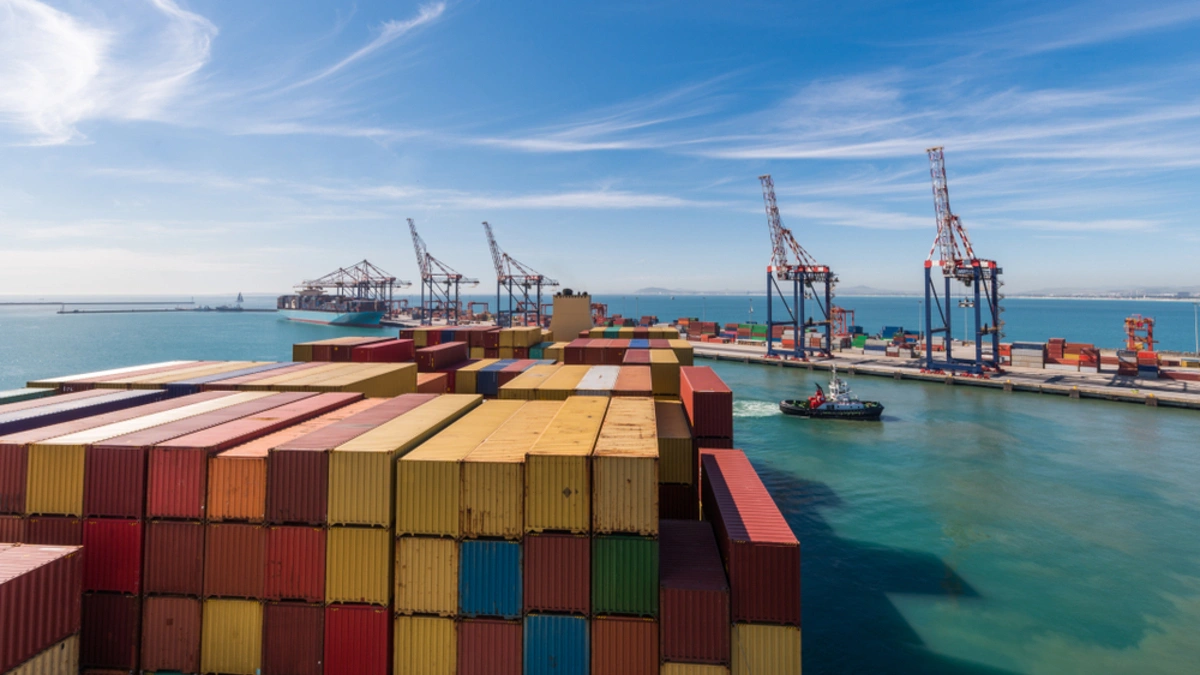
Strong winds regularly disrupt operations at the Port of Cape Town, creating delays that can extend well beyond the harbour. Transnet is now considering wind shields, combined with improved weather forecasting and predictive modelling, as part of an effort to reduce these interruptions and keep cargo moving.
The proposal comes as the port continues to look at ways of improving its ability to operate during adverse weather. The focus is not on eliminating the effect of strong winds, but on reducing the amount of time they prevent equipment from operating safely.
That matters because lost operating time at a major port can quickly become a problem for exporters, shipping companies and businesses further along the supply chain.
Why Strong Winds Disrupt Port Operations
Much of the work at a container port depends on large pieces of equipment, including ship-to-shore cranes, operating safely.
When wind speeds reach certain levels, those operations may have to be restricted or stopped. The resulting delays can affect when cargo is loaded and unloaded and, in turn, when vessels are able to leave the port.
A disruption to one operation can also affect the schedule of others.
For exporters, the consequences can be significant. Cargo may already have been transported to the port, prepared for export and scheduled for loading. When operations are interrupted, those goods can remain in the system for longer, creating uncertainty around delivery times and additional pressure on transport and storage arrangements.
The Wind Shield Proposal
Transnet is considering wind shields as one way of reducing the impact of strong winds on port operations.
The concept is relatively straightforward: strategically placed barriers could reduce wind speeds in areas where equipment is operating, potentially allowing some activities to continue safely for longer during periods of adverse weather.
The objective is not to make the port immune to wind. Instead, the proposed infrastructure is intended to reduce the frequency or duration of stoppages caused by conditions that currently prevent equipment from operating.
That could give the port more usable operating time, particularly during periods when strong winds would otherwise restrict activity.
Forecasting Matters Just as Much
The physical wind shields form only part of the proposed approach.
Transnet National Ports Authority has been working with the Council for Scientific and Industrial Research (CSIR) on a wind study and predictive modelling for the Port of Cape Town.
The work is designed to improve understanding of how wind conditions affect port operations and provide more localised information that can support operational decisions.
The Western Cape Government reported in February that the forecasting model had been tested and integrated into the port’s operational support system. The system provides localised wind forecasts and information intended to assist Port Control when making decisions about operations.
The practical benefit is better preparation.
Accurate forecasting can give port operators more warning of potentially disruptive conditions, allowing them to adjust operations and plan around periods of severe wind rather than reacting once a disruption has already occurred.
Why Exporters Feel the Impact
The effects of a port disruption are not confined to the port.
Take an agricultural exporter. Produce may have been harvested, packed, transported to Cape Town and prepared for loading onto a vessel bound for an overseas market. If strong winds interrupt operations, the shipment can be delayed even though every previous stage of the journey has been completed.
That delay can affect schedules, transport planning, storage and the timing of when goods reach their destination.
The Western Cape Government has highlighted fruit exports in particular when discussing the need to reduce weather-related disruption at the port.
For products where timing and condition are critical, improving the consistency of port operations can have a direct commercial benefit.
More Than an Infrastructure Problem
Wind is only one of the factors affecting port performance, which is why the proposed response goes beyond the construction of physical barriers.
The broader work includes forecasting, operational procedures and planning for periods when weather prevents normal activity.
That combination is important. Better infrastructure can reduce the impact of strong winds, but better information can help operators decide how to use the available operating time and prepare for disruption when it cannot be avoided.
The Western Cape Government’s stakeholder work has also identified the need for clearer procedures around stopping and restarting operations and for alternative measures during extended weather disruptions.
A Practical Response to a Recurring Problem
The proposed wind shields are a targeted response to a problem that repeatedly affects the Port of Cape Town.
Rather than treating every weather-related stoppage as unavoidable, the approach is to reduce the effect of strong winds where possible and improve the information available to the people running the port.
For exporters and other businesses that depend on the port, the outcome is ultimately straightforward: fewer disruptions, greater certainty and a more predictable route for getting goods to market.
That is the real value of the proposal. Not simply keeping cranes operating for longer, but reducing the number of times a weather event at the harbour becomes a problem for businesses hundreds or thousands of kilometres away.
ADVERTISEMENT
Transnet Reports Progress as Rail Volumes Rise and Freight Reforms Move Forward
A Terminal in Healing: SAFLA and the RFA Acknowledge the Movement Towards DGT Efficiency
Preparing South Africa’s Logistics Industry for 2030, Focused on Compliance, People, and Sustainability.
Trending
-
Management2 months agoSEO, AEO, GEO and SEO for AI: What Is the Difference for the Supply Chain Industry?
-
Logistics3 months agoDHL Expands Asia Pacific Data Center Logistics Capabilities to Support Growing Regional Demand
-
Transport3 months agoLDV T60 Max vs GWM P500 vs Isuzu D-Max vs Toyota Hilux vs Ford Ranger: Which Double-Cab Bakkie Offers the Best Value?
-
Logistics3 months agoDHL Group to invest around € 160 million in 2026-2027 to strengthen logistics infrastructure and support clean energy transition in France
-
Logistics3 months agoTop 5 Warehousing and Logistics Companies in the Western Cape by Google Review Rating
-
Logistics2 months agoTop 4 Lift Truck Companies in Gauteng
-
Logistics3 months agoTop 10 Warehousing and Logistics Companies in Gauteng by Google Review Rating
-
Management3 months agoAI in Warehousing and Logistics in 2026: From Automation to Autonomous Decision-Making