Connect with us

Press Releases

Your Weakest Supplier Could Be Your Biggest Cyber Risk

Published

on

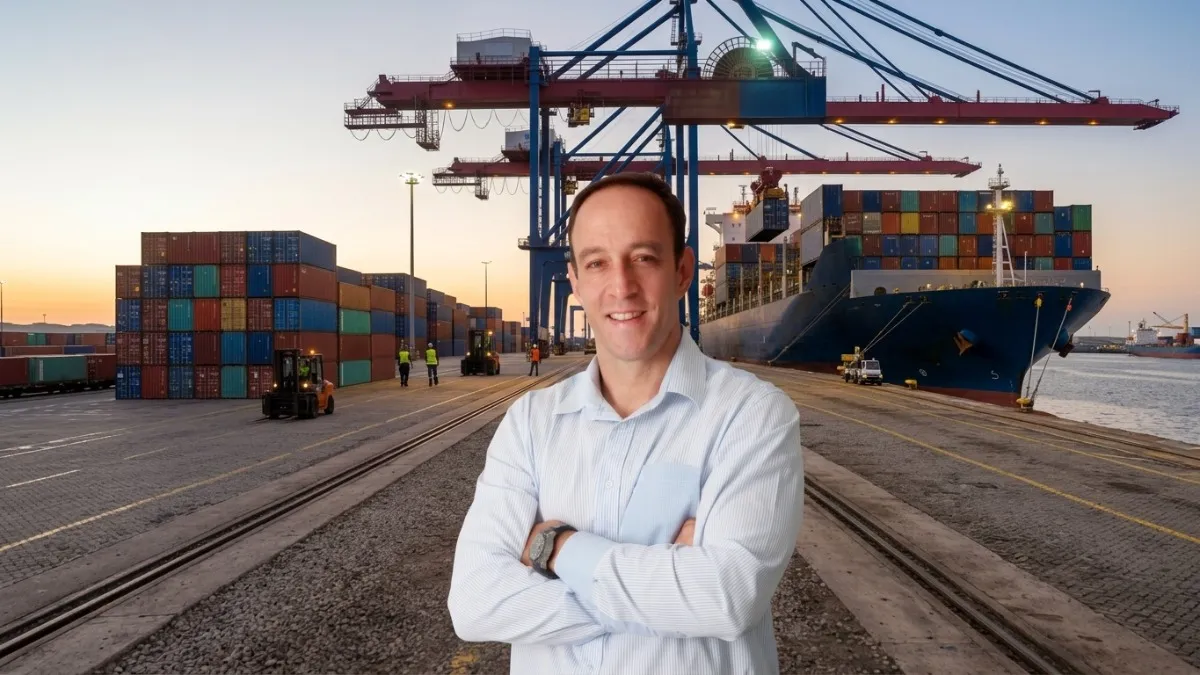
Roy Alves posing in a shipping yard in front of a freight ship.

Written by J2 Software sales director Roy Alves

It does not matter how much a business has invested in securing its own network if an attacker can walk in through a supplier, service provider or SaaS application with legitimate access. Your weakest supplier could be your biggest cyber risk.

In today’s interconnected supply chains, the security of a business increasingly depends on organisations it does not control, may barely know, and may never have considered part of its cyber security perimeter.

This is not a theoretical problem for South African businesses. Third-party risk was identified as the leading concern by 60% of South African CISOs in the 2026 ITWeb Brainstorm CISO Survey, while PwC’s 2026 Digital Trust Insights research found that only 6% of South African organisations consider themselves very capable of managing supply chain vulnerabilities.

The uncomfortable part is that supply chain businesses can have hundreds or even thousands of suppliers, and every one of those relationships potentially introduces another point of exposure.

The risk becomes even harder to manage because suppliers have suppliers of their own. A manufacturer, distributor, retailer or logistics company may depend on technology providers, outsourced service companies, contractors and software platforms, all of which may have some level of access to its systems or information.

Somewhere in that chain there may be a smaller business with access to an email account, application, shared platform or corporate network that has security controls nowhere near those of the organisation ultimately carrying the risk. The bigger the ecosystem becomes, the harder it is to know exactly where the exposure sits.

Cloud and SaaS have made this trust chain even longer. A business may rely on Microsoft 365 for email, a cloud platform for financial systems, a SaaS application for customer management, another service for logistics and an external provider for IT support. These systems are often connected through APIs and integrations, creating relationships that are easy to establish but surprisingly difficult to understand.

The security of an application matters, but so does what it can access. An organisation can carefully assess the security of a SaaS provider while overlooking the permissions granted to the application itself, potentially giving a compromised service access to sensitive data, mailboxes, files or business systems.

There is another problem, and it is often hiding in plain sight. Business users can introduce cloud applications without waiting for IT, signing up for services within minutes and connecting them to corporate data. Marketing, finance, sales and operations teams may all have legitimate reasons for doing so, but the organisation can quickly lose visibility of which applications are connected to corporate identities and information.

This is often referred to as shadow SaaS. What begins as a useful productivity tool can quietly become another part of the attack surface, particularly when nobody knows who still has access to it or what happens when an employee leaves.

This is where traditional supplier due diligence starts to fall short.

A questionnaire completed once a year does not tell you whether a supplier has subsequently suffered a breach, changed its infrastructure, added another subcontractor, altered access permissions or introduced another cloud service into the environment. Nor does it necessarily tell you what happens when that supplier depends on another provider.

The real question is not simply whether a supplier is secure, but how far the trust relationship extends. Critical suppliers need to be identified, privileged access controlled, cloud and SaaS connections understood and third-party accounts monitored, while access should disappear when the business relationship ends.

Where a supplier is genuinely critical, organisations also need to understand how they would continue operating if that supplier suffered a cyber incident, ransomware attack or prolonged outage.

Addressing third party risk requires continuous visibility across endpoints, cloud environments, Microsoft 365, SaaS platforms and the wider digital estate. J2’s managed security services and Cyber Resilience Framework are designed to give organisations greater visibility and control across users, email, data, machines and internet facing assets, helping identify unusual activity, compromised accounts and suspicious access.

The objective is not simply to monitor what happens inside the organisation, but to identify the signs that something connected to it has become a security problem, giving IT and security teams an opportunity to respond before a supplier compromise becomes a business compromise.

The answer is not to stop using suppliers, cloud services or SaaS. That would be neither realistic nor commercially sensible. The answer is to understand where trust exists, what that trust allows someone to access and what the consequences would be if it were abused.

Every supplier, SaaS platform, integration and business partner effectively extends a company’s digital footprint. Cyber security is no longer just about defending the systems a company owns, it is about understanding the ecosystem on which the business depends. For supply chain companies, that ecosystem is now part of the attack surface, and ignoring it does not make the risk disappear.

Continue Reading

Freight Forwarding

Opinion Piece: Logistics Reform Must Deliver Reliable Trade in 2027

Published

on

Head shot of Dave Logan, Executive Officer of the South African Freight and Logistics Association (SAFLA).

By Dave Logan, Executive Officer of the South African Freight and Logistics Association

As 2026 draws to a close, South Africa’s logistics reforms have tangible milestones to show. The task for 2027 is to make those changes commercially useful. Freight forwarders and their customers need dependable delivery windows and costs they can plan around. Uncertainty ties up working capital, erodes margins and weakens confidence in South African supply chains.

What 2026 Demonstrated

Durban Container Terminal Pier 2’s private operating partnership took effect in January. In November, Grindrod completed its first open access test train, with commercial operations planned for 2027. These developments deserve support. At Pier 2, private participation builds on earlier recovery and public equipment investment. The next test is sustained service that cargo owners can book and trust.

For smaller forwarders and transporters, delays become financing problems. Storage, demurrage, detention and idle vehicles can consume a shipment’s margin before payment arrives. Improving terminal output matters, but the benefit must reach the business waiting for its cargo through lower total delivery costs and greater predictability.

Global tariff changes and shipping disruption have reinforced the need for viable alternatives. A different port or route is useful only when capacity, permits and commercial terms have been checked. South Africa’s response must include greater predictability at home.

Priorities for 2027

Rail access must translate into dependable services. Transparent slot allocation, fair access charges and credible maintenance obligations are essential. Infrastructure management must treat new operators and Transnet Freight Rail fairly. Smaller cargo owners need practical aggregation and intermodal services. Lower costs will depend on utilisation and reliability.

Corridor performance must include customs and other control agencies. Faster port handling has limited value if cargo then waits for permits or an inspection. Government, Transnet and industry should agree corridor service standards, align operating windows with demand and name the authority responsible for resolving each hold. Regional trade ambitions depend on these handovers working.

Digitalisation should remove repeated submissions and make release decisions easier to act on. This requires common data standards, coordinated processes and clear permissions for sharing commercially sensitive information. A portal that adds another fee or duplicates paperwork can increase costs. Affordable access, training and workable outage procedures must be part of implementation.

Security requires intelligence sharing and coordinated action against cargo crime and infrastructure theft. Driver welfare belongs in that response: safe rest facilities, decent staging conditions and realistic schedules support safer operations. Cargo owners, operators, infrastructure managers and law enforcement share responsibility.

Sustainability investment should follow sound operating economics. Reducing empty running, fuel waste and avoidable waiting can lower costs and emissions. Modal shifts need reliable services. Customers’ emissions requirements should be met with credible data and proportionate support for smaller firms.

What SAFLA Is Asking For

SAFLA calls for a published baseline and quarterly reporting on priority corridors. Measures should include truck turnaround, delivery reliability, border queue-to-release time and the cost of avoidable delays. Reporting must show the longer delays operators must plan for alongside averages. Each improvement needs an accountable owner and deadline, supported by transparent charging and effective escalation.

Industry must also improve shipment data, invest in compliance skills and agree realistic delivery commitments. SAFLA’s role is to bring operational evidence, including SME experience, into structured engagement that resolves recurring failures.

The measure of reform in 2027 will be the next compliant shipment: whether its delivery is easier to plan, less costly to finance and more dependable. That is how reform earns lasting industry support.

Continue Reading

Logistics

How AI Search is Changing B2B Procurement: South African Live Campaign Data Reveals Key Lessons for Logistics and Transport Leaders

Published

on

Francois Vorster, Chief Disruptor at IMS, poses in a darkblue suit.

As procurement managers, fleet operators and supply chain executives increasingly turn to artificial intelligence platforms to research service providers and operational partners, new live campaign data from South African digital agency IMS Ad Agency highlights both the promise and the commercial pitfalls of advertising inside ChatGPT.

Between 23 October and 9 November 2026, IMS conducted a live South African B2B test campaign on ChatGPT to evaluate whether conversational, contextually relevant ads can drive qualified business enquiries compared to traditional search engines. For logistics and transport companies looking to capture high-value corporate contracts, the findings underscore a critical takeaway: cheapclicks do not automatically translate into qualified commercial leads.

“As AI platforms become part of how businesses discover and evaluate service providers, IMS wanted to assess ChatGPT advertising through a live campaign rather than assumptions,” says Francois Vorster, Chief Disruptor at IMS. “We were testing conversational relevance rather than treating ChatGPT simply as another keyword-search platform.”

The Numbers: High Traffic, Low Click Costs

Across its dedicated B2B services campaign, IMS recorded 85,007 impressions and 2,311 clicks at a 2.72% click-through rate (CTR). Traffic acquisition proved significantly cheaper than traditional search:

  • ChatGPT Average Cost Per Click (CPC): R4.69 (compared to R58.16 on comparable Google Ads campaigns).
  • Attributed Form Enquiries: 17 tracked lead events at an average cost of R637.08 per event (versus R797.39 on Google Ads).
  • Mobile Dominance: Across the broader ad account, 83.5% of impressions and 84.2% of clicks occurred on mobile devices—primarily via Android (1,935 clicks) and iOS (893 clicks) apps—proving that decision-makers and researchers are engaging with AI tools on the move.

The Commercial Reality: Lead Quality Over Click Volume

Despite ChatGPT delivering clicks at less than a tenth of the cost of Google Ads, IMS found that traditional search still generated significantly higher-quality enquiries and a better overall cost per genuinely relevant lead.

One key factor for B2B marketers targeting senior executives is audience segmentation: ChatGPT ads are currently served only to users on Free and Go tiers, excluding paid Plus and Pro subscribers.

What This Means for Logistics & Supply Chain Marketers

For transport, freight, and logistics providers competing for corporate tenders and B2B clients, early adoption of AI advertising requires disciplined measurement:

  • Measure Pipeline, Not Just Clicks: Low CPCs can create a false sense of performance. Campaigns must be tracked through to sales-qualified leads and actual revenue rather, than stopping at basic website form fills.
  • Prioritise Mobile Experience: With over 84% of AI ad traffic originating on mobile apps, B2B websites, quote calculators, and tender enquiry forms must load rapidly and function seamlessly on smartphones.
  • Treat AI as a Complementary Channel: Conversational AI advertising is an effective top-of-funnel awareness tool, but it works best alongside – rather than replacing – established B2B search and industry channels.

“By experimenting with ChatGPT advertising on our own business, IMS is gaining direct experience in contextual campaign design, measurement and optimisation,” continues Vorster. “These findings will help us evaluate where conversational advertising can complement established search and social channels.”

To access the findings go to https://imsolutions.co.za/news/ims-takes-digital-advertising-into-chatgpt-our-latest-campaign-results/

Continue Reading

Logistics

Transnet Implements Urgent Measures to Reduce Durban Gateway Terminal Backlogs

Published

on

Cargo container ship docked at a shipping port.

Transnet is implementing a series of urgent interventions to reduce congestion at Durban Gateway Terminal (DGT), following operational challenges that have affected shipping lines, cargo owners and the wider logistics value chain.

The measures, announced in a media statement on 18 November 2026, are being coordinated with Durban Gateway Terminal and aim to increase available capacity, improve vessel evacuation and progressively reduce the backlog at the Port of Durban.

Transnet says the situation is being monitored at senior leadership level, with several interventions targeting both vessel movements and the evacuation of cargo from the terminal.

Additional Berthing Capacity and Vessel Diversions

One of the immediate measures involves making Berth 102 available at the Port of Durban to accommodate geared vessels for direct cargo discharge.

Transnet National Ports Authority (TNPA) has dedicated the berth to provide additional capacity and encourage shipping lines to divert suitable vessels away from congested operations.

The intervention also supports the diversion of vessels to the Ngqura Container Terminal (NCT), where Durban-bound containers can be discharged before being transferred by smaller geared vessels to Berth 102 and the Point Terminal.

Transnet Port Terminals (TPT) and DGT are coordinating the identification of suitable vessels for diversion to Ngqura, with the additional berth expected to strengthen this arrangement.

Pier 1 to Receive Additional Crane Capacity

Transnet is also working to increase handling capacity at Pier 1 through the return of ship-to-shore (STS) cranes from long-term refurbishment.

The final crane is scheduled for commissioning on Friday, 20 November, before being handed over to operations on Saturday, 21 November. This will bring all six cranes into operational availability at the terminal.

Additional crane availability is expected to support cargo handling and contribute to reducing the vessel backlog.

Transnet also assessed whether equipment could be transferred from other terminals to DGT. However, Cape Town Container Terminal and Cape Town Multi-Purpose Terminal are currently unable to release equipment because of their requirements during the peak deciduous fruit export season.

The company says it will continue reviewing opportunities to optimise equipment deployment across its network.

Rail Services to Help Clear Import Containers

Alongside the measures targeting vessel movements, Transnet Freight Rail (TFR) has made trains available to evacuate imported containers destined for Gauteng.

This provides another option for moving cargo away from the port and reducing pressure on landside operations.

Transnet is encouraging industry participants to make use of the available rail services to support the evacuation process.

The company is also prioritising essential cargo, including pharmaceuticals and automotive parts, before vessels berth to ensure these goods receive priority evacuation from the terminal.

Coordinating the Recovery of Port Operations

Transnet acknowledges that resolving the backlog will require continued coordination between terminal operations, TNPA, TFR, shipping lines, customers and other stakeholders.

The interventions highlight the importance of addressing congestion across multiple stages of the port operation. Additional berthing capacity and crane availability can support vessel handling, while rail services and cargo prioritisation help move containers away from the terminal.

For importers, exporters and manufacturers, the effectiveness of these measures will be important in restoring more predictable cargo movements through Durban.

Transnet says it will continue providing updates to key stakeholders as the interventions progress, with the aim of restoring operational performance as quickly and sustainably as possible.

Article adapted from a media statement issued by Transnet SOC Ltd.

Continue Reading

Trending