Connect with us

Technology

Keeping the Network Moving: What Gauteng’s New Public Transport System Could Mean for Supply Chains


Published

on

Smiling as she boards a public bus.

Public transport is often discussed in terms of commuters, routes and fares. But behind those daily journeys sits another system that has to work properly: the regulation of the operators providing the service.

Gauteng is now trying to modernise that system through the Gauteng Public Transport Regulatory Information System (GPTRIS), a digitally enhanced platform designed to simplify compliance, improve operator registration and strengthen the management of public transport data.

The early response has been significant. Between 1 and 14 September 2026, the province processed 220 applications, with more than 30 operating licences already issued through over-the-counter transactions. The figures were highlighted by Gauteng MEC for Roads and Transport Kedibone Diale-Tlabela in the province’s latest update on the system.

But the bigger question is what better regulation could mean for the transport network beyond the licensing process itself.

Bringing Regulation Into the Digital Age

Managing a public transport network involves more than putting vehicles on the road.

Operators need to register, apply for licences, meet compliance requirements and keep their information up to date. Government, meanwhile, needs accurate information to manage those processes and identify irregularities.

GPTRIS is intended to bring more of these functions into one digitally enhanced system. According to Gauteng Roads and Transport, the platform is designed to simplify compliance, reduce fraud, improve data management and make the application and processing of operating licences more efficient.

That may sound like an administrative improvement, but administrative systems can have operational consequences.

When information is fragmented or processes are slow, delays can affect operators before a vehicle even reaches the road. Better systems can give regulators a clearer picture of the sector while making it easier for legitimate operators to navigate the requirements they have to meet.

The province says this is intended to create a more accessible, transparent and responsive regulatory environment.

Public Transport is Part of the Economic Network

The importance of public transport extends well beyond the transport sector itself.

Gauteng is home to major commercial, industrial and employment centres, and millions of residents depend on public transport for their daily movement. The provincial government itself describes an efficient and well-regulated public transport sector as critical to economic growth, job creation and the daily movement of residents.

That makes public transport part of the wider economic network.

A factory, warehouse, retail operation or office can have the right infrastructure and equipment, but it still depends on people being able to get to work. When transport is unreliable or difficult to access, the consequences can extend into staffing, operating hours and productivity.

This is why the regulation of public transport matters to businesses that may never interact directly with the licensing system.

The workforce is one of the things that moves through the economy every day.

Better Data Could Give Government a Clearer Picture

One of the less visible benefits of a system like GPTRIS could be the information it produces.

The province says the platform is intended to improve data management alongside operator registration and licensing.

Accurate, accessible data can make it easier to understand who is operating, whether regulatory requirements are being met and where potential problems are emerging.

That does not automatically make the transport network better. A digital database cannot fix road conditions, congestion or vehicle shortages on its own.

What it can do is give regulators a stronger information base for managing the system.

That distinction is important. GPTRIS is an administrative and regulatory tool, not a solution to every challenge facing Gauteng’s public transport network.

Fraud and Compliance Are Part of Network Reliability

The province has also positioned GPTRIS as a way to tackle fraudulent activity linked to the granting and issuing of operating licences.

That makes compliance part of the broader reliability conversation.

For operators, clearer processes can reduce uncertainty around applications and regulatory requirements. For government, stronger controls can help protect the integrity of the licensing system.

The result the province is aiming for is a transport environment in which legitimate operators can access services more efficiently while regulation becomes easier to manage and monitor.

Whether the new system ultimately delivers those benefits will depend on how it performs over time.

The Real Test Will Be on the Ground

The early numbers show that operators are using GPTRIS. During its first two weeks, more than 200 applications were processed, including 220 applications cited by the MEC, with more than 30 operating licences issued through over-the-counter transactions.

That demonstrates early uptake, but it is too soon to judge the system by those figures alone.

The more meaningful test will be whether the digital system can translate into faster administrative processes, cleaner regulatory data, stronger compliance and fewer opportunities for fraudulent licensing activity.

There is also a longer-term question around how effectively that information can support transport planning and decision-making.

For Gauteng, modernising public transport regulation is therefore about more than replacing paperwork with a digital system. It is about creating a more structured information base around one of the networks that keeps the province moving.

Public transport may operate on roads, but its impact reaches into workplaces, commercial centres and the wider economy.

GPTRIS will ultimately be judged by what changes on the ground. If better regulation and better information make the system easier to manage and more responsive to operators and the travelling public, the value of the platform will extend well beyond the licensing office.

Continue Reading

Logistics

TNPA Completes R434 Million Investment to Reduce Shipping Delays and Improve Port Efficiency

Published

on

Composite image showing a hand analysing financial charts with a pen, overlaid with a shipping port, cargo vessels and a city skyline.

Transnet National Ports Authority (TNPA) has completed a R434 million investment in hydraulic tension mooring technology across five South African commercial ports, aimed at improving vessel stability and reducing weather-related disruptions to shipping operations.

The project involved installing 52 hydraulic tension mooring units across the ports of Ngqura, Cape Town, Durban, Port Elizabeth and Saldanha. With the commissioning of the final eight units, TNPA has completed the phased rollout of the technology across its port network.

Hydraulic tension mooring units help stabilise vessels alongside berths during adverse weather conditions, limiting excessive movement and allowing cargo-handling operations to continue safely.

According to TNPA, shipping and cargo-handling operations at these ports are frequently affected by wind speeds exceeding 35 knots. The new equipment is designed to reduce precautionary vessel movements during these conditions, helping minimise associated costs and delays for shipping lines and terminal operators.

Five Ports Receive New Mooring Equipment

The 52 hydraulic tension mooring units have been distributed according to operational requirements across five commercial ports.

The Port of Ngqura received the largest allocation, with 16 units, followed by Cape Town with 14 and Durban with 12. Port Elizabeth received six units, while Saldanha received four.

Ngqura’s larger allocation reflects its accommodation of larger container vessels and exposure to crosswinds and berth surge conditions.

TNPA says the technology is already delivering benefits to shipping lines through improved vessel stability, enhanced safety and fewer operational interruptions.

Ryan Woods, Terminal Planning Manager at Maersk South Africa, also highlighted the improved stability of vessels and the safer interface between ships and shore during cargo operations.

Improving Port Reliability and Operational Capability

The investment forms part of TNPA’s broader efforts to improve infrastructure and operational efficiency across South Africa’s port network.

By helping vessels remain safely alongside berths during adverse weather, the technology is intended to reduce weather-related disruptions and support more consistent cargo-handling operations.

The project has also included a skills-transfer programme implemented by ShoreTension B.V. to equip TNPA Marine Shorehands with the knowledge required to operate and maintain the equipment.

This training is intended to strengthen internal technical capabilities and ensure that the expertise needed to maintain the systems remains within TNPA.

For South Africa’s logistics network, reliable vessel operations are an important part of maintaining cargo flows through the country’s commercial ports. The completion of the R434 million rollout represents another investment in the infrastructure supporting those operations.

Article adapted from “TNPA Completes R434 Million Investment to Reduce Shipping Delays and Improve Port Efficiency”,issued by Transnet National Ports Authority.

Continue Reading

Press Releases

Your Weakest Supplier Could Be Your Biggest Cyber Risk

Published

on

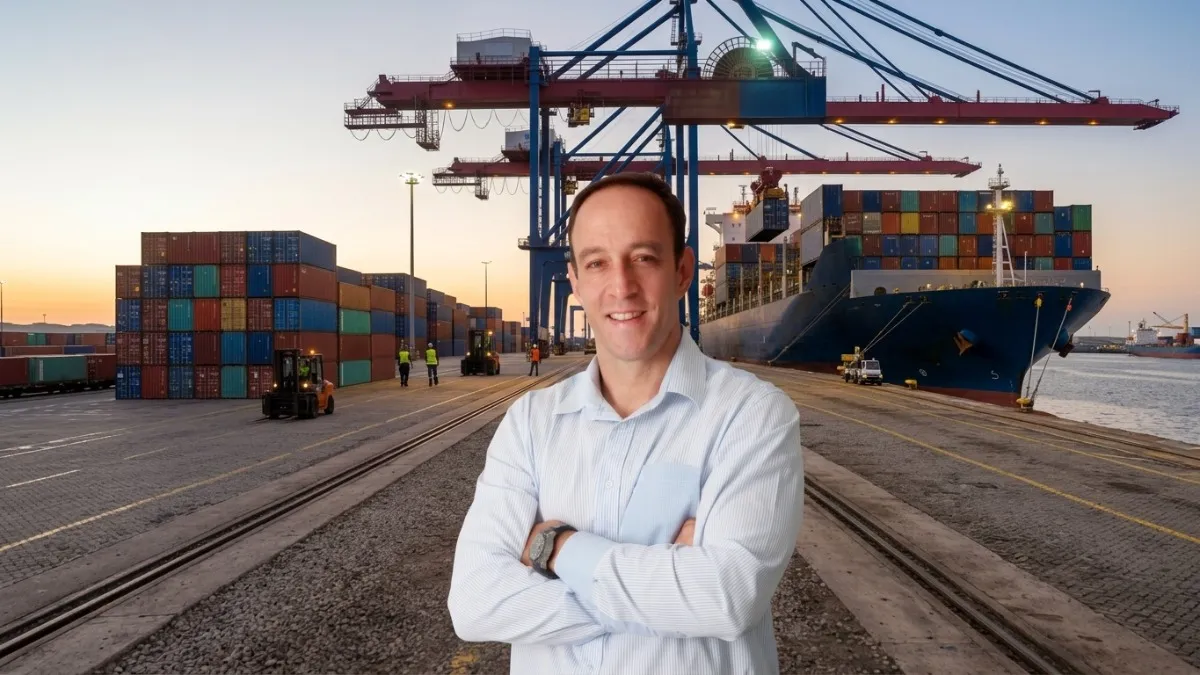
Roy Alves posing in a shipping yard in front of a freight ship.

Written by J2 Software sales director Roy Alves

It does not matter how much a business has invested in securing its own network if an attacker can walk in through a supplier, service provider or SaaS application with legitimate access. Your weakest supplier could be your biggest cyber risk.

In today’s interconnected supply chains, the security of a business increasingly depends on organisations it does not control, may barely know, and may never have considered part of its cyber security perimeter.

This is not a theoretical problem for South African businesses. Third-party risk was identified as the leading concern by 60% of South African CISOs in the 2026 ITWeb Brainstorm CISO Survey, while PwC’s 2026 Digital Trust Insights research found that only 6% of South African organisations consider themselves very capable of managing supply chain vulnerabilities.

The uncomfortable part is that supply chain businesses can have hundreds or even thousands of suppliers, and every one of those relationships potentially introduces another point of exposure.

The risk becomes even harder to manage because suppliers have suppliers of their own. A manufacturer, distributor, retailer or logistics company may depend on technology providers, outsourced service companies, contractors and software platforms, all of which may have some level of access to its systems or information.

Somewhere in that chain there may be a smaller business with access to an email account, application, shared platform or corporate network that has security controls nowhere near those of the organisation ultimately carrying the risk. The bigger the ecosystem becomes, the harder it is to know exactly where the exposure sits.

Cloud and SaaS have made this trust chain even longer. A business may rely on Microsoft 365 for email, a cloud platform for financial systems, a SaaS application for customer management, another service for logistics and an external provider for IT support. These systems are often connected through APIs and integrations, creating relationships that are easy to establish but surprisingly difficult to understand.

The security of an application matters, but so does what it can access. An organisation can carefully assess the security of a SaaS provider while overlooking the permissions granted to the application itself, potentially giving a compromised service access to sensitive data, mailboxes, files or business systems.

There is another problem, and it is often hiding in plain sight. Business users can introduce cloud applications without waiting for IT, signing up for services within minutes and connecting them to corporate data. Marketing, finance, sales and operations teams may all have legitimate reasons for doing so, but the organisation can quickly lose visibility of which applications are connected to corporate identities and information.

This is often referred to as shadow SaaS. What begins as a useful productivity tool can quietly become another part of the attack surface, particularly when nobody knows who still has access to it or what happens when an employee leaves.

This is where traditional supplier due diligence starts to fall short.

A questionnaire completed once a year does not tell you whether a supplier has subsequently suffered a breach, changed its infrastructure, added another subcontractor, altered access permissions or introduced another cloud service into the environment. Nor does it necessarily tell you what happens when that supplier depends on another provider.

The real question is not simply whether a supplier is secure, but how far the trust relationship extends. Critical suppliers need to be identified, privileged access controlled, cloud and SaaS connections understood and third-party accounts monitored, while access should disappear when the business relationship ends.

Where a supplier is genuinely critical, organisations also need to understand how they would continue operating if that supplier suffered a cyber incident, ransomware attack or prolonged outage.

Addressing third party risk requires continuous visibility across endpoints, cloud environments, Microsoft 365, SaaS platforms and the wider digital estate. J2’s managed security services and Cyber Resilience Framework are designed to give organisations greater visibility and control across users, email, data, machines and internet facing assets, helping identify unusual activity, compromised accounts and suspicious access.

The objective is not simply to monitor what happens inside the organisation, but to identify the signs that something connected to it has become a security problem, giving IT and security teams an opportunity to respond before a supplier compromise becomes a business compromise.

The answer is not to stop using suppliers, cloud services or SaaS. That would be neither realistic nor commercially sensible. The answer is to understand where trust exists, what that trust allows someone to access and what the consequences would be if it were abused.

Every supplier, SaaS platform, integration and business partner effectively extends a company’s digital footprint. Cyber security is no longer just about defending the systems a company owns, it is about understanding the ecosystem on which the business depends. For supply chain companies, that ecosystem is now part of the attack surface, and ignoring it does not make the risk disappear.

Continue Reading

Supply Chain

Moving with Purpose: Why Reliable Passenger Transport Strengthens Communities and Business Continuity
Published

on

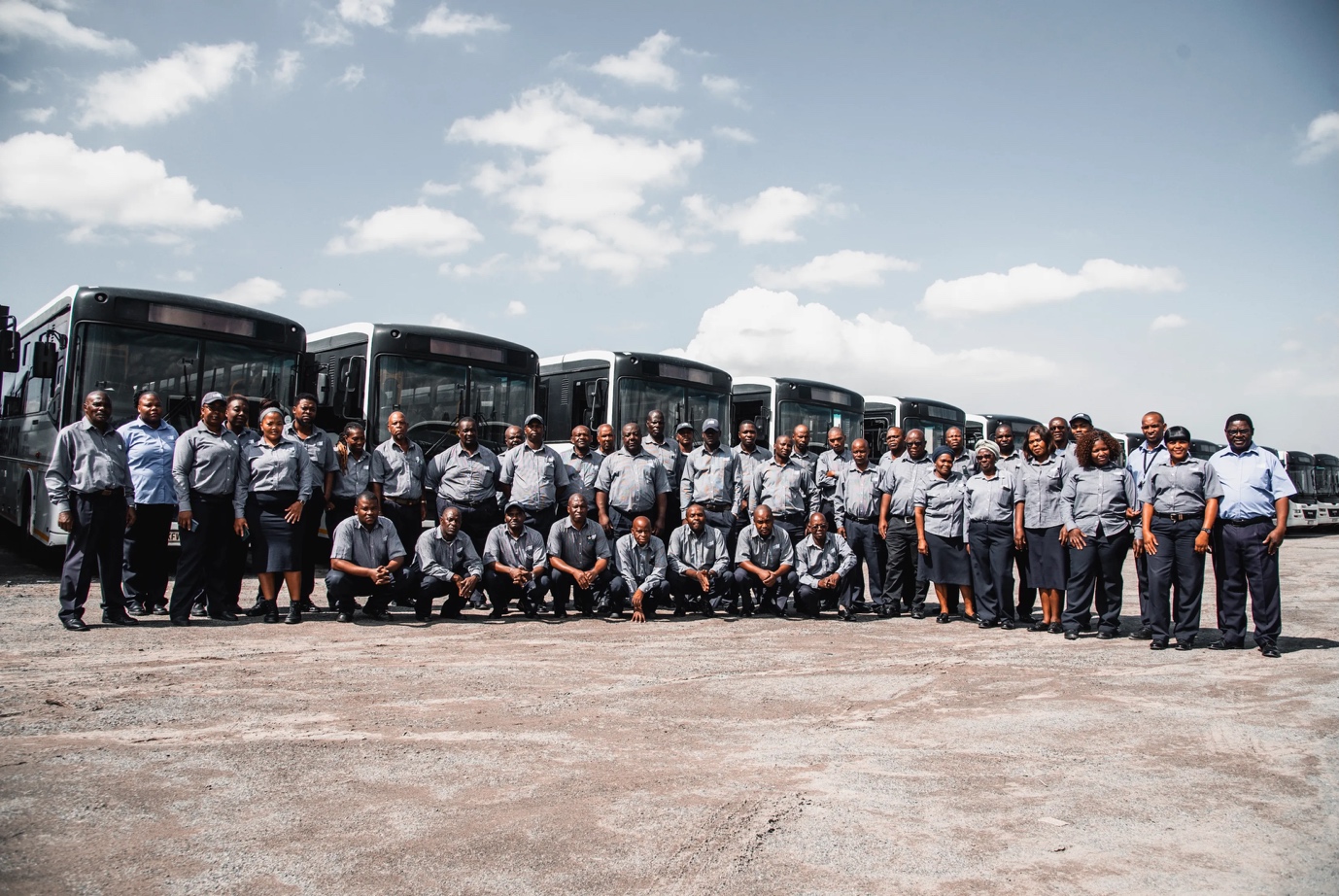
Unitrans team posed in front of their busses.

South Africa’s Transport Month this October puts renewed focus on the role that transport plays in economic growth and social development. For businesses, that conversation extends beyond infrastructure and the movement of goods. It also includes the daily movement of the people who keep operations running.

Reliable passenger transport is essential to workforce mobility and business continuity. In industries that operate in shifts or around the clock, dependable transport can influence attendance, shift readiness and production continuity. Yet the movement of people is often overlooked as part of supply-chain resilience.

Unitrans passenger operations provides employee transport, commuter services and managed solutions across multiple sectors, moving people early in the morning, late at night and over long distances to mining, agricultural and other operational sites.

“Transport is not just about mobility. It is a lifeline to work, income and essential services,” says Bazil Govender, Divisional Head: Business Development at Unitrans passenger operations. “It connects people to livelihoods, education, healthcare and economic opportunity, while supporting the continuity of local businesses.”

Transport Month provides a timely opportunity to consider this wider role: how safe, reliable and well-managed mobility supports not only individual journeys, but the businesses, communities and local economies that depend on them.

Safety Beyond Compliance

Unitrans Megabus driving through the city.

Research published by the Road Traffic Management Corporation in March 2025 recorded 146 fatalities in major long-distance bus crashes during 2024, the highest annual figure in its 2018–2024 dataset. The findings reinforce the need for continued attention to passenger transport safety.

At Unitrans, safety extends beyond compliance.

“Policies and procedures are essential, but safety ultimately depends on people making responsible decisions every day,” Govender says. “That includes the driver behind the wheel, the team planning the route, the customer setting operational expectations and every person sharing the road.”

Safety must therefore inform each stage of how a journey is planned and delivered.

Drivers contribute through vigilance, professionalism and care. Operations teams consider routes, schedules, vehicle readiness and local conditions. Customers help uphold standards, while passengers, communities and other road users influence the broader road environment.

This shared responsibility requires consistent attention to behaviour, accountability and continuous improvement. Safety must be embedded in organisational culture rather than treated as a checklist addressed only during a campaign or event.

What Makes a Connected Community?

School children boarding the bus.

The Unitrans passenger operations team sees first-hand how safe, reliable mobility supports people, businesses and the supply chains that depend on them.

Behind every journey is a coordinated network of drivers, planners, fleet teams, operational processes and relationships with customers and communities. When one part of that network fails, the impact can extend beyond a delayed trip to affect employee attendance, production schedules, family responsibilities and access to essential services.

“In a South African context, a connected community is one where mobility is reliable, safe and inclusive, and becomes an enabler of economic resilience, business continuity and social progress,” says Nothando Sibiya, Business Development Manager at Unitrans passenger operations.

“It requires businesses to see transport as more than simply moving people from one place to another. Transport providers need to understand the communities and environments in which they operate, engage meaningfully with local stakeholders and respond to the realities of each route and region.”

Connected communities are therefore supported not only by infrastructure, but by strong relationships, accountable systems and collaboration among businesses, customers, passengers, communities, road users and public stakeholders.

The Human Impact of Transport

Elderly woman sitting on the bus.

A practical example emerged through ongoing engagement between the regional management team at a Unitrans operation in Secunda and members of the surrounding community.

Through these conversations, the team became aware that transport challenges were affecting some children’s ability to attend school consistently. Working with community representatives, the team helped put a transport arrangement in place to improve access to education.

The response was rooted in a clearly identified local need and made use of existing transport capabilities to address a practical barrier.

By improving learners’ ability to reach school, the arrangement demonstrated how listening, collaboration and targeted action can make a meaningful difference to people’s everyday lives.

It also reflects Govender’s view that meaningful community contributions should be continuous rather than once-off, practical rather than symbolic, and shaped by local realities.

Moving People, Supporting Progress

Passenger transport cannot solve every economic or social challenge, and responsibility for building safer, more connected communities does not rest with transport providers alone.

It requires commitment from businesses, customers, employees, communities, road users and public stakeholders. Trust, communication and ongoing engagement are as important as the physical infrastructure connecting people.

When employees can reach their workplaces consistently and safely, businesses are better positioned to maintain operations and protect productivity. When communities have dependable access to employment, education, healthcare and essential services, people are better able to participate in economic and social opportunities.

The result is a stronger connection between people, operational continuity and supply-chain resilience – and a reminder during Transport Month that the value of transport is ultimately measured by what it enables.
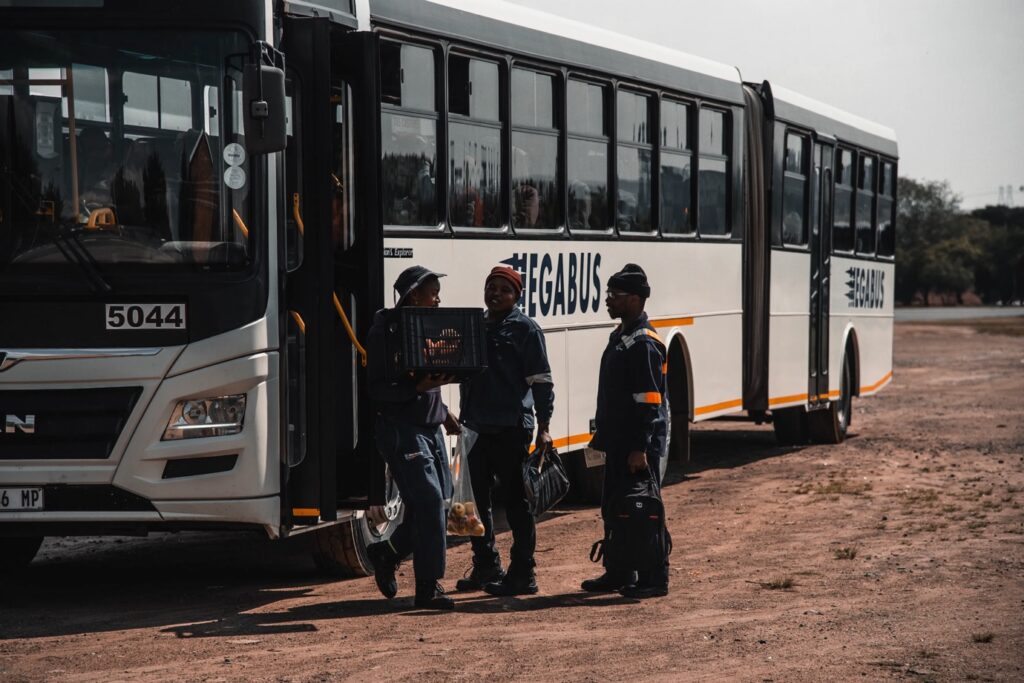
Passeners boarding a Megabus.

“Purposeful transport is not simply about reaching a destination,” Govender concludes. “It is about enabling opportunity, strengthening relationships and helping to create the conditions in which people, communities and businesses can progress.”

Source note: Department of Transport, October Transport Month 2026.

Road Traffic Management Corporation, The Role of Seatbelts in Preventing Fatalities and Serious Injuries in Long Distance Bus Crashes in South Africa, March 2025. The study’s 2024 dataset was extracted on 2 December 2024 and covers records up to 1 December 2024

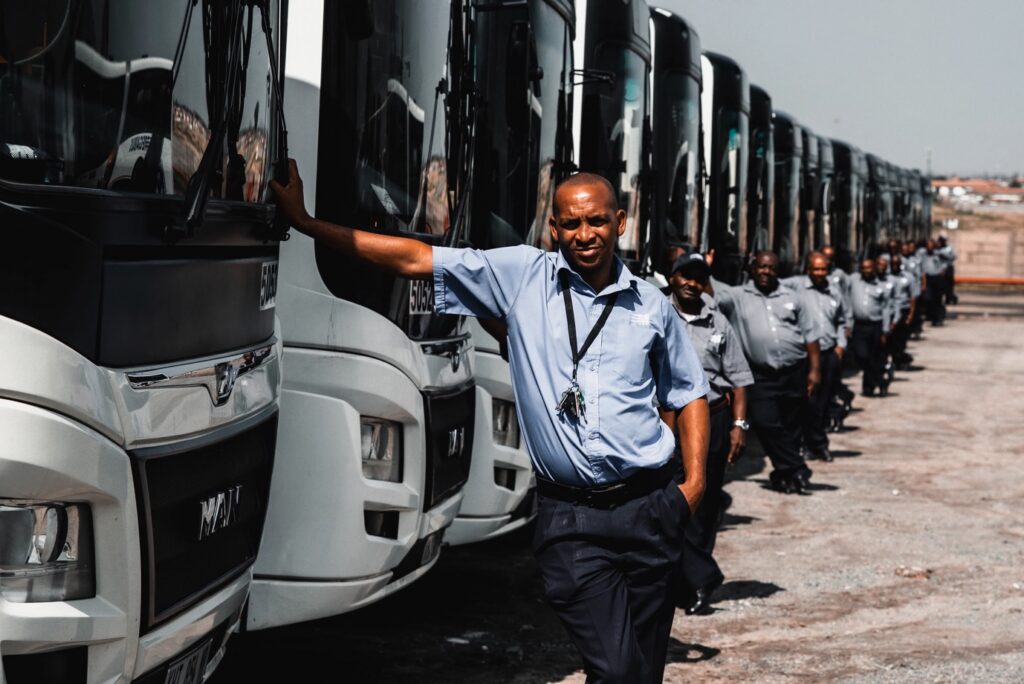
Megabusses lined up in a parking lot.
Megabus bus drivers posing next to their buses.

Continue Reading

Trending